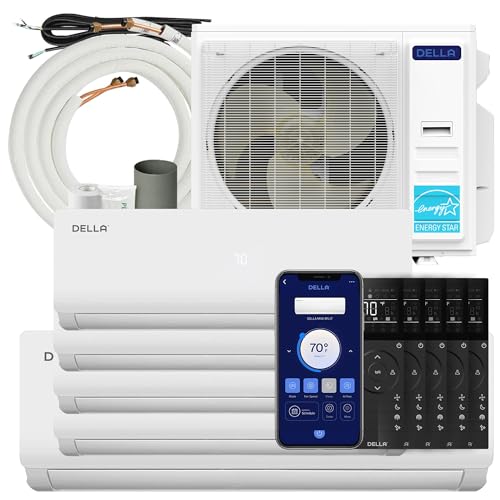
Five Zone Mini Split: Complete Guide to Multi-Zone Ductless Comfort
A five zone mini split lets one outdoor unit serve five independent indoor air handlers, giving you room-by-room temperature control without ductwork. This guide explains how multi-zone systems work, when five zones make sense, and how to plan an installation that fits your home.
A practical reference for multi-zone ductless planningWhy multi-zone matters: A single-zone mini split is excellent for one room, but whole-home comfort usually requires several zones. A five zone mini split connects five indoor units to one outdoor compressor, so each room can be set to its own temperature without installing ducts. This is often the most practical ductless approach for homes with multiple distinct living areas.
What Is a Five Zone Mini Split System?
A five zone mini split is a ductless heat pump or air conditioner configured with one outdoor unit and five indoor air handlers. Each indoor unit is called a zone. Zones are controlled independently, so a bedroom, home office, living room, and kitchen can each maintain a different temperature at the same time.
The term "zone" refers to the indoor unit and the space it serves — not necessarily an entire room. A large open area might use one zone, while a smaller room uses another. The key point is that each indoor air handler conditions its own space and can be turned on or off without affecting the others.
For readers new to ductless systems, the overview of ductless mini split air conditioners and heat pumps explains the components and how they work together. The mini split AC system guide covers system-level planning in more depth.
How a Multi-Zone System Works
In a multi-zone system, the outdoor unit shares its compressor capacity across the connected indoor units. Each indoor unit has its own expansion valve and blower, so refrigerant flow is regulated per zone. When one zone calls for cooling, the outdoor unit modulates output to meet that demand. When a second zone calls, the outdoor unit ramps up further.
This is why multi-zone systems are described as having "diversity." The outdoor unit is sized to the combined load of all zones, but it is not usually expected to run every zone at full capacity at the same time. Most households use zones on different schedules, so the design assumes that not every room will demand maximum output simultaneously.
For a deeper explanation of how inverter compressors modulate output, the inverter vs non-inverter guide is a useful companion. The heat pump vs air conditioner comparison explains how the same system can handle both cooling and heating.
When a Five Zone System Makes Sense
Five zones are not automatically the right choice for every home. They are a good fit when:
- The home has five distinct living areas that are used on different schedules — for example, three bedrooms, a living room, and a home office.
- There is no existing ductwork and retrofitting ducts would be impractical or disruptive.
- The home has persistent hot or cold rooms that a single central system cannot balance.
- The homeowner wants room-by-room control rather than conditioning the entire house at once.
- The layout supports multiple indoor units — wall, floor, or ceiling mounting options exist for most room types.
For smaller homes, a three-zone or four-zone system may be the better match. The goal is to match the number of zones to the number of spaces that genuinely need independent control, not to maximize zone count for its own sake.
Planning the Zones: A Room-by-Room Example
The table below illustrates how a five zone system might be distributed in a typical home. It is an example, not a rule — actual zone planning depends on the layout, load calculation, and how each room is used.
| Zone | Typical Room | Best For |
|---|---|---|
| Zone 1 | Living room | High-traffic daytime comfort |
| Zone 2 | Primary bedroom | Nighttime comfort and quieter operation |
| Zone 3 | Second bedroom | Occasional use and guest comfort |
| Zone 4 | Home office | Daytime cooling during work hours |
| Zone 5 | Kitchen or open dining area | High-gain space with separate schedule |
Actual zone planning should follow a load calculation for each room. Sizing guides for common areas include mini split for 500 square feet, 600 square feet, and 1,200 square feet.
Sizing a Five Zone System
Sizing a multi-zone system is more involved than sizing a single-zone unit. The outdoor unit must have enough capacity for the combined load of all zones, while still modulating efficiently when only one or two zones are active. Oversizing the outdoor unit to cover the theoretical maximum of all zones at once can lead to poor modulation and higher humidity.
A professional load calculation accounts for:
- Square footage and ceiling height per zone
- Insulation levels and window area
- Sun exposure and orientation
- Occupancy and internal heat gains
- How often zones are used simultaneously
For a broader look at how sizing interacts with system choice, the different types of air conditioning for homes guide provides useful context. The ductwork design guide is helpful for understanding airflow and load distribution, even though mini splits do not use ducts.
Market Tiers: Entry-Level, Mid-Range, and Premium Five Zone Systems
Five zone mini splits span a range of build quality and features. The tiers below describe relative market position and help set expectations before comparing specific systems.
| Tier | Typical Characteristics | Best For |
|---|---|---|
| Entry-level | Basic multi-zone system; standard controls; simpler indoor units | Homes where zone count matters more than advanced features |
| Mid-range | Inverter compressor; better efficiency; improved indoor unit design | Most whole-home ductless installations |
| Premium | Higher efficiency ratings; quieter operation; advanced controls | Primary comfort systems in larger homes |
| Top-tier | Cold-climate heating; premium indoor unit options; smart integration | Homes relying on the heat pump as primary heating source |
Mid-range five zone systems often provide the most balanced combination of efficiency, features, and reliability for typical homes. Premium and top-tier systems are worthwhile investments when the system will run year-round or when quiet operation is a priority.
Installation Considerations for Five Zone Systems
Installing a five zone system involves more coordination than a single-zone installation. The main considerations are:
- Outdoor unit placement: It must be sized for the combined capacity and positioned to allow proper airflow. Clearance and noise are both relevant.
- Line set routing: Multiple line sets run from the outdoor unit to each indoor unit. Length and routing affect performance and appearance.
- Indoor unit placement: Each zone needs clear airflow and a drain path that works with gravity.
- Electrical capacity: Multi-zone systems typically need a dedicated circuit, and the panel must be sized for the outdoor unit.
- Permits and inspections: Local rules vary, and a licensed installer should handle compliance.
The guides on installing a mini split and installing a mini split AC system walk through the process in more detail. Homeowners also often review the first week after AC installation checklist to confirm drainage, airflow, and control behavior across all zones.
Controlling Five Zones
Each indoor unit has its own control — usually a remote, a wall thermostat, or an app-based interface depending on the model. Multi-zone systems may support scheduling per zone, which is especially useful when:
- Bedrooms are used on a different schedule than living areas
- A home office needs cooling only during work hours
- Guest rooms are rarely occupied
- Different floors have different comfort preferences
Smart controls can improve comfort and efficiency, but they are not a substitute for correct zoning and installation. The electronic home thermostat overview explains how modern controls interact with heating and cooling equipment.
Maintenance Across Five Zones
Maintenance for a five zone system is largely the same per zone, but the total workload is higher because there are more indoor units. Routine tasks include:
- Cleaning or replacing filters in each indoor unit
- Keeping outdoor coil clear of debris
- Checking condensate drains for each zone
- Inspecting line set insulation for damage
- Scheduling annual professional service for the whole system
Because a multi-zone system shares one outdoor unit, a problem there can affect all zones. Regular service catches issues early, before they impact comfort across the home. The fixing an air conditioner guide covers troubleshooting principles that apply to many mini split issues.
Five Zone Mini Split vs Other Whole-Home Options
| System | Best For | Considerations |
|---|---|---|
| Five zone mini split | Whole-home comfort without ducts; room-by-room control | Requires space for five indoor units; outdoor unit capacity is shared |
| Central air or heat pump | Homes with existing ducts | Duct losses and installation complexity |
| Single-zone mini split | One room or open area | Does not address multi-room comfort |
| Window or portable units | Temporary or single-room cooling | Noise, lower efficiency, and limited zone control |
For homes without ducts, the comparison of ductless air conditioning for older homes explains why multi-zone systems often make more sense than a full duct retrofit. The heat pump cooling and heating split system guide and the mini split air conditioning and heating systems overview provide additional context.
Common Mistakes to Avoid
- Assuming every room needs a zone. A zone should correspond to a space that genuinely benefits from independent control.
- Oversizing the outdoor unit to cover every zone at full load simultaneously.
- Ignoring zone diversity. The design should reflect how the home is actually used.
- Skipping the load calculation. Zone-by-zone loads matter more than whole-house totals.
- Neglecting maintenance on indoor units. Each zone has its own filters and drain to check.
Planning tip: Decide early which rooms need independent control and which can share a zone. That decision shapes both the system configuration and the installation plan.
Frequently Asked Questions
What is a five zone mini split?
A five zone mini split is a ductless system where one outdoor compressor connects to five indoor air handlers. Each indoor unit is its own zone, with independent temperature control, so different rooms can be conditioned separately.
Can all five zones run at the same time?
Yes, but the outdoor unit distributes capacity across the active zones. If all five zones demand maximum output simultaneously, the system may not deliver full capacity to every room at once. Multi-zone systems are designed with diversity in mind, since most homes do not run every zone at full load at the same time.
Is a five zone mini split good for a whole house?
It can be a strong fit for homes without ducts or for whole-home coverage when the layout is compatible with wall-mounted or ceiling air handlers. Whether it works for your home depends on the square footage, the number of rooms, and the load calculation for each zone.
How is zoning controlled on a five zone mini split?
Each indoor air handler has its own remote or wall control, and some systems support app-based control for every zone. Multi-zone systems may also allow scheduling per zone, which helps when rooms are used on different schedules.
How many indoor units can one outdoor unit support?
Multi-zone systems commonly support two to five indoor units, and some support more. The exact maximum depends on the model, and the outdoor unit's capacity must match the combined load of the connected zones.
Ready to Compare Five Zone Mini Split Systems?
Use this guide to narrow down zone count, capacity, and tier. Then review the recommended multi-zone systems below to find a configuration that matches your home.
Explore Ductless Mini Split Systems