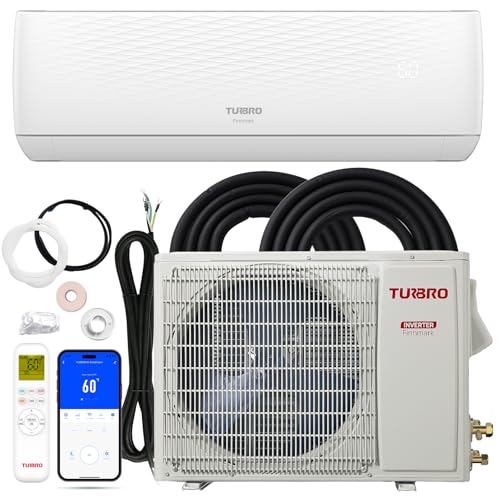
Inverter Split AC vs Non-Inverter Split AC: What Actually Differs
Two split systems can look almost identical on the wall, yet behave very differently once the compressor starts running. This guide explains how inverter and non-inverter split AC units work, where they diverge in comfort and efficiency, and how to match each type to the way you actually cool your rooms.
Jump to the Comparison TableIf you have narrowed your search to a split air conditioner, the next fork in the road is usually the compressor type. Sales pages often throw around the terms inverter and non-inverter as if they were minor labels, but they describe two genuinely different control strategies. One modulates compressor speed continuously, the other cycles a fixed-speed compressor on and off. That single design decision ripples into how steady the room feels, how the unit behaves on very hot afternoons, how much maintenance attention it needs, and how it holds up over a decade of use.
This page is written for readers who already know they want a split system and are now comparing compressor technologies before committing. You will find a side-by-side table, a deeper discussion of each difference, and practical guidance on which type fits which kind of room and usage pattern. If you are still exploring broader categories, the guide on different types of air conditioning systems is a useful companion read before diving into this comparison.
What Is a Split AC System?
A split air conditioner divides its hardware into two parts. The indoor unit contains the evaporator coil, blower fan, filters, and — in most modern designs — the expansion valve. The outdoor unit houses the compressor, condenser coil, and condenser fan. Refrigerant travels between the two through insulated copper lines, absorbing heat indoors and releasing it outdoors.
Because the noisy compressor sits outside, split systems are quieter indoors than window or portable units. They also avoid the ductwork that central systems require, which makes them a common choice for homes without existing ducts. If you want to compare split units against ducted options more broadly, the page on ducted vs ductless AC covers that trade-off in detail. The distinction in this article, however, is not about ducting — it is about what happens inside the outdoor unit's compressor.
What Is an Inverter Split AC?
An inverter split AC uses a variable-speed compressor. Inside the outdoor unit, an inverter circuit converts incoming AC power to DC, then modulates the frequency and voltage delivered to the compressor motor. The result is a compressor that can spin slowly when the room is close to the setpoint and ramp up when there is a large cooling demand.
In practice, the unit typically starts at a higher speed to pull the room down, then settles into a low, continuous pace to hold the temperature. The compressor rarely stops completely during normal operation. This is the defining behavior: modulation instead of on/off cycling.
Related reading on this site includes the broader explainer on regular AC vs inverter AC, which places the inverter concept in the context of other system types.
What Is a Non-Inverter Split AC?
A non-inverter split AC — sometimes called a fixed-speed or constant-speed split — uses a compressor that runs at a single speed. When the thermostat calls for cooling, the compressor starts and runs at full speed. When the room reaches the setpoint, the compressor switches off. When the room warms again, it restarts.
This is the classic refrigeration control scheme. It is mechanically simpler and has fewer electronic components in the power path. The trade-off is that the compressor cannot partially load: it is either fully on or fully off, and the room temperature tends to oscillate around the setpoint rather than sit on it.
Quick Comparison Table
The table below summarizes the main differences. The rows that follow the table explain each point in more depth.
| Feature | Inverter Split AC | Non-Inverter Split AC |
|---|---|---|
| Compressor type | Variable-speed, modulated by an inverter drive | Fixed-speed, single operating speed |
| Temperature control | Continuous modulation; small temperature swing | On/off cycling; noticeable temperature swing |
| Part-load efficiency | High; compressor slows rather than stopping | Lower; each restart draws a surge and full-power run |
| Startup current | Soft start; gradual ramp-up | Higher inrush current at each compressor start |
| Indoor noise pattern | Steady low-level hum during hold periods | Cycles between fan/compressor noise and quiet |
| Humidity control | Better during long, low-speed runs | Less consistent; short cycles remove less moisture |
| Electronics complexity | Higher; inverter board and sensors | Lower; simpler control board |
| Typical lifespan | Long when electronics are protected | Long when compressor is cycled reasonably |
| Best for | Long daily sessions, bedrooms, living rooms | Short sessions, guest rooms, occasional use |
Compressor Behavior and Temperature Control
The most visible difference between the two types is how the room feels over time. A non-inverter split AC runs its compressor at full speed until the return-air sensor reads the setpoint, then shuts off. The room continues to cool slightly after shutdown because the coil is still cold, then warms until the thermostat triggers a restart. The result is a gentle sawtooth temperature curve.
An inverter split AC, by contrast, reduces compressor speed as the room approaches the setpoint. Instead of stopping, it finds the minimum speed that offsets the heat gain of the room. The temperature curve flattens. For occupants, this usually translates into fewer “cold then warm” cycles and less need to adjust the thermostat.
Why this matters for comfort: Temperature swing is not just a number on a datasheet. In a bedroom, a one- to two-degree swing can be the difference between sleeping through the night and waking up to adjust the remote. In a home office, a steady temperature supports consistent concentration during long work sessions.
Energy Efficiency and Long Run Behavior
Efficiency is where the inverter design shows its strongest advantage — but only under the right usage pattern. Because the inverter compressor slows down instead of stopping, it avoids the repeated high-current startups that a fixed-speed compressor performs. Over a long cooling session, that translates into lower average power draw for the same delivered cooling.
The non-inverter unit is not inefficient by design; it is simply optimized for full-load operation. If a room needs only a fraction of the unit's capacity, the fixed-speed compressor still runs at full power until the setpoint is reached, then stops. In short bursts this is acceptable. Over many hours, the cycling losses add up.
Two related guides on this site go deeper into the regulatory and rating side: the explanation of SEER ratings and the overview of DOE AC efficiency standards. Both are worth reading if you are comparing units across efficiency tiers.
For readers who want to compare compressor designs across the broader market, the article on inverter split vs non-inverter split overlaps with this page and can serve as a second reference.
Comfort, Noise, and Air Quality
Noise perception differs between the two types even when decibel ratings are similar. A non-inverter unit alternates between a louder full-speed run and near-silence when the compressor is off. Some people find the cycling noticeable, especially at night. An inverter unit tends to settle into a low, continuous hum during hold periods, which many occupants find less disruptive because the sound level is steady rather than pulsing.
Humidity control also favors the inverter design during long sessions. A compressor running at low speed for extended periods keeps the evaporator coil cold and pulls moisture out of the air more consistently. A fixed-speed compressor that cycles on and off spends less total time with a cold coil, so dehumidification is less steady. If humidity is a major concern in your space, the guide on decreasing humidity in the house offers broader strategies beyond the AC itself.
Air filtration is broadly similar between the two types, since both use the same style of washable or replaceable filter in the indoor unit. The difference is in how often the fan runs at low speed, which affects how much air passes through the filter during hold periods.
Lifespan, Maintenance, and Service Needs
Both types can last well over a decade when installed correctly and maintained. The maintenance profiles differ, though. Inverter units have more electronics — an inverter board, sensors, and a more complex control system — and those components are sensitive to voltage spikes and poor earthing. In regions with unstable power, a surge protector or voltage stabilizer is a sensible addition.
Non-inverter units have a simpler electrical path. The compressor still benefits from clean power and regular coil cleaning, but there are fewer boards to fail. For owners who prefer a design with fewer electronic failure points and predictable service behavior, the fixed-speed unit has a practical appeal.
On both types, the routine maintenance items are the same: clean or replace filters, keep the outdoor coil free of debris, and check refrigerant lines for kinks or leaks. The guides on cleaning the AC filter and cleaning condenser coils apply equally to inverter and non-inverter split systems.
Installation and Electrical Considerations
Physically, the two split types install in much the same way: an indoor wall unit, an outdoor condenser, and a line set between them. The electrical side is where they diverge. Inverter units use a soft-start ramp, so the startup current is lower and more gradual. Non-inverter units draw a higher inrush current at each compressor start, which can matter on circuits that are already loaded.
If you are planning the electrical side of the install, the article on whether you need an electrician for AC installation walks through the panel and circuit questions that apply to both types. For placement decisions, the guide on indoor and outdoor unit placement is relevant regardless of compressor type.
Who Should Choose Which Type
There is no universal winner. The right choice depends on how the room is used, how long the unit runs per session, and what the owner values most. The breakdown below frames the decision by usage pattern rather than by a single headline specification.
Choose an inverter split AC if:
- The room is used for long daily sessions — bedrooms, living rooms, home offices, or study rooms where the unit runs for several hours at a time.
- You want the temperature to stay steady rather than drift between setpoint and restart.
- You value quieter, more consistent indoor sound during hold periods.
- Humidity control matters, such as in coastal or humid climates.
- The electrical supply is stable, or you are willing to add surge protection.
- You are planning a long-term installation and want the unit to age alongside the room's usage.
Choose a non-inverter split AC if:
- The room is used for short, occasional sessions — guest rooms, hobby rooms, or seasonal cabins.
- You prefer a simpler electrical design with fewer electronic components to service.
- The space is small enough that the unit reaches the setpoint quickly and cycles infrequently.
- You are replacing an existing fixed-speed unit and want to keep the same electrical and control setup.
- You want a proven, predictable compressor design that technicians are familiar with.
If you are still deciding on the broader category of split system — for example, whether a ductless mini-split or a more traditional split is the right fit — the overview of ductless air conditioning systems can help you frame the decision before returning to the inverter question.
Frequently Asked Questions
Is an inverter split AC always better than a non-inverter split AC?
No. An inverter unit is usually the better fit for long, daily cooling sessions because it holds temperature steadily and reduces cycling losses. A non-inverter unit can be the more sensible match for short, occasional use, or for owners who prefer a simpler electrical design. The right answer depends on the room's usage pattern, not on a single universal ranking.
Does an inverter AC cool faster than a non-inverter AC?
On initial pull-down, a non-inverter unit runs its compressor at full speed immediately, which can feel like faster cooling in the first few minutes. An inverter unit also ramps up quickly but then slows as the room approaches the setpoint. Over a full session, the inverter unit spends more time at partial load, which is where its efficiency advantage appears.
Which type is quieter?
Indoor noise depends heavily on fan speed and unit design. In general, an inverter unit's steady low-speed hold period is perceived as less disruptive than the on/off cycling of a fixed-speed compressor. However, a well-designed non-inverter unit with a quiet indoor fan can also be very comfortable in a bedroom.
Do inverter split AC units need special maintenance?
The routine maintenance is the same: clean filters, keep coils clear, and check refrigerant lines. The additional consideration for inverter units is electronics protection. Surge protectors and stable voltage are more important because the inverter board is a costly component to replace. Non-inverter units have fewer electronics in the power path, so they are less exposed to that specific risk.
Can I replace a non-inverter split with an inverter split without changing the wiring?
Often yes, but the electrical requirements should be confirmed by a qualified installer. Inverter units generally have lower startup current, which is favorable, but the circuit breaker, wiring gauge, and disconnect should be checked against the new unit's nameplate rating. This is not a swap to perform without verifying the electrical details.
Final Verdict
The inverter versus non-inverter decision is really a question about usage. If the split AC will run for hours at a time, day after day, the inverter design's steady temperature control and part-load efficiency make it the more natural fit. If the unit will run in short bursts, or if the room is a secondary space used occasionally, a non-inverter split remains a sensible, proven choice with a simpler electrical profile.
Neither type is obsolete, and neither is universally superior. The useful move is to match the compressor behavior to the way the room is actually used. Once that match is clear, the rest of the selection — capacity, efficiency tier, and installation details — becomes much easier to narrow down.
If you want to compare this topic against adjacent guides, the article on regular AC vs inverter AC covers the wider category, and the overview of different kinds of air conditioning units helps place split systems in the broader market context.