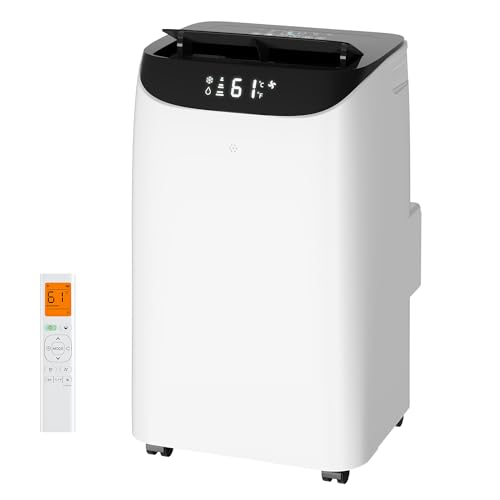
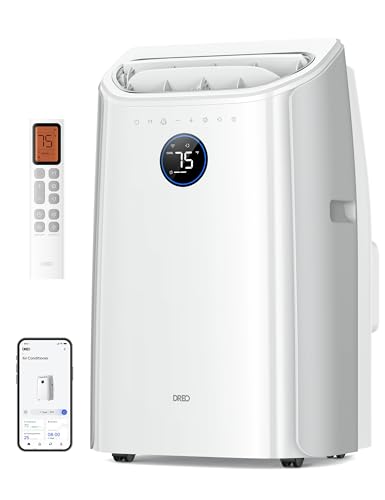
Dual Hose Inverter Portable Air Conditioner
Efficient, powerful, and intelligent cooling for any room. Learn why a dual-hose inverter portable AC is the smart choice for your home or office.
Shop Top Picks
What Is a Dual Hose Inverter Portable AC?
A dual hose inverter portable air conditioner is a self-contained cooling unit that uses two separate hoses—one for intake air and one for exhaust—to condition a room without requiring permanent installation. The inverter technology allows the compressor to adjust its speed continuously, providing precise temperature control and significant energy savings compared to traditional on/off portable ACs.
Unlike single-hose units that draw air from the room and exhaust it outside (creating negative pressure), a dual-hose system pulls fresh air from outside through one hose, cools it, and expels hot air through the other. This design is more efficient, especially in warmer climates, because it doesn't force cooled indoor air out of the room.
Key Benefits of Dual Hose Inverter Portable AC
⚡ Energy Efficiency
Inverter compressors adjust power based on cooling demand, using up to 30-50% less energy than conventional portable ACs.
❄️ Faster Cooling
The dual-hose design maintains optimal airflow, cooling rooms faster and more evenly than single-hose models.
🔇 Quieter Operation
Inverter technology reduces mechanical stress, resulting in lower noise levels—ideal for bedrooms and offices.
🌬️ No Negative Pressure
Because it uses outside air for cooling, it doesn't create a vacuum effect that pulls hot air in from other rooms.
How Does a Dual Hose Inverter Portable AC Work?
This system operates on a simple yet effective principle. The intake hose draws fresh outdoor air across the condenser coil to dissipate heat, while the exhaust hose vents the hot air back outside. Simultaneously, the inverter compressor modulates its speed to maintain the desired temperature, avoiding the frequent starts and stops that waste energy.
Most modern units also include a dehumidification mode, which can help lower indoor humidity levels, making the environment more comfortable. Some models also feature a heat pump function for year-round use.
For optimal performance, it's crucial to properly install the window kit to seal the hoses effectively. Without a proper seal, the unit will draw in warm air, reducing efficiency.
Compared to traditional window units, this type of portable AC offers the flexibility of easy mobility and simple installation, making it perfect for renters or those who want cooling in multiple rooms.
Dual Hose vs Single Hose: Which Is Better?
When choosing a portable AC, understanding the difference between dual-hose and single-hose systems is essential. While both can cool a room, the dual-hose design offers superior performance and efficiency.
| Feature |
Dual Hose Inverter |
Single Hose (Traditional) |
| Cooling Efficiency |
High (uses outside air) |
Moderate (uses room air, creates negative pressure) |
| Energy Consumption |
Up to 50% less |
Higher (compressor cycles on/off) |
| Noise Level |
Quieter (inverter technology) |
Louder (constant cycling) |
| Temperature Stability |
Excellent (variable speed) |
Poor (frequent temperature swings) |
| Ideal Room Size |
Up to 450 sq ft (12,000–14,000 BTU) |
Up to 300 sq ft (8,000–10,000 BTU) |
If you're looking for a portable AC for a small apartment or a room with limited window access, a dual-hose inverter model is the superior investment for long-term comfort and energy savings.
Sizing Guide: BTU and Room Coverage
Choosing the right BTU (British Thermal Unit) capacity is crucial for efficient cooling. A unit that's too small will run constantly without reaching the desired temperature, while one that's too large will cool too quickly without dehumidifying properly.
As a general rule, you need about 20 BTU per square foot of living space. For example, a 10,000 BTU unit is ideal for rooms up to 400–450 sq ft. However, you should also consider factors like ceiling height, sunlight exposure, and the number of occupants. A dual-hose inverter unit typically performs best in medium to large rooms (250–450 sq ft) where its efficient air exchange can truly shine.
Here's a quick reference:
- 8,000 BTU – Rooms up to 200 sq ft (small bedrooms, home offices)
- 10,000 BTU – Rooms up to 300 sq ft (living rooms, medium bedrooms)
- 12,000 BTU – Rooms up to 400 sq ft (large living rooms, open spaces)
- 14,000 BTU – Rooms up to 500 sq ft (master bedrooms, studios)
Always refer to the manufacturer's specifications for precise room coverage, and consider using a BTU calculator to fine-tune your selection.
Energy Efficiency and Inverter Technology
One of the standout features of these units is the inverter technology. Instead of a fixed-speed compressor that turns on and off, an inverter compressor adjusts its speed to maintain the set temperature. This can result in energy savings of 30% to 50% compared to conventional portable ACs.
While portable ACs aren't rated with a SEER (Seasonal Energy Efficiency Ratio) like central systems, their EER (Energy Efficiency Ratio) is often higher in dual-hose models. Look for units with an EER of 10 or above for the best efficiency.
For homeowners looking to reduce their carbon footprint and electricity bills, a dual-hose inverter portable AC is an excellent alternative to energy-efficient window units and is often more effective than standard portable models.
Installation and Maintenance Tips
One of the biggest advantages of a portable AC is its ease of installation. Most models come with a window installation kit that allows you to secure the hoses in a sliding or casement window. The process typically takes less than 30 minutes and requires no special tools.
Regular maintenance is key to extending the life of your unit. This includes cleaning the air filter every two weeks during peak usage, checking the hoses for any obstructions, and ensuring the window seal remains intact. Some advanced models feature a self-cleaning function that dries the internal components to prevent mold and bacteria growth.
If you're using the unit in a room with no window, consider a windowless portable AC solution, though these are less efficient than dual-hose models.
Pros and Cons of Dual Hose Inverter Portable AC
✅ Pros
- ✓ Energy efficient with inverter compressor
- ✓ Faster and more even cooling
- ✓ Quieter operation
- ✓ Doesn't create negative air pressure
- ✓ Easy to move and install
❌ Cons
- ✗ Higher upfront cost than single-hose units
- ✗ Requires two hoses to be vented
- ✗ Bulky for very small rooms
- ✗ Drain water may need manual removal