Portable Air Conditioner Sliding Window Kit: Complete Buyer's Guide
Everything you need to know about sealing a portable AC exhaust hose in a horizontal sliding window — measuring, kit types, installation, and troubleshooting.
EXPLORE KITS Educational guide — learn first, then chooseQuick summary: A sliding window kit is the connection point between your portable air conditioner and the outside world. Get it right, and your unit cools efficiently with a tight seal. Get it wrong, and you lose cooling capacity, invite insects, and deal with water intrusion. This guide walks you through the entire decision process.
If you are still deciding whether a portable AC is right for your space, start with our portable air conditioner guide and then return here to select the correct sliding window accessory.
What Is a Portable AC Sliding Window Kit?
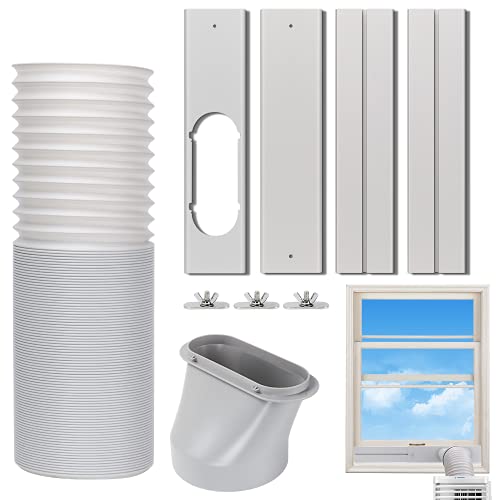
A portable air conditioner sliding window kit is an adjustable panel assembly that fits into the track of a horizontal sliding window. It creates a sealed surface with a circular port where the unit's exhaust hose connects, allowing hot air to leave the room while blocking outdoor air, rain, and pests from entering.
Unlike a double-hung window kit — which is designed for windows that open vertically — a sliding window kit is built for windows that move left and right. The panels expand horizontally, locking into the window track and filling the gap that remains when the movable sash is partially open.
Most kits include:
- Adjustable panels — typically two or three interlocking sections that slide past each other to match the opening width.
- A hose adapter plate — a panel with a circular cutout sized for common exhaust hose diameters (usually 5 to 6 inches).
- Weather sealing strips — foam or rubber gaskets that sit against the window frame and sash.
- Security hardware — screws or a locking bracket to prevent the window from being opened further from the outside.
If your window opens sideways, a standard double-hung kit will not seal properly. For a dedicated walkthrough of that scenario, see our guide on portable AC for casement windows and the related casement window kit guide, which cover the differences between window styles.
Why the Right Kit Matters for Performance
A portable air conditioner works by pulling room air in, cooling it, and exhausting hot air through the hose. If the window opening around the hose is not sealed, the unit creates negative pressure in the room and pulls hot outdoor air back inside. The result is a unit that runs constantly, cools poorly, and consumes more energy.
A properly fitted sliding window kit solves three problems at once:
- Cooling efficiency — the sealed panel keeps the cool air inside and prevents hot air from leaking around the hose.
- Moisture control — rain and humid outdoor air cannot enter through gaps around a loose hose.
- Pest and security protection — a solid panel with a tight hose collar blocks insects and makes the window harder to open from outside.
If you notice weak cooling after installation, the window seal is one of the first things to check. Our troubleshooting guide on portable AC not cooling enough explains the diagnostic steps in order.
Types of Sliding Window Kits
Kits differ mainly in how they adjust, how they seal, and how much they cost in terms of tier positioning. The table below summarizes the three most common categories.
| Kit Type | Tier | Best For | Key Consideration |
|---|---|---|---|
| Basic adjustable panel kit | Entry-level | Standard horizontal sliding windows in bedrooms and home offices | Usually included with the AC unit; check panel width against your window opening |
| Reinforced multi-panel kit | Mid-range | Wider openings and sliding glass doors | More overlap between panels for a more stable seal; check hose collar diameter |
| Universal fit kit with sealing accessories | Premium | Irregular window frames and long-term installations | Includes weather stripping, insulation sleeve compatibility, and adapters for multiple hose sizes |
Beyond the panel construction, kits also vary in hose compatibility. Most portable AC units use a 5-inch or 6-inch exhaust hose, and the hose collar on the panel must match. If you are adding insulation to reduce heat gain along the hose, our guide on a portable AC exhaust hose insulation sleeve explains how to pair it with the window panel.
How to Measure Your Sliding Window Before Buying
Measurement errors are the most common reason a kit does not fit. Take these four measurements before you order:
- Full opening width — the total width of the window opening when fully open, from frame to frame.
- Full opening height — the height of the opening from the sill to the top track.
- Sash width — the width of the movable panel, since the kit must fit in the remaining opening when the sash is closed against it.
- Track depth — how deep the window track is, because the kit panel must sit inside the track without wobbling.
Write the measurements down and compare them with the kit's stated adjustment range. A kit rated for a 24-inch to 47-inch opening will not work on a 60-inch sliding glass door. For wider openings, look at kits marketed for sliding doors or combine two panel sets.
If your window is unusually small, our guide on portable AC for small windows covers compact kit options and alternative sealing methods.
Step-by-Step Installation
Installation is straightforward and usually takes 15 to 30 minutes. Follow this sequence for a stable, well-sealed result:
- Clean the window track. Remove dust and debris so the panel sits flush and the sealing strips adhere properly.
- Assemble the panels. Slide the interlocking sections together and set them to roughly the width of your opening. Tighten any locking screws.
- Insert the panel into the track. Place the bottom edge into the sill track first, then tilt the top into the upper track. Slide the panel to the side where the exhaust hose will exit.
- Close the window sash against the panel. The sash should press against the kit panel with the sealing strip in between, leaving no visible gap.
- Attach the sealing strips. Apply foam or rubber strips to the top, bottom, and sash-facing edges of the panel. This is the step most people rush and later regret.
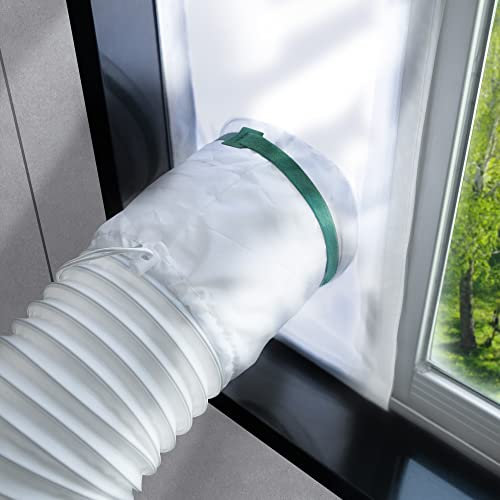
- Connect the exhaust hose. Screw or twist the hose collar into the circular port on the panel. Confirm it is fully seated — a partially connected hose leaks hot air back into the room.
- Secure the window. Use the included screws or locking bracket so the window cannot be slid open from outside. This is a security step, not an optional one.
- Test the seal. Turn the unit on and run your hand around the panel edges. Any noticeable airflow means the seal needs attention.
If the hose is too short to reach the window, the kit will not help. Check hose length and routing before installation; our overview of portable AC intake and exhaust explains the airflow path and why a short, straight hose performs better than a long, kinked one.
Window Compatibility Checklist
Before finalizing a purchase, confirm each item below. A single mismatch can mean the kit does not seal.
| Check | What to Verify | Why It Matters |
|---|---|---|
| Window orientation | Horizontal sliding (left-right), not vertical | A vertical kit will not seal a horizontal opening |
| Hose diameter | Matches the panel collar (5 in or 6 in typical) | A loose collar leaks exhaust air back into the room |
| Panel adjustment range | Opening width falls within the kit's stated range | Out-of-range kits wobble or leave gaps |
| Track depth | Kit panel fits inside the track | Shallow tracks need thin-panel kits or additional shims |
| Screen or storm window | Can be removed or has an adapter path | Screens block the hose and defeat the exhaust path |
If your window cannot accept a standard kit, there are alternative approaches. Our guides on portable AC for side-opening windows and crank-out windows cover specialized kits and sealing methods for non-standard frames.
Common Problems and Fixes
The kit does not fit the window width
Check the adjustment range again. If your opening is wider than the kit's maximum, do not force it — use a kit rated for sliding glass doors or add an extension panel. If the opening is narrower than the minimum, you need a compact kit or a different window.
Hot air is leaking around the panel
This almost always points to worn or missing sealing strips. Replace the foam strips, and make sure the sash presses firmly against the panel. Also confirm the hose collar is fully screwed into the port.
Condensation on the panel
Condensation on the inside of the panel is normal in humid weather. Water on the outside face of the panel or dripping into the room is not — it usually indicates a gap at the top edge. Re-seal the top strip and check that the panel is not tilted.
The unit cools poorly after installation
If cooling dropped after adding the kit, the likely causes are a blocked hose, a disconnected collar, or negative pressure from a second unsealed opening. Our guides on AC not blowing cold air and portable AC not cooling enough walk through the diagnostic order.
Maintenance and Seasonal Care
A sliding window kit is a low-maintenance accessory, but a few habits extend its life and keep the seal tight:
- Inspect the sealing strips at the start of each cooling season. Foam compresses and cracks over time; replace it when it no longer springs back.
- Clean the panel with a damp cloth. Avoid abrasive cleaners that scratch the surface and weaken the seal.
- Remove the kit before cold weather if the window will be used for ventilation. Store the panels flat to prevent warping.
- Check the hose collar for cracks. A cracked collar leaks exhaust air and reduces cooling performance.
If the unit also struggles with humidity, a self-evaporating model reduces manual draining. Our overview of a portable AC with self-evaporating system explains how that feature interacts with window venting.
Ready to Choose the Right Kit?
Compare feature sets, panel adjustment ranges, and hose compatibility in the recommended products section below. Every listing is selected for sliding window compatibility.
View Recommended KitsFrequently Asked Questions
What is a portable air conditioner sliding window kit?
A portable AC sliding window kit is an adjustable panel system that seals the gap around a portable air conditioner's exhaust hose in a horizontal sliding window. It prevents outside air and insects from entering while allowing hot exhaust air to escape.
Do all portable AC units come with a sliding window kit?
Most single-hose portable AC units include a basic window kit in the box, but the included panels are often designed for standard double-hung windows. Sliding window kits may need to be purchased separately or as a compatible accessory.
Can I use a portable AC with a sliding window that opens sideways?
Yes. Horizontal sliding windows require a kit designed for side-to-side openings, which typically uses vertical panels that expand horizontally. Using a double-hung window kit in a sliding window usually leaves gaps and weakens the seal.
How do I measure a sliding window for a portable AC kit?
Measure the full width and height of the window opening, then measure the width and height of the movable sash. Also note the window track depth, since the kit panel must fit inside the track for a stable, sealed installation.
Is a sliding window kit better than sealing the gap with foam or tape?
A dedicated sliding window kit provides a rigid, adjustable panel with a hose port and weather sealing. Foam or tape can work as a temporary fix, but a proper kit offers a more stable mount, better sealing, and easier seasonal removal.
Related Guides
Choosing by Tier, Not by Guesswork
Instead of comparing listings by numbers that change constantly, use tier descriptors to orient yourself. Entry-level kits cover standard window openings and basic sealing. Mid-range kits add reinforced panels and broader adjustment ranges for larger openings. Premium kits bundle weather sealing, hose adapters, and insulation compatibility for long-term installations.
Basic Adjustable Panel Kit
Best for standard bedroom and home office sliding windows. Usually included with the AC unit. Check panel width and hose collar diameter before relying on it.
Reinforced Multi-Panel Kit
Best for wider openings and sliding glass doors. More overlap between panels creates a more stable seal and reduces wobble in the track.
Universal Fit Kit
Best for irregular frames and long-term use. Bundles weather stripping, multiple hose adapters, and compatibility with insulation sleeves.
For a broader view of portable AC options across these tiers, see the portable AC units overview. If you are cooling a very small room, our guide on portable AC for a very small room covers compact units and kit fit.