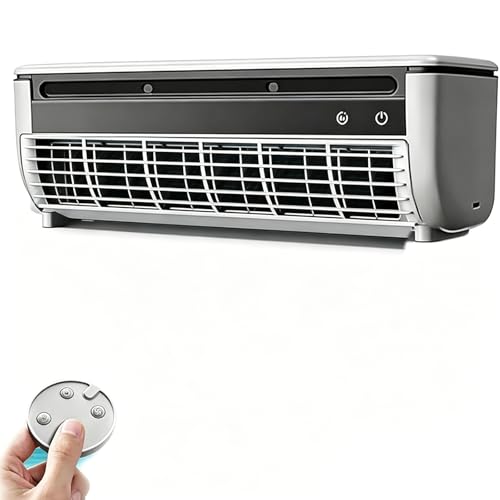
Ductless Air Conditioning Units: The Complete Guide
Ductless air conditioning units deliver precise, zone-by-zone comfort without the energy losses of ductwork. This guide explains how they work, how to size them, which efficiency ratings matter, and how to choose the right system for your home.
Start the Buying GuideWhy this guide matters: Ductless systems are one of the fastest-growing HVAC categories in North America, yet they are frequently mis-sized and mis-specified. A well-chosen ductless air conditioning unit can cut cooling energy use, eliminate hot spots, and provide quiet operation for decades. A poorly chosen one can underperform and shorten its own service life. Read this guide before you compare models.
What Are Ductless Air Conditioning Units?
Ductless air conditioning units — commonly called ductless mini-splits or mini-split systems — are HVAC systems that cool (and often heat) individual rooms or zones without a network of air ducts. Each system pairs an outdoor compressor/condenser unit with one or more indoor air-handling units. The two are connected by a small bundle of refrigerant lines, power wiring, and a condensate drain that passes through a hole in the wall roughly three inches in diameter.
Because there are no ducts, ductless systems avoid the substantial energy losses that occur when conditioned air escapes through leaky or poorly insulated ductwork. This makes them especially attractive for homes without existing ducts, additions, converted attics and garages, and older properties where retrofitting ductwork is impractical. If you are comparing approaches for an older property, our guide to ductless air conditioning for older homes covers the retrofit considerations in detail.
How Ductless Systems Work
Ductless systems operate on the same refrigeration cycle as central air conditioners. The outdoor unit compresses refrigerant, releasing heat to the outside air. The refrigerant then travels through the line set to the indoor unit, where it absorbs heat and humidity from the room. A fan blows cooled, dehumidified air back into the space.
Most modern ductless units use inverter-driven compressors that vary their speed continuously rather than cycling on and off at full power. This variable-speed operation produces steadier room temperatures, quieter running, and lower energy consumption during part-load conditions — which is how systems actually run most of the season. Many ductless systems are also heat pumps, reversing the cycle in winter to provide efficient heating.
Types of Ductless Air Conditioning Units
Ductless indoor units come in several form factors. The right choice depends on room layout, ceiling height, and aesthetic preferences.
Wall-Mounted High-Wall Units
The most common configuration. Mounted high on an exterior wall, these units are the default choice for bedrooms, living rooms, and home offices. They are the most widely available and typically the most well-specified for the category.
Ceiling Cassette Units
Recessed into a drop ceiling with a four-way louver, cassettes distribute air evenly across a room. They suit open-plan spaces and commercial settings where wall space is limited. See our guide to ductless ceiling cassette mini-split air conditioners for details.
Floor-Mounted Units
Installed low on a wall or in a floor console, these are useful under windows or in rooms with limited high-wall space. They are also a practical option for attic rooms with sloped ceilings.
Ducted Mini-Split Units
A short-run ducted indoor unit can serve two or three adjacent rooms from a concealed location. This is technically a hybrid approach, but it remains a ductless system at the outdoor-unit level. Learn more in our ducted mini-split system guide.
Single-Zone vs Multi-Zone Systems
A single-zone system connects one indoor unit to one outdoor unit. It is the simplest, most efficient, and most straightforward configuration when you need to condition one room or one open living area.
A multi-zone system connects two to eight indoor units to a single outdoor compressor. Each zone can be set to a different temperature, which is ideal for homes where rooms are used at different times of day. However, multi-zone systems are more complex to design, and oversizing the outdoor unit relative to the combined indoor load reduces efficiency. Our guide to multi-zone ductless air conditioning systems explains the design trade-offs.
| Factor | Single-Zone | Multi-Zone |
|---|---|---|
| Best for | One room or one open-plan area | Several rooms needing independent control |
| Design complexity | Low — straightforward load matching | Higher — requires block-load and diversity calculation |
| Efficiency at part load | Excellent when correctly sized | Excellent if the outdoor unit is not oversized for simultaneous use |
| Installation scope | One wall penetration, one line set | Multiple wall penetrations and longer line runs |
| Tier positioning | Entry-level through premium | Mid-range through professional-grade |
Sizing and BTU Requirements
Correct sizing is the single most important decision in ductless system selection. An undersized unit will struggle during peak heat and run continuously. An oversized unit will short-cycle, dehumidify poorly, and wear out its compressor sooner.
A rough starting point is 20 BTU per square foot of floor area for a standard room with average insulation and ceiling height. Adjust upward for south- and west-facing windows, poor insulation, open-plan spaces with high ceilings, or kitchen areas with appliances. Adjust downward for well-shaded rooms and high-performance building envelopes. A professional Manual J load calculation remains the gold standard for whole-home and multi-zone design.
For room-by-room capacity guidance, see our BTU calculator by room size and our guide on how to size an air conditioner.
Efficiency Ratings Explained
Ductless systems are rated on SEER2 for cooling efficiency and HSPF2 for heating efficiency. Higher numbers indicate greater efficiency. Because ductless units avoid duct losses, their effective whole-home efficiency is often higher than a comparable-efficiency central system serving the same space.
Look for ENERGY STAR certification as a baseline indicator of efficiency, and check local utility rebate programs, which often specify minimum SEER2 and HSPF2 thresholds. Our overviews of SEER ratings and DOE efficiency standards explain the rating systems in more depth.
Pros and Cons of Ductless Air Conditioning Units
Advantages
- No duct losses — conditioned air goes directly into the room
- Zone-by-zone temperature control reduces wasted cooling
- Quiet indoor operation, especially at low fan speeds
- No ductwork to install, seal, or clean
- Ideal for retrofits, additions, and homes without ducts
- Many models provide both cooling and efficient heat-pump heating
Considerations
- Visible indoor units on walls or ceilings
- Higher upfront equipment positioning than some ducted alternatives
- Each zone needs its own indoor unit and wall penetration
- Filters require regular cleaning for peak performance
- Professional installation is strongly recommended for line-set and refrigerant work
Installation Considerations
Ductless installation involves mounting the indoor and outdoor units, routing the line set and condensate drain, evacuating the refrigerant lines, and commissioning the system. Refrigerant handling is regulated, and improper installation is the leading cause of premature system failure.
Key planning points include choosing an outdoor location with adequate clearance and drainage, keeping line-set runs within manufacturer limits, and positioning indoor units so air reaches the occupied space without blowing directly on seating. Our guide to ductless air conditioning system installation walks through the process, and our DIY mini-split installation overview explains which steps are realistic for a confident homeowner and which should be left to a licensed technician.
Maintenance Essentials
Ductless systems are low-maintenance but not no-maintenance. Clean or rinse the indoor filters every two to four weeks during heavy use — clogged filters are the most common cause of reduced cooling and frozen coils. Keep the outdoor coil free of leaves and debris, and have the system professionally serviced annually to check refrigerant charge, electrical connections, and drain flow.
Our guide to cleaning AC filters covers the routine step in detail. If you notice reduced cooling, water leakage, or unusual noise, our troubleshooting guides on AC not cooling and AC leaking water are practical starting points.
Market Tiers and What to Expect
Ductless systems are positioned across three broad market tiers. Use these tiers as a relative comparison framework rather than an absolute quality judgment — a well-installed mid-tier system will outperform a poorly installed premium one.
Essential Tier
Single-zone systems with solid basic performance, standard inverter compressors, and essential features. A good fit for a bedroom, home office, or seasonal room where the priority is straightforward cooling.
Balanced Tier
Higher efficiency ratings, quieter operation, improved filtration options, and often smart controls. Multi-zone configurations typically land here. The most common choice for whole-home ductless retrofits.
High-End Tier
Top-tier SEER2 and HSPF2 ratings, cold-climate heating performance, advanced air-quality features, and refined build quality. Suited to homes where long-term efficiency and premium comfort matter most.
Key Buying Factors Before You Decide
Before comparing specific models, work through these decisions in order. They determine which category of system you should be evaluating at all.
- Scope of cooling needed. One room, several rooms, or a whole home? This determines single-zone versus multi-zone. If you are still comparing system types broadly, our overview of ductless air conditioning systems and ducted versus ductless AC will help you frame the decision.
- Heating needs. If you need winter heating, a heat-pump model is the practical choice. Our guide to ductless heat pump and air conditioner combinations explains how the two modes differ.
- Room load. Use a BTU calculator or a professional load calculation to match capacity to each room. Avoid the temptation to oversize "just in case."
- Efficiency target. Set a minimum SEER2 and HSPF2 based on your climate, utility rebates, and expected years of use. Higher-efficiency models justify themselves over the life of the system.
- Indoor unit style. High-wall, cassette, floor-mounted, or short-run ducted — chosen based on room geometry and aesthetics.
- Installation quality. The best system in its class underperforms if installed poorly. Vet your installer carefully using our guide to choosing an HVAC contractor.
Ready to Compare Ductless Units?
You now understand how ductless systems work, how to size them, and what the efficiency ratings mean. The next step is to compare specific models against your room load and tier target.
Explore Recommended UnitsFrequently Asked Questions
What are ductless air conditioning units?
Ductless air conditioning units, also called mini-split systems, are HVAC systems that cool individual rooms or zones without using ductwork. They consist of an outdoor compressor unit connected to one or more indoor air-handling units via a small conduit.
How many indoor units can one ductless system support?
A single-zone system supports one indoor unit. Multi-zone systems can support anywhere from two to eight indoor units connected to a single outdoor compressor, allowing independent temperature control in each zone.
Do ductless air conditioning units heat as well as cool?
Many ductless systems are heat pumps that provide both cooling and heating. In heating mode, they transfer heat from outdoor air into the home, and modern cold-climate models operate efficiently even in sub-freezing temperatures.
How long do ductless air conditioning units last?
With proper maintenance, ductless systems typically last 15 to 20 years. The outdoor compressor generally determines the system lifespan, while indoor units may need cleaning or minor service more frequently.
Are ductless air conditioning units energy efficient?
Yes. Ductless systems avoid the energy losses associated with ductwork, which can account for a significant portion of cooling energy in ducted homes. Premium inverter-driven models achieve very high SEER2 ratings and precise temperature control.