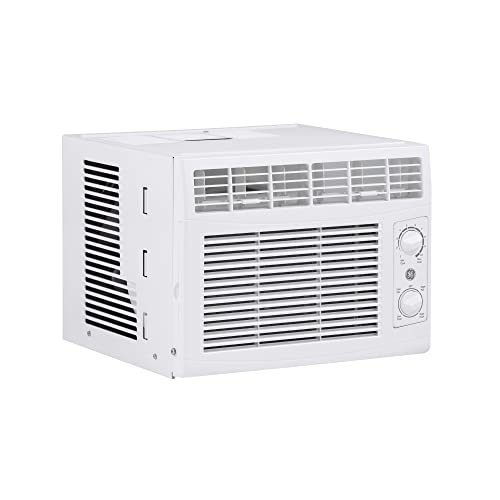
Easy to Install Window Air Conditioner
Everything you need to know before choosing and setting up a window AC that installs quickly, securely, and without professional help.
SEE RECOMMENDED MODELSWhy this guide matters: Window air conditioners are among the simplest cooling solutions available, but "easy to install" is not a universal trait. The right model, the right window, and the right preparation determine whether setup takes twenty minutes or an entire afternoon. This guide walks you through every factor that makes a window unit genuinely easy to install, so you can choose with confidence and avoid the common pitfalls that turn a quick job into a frustrating project.
What Makes a Window Air Conditioner Easy to Install?
Installation difficulty depends on a combination of unit weight, mounting hardware, window compatibility, and the amount of assembly required. A window AC that is easy to install typically shares several characteristics: it fits common window openings, includes a complete mounting kit, requires no drilling or custom framing, and offers clear instructions with labeled parts.
Units designed for quick setup usually weigh less, which makes lifting and positioning safer for a single person. They also tend to use support brackets that rest on the window sill rather than relying on external brackets that require exterior access. If you are comparing approaches, understanding the difference between ductless and ducted systems helps you see why window units remain the most accessible option for renters and single-room cooling.
Key Features That Simplify Setup
Complete Mounting Kit
Look for units that include window panels, foam seals, support brackets, and screws in the box. A complete kit eliminates last-minute hardware store runs.
No-Drill Window Panels
Accordion-style side panels that expand to fit the window opening without drilling are a hallmark of easy installation.
Lightweight Chassis
Smaller BTU units are lighter and easier to lift alone. A second person is still recommended for safety, but the physical effort is lower.
Pre-Assembled Components
Models that arrive mostly assembled reduce the number of steps and the risk of missing parts during setup.
Clear Instructions
Illustrated manuals with step-by-step diagrams make a measurable difference, especially for first-time installers.
Standard Window Fit
Units sized for double-hung windows between 23 and 36 inches wide cover the majority of residential window openings.
Window Types and Compatibility
Not every window is suitable for a standard window air conditioner. Double-hung windows are the most compatible because the lower sash can be raised and secured against the unit. Single-hung windows work similarly. Casement windows that crank outward, awning windows, and sliding windows typically require specialized brackets or a different cooling solution entirely.
Before choosing a unit, measure the width and height of the window opening and the depth of the sill. Most easy-to-install models specify a minimum and maximum window width, and exceeding those limits means the included panels will not seal properly. If your window situation is unusual, a ductless mini-split may be a better long-term fit, though it requires professional installation.
Step-by-Step Installation Overview
The following outline reflects the typical process for a window unit designed for straightforward setup. Exact steps vary by model, but the sequence is consistent across most easy-to-install designs.
- Unbox and verify parts Check the mounting kit against the parts list. Confirm the window panels, foam seals, brackets, and screws are all present.
- Prepare the window Clean the sill and window track, then check that the window opens and closes smoothly. Remove any obstructions that could prevent a tight seal.
- Attach the support bracket Most easy-install units use a sill-mounted bracket that requires no exterior access. Follow the manual for the correct orientation.
- Install the side panels Slide the accordion panels into the unit's frame and expand them to match the window width. These panels are usually pre-scored for trimming.
- Lift and position the unit With a second person helping, lift the unit into the window and rest it on the bracket. Ensure it sits level or tilts slightly outward for drainage.
- Secure the window sash Lower the window sash onto the unit and use the included sash lock or bracket to prevent the window from being opened from outside.
- Seal the gaps Apply the foam seals around the panels and any remaining gaps. A proper seal keeps cool air in and pests out.
- Test the unit Plug the unit into a dedicated outlet, power it on, and confirm that cool air flows and the unit drains properly.
If your home lacks suitable windows altogether, exploring the easiest portable air conditioner to install can be a practical alternative that requires only a window kit for exhaust.
Tools and Preparation Checklist
Most easy-to-install window units require only a handful of tools. Gathering them beforehand keeps the process smooth.
- Measuring tape for window dimensions
- Phillips-head screwdriver for bracket and panel screws
- Level to confirm the unit sits correctly
- Utility knife for trimming foam seals if needed
- Work gloves for handling metal edges
- A second person for lifting assistance
Electrical preparation matters as well. Confirm that the outlet near the window can handle the unit's amperage, and avoid extension cords for larger units. For guidance on circuit requirements, see the overview of amps and breaker size for AC units.
Common Installation Mistakes to Avoid
Even straightforward installations go wrong when basic precautions are skipped. The most frequent issues include inadequate support, improper tilt, and incomplete sealing.
- Insufficient support: Relying on the window frame alone can damage the sash and create a safety hazard. Always use the included bracket.
- Wrong tilt direction: The unit should tilt slightly toward the outside so condensation drains away from the room.
- Gaps in sealing: Unsealed gaps let warm air in and reduce efficiency, undermining the purpose of the unit.
- Skipping the sash lock: Without a lock or bracket, the window can be opened from outside, creating a security risk.
- Using an undersized outlet: Dedicated circuits prevent tripped breakers and overheating.
Choosing the Right Capacity for Your Room
An easy installation is undermined by a unit that cannot cool the room effectively. Capacity is measured in BTU, and the correct size depends on room area, ceiling height, sun exposure, and occupancy. Oversizing a unit causes short cycling, which leaves the room humid and uncomfortable. Undersizing means the unit runs constantly without reaching the set temperature.
| Room Area | Recommended Capacity | Typical Use Case | Installation Consideration |
|---|---|---|---|
| Up to 150 sq ft | 5,000–6,000 BTU | Bedroom, small office | Lightest units, easiest for one person |
| 150–250 sq ft | 8,000–10,000 BTU | Living room, medium bedroom | Requires sturdy bracket, two-person lift |
| 250–400 sq ft | 12,000–14,000 BTU | Large room, open-plan space | Heavier unit, confirm window width |
| 400–600 sq ft | 15,000–18,000 BTU | Studio, large living area | Check circuit capacity, may need 240V |
For a deeper explanation of sizing, the guide on how to size an air conditioner covers load factors in detail. If you are focused on efficiency, energy-efficient small window air conditioners are worth reviewing for smaller rooms.
Energy Efficiency and Long-Term Operation
Installation ease is only one part of the decision. A unit that installs quickly but runs inefficiently will cost more to operate over its lifespan. Look for models with a competitive SEER or CEER rating for their class, and consider inverter-driven compressors if you want smoother temperature control and lower energy use.
Window units with ENERGY STAR certification meet stricter efficiency criteria and are typically well-specified for their category. If quiet operation matters, energy-efficient quiet window air conditioners balance sound levels with efficiency. For broader context on efficiency ratings, the explanation of what a SEER rating is provides the technical background.
Maintenance After Installation
A properly installed unit still needs routine maintenance to perform well. Clean or replace the filter every two to four weeks during peak season, inspect the seals at the start of each cooling season, and check the drain path for blockages. Before winter, either remove the unit or cover it with an appropriate cover to protect the components.
Seasonal preparation is covered in the seasonal AC checklist, and filter guidance is available in the article on when to replace an AC filter. Following these routines extends the life of the unit and keeps energy use stable.
Window AC vs Other Easy-Cooling Options
Window units are not the only simple option. Portable air conditioners require only an exhaust hose and window kit, while portable units designed for quick setup appeal to renters who cannot modify windows. Ductless mini-splits offer superior efficiency and quiet operation but require professional installation, which is a different category of effort entirely.
If you are weighing permanent versus temporary solutions, the comparison of ductless versus ducted AC clarifies the trade-offs. For whole-home cooling, central systems remain the standard, but they are not an easy-install project. Window units occupy a distinct niche: fast, reversible, and suitable for single rooms.
Frequently Asked Questions
How long does it take to install a window air conditioner?
For a unit with a complete mounting kit and a compatible double-hung window, installation typically takes 30 to 60 minutes with two people. Heavier units or windows requiring custom panel trimming can take longer.
Do I need a professional to install a window AC?
Most window units are designed for DIY installation and do not require a professional. A second person is recommended for lifting, and any electrical concerns should be addressed by a qualified electrician.
Can I install a window AC in a sliding window?
Standard window units are designed for double-hung or single-hung windows. Sliding windows require a specialized bracket or a different unit type, and casement windows are generally unsuitable for standard window ACs.
What if my window is too narrow for the unit?
Check the manufacturer's minimum window width before purchase. If your opening is narrower than the minimum, consider a smaller capacity unit or a portable air conditioner with a window exhaust kit.
Should the window AC tilt inward or outward?
The unit should tilt slightly outward, toward the exterior, so that condensation drains outside rather than into the room. Most mounting brackets are designed to create this tilt automatically.
How do I keep the window secure after installation?
Use the included sash lock or bracket to prevent the window from being raised from outside. Some units also include security screws for the side panels.
Final Checklist Before You Buy
- Measure window width, height, and sill depth
- Confirm the unit's window compatibility range
- Check that a complete mounting kit is included
- Verify the electrical outlet and circuit capacity
- Match BTU capacity to room size
- Review efficiency ratings for the tier you are considering
- Plan for a second person during installation
With these factors confirmed, an easy-to-install window air conditioner becomes a genuinely simple project. The models recommended below are selected for straightforward setup and reliable performance within their respective tiers.
Recommended Easy-to-Install Window Air Conditioners
⚠️ AFFILIATE DISCLOSURE: This website contains affiliate links. As an Amazon Associate, we earn from qualifying purchases. If you make a purchase through these links, we may receive a small commission at no additional cost to you. Read our full affiliate policy.

GE Window Air Conditioner 5,000 BTU AC Unit for Small Spaces up to 150 sq ft with Manual Controls & 2 Cooling Modes, Easy Install Kit, White
Check price on Amazon
Midea 8,000 BTU Smart Inverter Air Conditioner Window Unit with Heat and Dehumidifier – Cools up to 350 Sq. Ft., Energy Star Rated, Quiet Operation, Electronic Controls, Remote Control, White
Check price on Amazon
Midea 6,000 BTU Window Air Conditioner, Electronic Control, 250 Sq Ft, New | 3-In-1 Cool/Fan/Dehumidifier Modes, Easy-To-Use Controls, Remote Control, And Cooling For Bedrooms, Studies and Home Offices
Check price on Amazon
ROVSUN 8000 BTU Window Air Conditioner with Heat, AC Unit for Window, 115V | 4-in-1 Cool, Heat, Dehumidify & Fan, APP & Voice Control, Compatible with Alexa/Google, Timer & ECO Mode, 350 Sq Ft
Check price on Amazon
GE 5,000 BTU Digital Window Air Conditioner for Bedroom, Small AC Unit Cools Rooms up to 150 sq ft, Remote Control, Energy Saver Mode, 24Hr Timer, Easy Install Kit
Check price on Amazon
Midea 5,000 BTU EasyCool Small Window Air Conditioner - Cool up to 150 Sq. Ft. with Easy-to-Use Mechanical Controls and Reusable Filter, Perfect for Small Bedroom, Living Room, Home Office
Check price on Amazon