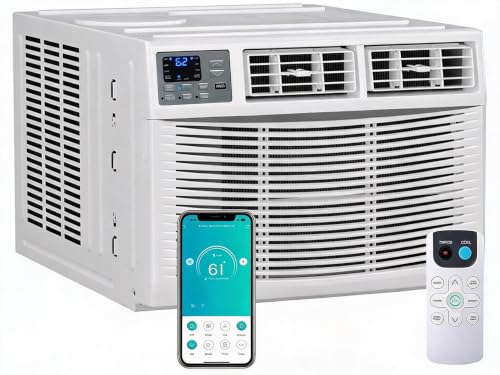
Energy Efficient Air Conditioner and Heater: The Complete Guide
Understand how high-efficiency heating and cooling systems work, which ratings actually matter, and how to match the right system to your home so you can stay comfortable while using less energy.
Start LearningWhy this guide matters: Heating and cooling account for the largest share of household energy use in most American homes. Choosing an energy efficient air conditioner and heater is not only about a single appliance purchase — it is about selecting the right technology, sizing it correctly, and understanding how efficiency ratings translate into real-world comfort. This guide walks you through everything you need to know before you commit to a system.
What Makes an Air Conditioner and Heater Energy Efficient?
Efficiency in a heating and cooling system is measured by how much conditioned air it produces relative to the electricity it consumes. An energy efficient air conditioner and heater combination achieves this through three main levers: a higher efficiency rating, modulation technology such as an inverter compressor, and a design that minimizes energy loss between the unit and your living space.
The most widely used metric for cooling efficiency in the United States is the SEER2 rating, while heating efficiency is measured by HSPF2 for heat pumps and AFUE for furnaces. When you compare systems, always look at the same metric category — mixing SEER2 with legacy SEER figures can lead to misleading conclusions.
Beyond the equipment itself, efficiency depends heavily on installation quality, duct sealing, refrigerant charge accuracy, and ongoing maintenance. A premium-rated system installed poorly will underperform a mid-tier unit that is installed and commissioned correctly. This is why the equipment rating should always be paired with a reputable installation partner — you can learn how to vet one in our guide on how to choose an HVAC contractor.
Understanding Efficiency Ratings: SEER2, HSPF2, and EER2
Efficiency ratings are the foundation of any comparison between energy efficient air conditioners and heaters. Here is what each rating actually tells you.
SEER2 (Seasonal Energy Efficiency Ratio 2)
SEER2 measures cooling efficiency across an entire cooling season. A higher number means the system uses less electricity to deliver the same cooling output. Minimum federal standards require 14.3 SEER2 for split systems in northern regions and 15.2 SEER2 in southern regions. For genuinely energy efficient performance, look for models rated 16 SEER2 and above, with top-tier systems reaching 20 SEER2 or higher. Our overview of air conditioner energy efficiency explains how these numbers are calculated.
HSPF2 (Heating Seasonal Performance Factor 2)
HSPF2 measures heating efficiency for heat pumps across a heating season. A higher HSPF2 indicates a heat pump that delivers more heat per unit of electricity. For cold climates, systems rated 9.0 HSPF2 and above are generally considered high-efficiency choices.
EER2 (Energy Efficiency Ratio 2)
EER2 measures efficiency at a single peak-temperature condition rather than across a full season. It is especially relevant in hot climates where systems run near peak capacity for long stretches. A high EER2 indicates the unit handles extreme heat efficiently.
Practical tip: Do not judge a system by a single rating alone. A unit with an excellent SEER2 but a lower EER2 may perform less efficiently in very hot regions, while a heat pump's HSPF2 matters more than its SEER2 if heating dominates your annual usage.
The Core Technologies Behind High Efficiency
Inverter Compressors
An inverter compressor varies its speed continuously rather than cycling fully on and off. This modulation keeps indoor temperatures stable, eliminates the energy spike of repeated startups, and usually reduces consumption substantially over a season. Inverter technology is now standard in most high-efficiency ductless systems and increasingly common in central systems. You can explore the category in depth through our energy efficient inverter air conditioner resource.
Variable-Speed Air Handlers
Variable-speed blowers adjust airflow to match demand. They run longer at lower speeds, which improves humidity control, reduces noise, and distributes air more evenly. Pairing a variable-speed air handler with a two-stage or inverter compressor is one of the most reliable paths to a genuinely efficient system.
Heat Pump Technology
A heat pump is essentially a reversible air conditioner: in summer it moves heat out of your home, and in winter it moves heat in. Because it moves heat rather than generating it through combustion, a heat pump can deliver several units of heating for each unit of electricity consumed. Modern cold-climate heat pumps maintain efficiency well below freezing. Our overview of HVAC heat pumps covers how the technology differs from conventional furnace-and-AC combinations.
ENERGY STAR Certification
ENERGY STAR certified equipment meets efficiency thresholds set by the EPA above federal minimums. Certification is a useful shortcut when scanning the market, but it should be treated as a baseline indicator rather than a guarantee of real-world performance. For a broader look at the certified category, see our guide to ENERGY STAR HVAC systems.
Comparing System Types for Efficiency
Different system architectures deliver efficiency in different ways. The table below summarizes how the major categories compare for combined heating and cooling.
| System Type | Cooling Efficiency | Heating Efficiency | Best For |
|---|---|---|---|
| High-efficiency central AC + heat pump | Very high (16–20+ SEER2) | High (HSPF2 rated) | Whole-home comfort with existing ductwork |
| Ductless mini-split heat pump | Very high (18–25+ SEER2) | High (cold-climate capable) | Homes without ducts, room-by-room zoning |
| Window or through-the-wall unit | Moderate to high (varies widely) | Limited (cooling-focused) | Single rooms, supplemental cooling |
| Portable air conditioner | Moderate | Minimal | Temporary or renter-friendly cooling |
| Standard single-stage central system | Entry-level to mid-range | Depends on paired furnace | Replacement in moderate climates |
For homes with existing ductwork, a high-efficiency central system paired with a heat pump is often the most balanced choice. For homes without ducts or with problematic ductwork, a ductless approach frequently wins on efficiency because it eliminates duct losses. Our ductless heat and air conditioner guide explains the trade-offs in more detail.
How to Size an Energy Efficient System Correctly
Oversizing is one of the most common reasons a high-efficiency system fails to deliver expected savings. An oversized unit cools the space too quickly, cycles frequently, and struggles to remove humidity. Undersizing leads to constant operation and premature wear. The correct approach is a room-by-room load calculation rather than a rule-of-thumb estimate.
Square footage is the starting point, but factors such as ceiling height, window area, insulation quality, sun exposure, and local climate all shift the result. If you are sizing a system yourself before consulting a professional, start with our guide on how to size an air conditioner and treat the result as an estimate to discuss with your installer.
Choosing the Right Tier for Your Home
Energy efficient systems fall into broadly recognizable market tiers. Rather than focusing on any single figure, consider which tier matches your priorities for durability, feature set, and long-term performance.
Entry-Level Tier
Meets current federal efficiency minimums. A solid, reliable choice when the goal is straightforward replacement with modest efficiency gains over an older unit.
Mid-Range Tier
Typically adds two-stage or inverter compressors and better humidity control. A balanced choice for homeowners who want meaningful efficiency improvements without top-tier complexity.
High-End Tier
Variable-speed technology, advanced controls, and strong seasonal ratings. Well-suited to climates with long cooling or heating seasons where efficiency gains compound year after year.
Premium / Flagship Tier
The highest seasonal ratings, quietest operation, and the most refined modulation. A long-term investment for homeowners prioritizing maximum comfort and efficiency over the life of the system.
In general, mid-range and high-end tiers offer the most balanced combination of efficiency, durability, and feature set for most households. Entry-level tier remains a reasonable choice in mild climates or for secondary spaces.
Maximizing Efficiency After Installation
The equipment is only part of the equation. The following practices consistently improve real-world efficiency regardless of which tier you choose.
- Seal and insulate ductwork. Leaky ducts can waste a large portion of conditioned air before it reaches living spaces. Sealing ducts is often the highest-return efficiency improvement in a home with central air.
- Use a programmable or smart thermostat. Scheduling setbacks during unoccupied hours reduces runtime without sacrificing comfort. Our guide to the digital air conditioner thermostat covers setup best practices.
- Replace filters on schedule. A clogged filter restricts airflow, forces the blower to work harder, and degrades efficiency across the entire system.
- Schedule annual maintenance. Clean coils, correct refrigerant charge, and a well-calibrated system are essential to preserving rated efficiency over time.
- Address envelope issues first. Attic insulation, air sealing, and window treatments reduce the load the system must handle — often more effectively than upgrading equipment alone.
For a broader set of habits that reduce consumption, see our collection of ways to reduce your AC electricity bill.
Common Mistakes to Avoid
- Buying on rating alone. A high SEER2 unit installed with undersized ducts or an incorrect refrigerant charge will not deliver rated performance.
- Skipping the load calculation. Rule-of-thumb sizing frequently leads to oversizing and poor humidity control.
- Ignoring the heating side. If you are replacing both an air conditioner and a heater, evaluate the combined system rather than each component in isolation.
- Overlooking ductwork condition. Duct losses can erase the benefit of a high-efficiency unit.
- Delaying maintenance. Efficiency degrades gradually and silently; annual service protects your investment.
Frequently Asked Questions
What SEER2 rating makes an air conditioner energy efficient?
The federal minimum for new central systems is 14.3 SEER2 in northern states and 15.2 SEER2 in southern states. For genuinely efficient performance, look for 16 SEER2 and above, with top-tier models reaching 20 SEER2 or higher.
Can a heat pump both heat and cool my home efficiently?
Yes. A heat pump reverses its refrigerant cycle to provide heating in winter and cooling in summer. Modern cold-climate heat pumps remain efficient well below freezing, making them one of the most energy efficient year-round solutions available.
How does an inverter compressor improve energy efficiency?
An inverter compressor continuously modulates its speed instead of switching fully on and off. This avoids energy spikes, reduces temperature swings, and typically consumes less electricity over a season than a single-stage system.
Does ENERGY STAR certification guarantee lower energy use?
ENERGY STAR certification confirms the equipment meets efficiency thresholds set by the EPA. Real-world energy use also depends on correct sizing, duct quality, installation, and maintenance, so certification should be paired with proper installation.
Is a ductless mini-split more efficient than central air?
Ductless systems avoid duct losses, which can be significant in a central system. In homes without ducts or with poor ductwork, a high-efficiency ductless system is often the more energy efficient choice. In well-sealed homes with quality ducts, a high-efficiency central system remains competitive.
Final Takeaways
An energy efficient air conditioner and heater is the result of three decisions made well: choosing the right technology for your home, sizing and installing it correctly, and maintaining it consistently. SEER2, HSPF2, and EER2 ratings give you a reliable starting point, inverter and heat pump technology deliver the underlying efficiency, and careful installation ensures those ratings translate into real comfort and lower energy use.
If you are still exploring the broader category, our energy efficient AC overview and the energy efficient heating and cooling systems for homes guide provide additional context. When you are ready to compare specific products, the recommendations section below highlights systems worth evaluating.