
ENERGY STAR Certified Air Conditioners
A practical guide to understanding the ENERGY STAR label, how certification is verified, which AC categories can earn it, and what to check before you commit to a more efficient system.
Start With the BasicsWhy this page exists: Most people who search for ENERGY STAR certified air conditioners already know they want an efficient unit. What they still need is clarity — what the label actually guarantees, how eligibility differs across window, portable, ductless, and central systems, and which practical factors decide whether a certified model performs as intended in a real home.
What ENERGY STAR Certification Actually Means
ENERGY STAR is a voluntary labeling program run by the U.S. Environmental Protection Agency in partnership with the Department of Energy. For air conditioners, the label is awarded only to models that meet a defined efficiency threshold and pass independent verification. The threshold is not static — it is revised periodically so that the label continues to represent the upper portion of the market rather than the average.
In practice, a certified unit delivers the same cooling output while drawing less electricity than a baseline model of comparable capacity. That difference is expressed through efficiency metrics such as SEER2 for central systems, CEER for room air conditioners, and EER2 for specific operating conditions. Understanding those metrics is more useful than treating the label as a single yes-or-no signal.
Certification also applies to connected functionality. Many certified room air conditioners and smart thermostats must support demand response features, which allow utilities to make small automatic adjustments during peak grid stress. This is one reason certified models often include Wi-Fi controls and scheduling features that would otherwise be optional.
Which AC Categories Can Earn the Label
Certification requirements are defined per product category, which means the label looks different depending on the type of system you are considering. The table below summarizes how the program applies across the most common residential categories.
| Category | Primary Metric | What Certification Signals | Typical Market Tier |
|---|---|---|---|
| Window air conditioners | CEER | Higher combined efficiency across the cooling season | Entry-level to mid-range |
| Portable air conditioners | CEER | Efficiency verified for single-duct and dual-duct designs | Mid-range |
| Ductless mini-split systems | SEER2 / HSPF2 | High seasonal efficiency for both cooling and heating modes | Premium to high-end tier |
| Central air conditioners | SEER2 / EER2 | Certified condenser and coil combinations meeting current thresholds | Mid-range to premium |
| Heat pumps (cooling mode) | SEER2 / HSPF2 | Efficient year-round operation with certified cooling performance | Premium to flagship tier |
For readers comparing specific capacities, the guides on certified window air conditioners and certified portable air conditioners break down category-specific requirements. Those pages are useful when you have already narrowed the form factor and want to compare models within a single class.
Reading the Efficiency Metrics Behind the Label
The certification threshold is expressed through metrics that measure different things. Mixing them up is one of the most common sources of confusion when comparing certified units.
SEER2 — Seasonal Efficiency for Central and Ductless Systems
SEER2 replaced the older SEER rating under updated DOE test procedures. It estimates seasonal cooling efficiency and is the metric used for central air conditioners and ductless mini-splits. A higher SEER2 indicates a unit that uses less electricity across a typical cooling season. Because SEER2 uses updated testing conditions, it is not directly comparable to older SEER figures — a comparison that matters when you are reading legacy product listings.
EER2 — Peak-Load Efficiency
EER2 measures efficiency at a specific high-temperature condition rather than across a season. It is a better indicator of performance during the hottest part of the day, when the system is working hardest. Central systems are evaluated on both SEER2 and EER2, and certification requires meeting thresholds for both.
CEER — Room Air Conditioner Efficiency
CEER is the combined efficiency metric used for window and portable units. It accounts for standby power draw and part-load operation, which is why it is more representative than a simple EER figure for room units that cycle on and off throughout the day.
HSPF2 — Heating Seasonal Performance
For ductless mini-splits and heat pumps that provide heating as well as cooling, HSPF2 measures heating efficiency. A unit can be certified for cooling while offering modest heating performance, so check both figures if year-round operation matters to you.
The broader explainer on SEER versus SEER2 under DOE standards covers how the test procedures changed and why the numbers shifted between generations of products.
How to Choose a Certified Unit That Actually Delivers
The label narrows the field, but several practical factors determine whether a certified unit will perform to its rated efficiency in your home. Treat the following as a shortlist of decisions that matter more than the badge itself.
1. Correct Sizing Comes First
An oversized certified unit short-cycles, which reduces dehumidification and can erode the efficiency advantage the label promises. Undersizing forces continuous operation and leaves rooms uncomfortable. A room-by-room load calculation is the reliable way to size a system, and the guide on how to size an air conditioner walks through the inputs that matter.
2. Installation Quality Decides Real-World Efficiency
Central and ductless systems lose efficiency through refrigerant charge errors, undersized line sets, and duct leakage. A certified condenser paired with a poorly sealed duct system can perform below a standard unit installed correctly. The ductwork design guide explains how layout and sealing affect delivered capacity.
3. Match the Form Factor to the Space
Window units remain the most straightforward path to certification for single rooms. Ductless mini-splits are certified at higher efficiency tiers and suit homes without ductwork. Central systems make sense when the home already has ducts and the goal is whole-house comfort. The comparison of ductless versus ducted air conditioning is useful when both options are viable.
4. Check Inverter and Variable-Speed Operation
Inverter-driven compressors are common among certified models because they modulate output instead of cycling on and off. This supports steadier temperatures and better part-load efficiency. The explainer on inverter versus non-inverter AC covers the trade-offs without overstating the benefits.
5. Factor in Long-Term Maintenance
Certified units hold their efficiency only when filters are clean and coils are serviced. A simple seasonal routine keeps performance close to the rated figures. The AC maintenance guide and the collection of energy saving tips for AC cover the habits that protect efficiency over the life of the system.
How to Verify a Certification Claim
Because the label carries commercial weight, it is worth confirming that a specific model is actually certified rather than relying on marketing language. The process is straightforward:
Verification Checklist
- Note the exact model number from the product label or listing, not just the series name.
- Look up the model in the official ENERGY STAR product database maintained by the EPA.
- Confirm that the certification is current — listings can be updated or withdrawn when standards change.
- Cross-check the efficiency figures on the manufacturer's specification sheet against the database entry.
- For central systems, confirm that the certified combination of condenser, coil, and air handler is the one being installed.
Central systems deserve particular attention because certification often applies to matched combinations rather than a single outdoor unit. If the installer substitutes a different coil or air handler, the certified rating may no longer apply.
Common Mistakes When Buying a Certified AC
- Assuming the label alone reduces energy use. Certification sets a floor for efficiency; sizing, installation, and usage habits determine actual consumption.
- Comparing SEER2 to legacy SEER figures. The test procedures differ, so the numbers are not interchangeable.
- Ignoring the heating metric on ductless systems. If the unit will run in heating mode, HSPF2 matters as much as SEER2.
- Overlooking duct condition in central systems. Leaky or undersized ducts can erase the efficiency gain of a certified condenser.
- Skipping the matched-system check. A certified outdoor unit paired with an unmatched indoor coil may not deliver the rated efficiency.
Readers weighing a certified replacement against repairing an older system can find a structured comparison in the guide on replacing versus repairing an air conditioner.
Related Efficiency Guides
If you are building a broader efficiency plan, these pages complement the certification overview above:
- Energy efficiency in HVAC systems — how efficiency is measured across heating and cooling equipment.
- Energy efficient air conditioning systems — a category-level overview of efficient system types.
- Energy efficient ductless air conditioners — focused guidance for homes without ductwork.
- Energy efficient central air units — what to look for in whole-house systems.
- ENERGY STAR HVAC systems — how the label applies across the broader HVAC category.
- HVAC energy audits — how to identify where a home is losing efficiency before choosing equipment.
- Certified 6,000 BTU air conditioners — a capacity-specific example for small rooms.
- Certified 10,000 BTU air conditioners — a capacity-specific example for medium rooms.
Frequently Asked Questions
What does ENERGY STAR certified mean for an air conditioner?
An ENERGY STAR certified air conditioner meets or exceeds efficiency benchmarks set by the U.S. Environmental Protection Agency. Certified models use less electricity to deliver the same cooling output compared with standard models, and they are verified through third-party testing before they can carry the label.
Does an ENERGY STAR label guarantee lower energy use?
The label indicates that the unit meets a defined efficiency threshold, but actual energy use depends on correct sizing, installation quality, duct condition, thermostat settings, and maintenance. A certified unit that is oversized or poorly installed can still consume more energy than expected.
Are all ENERGY STAR air conditioners inverter models?
No. Inverter-driven compressors are common among certified models because they support variable-speed operation, but single-stage and two-stage units can also earn certification if they meet the applicable efficiency requirements.
How often should a certified air conditioner be serviced?
Most manufacturers and efficiency programs recommend professional servicing once per year, ideally before the cooling season. Filter cleaning or replacement should happen every one to three months depending on household conditions.
Is a certified window unit worth choosing over a standard one?
For a single room where the unit will run frequently, the efficiency advantage of a certified model typically justifies the step up in tier. For occasional use, the difference in real-world consumption is smaller, and correct sizing matters more than the label.
Bringing It Together
ENERGY STAR certification is a reliable starting filter, not a finish line. The label tells you that a model has cleared a verified efficiency threshold. What it cannot tell you is whether the unit is sized for your room, whether the installation will preserve its rated performance, or whether the form factor suits your home. Those questions belong to the buying process, and the guides linked throughout this page are designed to help you answer them in sequence.
If you are still deciding between system types, start with the air conditioner buying guide and then return here to narrow the shortlist to certified models within the category that fits your space.
Recommended ENERGY STAR Certified Air Conditioners
⚠️ AFFILIATE DISCLOSURE: This website contains affiliate links. As an Amazon Associate, we earn from qualifying purchases. If you make a purchase through these links, we may receive a small commission at no additional cost to you. Read our full affiliate policy.

LG 10,000 BTU Smart Window Air Conditioner, 115V, Cools 450 Sq. Ft. for Bedroom, Living Room, Apartment, Dual Inverter, Quiet Operation, Energy Star, works with LG ThinQ, Amazon Alexa and Hey Google
Check price on Amazon
Midea 10,000 BTU U Shaped Window Air Conditioner, Cools up to 450 Sq Ft | Ultra Quiet U-Shaped Design, Inverter Control, Open Window Flexibility, Alexa/Google Assistant, 37% Energy Savings, 2026 New
Check price on Amazon
Midea 5,000 BTU Window Air Conditioner, Cools up to 150 Sq. Ft. with Easy-to-Use Reusable Filter, Remote, Perfect AC for Bedroom, Living Room, Home Office, Electronic Control
Check price on Amazon
Midea 8,000 BTU Smart Inverter Air Conditioner Window Unit with Heat and Dehumidifier – Cools up to 350 Sq. Ft., Energy Star Rated, Quiet Operation, Electronic Controls, Remote Control, White
Check price on Amazon
Midea 6,000 BTU U Shaped Window Air Conditioner, Cools up to 250 Sq Ft | Ultra Quiet U-Shaped Design, Inverter Control, Open Window Flexibility, Alexa/Google Assistant, 37% Energy Savings, 2026 New
Check price on Amazon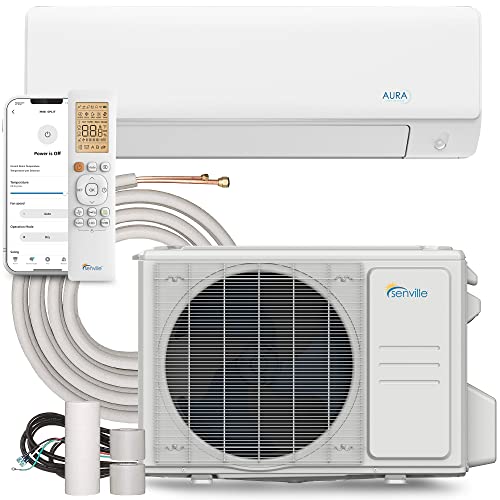
Senville AURA Mini Split Air Conditioner, Heat Pump, White, 12000 BTU | Energy Star Certified, Works with Alexa, Ductless, Wall Mounted, AHRI Certified, 208-230V Inverter
Check price on Amazon
Midea 7,800 BTU Window Air Conditioner, Inverter Technology, 340 Sq Ft | Energy Star Rated, Quiet Operation, Electronic Controls, Remote Control, 37% Energy Savings, White
Check price on Amazon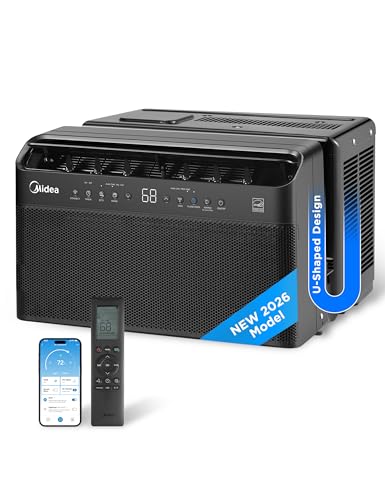
Midea 6,000 BTU U Shaped Window Air Conditioner, Cools up to 250 Sq Ft | Ultra Quiet U-Shaped Design, Inverter Control, Open Window Flexibility, Alexa/Google Assistant, 37% Energy Savings, Jet Black
Check price on AmazonDisclaimer
Some of the content on this site uses AI assistance. Information is provided for educational purposes only. We are not responsible for any losses resulting from the use of this information. By using this site, you waive any right to bring legal claims against us arising from your use of the information provided. If you do not agree, please do not use this site. Read the full disclaimer.