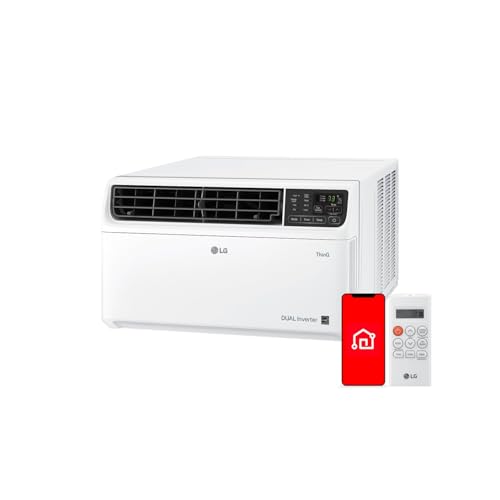
Energy Star Window Air Conditioner with Remote and WiFi Control
A complete research guide to smart, efficient window cooling. Understand what Energy Star certification means, how WiFi and remote control change daily use, and how to match a unit to your room before you decide to buy.
Start the GuideWho this guide is for: You already know you want a window air conditioner with smart features, and you are comparing models before purchasing. This page explains the technology, the efficiency standards, the sizing rules, and the practical trade-offs so you can choose with confidence.
Why Energy Star Certification Matters
Energy Star is a voluntary labeling program run by the U.S. Environmental Protection Agency. A window air conditioner that carries the Energy Star label has been independently verified to meet efficiency requirements that are stricter than the federal minimum. In practical terms, a certified unit produces the same cooling output while drawing less electricity than a comparable standard model.
For a window unit that runs for several hours a day through the cooling season, that efficiency difference compounds. The savings come from better compressor design, improved heat exchange, and smarter cycling behavior. If you are weighing efficiency across form factors, our overview of Energy Star qualified air conditioners explains how the certification applies to different unit types.
Efficiency in window units is usually expressed through the CEER (Combined Energy Efficiency Ratio) or the newer CEER2 metric. A higher rating indicates more cooling delivered per unit of electricity. Energy Star models sit at the upper end of that scale, and the difference is most noticeable in rooms where the unit operates continuously rather than in short bursts.
What Remote and WiFi Control Actually Add
A remote control and WiFi connectivity are often grouped together in product descriptions, but they serve different purposes. Understanding each one helps you judge whether a given model's feature set is genuinely useful for your routine.
Remote Control
A handheld remote lets you change temperature, fan speed, mode, and timer settings without walking to the unit. It is the fastest way to make a quick adjustment, and it remains functional even if your home network is down. Many remotes also include a display dimmer and a sleep timer, which are useful in bedrooms.
WiFi Control
WiFi connectivity links the air conditioner to your home network so you can control it from a smartphone app. This enables scheduling, remote turn-on before you arrive home, energy monitoring, and integration with voice assistants. It is the feature that turns a window unit into part of a smart home setup.
Models that combine both give you redundancy. The remote handles immediate adjustments, while the app handles automation and remote access. If you specifically want app-based control without a physical remote, our guide to an Energy Star window air conditioner with WiFi control covers that configuration in more detail.
Smart features worth checking before purchase
- App compatibility with both iOS and Android, plus a clear setup process.
- Voice assistant support for Amazon Alexa and Google Assistant.
- 7-day programmable scheduling with multiple on/off periods per day.
- Geofencing, which can turn cooling on or off based on your phone's location.
- Energy usage reporting inside the app, so you can see how settings affect consumption.
- Firmware update support, which keeps the app and unit compatible over time.
- A physical control panel on the unit itself as a fallback.
How to Size a Window AC for Your Room
Capacity is measured in BTU (British Thermal Units). An undersized unit runs constantly and never fully cools the room, while an oversized unit cools too quickly and cycles on and off, which leaves humidity behind and causes temperature swings. The table below gives a starting range based on floor area, assuming standard ceiling height and average insulation.
| Room Area | Suggested BTU Range | Typical Space | Market Position |
|---|---|---|---|
| Up to 150 sq ft | 5,000 – 6,000 BTU | Bedroom, small office, studio corner | Entry-level |
| 150 – 250 sq ft | 8,000 – 10,000 BTU | Living room, primary bedroom | Mid-range |
| 250 – 400 sq ft | 12,000 – 14,000 BTU | Open living area, large bedroom | High-end tier |
| 400 – 550 sq ft | 15,000 – 18,000 BTU | Studio apartment, converted loft | Flagship tier |
Adjust upward if the room faces direct afternoon sun, has large unshaded windows, sits above a garage, or regularly holds more than two people. Adjust downward for a well-shaded room with heavy insulation. For a deeper walkthrough of the calculation, see our guide on how to size an air conditioner.
Comparing Smart Window AC Tiers
Window air conditioners with remote and WiFi control fall into recognizable tiers. The tiers below describe relative market position and feature depth, not any specific monetary figure. Use them to set expectations about build quality, app maturity, and noise levels.
| Tier | Best For | Typical Traits |
|---|---|---|
| Entry-level | Single-room cooling on a focused feature set | Basic app control, simple remote, standard fan speeds, functional build |
| Mid-range | Daily use in bedrooms and living rooms | Reliable app with scheduling, quieter operation, better filter access, Energy Star certification common |
| High-end tier | Smart home integration and larger rooms | Voice assistant support, geofencing, energy reporting, improved airflow design, sturdier mounting hardware |
| Flagship tier | Maximum efficiency and premium build | Top efficiency ratings, near-silent modes, advanced app ecosystem, robust construction, refined remote |
Installation and Placement Considerations
A window air conditioner with WiFi and remote control still depends on correct physical installation. The unit must sit securely in the window frame with a slight outward tilt so condensation drains away from the room. Most models include a mounting bracket and side panels, but heavier high-capacity units may benefit from a dedicated support bracket.
Placement affects both performance and connectivity. Keep the indoor air intake clear of curtains and furniture. For WiFi stability, the unit should be within reasonable range of your router; a metal window frame or thick wall can weaken the signal. If the signal is marginal, a mesh node or extender near the room usually resolves it.
Check the electrical requirements before installation. Smaller units typically run on a standard 115V household circuit, while larger capacities may require a dedicated circuit. Our reference on amps and breaker size for an AC helps you confirm what your outlet and panel can support.
Energy-Saving Habits for Smart Window Units
Smart controls are most effective when paired with sensible settings. The following habits work together with the app and remote to reduce electricity use without sacrificing comfort.
- Set the thermostat to a consistent temperature rather than making large repeated adjustments.
- Use the scheduling feature to pre-cool the room shortly before you arrive, then raise the setpoint during away hours.
- Enable sleep mode at night, which gradually raises the temperature and lowers fan noise.
- Clean or rinse the filter every two to four weeks during heavy use; a clogged filter forces the compressor to work harder.
- Seal gaps around the window panels with foam or weatherstripping to prevent cooled air from escaping.
- Close blinds on sun-facing windows during the hottest part of the day.
For a broader set of strategies, read our guide on how to reduce your AC electricity bill. If you are also considering a ductless system for other rooms, the comparison in ductless vs ducted AC explains when each approach makes sense.
Maintenance That Keeps Efficiency Intact
Energy Star performance depends on the unit staying clean and properly sealed. Schedule a simple maintenance routine at the start and end of each cooling season. Remove and wash the filter, vacuum the front grille, and inspect the outdoor side of the unit for debris. If the unit is removable, tilt it slightly and check that the drain path is clear.
If you notice reduced cooling, unusual noise, or water pooling, address it early. Our troubleshooting article on AC not cooling covers the most common causes and the steps you can safely take before calling a technician.
Ready to Compare Models?
Review the recommended Energy Star window air conditioners with remote and WiFi control below, then check availability and feature details for the units that match your room size.
View RecommendationsFrequently Asked Questions
What does Energy Star certification mean for a window air conditioner?
Energy Star certification means the window air conditioner meets strict efficiency guidelines set by the U.S. Environmental Protection Agency. Certified models use less energy than standard units while delivering the same cooling output, which reduces long-term electricity consumption.
How does WiFi control improve a window air conditioner?
WiFi control lets you adjust temperature, fan speed, and operating modes from a smartphone app, even when you are away from home. It also enables scheduling, voice assistant integration, and remote monitoring, making cooling more convenient and energy-conscious.
Do I still need a remote control if my AC has WiFi?
A physical remote remains useful for quick adjustments without unlocking a phone, for guests who do not have app access, and as a backup when the network is unavailable. Many WiFi-enabled window units include both a remote and app control for flexibility.
What BTU size do I need for a window AC with WiFi and remote?
As a general guide, rooms up to 150 square feet suit 5,000 to 6,000 BTU units, rooms of 150 to 250 square feet suit 8,000 to 10,000 BTU units, and rooms of 250 to 400 square feet suit 12,000 to 14,000 BTU units. Adjust upward for sunny rooms, kitchens, or spaces with multiple occupants.
Can a WiFi window air conditioner work without internet?
Yes. The unit continues to cool normally using the physical controls or the included remote. WiFi features such as app control, scheduling, and voice commands require a working home network, but core cooling functions do not depend on connectivity.