ENERGY STAR Qualified Air Conditioners
Understand what ENERGY STAR certification means, how qualified models are tested, and how to choose a certified air conditioner that fits your room, climate, and long-term efficiency goals.
START WITH THE CHECKLISTWhy this page exists: If you are researching ENERGY STAR qualified air conditioners before buying, you likely want a clear answer to one question: does certification actually mean better cooling and lower energy use? This guide explains how the program works, which AC types can earn the label, which ratings to compare, and what to verify before checkout.
What Does ENERGY STAR Qualified Mean for an Air Conditioner?
ENERGY STAR is a voluntary certification program run by the U.S. Environmental Protection Agency. An air conditioner earns the ENERGY STAR label only when it meets specific efficiency requirements for its product category, verified through standardized testing. For cooling equipment, these requirements are built around efficiency metrics such as SEER2, EER2, and HSPF2 for heat pump models. The label is not a marketing claim — it is a certification tied to a published model list.
For shoppers, this matters because certified models are a reliable starting point in the research phase. Instead of comparing dozens of unverified specifications, you can narrow your options to units that have already met an independent efficiency threshold. From there, you compare capacity, type, features, and installation requirements. If you are still mapping out the broader landscape, our overview of different types of air conditioning for homes is a useful companion to this page.
Which Air Conditioner Types Can Carry ENERGY STAR Certification?
Not every AC category uses the same efficiency benchmark, but several common product types can qualify for the label. The table below summarizes how certification applies across the main categories, using neutral tier descriptors instead of financial figures.
| AC Category | Certification Notes | Typical Market Tier | Best For |
|---|---|---|---|
| Central Air Conditioner | Split-system outdoor condenser and indoor coil combinations are certified as matched systems. | high-end tier | Whole-home cooling with existing ductwork |
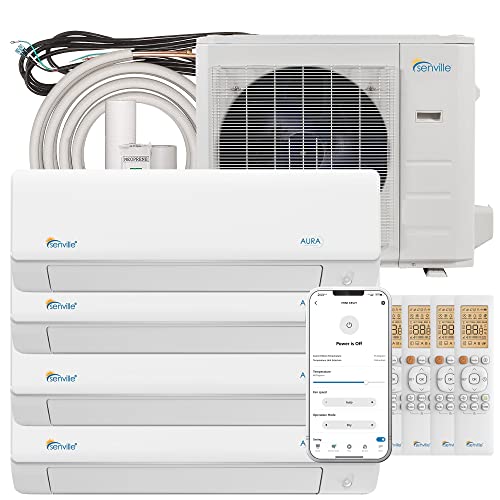
| Ductless Mini-Split | Single-zone and multi-zone systems can be certified; heat pump variants also qualify. | top-tier | Homes without ducts, room additions, zoning |
| Window Air Conditioner | Room units are certified against category-specific efficiency criteria. | entry-level | Single rooms, apartments, renters |
| Portable Air Conditioner | Certification applies to models that meet the program criteria for portable units. | mid-range | Temporary cooling, rooms without window support |
| Mini-Split Heat Pump | Dual-purpose cooling and heating models are certified using both cooling and heating metrics. | top-tier | Year-round comfort, efficient heating in mild climates |
Key Efficiency Metrics on an ENERGY STAR AC Label
Certification is only part of the picture. Two ENERGY STAR models can still differ in efficiency, so compare the underlying metrics before deciding. The three ratings below appear on most modern AC and heat pump listings.
SEER2
Seasonal Energy Efficiency Ratio 2 measures cooling efficiency across a simulated season. Higher values indicate a more efficient system within the same category. It is the primary cooling metric on current listings.
EER2
Energy Efficiency Ratio 2 measures efficiency at peak cooling conditions. It is especially relevant in hot climates where the unit runs near full capacity for extended periods.
HSPF2
Heating Seasonal Performance Factor 2 applies to heat pump models and reflects heating efficiency across a heating season. Compare it when the unit will handle winter heating as well as summer cooling.
A common mistake is treating the certification label as a guarantee of low energy use in every home. Certification is based on standardized testing, while real-world performance depends on correct sizing, duct condition, refrigerant charge, thermostat behavior, and maintenance. If you want to understand how efficiency ratings translate into real energy use, our guide to ENERGY STAR HVAC explains the broader system-level context.
How to Verify That a Model Is Actually ENERGY STAR Certified
Certification is model-specific, not brand-wide. A manufacturer may have certified models and non-certified models in the same product line. Before buying, confirm the exact model number.
Verification Checklist
- Locate the full model number on the product listing, packaging, or unit label.
- Search the official ENERGY STAR product database by brand and model number.
- Confirm that the certified listing matches the exact model you are purchasing, including any suffix codes.
- Check the certification date and ensure the listing is current for the product category.
- For central systems, verify that the outdoor unit and indoor coil are certified as a matched combination.
- Keep a copy of the certification listing with your purchase records for warranty and rebate purposes.
Important: Some retailers display an ENERGY STAR logo on a product page without confirming the specific model. Always cross-check the model number against the official certified product list. If the model number is not listed, treat the certification claim as unverified until confirmed.
Matching a Certified AC to Your Room and Capacity Needs
Certification does not replace sizing. A highly efficient unit that is too large will short-cycle, struggle to dehumidify, and may underperform a correctly sized standard unit. Start with a room-by-room capacity estimate, then filter for certified models within that capacity range.
For small rooms, certified window units are often the simplest path. Our guide to ENERGY STAR 6,000 BTU air conditioners covers the entry-level capacity range in detail. For room-by-room comparisons across larger spaces, the energy-efficient air conditioner for small room guide is a practical next step.
If you are cooling a single room without ductwork, a certified ductless system is often the most efficient option. The ENERGY STAR ductless mini-split guide explains how single-zone and multi-zone systems are certified and compared. For homes where heating also matters, the ENERGY STAR mini-split heat pump page covers dual-purpose models and their heating metrics.
ENERGY STAR Central AC and Window Units: What to Compare
Central air conditioners are certified as matched systems, meaning the outdoor condenser and indoor coil are tested together. When comparing central systems, confirm that the exact combination is listed, not just the outdoor unit. Installation quality also has a large effect on delivered efficiency; duct sealing, refrigerant charge, and airflow all influence performance after the unit is installed.
Window units are a more straightforward category. Certification is assigned to individual models, and the efficiency difference between a certified and non-certified unit in the same capacity class can be meaningful over years of seasonal use. Our energy-efficient window air conditioner guide compares certified window models by capacity and features.
If you are considering a heat pump rather than a cooling-only system, the ENERGY STAR window heat pump page explains how window-mounted heat pumps are certified and where they make sense.
Why Installation Determines Whether Certification Pays Off
A certified unit can only deliver its rated efficiency when it is installed correctly. For central and ductless systems, the most common efficiency losses come from undersized or leaky ducts, incorrect refrigerant charge, restricted airflow, and improper line-set length. For window and portable units, placement, window sealing, and direct sun exposure have a similar effect on delivered performance.
Before installation, confirm that the contractor will perform a room-by-room load calculation rather than relying on a rule-of-thumb estimate. After installation, ask for documented verification of refrigerant charge and airflow. These steps are not optional extras — they are what convert a certified rating into actual energy performance. If you are still comparing system types, the ducted vs ductless comparison is a useful starting point for deciding which installation approach fits your home.
Maintaining Certified Efficiency Over Time
Efficiency degrades when filters are clogged, coils are dirty, and refrigerant charge drifts. A simple seasonal routine preserves most of the rated performance:
Seasonal Maintenance Priorities
- Replace or clean filters according to the manufacturer's schedule, and more often during peak season.
- Keep outdoor condenser coils clear of debris and vegetation.
- Schedule a professional tune-up before the cooling season to verify refrigerant charge and airflow.
- Seal gaps around window units and check duct connections on central systems.
- Use a programmable or smart thermostat to avoid unnecessary runtime.
- Inspect drain lines to prevent water backup and humidity problems.
If you are weighing repair against replacement for an older system, our guide to the cost of an HVAC tune-up helps frame the maintenance side of the decision. For a broader comparison of system-level efficiency, the energy-efficient split system air conditioner page covers how split systems are evaluated.
ENERGY STAR AC Buying Checklist
Use this checklist during the research phase to move from a broad list of certified models to a shortlist that fits your home.
Before You Buy
- Estimate the required capacity for each room or zone before filtering by certification.
- Confirm the exact model number against the official ENERGY STAR certified product list.
- Compare SEER2 and EER2 across shortlisted models, and HSPF2 if the unit provides heating.
- Check whether the system is certified as a matched combination for central and ductless installations.
- Review the installation requirements: electrical circuit, line-set length, window or wall opening, and drainage.
- Ask the installer how they will verify refrigerant charge and airflow after installation.
- Keep the certification listing and model documentation with your warranty records.
Related Efficiency and System Guides
The pages below expand on specific product categories and system comparisons referenced throughout this guide. Each one is focused on a single decision point so you can research without jumping between unrelated topics.
How single-zone and multi-zone ductless systems are certified, compared, and installed.
Dual-purpose cooling and heating certification, HSPF2 comparisons, and climate considerations.
A broader look at certified mini-split categories and how they fit different homes.
Certified small-capacity units for single rooms, studios, and bedrooms.
Comparing certified window units by capacity, features, and installation needs.
Window-mounted heat pumps that cool and heat, and where they make practical sense.
How certification applies across full HVAC systems, not just individual AC units.
Split-system efficiency metrics, matching components, and installation considerations.
Frequently Asked Questions
What does ENERGY STAR qualified mean for an air conditioner?
An ENERGY STAR qualified air conditioner meets the efficiency requirements set by the U.S. Environmental Protection Agency. These models use less energy than standard units while delivering comparable cooling performance, and they are independently certified to meet the program criteria for their product category.
How do I verify that a specific AC model is ENERGY STAR certified?
Check the ENERGY STAR product database on the official program website and search by brand and model number. The certification label on the unit and the model number must match the certified listing. Always confirm the listing before purchase, especially for central systems where the outdoor unit and indoor coil must be certified as a matched combination.
Does an ENERGY STAR air conditioner always lower energy use in every home?
Certification reflects efficiency under standardized test conditions. Actual savings depend on correct sizing, duct quality, installation, thermostat settings, and maintenance. A certified unit that is oversized or poorly installed may not deliver its rated efficiency in practice.
Which AC types are eligible for ENERGY STAR certification?
Central air conditioners, ductless mini-split systems, window units, and portable air conditioners can all carry ENERGY STAR certification when they meet the program requirements for their product category. Heat pump variants are certified using both cooling and heating metrics.
What efficiency metrics should I compare on an ENERGY STAR AC label?
Compare SEER2 for cooling efficiency, EER2 for efficiency at peak conditions, and HSPF2 for heat pump heating performance. Higher ratings indicate greater efficiency within the same product category. A model that is certified but has a lower SEER2 than another certified model will generally use more energy for the same cooling output.
Do I still need to size a certified AC for my room?
Yes. Certification does not replace capacity sizing. An oversized unit will short-cycle, dehumidify poorly, and may underperform a correctly sized standard unit. Estimate the required capacity first, then filter certified models within that capacity range.
Ready to Compare Certified Models?
Use the checklist above to narrow your options, then review the recommended units below. Each product can be checked against the official ENERGY STAR listing using its model number before you decide.
VIEW RECOMMENDED UNITS