
Energy Star Window Air Conditioner with WiFi Control: The Complete Guide
Everything you need to know about smart, energy-efficient window cooling — from certification standards and WiFi features to sizing, installation, and choosing the right tier for your home.
START LEARNINGWhy this guide matters: A window air conditioner with WiFi control and Energy Star certification combines convenience with efficiency. You get remote operation through a smartphone app, voice assistant compatibility, and lower energy consumption than non-certified models. This guide walks you through every decision point so you can choose confidently.
What Is an Energy Star Window Air Conditioner with WiFi Control?
An Energy Star window air conditioner with WiFi control is a window-mounted cooling unit that meets the U.S. Environmental Protection Agency's strict energy efficiency criteria and includes built-in wireless connectivity. The WiFi module lets you control the unit through a manufacturer app, schedule cooling cycles, and integrate with smart home platforms such as Amazon Alexa or Google Assistant.
These units are designed for rooms where ductwork is impractical or where a central system would be oversized. They mount directly in a double-hung window frame, draw outside air for condenser cooling, and discharge cooled air directly into the room. The Energy Star label indicates the unit has passed third-party testing for energy performance, and the WiFi component adds remote management that traditional window units lack.
Key Benefits of Smart WiFi Window AC Units
Remote Operation
Turn the unit on before you arrive home, adjust the temperature from your office, or shut it off if you forget. WiFi control eliminates the need to be physically present to manage cooling.
Energy Star Efficiency
Certified models use less electricity than standard window units. Combined with smart scheduling, you avoid cooling empty rooms and reduce wasted energy throughout the season.
Voice Assistant Integration
Many WiFi-enabled window ACs work with Alexa and Google Assistant, letting you adjust settings hands-free. This is especially useful in kitchens, bedrooms, and home offices.
Smart Scheduling and Geofencing
Create cooling schedules based on your daily routine. Some apps support geofencing, which automatically adjusts the AC when you leave or approach home.
Energy Monitoring
Several apps display real-time energy usage, helping you understand consumption patterns and make informed adjustments to reduce electricity use.
Easy Installation
Window units install without ductwork or professional HVAC service. Most models fit standard double-hung windows and include mounting hardware for a secure fit.
How Energy Star Certification and WiFi Control Work Together
Energy Star certification and WiFi control address two different aspects of window AC ownership: efficiency and convenience. Energy Star focuses on how much cooling the unit delivers per unit of electricity consumed. The certification requires models to meet minimum efficiency ratios that are periodically updated by the EPA. WiFi control focuses on how you interact with the unit — remote access, scheduling, and automation.
When combined, these features reinforce each other. A highly efficient unit that runs unnecessarily still wastes energy. WiFi scheduling prevents that by ensuring the AC operates only when needed. Similarly, a smart-controlled unit with poor efficiency still draws excessive power. Energy Star certification ensures the baseline efficiency is solid, while WiFi adds operational intelligence.
For a broader look at certified cooling options, explore the full range of Energy Star qualified air conditioners and see how window models compare with other form factors.
Essential Features to Look For
| Feature | Why It Matters | What to Look For |
|---|---|---|
| Energy Star Certification | Confirms the unit meets EPA efficiency standards | Look for the Energy Star label and check the CEER or EER rating |
| WiFi Connectivity | Enables remote control and scheduling | Built-in WiFi (not just a remote); companion app for iOS and Android |
| BTU Capacity | Determines cooling coverage for your room size | Match BTU to square footage; account for sun exposure and occupancy |
| Noise Level | Affects comfort in bedrooms and living spaces | Look for units rated below 55 dB for quiet operation |
| Smart Home Compatibility | Adds voice control and automation | Alexa, Google Assistant, and IFTTT support where available |
| Remote and App Control | Provides flexibility beyond WiFi alone | Include a physical remote alongside the app for backup control |
| Filter Type | Affects air quality and maintenance frequency | Washable mesh filter; some models include antimicrobial treatment |
| Installation Kit | Ensures secure fit and proper sealing | Window bracket, side panels, and insulation foam included |
How to Size an Energy Star Window AC with WiFi
Correct sizing is the single most important factor in window AC performance. An undersized unit runs continuously without reaching the set temperature. An oversized unit cools too quickly, cycles on and off frequently, and fails to remove humidity effectively. Both scenarios waste energy and reduce comfort.
The primary sizing metric is BTU (British Thermal Units) per hour. As a general guide:
| Room Size | BTU Range | Typical Use Case |
|---|---|---|
| Up to 150 sq ft | 5,000 – 6,000 BTU | Bedrooms, small offices, studio apartments |
| 150 – 250 sq ft | 8,000 – 10,000 BTU | Living rooms, medium bedrooms, home offices |
| 250 – 400 sq ft | 12,000 – 14,000 BTU | Large living areas, open-plan spaces, master bedrooms |
| 400 – 550 sq ft | 15,000 – 18,000 BTU | Large rooms, combined living-dining areas |
Adjust upward if the room receives direct sunlight, has high ceilings, or is regularly occupied by multiple people. Adjust downward if the room is heavily shaded or in a mild climate. For a deeper breakdown, see the guide on Energy Star rated window air conditioners and how they perform across different room sizes.
Market Tiers: Entry-Level, Mid-Range, and Premium
Energy Star window ACs with WiFi span several market tiers. Understanding these tiers helps you align features with your priorities without overcommitting on capabilities you won't use.
Entry-Level Tier
Entry-level models cover the essentials: Energy Star certification, basic WiFi app control, and standard cooling features. These units typically offer a fixed fan speed or a small number of cooling modes. They are well-suited for bedrooms and guest rooms where advanced automation is unnecessary. Build quality is solid but uses standard materials. If you need reliable smart cooling for a single room, this tier delivers the core experience.
Mid-Range Tier
Mid-range models add refinements that improve daily use. You'll find quieter operation, more granular fan speed control, better app interfaces with scheduling and energy monitoring, and broader smart home compatibility. Some mid-range units include dehumidification modes, auto-restart after power outages, and improved filtration. These are the balanced choice for most households — feature-rich for the class without stepping into flagship territory.
Premium Tier
Premium Energy Star window ACs with WiFi focus on the best available comfort and control. Features may include variable-speed compressors for smoother temperature regulation, near-silent operation, advanced air filtration, dual-zone or multi-directional airflow, and deep integration with smart home ecosystems. Build quality is heavier-duty, with reinforced chassis and premium materials. These units are a long-term investment for primary living spaces where comfort and quiet operation matter most.
Advantages of WiFi Window ACs
- Remote control from anywhere via smartphone
- Smart scheduling reduces wasted cooling
- Voice assistant integration for hands-free use
- Energy monitoring helps identify savings opportunities
- No ductwork or professional installation required
- Energy Star certification ensures baseline efficiency
Limitations to Consider
- WiFi setup can be finicky on some models
- App quality varies by manufacturer
- Window units block part of the window view
- Cooling is limited to the room where installed
- Some units are heavier and require two-person installation
- Smart features depend on a stable home network
Installation and Placement Tips
Proper installation affects both cooling performance and energy efficiency. A poorly sealed window unit leaks cooled air, draws in hot outdoor air, and forces the compressor to work harder. Follow these guidelines for a solid installation:
- Choose the right window: Double-hung windows work best. Measure the window opening and compare with the unit's dimensions before installation.
- Use the mounting bracket: Most units include a support bracket. Install it according to the manufacturer's instructions to prevent sagging and vibration.
- Seal the gaps: Use the included insulation foam and side panels to close gaps around the unit. This prevents hot air infiltration and insect entry.
- Slight downward tilt: Tilt the unit slightly toward the outside so condensation drains properly and doesn't leak into the room.
- Check the electrical circuit: Confirm the outlet and circuit breaker can handle the unit's amperage. Most window ACs require a dedicated circuit.
- Position for airflow: Avoid placing furniture directly in front of the unit. Clear airflow improves cooling distribution and efficiency.
For units that also provide heating, see the guide on Energy Star window air conditioners with heat for additional installation considerations.
Maintenance for Long-Term Efficiency
An Energy Star unit only delivers its rated efficiency when properly maintained. Neglected filters and dirty coils force the compressor to work harder, increasing energy use and reducing cooling output.
- Clean or replace the air filter every two to four weeks during peak season. Most window ACs use washable mesh filters. Rinse with warm water and let dry completely before reinstalling.
- Inspect and clean the evaporator and condenser coils annually. Dust and debris reduce heat transfer. Use a soft brush or coil cleaner according to the manufacturer's guidance.
- Check the drain path. Ensure condensation drains freely. A clogged drain can cause water to back up into the unit or leak into the room.
- Clean the exterior grille and fan blades. Outdoor debris such as leaves and pollen can obstruct airflow.
- Store the unit properly during the off-season. If you remove the AC in winter, clean it thoroughly and store it covered to prevent dust accumulation.
How to Choose the Right Model for Your Home
Before selecting a specific unit, answer these questions to narrow your options:
- What is the square footage of the room? Use the BTU table above as a starting point, then adjust for sun exposure, ceiling height, and occupancy.
- Do you need heating as well? Some window ACs include a heat pump function. See the Energy Star window heat pump guide for dual-purpose options.
- How important is quiet operation? Bedroom installations benefit from units rated below 55 dB. Premium tiers generally offer the quietest operation.
- Which smart home platform do you use? Confirm Alexa or Google Assistant compatibility if voice control is a priority.
- Do you need a physical remote? Some models rely entirely on the app. If you prefer a handheld remote, check the package contents. The guide on Energy Star window ACs with remote and WiFi control covers models that include both.
- What is your window type? Double-hung windows are the most compatible. Casement and slider windows may require different mounting solutions.
Explore Energy Star Window ACs with WiFi Control
Browse our curated selection of smart, certified window air conditioners. Compare features, read specifications, and find the model that fits your room and your routine.
VIEW RECOMMENDED MODELSWindow AC vs Other Cooling Options
Window units are one option among several. Here's how they compare with other common cooling solutions:
| Cooling Option | Best For | Energy Star with WiFi? | Installation |
|---|---|---|---|
| Window AC with WiFi | Single rooms, apartments, bedrooms | Yes — widely available | DIY, no ductwork |
| Portable AC | Renters, rooms without suitable windows | Yes — see Energy Star portable air conditioners | DIY, requires vent hose |
| Mini-Split Heat Pump | Whole-home or multi-zone cooling | Yes — see Energy Star mini-split heat pumps | Professional installation |
| Central AC | Whole-home cooling with ductwork | Yes — broader energy-efficient AC options | Professional installation |
| Through-the-Wall AC | Rooms with wall sleeves | Yes — see Energy Star through-the-wall ACs | Professional or DIY |
Frequently Asked Questions
What does Energy Star certification mean for a window air conditioner?
Energy Star certification means the window air conditioner meets strict energy efficiency guidelines set by the U.S. Environmental Protection Agency. These units typically use significantly less energy than standard models, helping reduce electricity consumption while delivering reliable cooling performance.
How does WiFi control improve a window air conditioner?
WiFi control allows you to operate your window air conditioner remotely through a smartphone app. You can turn the unit on or off, adjust temperature settings, create schedules, and monitor energy usage from anywhere, making it more convenient and efficient.
What size Energy Star window AC with WiFi do I need for my room?
Room size determines the required BTU capacity. A 5,000 to 6,000 BTU unit suits rooms up to 150 square feet, while 8,000 to 10,000 BTU handles 150 to 250 square feet. For larger spaces up to 400 square feet, choose a 12,000 to 14,000 BTU model. Always account for sunlight, occupancy, and ceiling height.
Can I use a WiFi window air conditioner with smart home systems?
Many WiFi-enabled window air conditioners integrate with popular smart home platforms like Amazon Alexa and Google Assistant. This allows voice control and automation routines, such as scheduling cooling based on your daily habits or syncing with other smart devices.
Does WiFi control affect the energy efficiency of a window AC?
WiFi control itself has minimal impact on energy efficiency. In fact, smart scheduling and remote monitoring can help you avoid unnecessary cooling, potentially reducing overall energy consumption. Energy Star certified models with WiFi combine connectivity with high efficiency for optimal performance.
What is the difference between EER and CEER ratings?
EER (Energy Efficiency Ratio) measures cooling output divided by power input at a specific test condition. CEER (Combined Energy Efficiency Ratio) is a seasonal metric that accounts for standby power and part-load performance. Energy Star window ACs list CEER on the label, which provides a more realistic view of seasonal efficiency.
Related Guides and Resources
Recommended Energy Star Window Air Conditioners with WiFi Control
⚠️ AFFILIATE DISCLOSURE: This website contains affiliate links. As an Amazon Associate, we earn from qualifying purchases. If you make a purchase through these links, we may receive a small commission at no additional cost to you. Read our full affiliate policy.

Midea 6,000 BTU U Shaped Window Air Conditioner, Cools up to 250 Sq Ft | Ultra Quiet U-Shaped Design, Inverter Control, Open Window Flexibility, Alexa/Google Assistant, 37% Energy Savings, 2026 New
Check price on Amazon
Midea 10,000 BTU U Shaped Window Air Conditioner, Cools up to 450 Sq Ft | Ultra Quiet U-Shaped Design, Inverter Control, Open Window Flexibility, Alexa/Google Assistant, 37% Energy Savings, 2026 New
Check price on Amazon
ROVSUN 8000 BTU Inverter Window Air Conditioner with WiFi, Energy-Star Window AC Unit with Remote & App Control, Ultra Quiet Design & Easy Install Kit, Work with Alexa/Google Assistant, 115V/60Hz
Check price on Amazon
Frigidaire Gallery 8,000 BTU Smart Inverter Window Air Conditioner with Wi-Fi, Energy Star Most Efficient Certification & Indoor Air Quality Monitoring, Cools Up to 350 Sq. Ft., Ultra Quiet, White
Check price on Amazon
DELLA 6000 BTU Energy Saving Window Air Conditioner, Cools Up to 250 Sq. Ft | WIFI Smart Controls, GEO Location, Work with Alexa, Easy Install,Reusable Filter,Remote, Dehumidifier, Fan
Check price on Amazon
LG 10,000 BTU Smart Window Air Conditioner, 115V, Cools 450 Sq. Ft. for Bedroom, Living Room, Apartment, Dual Inverter, Quiet Operation, Energy Star, works with LG ThinQ, Amazon Alexa and Hey Google
Check price on Amazon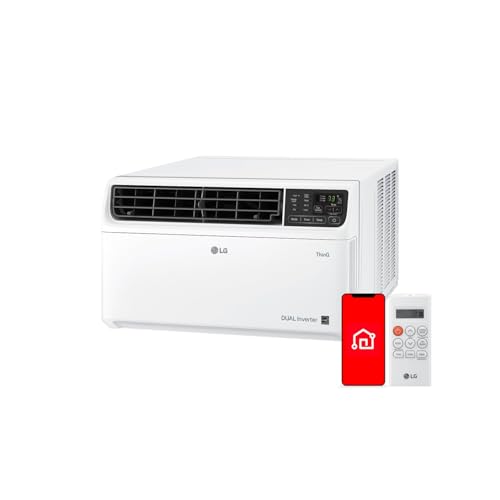
LG 18,000 BTU Window AC, Dual Inverter, WiFi & Remote, Voice Control | 230V, Dual Inverter, Energy Star, Ultra Quiet Operation, LG ThinQ, Alexa and Google Assistant Compatible, up to 1000 Sq.Ft.
Check price on AmazonDisclaimer
Some of the content on this site uses AI assistance. Information is provided for educational purposes only. We are not responsible for any losses resulting from the use of this information. By using this site, you waive any right to bring legal claims against us arising from your use of the information provided. If you do not agree, please do not use this site. Read the full disclaimer.