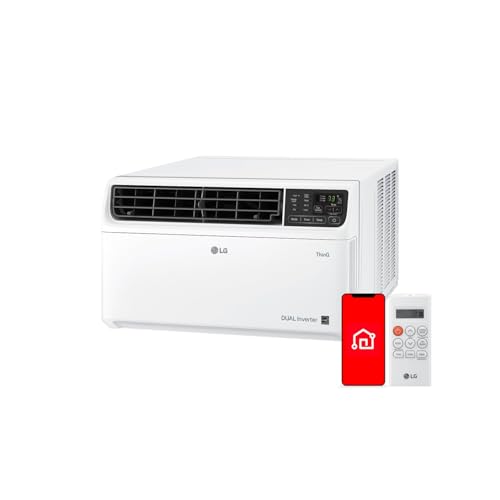
ENERGY STAR Window Air Conditioner with WiFi: Smart Cooling Made Simple
A complete research guide covering smart features, efficiency ratings, sizing, installation, and how to choose a connected window AC that fits your home and lifestyle.
Window air conditioners have evolved well beyond the basic dial-and-vent units of the past. Today, an ENERGY STAR certified window AC with WiFi combines verified efficiency with app-based control, voice assistant compatibility, and scheduling features. If you are researching this category before making a purchase, this guide walks you through everything that matters: how the efficiency certification works, what WiFi control actually adds to daily use, how to size a unit for your room, and which features separate entry-level models from top-tier ones.
The appeal is straightforward. A window unit installs in a standard double-hung window without ductwork or professional labor, while the WiFi module lets you adjust settings from your phone, set schedules, and monitor energy use. The ENERGY STAR label adds a layer of confidence that the unit meets federal efficiency guidelines. Together, these features make connected window ACs a practical option for bedrooms, home offices, apartments, and rooms that central systems struggle to reach.
Why this combination matters: A WiFi window AC without efficiency certification can still be convenient, but it may quietly consume more energy over a full cooling season. Pairing smart control with ENERGY STAR certification means you get convenience and verified efficiency in the same unit — a combination that pays off across years of seasonal use.
What ENERGY STAR Certification Means for a Window AC
ENERGY STAR is a voluntary labeling program run by the U.S. Environmental Protection Agency. For room air conditioners, certified models must meet efficiency thresholds set by the DOE, measured through the Combined Energy Efficiency Ratio (CEER). The CEER blends cooling efficiency across a range of operating conditions rather than a single test point, which makes it a more realistic indicator of seasonal performance than older single-metric ratings.
In practical terms, an ENERGY STAR window unit uses noticeably less electricity than a baseline model of the same cooling capacity. The difference is most visible in rooms where the AC runs for many hours per day during summer. Certification also typically signals that the unit includes features like programmable timers, eco modes, or improved insulation around the chassis — details that support efficiency in everyday use rather than only on a test bench.
It is worth noting that ENERGY STAR requirements are periodically updated. When comparing models, check that the certification reflects current program criteria rather than an older standard. Reputable listings display the certification clearly, and the ENERGY STAR product database is a reliable cross-reference if you want to verify a specific model number.
How WiFi Control Changes Daily Use
A WiFi-enabled window AC connects to your home network and pairs with a manufacturer app. That connection unlocks several capabilities that a remote-controlled unit cannot match. The most useful is remote adjustment: you can cool a bedroom before you arrive home, or turn the unit off if you forgot. Scheduling is the second major benefit — you can program cooling windows that match your routine rather than relying on a simple on/off timer.
Many connected models also support voice assistants, energy usage dashboards, and geofencing. Geofencing uses your phone's location to switch the unit on or off automatically when you leave or return. Energy dashboards show estimated consumption by day or month, which helps you spot inefficient habits. Some apps add filter-cleaning reminders, diagnostic alerts, and firmware updates that improve performance over time.
A practical consideration: WiFi control depends on a stable 2.4 GHz network in most cases. If your router broadcasts only on 5 GHz or the window is far from the access point, setup can be frustrating. Before buying, confirm the unit's network requirements and check that your router supports them. Also consider whether the app is available for your phone platform and whether it requires an account.
Key Features to Compare Across Models
Cooling Capacity (BTU)
Match capacity to room size, ceiling height, sun exposure, and occupant load. Oversizing causes short cycling and uneven humidity control.
CEER Efficiency Rating
Higher CEER values indicate better seasonal efficiency. Compare within the same capacity class for a fair assessment.
App & Voice Control
Check which assistants are supported, whether scheduling and geofencing are included, and whether the app receives regular updates.
Noise Level
Decibel ratings vary widely. Bedroom installations benefit from lower noise, especially on higher fan speeds.
Installation Fit
Confirm window width and height range, sash type compatibility, and whether a mounting kit or support bracket is included.
Additional Modes
Fan-only, dry/dehumidify, eco, sleep, and auto modes add flexibility. Some models include a washable or antimicrobial filter.
Sizing a Window AC for Your Room
Capacity is the single most important specification to get right. A unit that is too small runs continuously without reaching the set temperature. A unit that is too large cools quickly but short-cycles, which leaves the room feeling clammy and puts extra wear on the compressor. The starting point is square footage, then adjustments for ceiling height, window area, sun exposure, kitchen heat, and the number of occupants.
| Room Size | Typical Capacity Range | Best For |
|---|---|---|
| Up to 150 sq ft | 5,000 – 6,000 BTU | Small bedrooms, dorm rooms, tiny offices |
| 150 – 250 sq ft | 8,000 – 10,000 BTU | Standard bedrooms, home offices, small living areas |
| 250 – 400 sq ft | 12,000 – 14,000 BTU | Large bedrooms, studios, open-plan living rooms |
| 400 – 550 sq ft | 15,000 – 18,000 BTU | Large living rooms, lofts, combined kitchen-living spaces |
Treat the table as a starting point. A south-facing room with large windows may need a step up in capacity, while a shaded, well-insulated room may perform well with the lower end of the range. If you are cooling a space that is part of a larger home, consider whether a single window unit is the right approach or whether a ductless system would serve the area better. Our guide to ducted mini-split systems explains when a more permanent solution makes sense.
Installation Considerations
Window AC installation is a DIY-friendly project for most homeowners, but a few details determine whether the unit is safe and efficient. First, verify the window type: most window units fit double-hung windows, while casement and slider windows usually require a specific bracket or a different product category. Second, check the weight of the unit and whether your window frame and sill can support it; larger capacity units often need an outdoor support bracket.
Sealing the gap around the unit matters more than many buyers expect. The accordion side panels included with most units should be fitted tightly, and foam insulation can close remaining gaps. A poorly sealed installation lets hot air in and undermines the efficiency gains of an ENERGY STAR model. If you are unsure about the process, our walkthrough on how to install an air conditioner in a window covers the step-by-step sequence.
For renters or anyone who cannot modify a window, a portable unit may be a better fit. Our guide to an easy-to-use portable air conditioner covers that alternative. If you are comparing window units more broadly, the energy-efficient window air conditioner guide provides additional context on efficiency-focused models.
Where Connected Window ACs Fit Best
WiFi window units are strongest in specific use cases. A bedroom benefits from scheduling and pre-cooling before bedtime. A home office benefits from quick remote adjustments during the workday. An apartment without ductwork benefits from a solution that installs without structural changes. A guest room benefits from remote control so the unit is not running unnecessarily between visits.
They are less suitable for whole-home cooling or for rooms where the window configuration does not support a standard unit. In those cases, a ductless mini-split or a central system is the more appropriate path. The energy-efficient wall-mounted air conditioner guide covers a related category if you are evaluating wall-mounted options.
Ready to Compare Connected Window AC Models?
Review the recommended units below to compare capacity, efficiency ratings, smart features, and installation requirements side by side.
Common Mistakes to Avoid
- Buying by brand alone. Efficiency ratings and capacity matter more than brand reputation for a specific room.
- Ignoring the window type. Confirm compatibility before ordering; returns on heavy units are inconvenient.
- Skipping the seal. Gaps around the unit waste the efficiency you paid for.
- Oversizing. A larger unit is not automatically better; short cycling reduces comfort and increases wear.
- Assuming WiFi works everywhere. Verify your router band and signal strength at the window location.
- Neglecting filter cleaning. A clogged filter reduces airflow and efficiency regardless of the certification.
Maintenance for Long-Term Efficiency
A connected window AC still requires basic upkeep. Clean or replace the filter every two to four weeks during heavy use. Check the exterior coils at the start of each cooling season and remove debris. Confirm that the unit remains level and that the mounting hardware has not loosened. Use the app's filter reminder if it has one, and review the energy dashboard monthly to catch unusual consumption patterns early.
At the end of the season, unplug the unit, clean it thoroughly, and cover it or remove it depending on your climate and window setup. Proper offseason storage extends the life of the compressor and the electronics, including the WiFi module.
Frequently Asked Questions
Do ENERGY STAR window ACs with WiFi really use less electricity?
Can I control the unit when I am away from home?
Does WiFi control work with 5 GHz networks?
How often should I clean the filter?
Is a WiFi window AC a good choice for a bedroom?
What if my window is not a double-hung type?
Final Checklist Before You Choose
- Measure the room and confirm the capacity range.
- Verify the window type and dimensions.
- Check the CEER rating and current ENERGY STAR status.
- Confirm the app platform, network band, and voice assistant support.
- Review noise ratings if the unit is for a bedroom.
- Plan for sealing and, if needed, an outdoor support bracket.
- Set a filter-cleaning routine from day one.