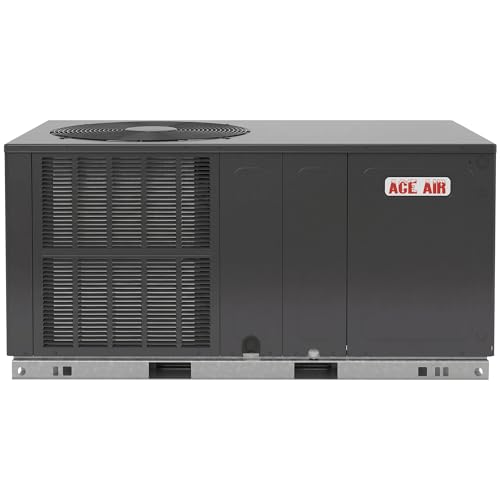
Four Ton Air Conditioning Unit: The Complete Buyer's Guide
Everything you need to know about 4-ton (48,000 BTU) air conditioners — sizing, efficiency, installation, maintenance, and which tier fits your large home best.
START LEARNINGQuick Summary: A four ton air conditioning unit delivers 48,000 BTU of cooling — typically the right capacity for homes around 2,000 to 2,500 square feet, depending on climate, insulation, and layout.
This guide explains how to confirm whether a 4-ton system is the correct match for your space, what efficiency ratings matter, and how to plan for installation and long-term upkeep.
What Is a Four Ton Air Conditioning Unit?
A four ton air conditioning unit is a central cooling system rated at 48,000 BTU per hour (1 ton of cooling equals 12,000 BTU). It is one of the most common capacities for larger single-family homes in the United States, sitting between the popular 3-ton and 5-ton classes.
Choosing the right capacity is critical. An undersized unit struggles to keep up during peak heat, while an oversized system cools too quickly and leaves humidity behind. A properly sized 4-ton system strikes a balance for homes in the mid-to-large range when a professional load calculation supports the decision.
Four Ton AC Sizing: Is It Right for Your Home?
Use the table below as a starting reference only. A professional Manual J load calculation is the reliable way to confirm capacity, because ceiling height, window area, insulation, local climate, and occupancy all influence the final number.
| Home Size (sq ft) | Typical Capacity Range | Notes |
|---|---|---|
| 1,200 – 1,500 | 2.0 – 2.5 tons | Usually a smaller capacity is sufficient |
| 1,500 – 2,000 | 2.5 – 3.0 tons | 3-ton is often the sweet spot |
| 2,000 – 2,500 | 3.5 – 4.0 tons | Four ton fits many homes in this range |
| 2,500 – 3,000 | 4.0 – 5.0 tons | 4-ton may fit if insulation and climate are favorable |
| 3,000+ | 5.0+ tons or zoning | Consider multi-zone or larger capacity systems |
If your home is near the edge of the 4-ton range, ask your contractor to run a room-by-room load calculation rather than relying on square footage alone. For additional context on whole-home installation planning, see whole-house air conditioning installation.
Efficiency Ratings That Matter for a 4-Ton Unit
Because a four ton unit moves a large volume of air, efficiency differences translate into meaningful long-term energy use. Focus on these ratings:
- SEER2: The current DOE efficiency standard. Higher SEER2 means lower energy consumption over a cooling season. For a large system, stepping up to a higher tier can pay off over the unit's lifespan.
- EER2: Measures efficiency at peak conditions. Important in hot climates where the system runs hard on the hottest days.
- HSPF2: Relevant if you choose a heat pump version of a 4-ton system for year-round comfort.
- ENERGY STAR certification: A reliable shortcut for identifying systems that meet above-baseline efficiency thresholds.
If efficiency is a top priority, compare options in the high SEER air conditioner category before finalizing your model selection.
Advantages and Considerations of a 4-Ton System
Strengths
- Comfortable cooling for mid-to-large homes when correctly sized
- Wide product availability across entry-level, mid-range, and premium tiers
- Compatible with standard ducted central air layouts
- Heat pump variants available for combined heating and cooling
- Strong match for multi-room and open-plan layouts
Considerations
- Requires adequate ductwork and electrical capacity
- Oversizing can cause short cycling and humidity issues
- Installation complexity is higher than smaller window or mini-split units
- Professional load calculation is essential before purchase
- Outdoor unit placement and clearances need planning
Installation Planning for a Four Ton Unit
A four ton air conditioning unit is a substantial piece of equipment. Before purchase, confirm the following with a licensed HVAC contractor:
- Electrical service: Verify your panel can support the system's amperage requirements.
- Ductwork condition: Leaky or undersized ducts reduce efficiency and comfort. Consider duct inspection or sealing as part of the project.
- Outdoor placement: The condenser needs clearance for airflow and a stable pad.
- Line set and refrigerant: The installer must follow current EPA refrigerant handling rules.
- Permits: Many jurisdictions require a permit for central AC installation.
For a broader view of project scope and planning, explore central air conditioning system installation and HVAC and ductwork installation.
Four Ton AC Tiers: How Models Differ
Rather than comparing models by numerical figures, use the tier system below to understand relative positioning in the market. This classification stays consistent across the site.
| Tier | Typical Characteristics | Best For |
|---|---|---|
| Entry-Level | Single-stage compressor, standard efficiency, solid build | Straightforward replacements and essential cooling needs |
| Mid-Range | Two-stage or variable-speed options, improved efficiency, quieter operation | Homeowners wanting balanced comfort and efficiency |
| Premium | High-efficiency variable-speed compressors, advanced controls, premium materials | Long-term investment, maximum comfort, and quieter performance |
| High-End Tier | Top-tier efficiency, smart features, enhanced humidity control | Large homes prioritizing efficiency and smart-home integration |
Tier selection should follow the load calculation, not precede it. A well-specified mid-range unit correctly installed often outperforms a premium unit that is oversized or poorly matched to the ductwork.
Maintenance Tips for Long-Term Performance
- Replace or clean filters regularly — monthly during peak season is a safe baseline.
- Schedule annual professional service — coil cleaning, refrigerant charge verification, and electrical checks.
- Keep the outdoor unit clear — remove debris and maintain recommended clearance.
- Inspect ductwork — sealed ducts preserve efficiency and comfort.
- Monitor thermostat behavior — unusual cycling can signal sizing or maintenance issues.
Frequently Asked Questions
How many square feet does a four ton air conditioner cool?
As a general reference, a 4-ton unit is often associated with homes around 2,000 to 2,500 square feet. The accurate answer depends on a professional load calculation that accounts for insulation, windows, ceiling height, and climate.
Is a 4-ton AC too big for my house?
If your home is well under 2,000 square feet or has strong insulation and shade, a 4-ton system may be oversized. Oversizing causes short cycling, uneven cooling, and higher humidity. Always confirm with a Manual J load calculation.
What SEER2 rating should I look for in a 4-ton unit?
Meet or exceed the current DOE minimum for your region, and consider stepping up a tier if you plan to stay in the home long term. Higher SEER2 models reduce energy use over the cooling season, which matters more on a large system.
Can a four ton unit work with a heat pump setup?
Yes. Four ton heat pump systems are available and provide both heating and cooling. Review efficiency ratings for both seasons (SEER2 and HSPF2) if year-round performance matters to you.
How long does installation take?
Replacement installations often take one to two days, while new installations with ductwork can take longer. Your contractor can provide a timeline after assessing your home.
Ready to Compare Four Ton Air Conditioning Units?
Browse recommended models below, then confirm sizing with a licensed HVAC professional before purchase.
VIEW RECOMMENDED MODELS