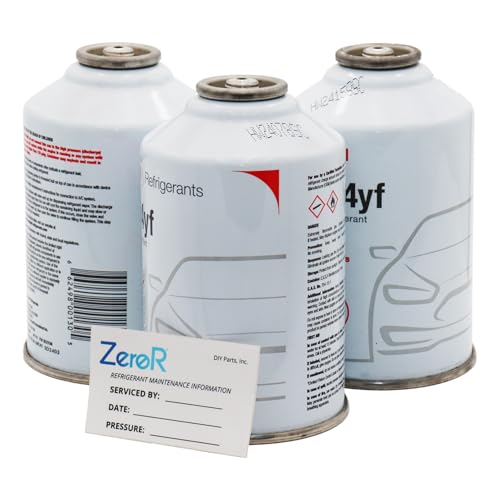
Freon 1234yf: The Eco-Friendly Refrigerant Explained
Discover why R-1234yf is becoming the standard for modern air conditioning and refrigeration systems. Learn about its environmental benefits, performance characteristics, safety profile, and compatibility with today's AC units.
Quick Overview: Freon 1234yf (also known as R-1234yf) is a hydrofluoroolefin (HFO) refrigerant with a Global Warming Potential (GWP) of less than 1. It was developed as a direct replacement for R-134a in automotive and HVAC applications, offering dramatically lower environmental impact while maintaining comparable cooling performance.
What Is Freon 1234yf?
Freon 1234yf is a synthetic refrigerant belonging to the hydrofluoroolefin (HFO) chemical family. It was jointly developed by major chemical manufacturers as a response to increasingly strict environmental regulations targeting high-GWP refrigerants. The chemical formula is C3H2F4, and it is classified as a mildly flammable (A2L) refrigerant under ASHRAE safety standards.
Unlike older refrigerants such as R-134a (GWP of 1,430) or R-410A (GWP of 2,088), Freon 1234yf has a GWP of less than 1, meaning its contribution to global warming is negligible compared to legacy refrigerants. It is designed to be a near drop-in replacement for R-134a in many systems, though proper system adjustments and safety considerations are required.
The refrigerant is primarily used in automotive air conditioning systems, but its adoption is expanding into commercial and residential HVAC applications, particularly in regions with strict refrigerant regulations such as the European Union and parts of North America. As global regulations phase down HFC refrigerants, Freon 1234yf is positioned as a long-term sustainable solution.
Key Properties and Specifications
Understanding the physical and thermodynamic properties of Freon 1234yf helps technicians and consumers make informed decisions about system compatibility and performance expectations.
| Property | Freon 1234yf (R-1234yf) | R-134a (Reference) |
|---|---|---|
| Chemical Class | Hydrofluoroolefin (HFO) | Hydrofluorocarbon (HFC) |
| Global Warming Potential (GWP) | < 1 | 1,430 |
| Ozone Depletion Potential (ODP) | 0 | 0 |
| ASHRAE Safety Classification | A2L (Mildly Flammable) | A1 (Non-Flammable) |
| Boiling Point (at 1 atm) | -29.4°C (-20.9°F) | -26.1°C (-14.9°F) |
| Critical Temperature | 94.7°C (202.5°F) | 101.1°C (214°F) |
| Critical Pressure | 3.38 MPa | 4.06 MPa |
| Lubricant Compatibility | POE / PAG oils | POE / PAG oils |
| Typical System Operating Pressure | Slightly higher than R-134a | Baseline |
These properties indicate that Freon 1234yf operates at similar pressure ranges to R-134a, making it a practical alternative in systems designed for that refrigerant. However, the mild flammability classification means that system design, installation, and servicing must account for additional safety measures.
Environmental Benefits of Freon 1234yf
The primary driver behind the adoption of Freon 1234yf is its environmental profile. The refrigerant was specifically engineered to address the climate impact of traditional HFC refrigerants.
Dramatically Lower Global Warming Potential
With a GWP of less than 1, Freon 1234yf has approximately 1/1,430th the climate impact of R-134a and 1/2,088th the impact of R-410A (per unit mass emitted). This means that even in the event of a complete system charge release, the environmental impact is orders of magnitude lower than legacy refrigerants.
Zero Ozone Depletion Potential
Like its HFC predecessors, Freon 1234yf has an ODP of zero, meaning it does not contribute to stratospheric ozone depletion. This is a baseline requirement for all modern refrigerants.
Regulatory Compliance
Freon 1234yf helps manufacturers and system owners comply with regulations such as the EU F-Gas Regulation, the US AIM Act, and the Kigali Amendment to the Montreal Protocol. These regulations mandate phasedown schedules for high-GWP refrigerants, and R-1234yf is one of the primary compliant solutions for many applications.
Atmospheric Lifetime
The atmospheric lifetime of Freon 1234yf is approximately 11 days, compared to 14 years for R-134a. This short lifetime means that any emitted refrigerant decomposes relatively quickly in the atmosphere, further reducing its long-term climate impact.
Performance and Energy Efficiency
While Freon 1234yf excels environmentally, its performance characteristics are also competitive, though there are some trade-offs to consider.
Cooling Capacity
Freon 1234yf has a volumetric cooling capacity that is slightly lower than R-134a (approximately 4-8% lower depending on operating conditions). This means that a system designed for R-134a may need minor adjustments—such as a slightly larger expansion valve or adjusted charge—to achieve equivalent cooling output when retrofitted with R-1234yf.
Energy Efficiency
In optimized systems, the energy efficiency of Freon 1234yf is comparable to R-134a. Some studies indicate a slight efficiency penalty (1-3%) in certain operating conditions, while others show near-parity or even marginal improvements when system components are specifically optimized for the new refrigerant.
System Pressure
Operating pressures are similar to R-134a, though slightly higher in some conditions. This means that most system components (compressors, condensers, evaporators) can handle the pressure without major redesign, though manufacturers typically validate components for the specific refrigerant.
Lubricant Compatibility
Freon 1234yf is compatible with polyolester (POE) and polyalkylene glycol (PAG) lubricants, the same lubricant families used with R-134a. This simplifies retrofitting and reduces the need for system flushing in many cases.
Safety Considerations and Handling
Freon 1234yf is classified as A2L by ASHRAE, meaning it is mildly flammable. This is a significant change from the A1 (non-flammable) classification of R-134a and requires attention to proper handling and system design.
Flammability Characteristics
The lower flammability limit (LFL) of Freon 1234yf is approximately 6.2% by volume in air, and the upper flammability limit (UFL) is approximately 12.3%. The minimum ignition energy is relatively high, and the burning velocity is low compared to more flammable substances like propane. This means that ignition requires a specific concentration and ignition source, making it safer than many other flammable refrigerants.
Handling Best Practices
- Use only equipment rated for A2L refrigerants (recovery machines, vacuum pumps, leak detectors).
- Ensure proper ventilation in service areas to prevent accumulation of refrigerant vapor.
- Avoid open flames, sparks, and other ignition sources in areas where refrigerant may be present.
- Wear appropriate personal protective equipment (gloves, safety glasses) when handling refrigerant.
- Follow manufacturer-specific procedures for charging, recovery, and system evacuation.
- Store refrigerant cylinders in well-ventilated areas away from heat sources and oxidizers.
System Design Requirements
Systems using Freon 1234yf must incorporate design features to mitigate flammability risk. These may include:
- Refrigerant detection sensors that trigger alarms or system shutdown.
- Ventilation systems to disperse leaked refrigerant.
- Electrical components rated for hazardous locations or isolated from refrigerant zones.
- Charge limits based on room volume and occupancy.
- Proper labeling and warning signage.
Toxicity
Freon 1234yf has low acute toxicity, similar to R-134a. However, as with all refrigerants, inhalation of high concentrations can cause dizziness, headache, or asphyxiation in poorly ventilated spaces. Proper handling procedures and ventilation are essential.
Advantages and Disadvantages
✅ Advantages
- Extremely low GWP (< 1)
- Zero ozone depletion potential
- Short atmospheric lifetime (~11 days)
- Compatible with existing POE/PAG lubricants
- Similar operating pressures to R-134a
- Regulatory compliant for future standards
- Near drop-in replacement for R-134a in many systems
- Low toxicity
- Readily available in most markets
⚠️ Disadvantages
- A2L mildly flammable classification
- Requires specialized equipment for service
- Slightly lower volumetric capacity vs. R-134a
- May require system component adjustments
- Not compatible with mineral oil lubricants
- Higher cost per unit compared to legacy refrigerants
- Limited availability in some regions
- Requires updated safety protocols and training
Compatibility and Applications
Where Freon 1234yf Is Used
Freon 1234yf is primarily used in mobile air conditioning (MAC) systems in passenger vehicles, light trucks, and some commercial vehicles. It has been adopted by major automakers worldwide as the standard refrigerant for new vehicles, particularly in markets with strict GWP regulations.
Beyond automotive applications, Freon 1234yf is increasingly used in:
- Commercial refrigeration systems (display cases, vending machines)
- Transport refrigeration units
- Residential and commercial air conditioning systems (particularly in regions with HFC phasedown regulations)
- Heat pump systems
- Chillers and industrial cooling equipment
Retrofit Considerations
While Freon 1234yf is sometimes described as a "drop-in" replacement for R-134a, proper retrofitting requires careful attention to several factors:
- System compatibility assessment: Verify that all components (compressor, seals, hoses, expansion valve) are rated for R-1234yf.
- Lubricant compatibility: Systems using mineral oil must be flushed and converted to POE or PAG oil.
- Charge adjustment: The charge amount may need adjustment due to density differences.
- Safety upgrades: Install refrigerant detection and ventilation systems as needed.
- Service equipment: Ensure recovery, vacuum, and charging equipment is rated for A2L refrigerants.
- Labeling: Update system labels to indicate the new refrigerant and safety classification.
Because of these requirements, retrofitting should only be performed by certified technicians following manufacturer guidelines and applicable regulations.
Systems Not Compatible with Freon 1234yf
Freon 1234yf is not a universal replacement for all refrigerants. Systems designed for R-410A, R-32, R-290 (propane), or other refrigerants typically require different system designs and should not be retrofitted with R-1234yf without thorough engineering evaluation.
How Freon 1234yf Compares to Other Refrigerants
Understanding how Freon 1234yf compares to other common refrigerants helps put its advantages and trade-offs into perspective.
| Refrigerant | GWP | Safety Class | Typical Application | Market Tier |
|---|---|---|---|---|
| Freon 1234yf (R-1234yf) | < 1 | A2L | Automotive AC, modern HVAC | Premium Eco Tier |
| R-134a | 1,430 | A1 | Legacy automotive AC, some refrigeration | Legacy Tier |
| R-410A | 2,088 | A1 | Residential/Commercial AC, heat pumps | Standard Tier |
| R-32 | 675 | A2L | Residential AC (EU/Asia markets) | Mid-Eco Tier |
| R-290 (Propane) | 3 | A3 | Small refrigeration, some AC | High-Eco Tier |
| R-22 | 1,810 | A1 | Legacy AC (phased out) | Obsolete Tier |
As the table shows, Freon 1234yf offers the best combination of low GWP and practical usability for many applications. While R-290 has an even lower GWP, its A3 flammability classification restricts its use in many settings. R-32 is a middle-ground option with moderate GWP and A2L flammability, but Freon 1234yf remains the preferred choice where the lowest possible GWP is required.
Regulatory Landscape and Future Outlook
Global Regulations Driving Adoption
Several major regulatory frameworks are accelerating the transition to low-GWP refrigerants like Freon 1234yf:
- EU F-Gas Regulation: Sets phasedown schedules for HFCs, with bans on high-GWP refrigerants in certain applications. R-1234yf is compliant with all current and planned restrictions.
- US AIM Act: Authorizes the EPA to phasedown HFC production and consumption, with rules increasingly favoring low-GWP alternatives.
- Kigali Amendment: Global agreement to phasedown HFCs, with most developed countries committed to significant reductions.
- California regulations: Some of the most stringent refrigerant rules in the US, driving rapid adoption of low-GWP solutions.
Industry Trends
The HVAC and automotive industries are investing heavily in R-1234yf infrastructure, including training programs, service equipment, and system designs. As production scales increase, the refrigerant is becoming more widely available and cost-competitive. Analysts expect R-1234yf to become the dominant refrigerant in automotive AC and a major player in stationary HVAC over the coming decade.
Future Refrigerant Developments
While Freon 1234yf is a strong solution, research continues into even lower-GWP refrigerants and blends. Some emerging options include R-1234ze (for chillers and larger systems) and various HFO blends. However, R-1234yf is expected to remain a key refrigerant for many years due to its balance of performance, safety, and environmental profile.
Maintenance and Service Considerations
Proper maintenance of systems using Freon 1234yf is essential for safety, performance, and longevity. Key considerations include:
- Qualified technicians only: Service should be performed by technicians trained and certified in handling A2L refrigerants.
- Leak detection: Use A2L-rated electronic leak detectors. Regular leak checks help maintain efficiency and prevent refrigerant loss.
- Recovery and recycling: Use recovery equipment rated for A2L refrigerants. Never vent refrigerant to the atmosphere.
- System evacuation: Proper evacuation is critical to remove moisture and non-condensables. Use a vacuum pump rated for A2L refrigerants.
- Charge verification: Weigh in the charge according to manufacturer specifications. Do not rely solely on pressure gauges.
- Component inspection: Regularly inspect seals, hoses, and electrical components for signs of wear or refrigerant exposure.
- Documentation: Maintain service records, including refrigerant quantities added or removed, as required by many regulations.
For more information on AC maintenance and system care, refer to our guide on high-SEER air conditioners and ductless mini-split AC systems.
Frequently Asked Questions About Freon 1234yf
Is Freon 1234yf the same as R-134a?
No, they are different refrigerants. Freon 1234yf is an HFO with a GWP of less than 1, while R-134a is an HFC with a GWP of 1,430. However, they have similar operating pressures and can use the same lubricant families, which makes R-1234yf a practical alternative in many R-134a systems after proper retrofitting.
Can I use Freon 1234yf in my existing home AC system?
Only if your system is specifically designed or approved for R-1234yf. Most residential AC systems use R-410A or R-32. Retrofitting an R-410A system to R-1234yf is not a simple drop-in process and requires engineering evaluation. Consult a qualified HVAC technician before attempting any refrigerant change.
Is Freon 1234yf flammable?
Yes, Freon 1234yf is classified as A2L (mildly flammable) under ASHRAE standards. It requires specific handling precautions, including the use of A2L-rated equipment and proper ventilation. However, its flammability characteristics are mild compared to A3 refrigerants like propane.
Why is Freon 1234yf better for the environment?
Freon 1234yf has a Global Warming Potential (GWP) of less than 1, compared to 1,430 for R-134a and 2,088 for R-410A. It also has a very short atmospheric lifetime of about 11 days, meaning it breaks down quickly if released. These properties make it one of the most environmentally friendly refrigerants available for many applications.
Do I need special equipment to service Freon 1234yf systems?
Yes. Because Freon 1234yf is an A2L refrigerant, service equipment must be rated for flammable refrigerants. This includes recovery machines, vacuum pumps, leak detectors, and charging equipment. Technicians must also be trained in A2L safety procedures.
What is the future of Freon 1234yf in HVAC?
Freon 1234yf is expected to play a major role in the transition to low-GWP refrigerants, particularly in automotive AC and commercial refrigeration. In residential HVAC, R-32 and R-454B are also competing options, but R-1234yf is well-positioned as regulations tighten. Its adoption is expected to continue growing as HFC phasedowns accelerate.
Can Freon 1234yf be mixed with other refrigerants?
No. Refrigerants should never be mixed unless explicitly approved by the system manufacturer. Mixing R-1234yf with other refrigerants can cause performance issues, safety hazards, and may damage the system. Always use the refrigerant specified on the system nameplate.
Is Freon 1234yf available for purchase by homeowners?
In many jurisdictions, the sale of refrigerants is restricted to certified technicians. Even where consumer purchase is allowed, handling A2L refrigerants requires proper training and equipment. For safety and regulatory compliance, refrigerant services should be performed by qualified professionals.
Ready to Explore Eco-Friendly Cooling?
If you're considering a system that uses Freon 1234yf or want to learn more about energy-efficient AC options, start by understanding your cooling needs and the available system types.
Explore High-Efficiency AC OptionsFinal Thoughts
Freon 1234yf represents a significant step forward in refrigerant technology, offering an environmentally responsible alternative to high-GWP HFCs without sacrificing performance. Its low GWP, zero ODP, and short atmospheric lifetime make it a leading choice for automotive AC and an increasingly important option for HVAC systems.
However, its A2L flammability classification means that proper handling, system design, and technician training are essential. For consumers, the key takeaway is to work with qualified professionals when servicing or installing systems that use R-1234yf. For industry professionals, staying informed about R-1234yf best practices is becoming increasingly important as regulations drive adoption.
As the world moves toward a more sustainable future, Freon 1234yf will continue to play a vital role in reducing the climate impact of cooling systems. Whether you're an HVAC technician, a facility manager, or a homeowner researching options, understanding this refrigerant is a worthwhile investment in informed decision-making.
For related topics, explore our guides on ductless mini-split systems, ENERGY STAR window AC units, and heat pumps vs air conditioners.