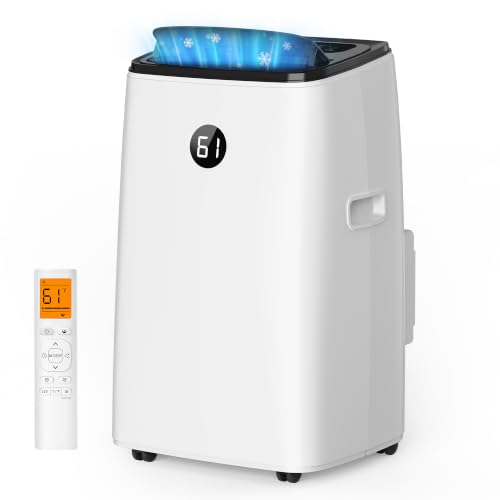
Highest Rated Small Portable Air Conditioner: The Complete Buyer's Guide
Everything you need to know before choosing a compact portable AC — sizing, venting, noise levels, efficiency, and the features that separate top-tier models from entry-level units.
Explore Top PicksWhy this guide matters: If you are searching for the highest rated small portable air conditioner, you have likely already narrowed your focus to compact units for a bedroom, home office, studio apartment, or dorm room. This guide helps you compare specifications intelligently, avoid common sizing mistakes, and understand which features genuinely matter — so you can move from research to a confident purchase decision.
What Counts as a "Small" Portable Air Conditioner?
Portable air conditioners are generally categorized by cooling capacity, physical footprint, and weight. A unit is considered small when it delivers roughly 5,000 to 10,000 BTU while remaining easy to move between rooms. These models typically weigh between 40 and 70 pounds, sit on caster wheels, and occupy less than two square feet of floor space.
Small portable units differ from their larger siblings in several important ways. They cool a single room rather than an open-plan living area, they use standard household outlets, and they rely on a window vent kit to exhaust hot air. For rooms up to 250 square feet, a compact unit is usually the most practical cooling solution — especially in rentals or homes without ductwork. If you are weighing portable versus other compact options, our portable air conditioner overview explains how these units fit into broader cooling strategies.
How to Choose the Right Capacity for Your Room
Capacity is the single most important specification when comparing small portable ACs. An undersized unit runs continuously and never fully cools the space; an oversized unit short-cycles, leaving the room clammy. Use the following ranges as a starting point, then adjust for real-world conditions.
| Room Size | Recommended Capacity | Typical Use Case |
|---|---|---|
| Up to 150 sq ft | 5,000 – 6,000 BTU | Bedroom, dorm room, small office |
| 150 – 250 sq ft | 8,000 – 10,000 BTU | Studio apartment, guest room, home office |
| 250 – 350 sq ft | 10,000 – 12,000 BTU | Large bedroom, open living area |
Several factors can push you toward the higher end of a range: direct sun exposure, high ceilings, kitchen heat gain, multiple occupants, or poor insulation. Conversely, a shaded basement room may need less capacity than the table suggests. For a deeper walkthrough of load calculation, see our guide on how to size an air conditioner.
Sizing Rule of Thumb
Start with 20 BTU per square foot for average conditions, then add 10% for sunny rooms or kitchens. A 200-square-foot bedroom with a south-facing window, for example, lands closer to 8,800 BTU than the baseline 4,000 BTU calculation would suggest for minimal cooling — which is why manufacturer capacity charts combine both square footage and environmental factors.
Key Features That Separate Top-Tier Units from Entry-Level Models
The highest rated small portable air conditioners share a set of characteristics that go beyond raw cooling capacity. When comparing models, evaluate these features carefully — they have a greater impact on day-to-day satisfaction than most marketing claims.
Venting and Airflow
Single-hose units pull air from the room to cool the condenser, then exhaust it outside — creating negative pressure that draws warm air back in through gaps. Dual-hose units separate intake and exhaust, maintaining balanced pressure and cooling more efficiently. If efficiency is a priority, dual-hose models in the mid-tier and high-end tier are the stronger choice.
Noise Level
Compressor noise is unavoidable, but premium small units often include sleep mode, variable fan speeds, and improved sound insulation. On low settings, top-tier units can operate in the 45–55 decibel range. If the unit will run overnight in a bedroom, prioritize models with a dedicated quiet mode.
Efficiency and Refrigerant
Portable AC efficiency is expressed through CEER (Combined Energy Efficiency Ratio). Higher CEER values indicate more efficient cooling, though the difference between tiers is often modest. Newer units increasingly use R32 refrigerant, which has a lower global warming potential than legacy R410A. For context on efficiency ratings more broadly, see our explanation of SEER and efficiency ratings.
Controls and Smart Features
Remote controls are standard. Wi-Fi connectivity, programmable timers, and app-based scheduling appear on mid-range and high-end models. These features are convenient but not essential — a unit with a solid thermostat and a 24-hour timer covers most needs.
- Dual-hose venting for balanced pressure
- Sleep mode and low-noise operation
- Programmable timer and thermostat
- Washable, reusable air filter
- Caster wheels for room-to-room mobility
- Auto-restart after power interruption
- Dehumidification mode for humid climates
- Window kit compatible with vertical and horizontal sliders
Comparing Tiers: Entry-Level, Mid-Range, and Premium Small Portable ACs
Because portable ACs vary widely in build quality and feature depth, it helps to classify them by market tier rather than by price. The table below uses universal quality descriptors so the comparison stays relevant over time.
| Tier | Best For | Typical Characteristics |
|---|---|---|
| Entry-Level | Occasional use, guest rooms, short cooling seasons | Single-hose venting, manual controls, basic timer, higher noise on all speeds |
| Mid-Range | Daily bedroom or home office cooling | Dual-hose options, digital thermostat, sleep mode, washable filter, quieter operation |
| Premium | Primary sleeping spaces, all-day use, smart-home integration | High CEER, advanced sound dampening, Wi-Fi control, auto-dimming display, reinforced vent kit |
The gap between tiers is most noticeable in noise, venting quality, and long-term durability. Mid-range models typically offer a smoother experience than entry-level units, while premium units justify their position through quieter operation and better build materials. For a wider comparison across form factors, our highest rated portable air conditioner guide covers larger and more powerful units as well.
Installation and Placement Tips for Small Spaces
A small portable AC is only as effective as its installation. The window vent kit must seal tightly; gaps let hot outdoor air back in and undermine cooling. Measure your window opening before ordering — most kits support openings between 20 and 50 inches, but vertical sliders and casement windows may require a specialized adapter.
Position the unit near the window it vents through, keep at least 12 inches of clearance around the intake and exhaust, and avoid placing it in direct sunlight. If the unit will serve a bedroom, route the hose so it does not block walkways or trap heat near curtains. For rooms without a suitable window, other compact solutions may be worth exploring — our guide to heating and cooling options for small homes outlines alternatives.
Maintenance Habits That Extend Unit Life
Portable ACs require modest but regular maintenance. Clean or replace the air filter every two to four weeks during heavy use, drain the condensate tank before it fills (or connect a continuous drain hose if the model supports it), and inspect the vent hose for kinks or tears at the start of each season. Storing the unit upright during the off-season protects the compressor oil.
If cooling performance drops noticeably, check the filter and the exhaust seal first — these account for most performance complaints. Persistent issues such as frost on the coils or unusual compressor noise warrant professional attention. Our guides on AC not cooling and AC making noise walk through troubleshooting steps in more detail.
Who Should Choose a Small Portable Air Conditioner?
Small portable ACs are the right fit for renters who cannot install window units, homeowners with rooms that central air does not reach, and anyone cooling a single bedroom or office. They are less suitable for open-plan living areas, rooms without a ventable window, or households that need to cool multiple rooms simultaneously — in those cases, a mini-split or central system is the better long-term investment.
If you are comparing ductless options, our overview of ductless heating and air conditioning units explains when a permanent mini-split makes more sense than a portable unit. For single-room cooling where installation flexibility matters most, a compact portable AC remains the simplest solution.
Ready to Compare Your Options?
The curated selection below highlights small portable air conditioners organized by tier and use case. Every listing links to current availability and detailed specifications so you can verify capacity, venting type, and noise ratings before deciding.
View Recommended UnitsFrequently Asked Questions
What BTU rating is best for a small portable air conditioner?
For small rooms up to 150 square feet, a portable AC with 5,000 to 6,000 BTU is generally sufficient. Rooms between 150 and 250 square feet typically need 8,000 to 10,000 BTU. Always account for sun exposure, ceiling height, and the number of occupants when selecting capacity.
Do small portable air conditioners need to be vented out a window?
Yes, most portable air conditioners require a window vent kit to exhaust hot air. Models with dual-hose systems vent more efficiently than single-hose units, as they separate intake and exhaust airflow to maintain balanced pressure in the room.
How quiet are top-tier small portable air conditioners?
Noise levels vary by model and fan speed. High-end small portable units often operate between 45 and 55 decibels on low settings, which is comparable to a quiet conversation. Look for models with sleep mode and variable fan speeds if noise is a priority.
Can a small portable air conditioner cool more than one room?
A single small portable AC is designed for one room or a defined zone. Cooling multiple rooms requires either multiple units or a ducted system. For open-plan spaces, choose a unit with higher capacity and adjustable louvers for directional airflow.
Still weighing portable against window-mounted options? Our guide to heating and cooling window units compares installation requirements and cooling performance side by side.