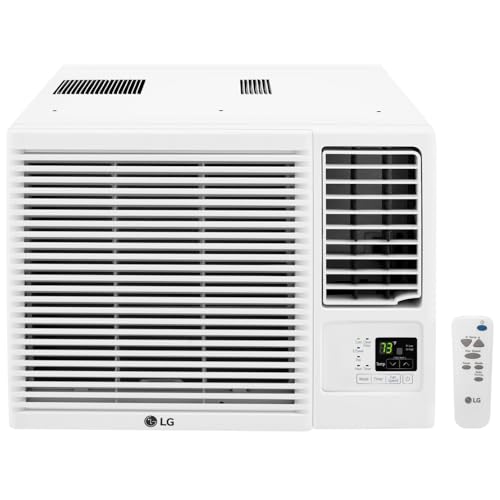
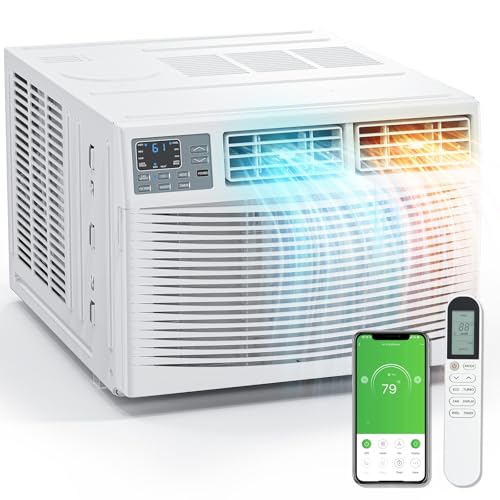
Heating and Cooling Window Units: The Complete Buyer's Guide
Everything you need to know about dual-function window air conditioners that keep a room comfortable all year. Understand how they work, how to size one, what to expect from each tier, and how to pick the right model for your space.
Start the GuideWhy this guide matters: A heating and cooling window unit is one of the most practical solutions for rooms without ductwork, for additions, and for older homes. But choosing the wrong type, capacity, or efficiency class wastes energy and leaves you uncomfortable. This guide walks you through every decision in plain language, so you can buy with confidence.
What Are Heating and Cooling Window Units?
A heating and cooling window unit is a single appliance that installs in a standard double-hung window and provides both cooled air in summer and warmed air in winter. Unlike a conventional window air conditioner that only cools, these dual-function models use either a reverse-cycle heat pump or an electric heating element to deliver warmth when outdoor temperatures drop.
For homeowners exploring broader options, our heating and cooling window units resource covers the full category, while the window air conditioners with heating overview explains how the two functions are combined in practice. If you are still deciding between ducted and ductless approaches, the ductless heating and air conditioning units guide is a useful comparison point.
How the Cooling Side Works
The unit draws warm indoor air across a cold evaporator coil, removes heat and humidity, and returns cool air to the room. Waste heat is expelled through the back of the chassis to the outdoors, just like a standard window AC.
How the Heating Side Works
Heat-pump models reverse the refrigerant cycle to move heat from outdoor air into the room. Electric-heat models use a heating element similar to a space heater. Heat pumps are generally more efficient in mild climates.
Window-Mounted Convenience
These units fit into a window opening and require no ductwork, no exterior pad, and no refrigerant line work. Most come with a mounting bracket and side panels, making them a strong option for renters and retrofits.
Types of Heating and Cooling Window Units
Not all dual-function window units are built the same way. The heating mechanism, in particular, determines efficiency, cold-weather performance, and long-term reliability. Here are the main categories you will encounter.
Electric Heater Window Units
A cooling AC combined with an electric resistance heater. They are straightforward, effective in milder climates, and tend to be the simplest design. They are well suited to rooms that need occasional backup heat rather than primary winter warmth.
Reverse-Cycle Heat Pump Units
These use a reversing valve to run the refrigeration cycle in either direction. They deliver heating with far better efficiency than resistance heat and are a solid choice for year-round use in moderate climates. Learn more about the underlying technology in our heating and air conditioning overview.
Inverter Dual-Function Units
Inverter-driven compressors vary speed to match load, which smooths temperature swings and reduces energy use. These are the most advanced window units available, with quieter operation and better part-load efficiency than fixed-speed models.
How Dual-Function Window Units Work
Understanding the mechanics helps you evaluate claims about efficiency and performance. A dual-function window unit contains the same core components as a conventional air conditioner: compressor, condenser coil, expansion device, and evaporator coil. What changes is the direction of refrigerant flow.
- Cooling cycle: The compressor pushes refrigerant to the outdoor coil, which releases heat. The indoor coil absorbs heat and humidity from the room.
- Heating cycle (heat pump): A reversing valve swaps the roles of the two coils, so the outdoor coil absorbs heat from outside air and the indoor coil releases it into the room.
- Electric heat models: A resistance element adds heat directly to the airstream; the refrigerant circuit may be idle in heating mode.
- Defrost control: Heat pump models include a defrost cycle to clear frost from the outdoor coil in cool, damp weather.
- Drainage: Condensate is managed through a drain pan and either evaporated by a slinger ring or routed out through a weep hole.
For a deeper look at how these systems compare with whole-home approaches, see the heating and air conditioning units hub and the heating and air split unit explainer.
How to Size a Heating and Cooling Window Unit
Sizing is the single most important decision. An undersized unit runs constantly and never fully conditions the room; an oversized unit cools too quickly, cycles on and off, and leaves humidity behind. Use the BTU guidance below as a starting point, then adjust for sun exposure, ceiling height, occupancy, and kitchen heat.
| Room Size | Suggested Cooling Capacity | Typical Use Case | Notes |
|---|---|---|---|
| Up to 150 sq ft | 5,000 – 6,000 BTU | Bedroom, small office | Choose a lower figure for shaded rooms, higher for sunny exposures. |
| 150 – 250 sq ft | 8,000 – 10,000 BTU | Living room, studio | Add capacity for west-facing windows and vaulted ceilings. |
| 250 – 400 sq ft | 12,000 – 14,000 BTU | Open-plan space, large bedroom | Check that the electrical circuit supports the unit's draw. |
| 400 – 550 sq ft | 15,000 – 18,000 BTU | Family room, small apartment | Consider whether a single window location can distribute air evenly. |
Heating capacity is usually expressed separately. If the unit will be your primary heat source, compare its heating BTU rating against the same room-size guidance. For homes without ducts, our heating options for houses without ductwork guide outlines how window units fit alongside other solutions.
Efficiency Ratings Explained
Efficiency determines how much comfort you get per unit of electricity. Window units use a few key ratings, and understanding them helps you compare models fairly across tiers.
CEER and EER
EER measures cooling output divided by power input at a fixed condition. CEER is the combined rating used for window units and factors in standby and cycling losses. Higher numbers indicate better efficiency.
COP and HSPF
Heat pump models report a coefficient of performance or HSPF for heating. Heat pumps in the mid-range and high-end tiers typically outperform electric resistance heat by a wide margin in mild weather.
ENERGY STAR
Certified models meet a higher efficiency threshold than the federal minimum. The high-efficiency window air conditioning units guide explains what the label means in practice.
Features That Matter
Beyond capacity and efficiency, a handful of features separate a good unit from a great one. Prioritize the ones that match how you actually use the room.
- Programmable or smart thermostat: Scheduling reduces runtime when the room is empty. Our heating and air conditioning thermostat guide covers compatibility.
- Remote and app control: Useful for bedrooms and rental units where you want to adjust settings without reaching the chassis.
- Sleep mode and fan-only mode: Fan-only operation circulates air without conditioning, which is handy in shoulder seasons.
- Washable filter: A reusable filter lowers maintenance effort and keeps airflow strong.
- Auto-restart: The unit returns to its previous settings after a power interruption.
- Quiet operation: Look for decibel ratings if the unit will run overnight in a bedroom.
- Supplemental heat lockout: On heat pump models, this prevents the resistance heater from running unnecessarily.
Pros and Cons of Dual-Function Window Units
Advantages
- One appliance for both seasons
- No ductwork or major renovation required
- Suitable for renters and older homes
- Zone cooling and heating for a single room
- Simpler installation than split systems
- Heat pump models are efficient in mild climates
Limitations
- Heating output may be limited in very cold weather
- Blocks part of the window view
- Requires a compatible window and secure mounting
- Noise can be noticeable in smaller rooms
- Cooling and heating capacity are tied to one chassis
- Some models need a dedicated electrical circuit
For a broader comparison of room-by-room options, see heating and cooling units for individual rooms and the units for small homes guide.
Installation Checklist
A correct installation protects the unit, the window, and your safety. Follow these steps and check the manufacturer's manual for model-specific requirements.
- Confirm the window type and opening dimensions match the unit's required window width and minimum height.
- Verify the electrical circuit. Larger units often need a dedicated circuit; check the nameplate amperage and breaker rating.
- Inspect the mounting bracket or support rail and ensure the unit tilts slightly toward the outdoors for drainage.
- Seal gaps with the included side panels and weather stripping to prevent air leaks and insect entry.
- Plug directly into a grounded outlet. Avoid extension cords and power strips for high-draw models.
- Test cooling and heating modes, confirm airflow, and check for unusual vibration before finalizing the install.
If you are installing in a mobile home, review the heating and cooling units for mobile homes guide for window-frame and anchoring considerations.
Maintenance for Long-Term Performance
Window units are exposed to outdoor air, dust, and pollen, so routine care matters. A simple schedule keeps efficiency high and extends service life.
- Clean or replace the air filter every two to four weeks during heavy use.
- Inspect and gently clean the outdoor coil at the start of each season.
- Check the drain pan and weep holes for clogs and standing water.
- Remove leaves and debris from around the exterior of the unit.
- Look for frost on the outdoor coil in heating mode and confirm the defrost cycle is working.
- Schedule a professional inspection every few years, especially for heat pump models.
For service options in your area, see heating and cooling service and the repair providers near you guide.
Step-by-Step Buying Guide
Follow this sequence to narrow the field quickly and avoid overbuying or underbuying.
- Measure the room and note sun exposure, ceiling height, and how many people use it. Match the result to the BTU table above.
- Decide on the heating method. Choose electric heat for occasional backup warmth and heat pump models for regular heating in mild climates.
- Set an efficiency target. ENERGY STAR certified models are a sensible baseline; inverter models sit at the high-end tier for part-load efficiency.
- Check the electrical requirements against your outlet and breaker. Confirm the plug type before purchase.
- Measure the window opening and compare it to the unit's required dimensions and included mounting hardware.
- Prioritize features that match your routine: scheduling, remote control, quiet operation, and washable filters.
- Confirm warranty terms for the sealed system and the compressor, since heating and cooling models work harder than cooling-only units.
Tiers at a Glance
To make comparisons easier, we classify dual-function window units into three universal tiers. Use these descriptors to set expectations; the recommended products below are organized using the same system.
| Tier | Best For | Typical Traits |
|---|---|---|
| Essential Tier | Occasional heating, smaller rooms, straightforward installs | Electric heat, mechanical controls, basic washable filter, standard mounting kit |
| Balanced Tier | Year-round comfort in moderate climates | Heat pump operation, digital controls, scheduling, improved filtration |
| High-End Tier | Quiet bedrooms, frequent use, efficiency-focused buyers | Inverter compressor, app control, low noise, superior part-load efficiency |
Frequently Asked Questions
Can a window unit really heat a room?
Yes. Electric-heat models add warmth directly, and heat pump models move heat from outdoor air into the room. Heat pumps work best in moderate climates; in very cold weather they may need backup from another heat source.
Do dual-function window units need a special outlet?
Larger models often require a dedicated circuit with a specific plug type, such as a 6-15P or 6-20P. Check the nameplate amperage and consult a licensed electrician if your outlet does not match.
How do I choose between a heat pump and an electric heater?
Choose a heat pump if you expect to use the heating function regularly and winter temperatures are moderate. Choose electric heat if you only need occasional warmth or if the room already has a primary heating system.
How often should I clean the filter?
During heavy cooling or heating seasons, clean or replace the filter every two to four weeks. A clogged filter reduces airflow, lowers efficiency, and can cause the indoor coil to freeze.
Can I install a window unit in a sliding window?
Standard units are designed for double-hung windows. Sliding windows need a specific bracket or a unit rated for horizontal installation. Check the manufacturer's window compatibility list before buying.
What is the difference between EER and CEER?
EER is measured at a single test condition. CEER is the combined efficiency rating for window units and accounts for standby and cycling losses, making it a more realistic comparison across models.
Will a window unit heat and cool a whole house?
No. A window unit is designed for a single room or a defined zone. For whole-home comfort, explore central systems or multi-zone ductless options through the combined heating and air conditioning units resource.
Ready to Compare Models?
Use the tier framework, sizing table, and efficiency guidance above to shortlist the right heating and cooling window unit. The product recommendations below are organized by the same tiers so you can move from research to a confident decision.
Explore Recommended UnitsFinal Thoughts
A heating and cooling window unit is a practical, self-contained comfort solution for rooms that ductwork cannot reach. The key is to size it correctly, choose a heating method that matches your climate, and set realistic expectations about efficiency and noise. If you are comparing this category with broader system types, the small-home heating and cooling units guide and the options for small homes article provide useful context. For contractor support, see the heating and cooling companies near you directory.
Whether you choose an essential-tier electric model for occasional backup warmth or a high-end inverter heat pump for year-round comfort, the right dual-function window unit can make one room significantly more comfortable in every season.