
House Ventilation: The Complete Guide to Healthier Indoor Air
Discover how proper ventilation removes stale air, controls moisture, and protects your family's health—plus practical ways to improve airflow in every room of your home.
START LEARNINGWhy ventilation matters: Modern homes are built tighter than ever, which improves energy efficiency but traps pollutants, moisture, and stale air indoors. A well-ventilated house breathes—and so do the people inside it.
What Is House Ventilation and Why It Matters
House ventilation is the deliberate process of exchanging stale indoor air with fresh outdoor air while removing moisture, odors, and airborne contaminants. It is different from air conditioning, which conditions temperature and humidity but does not necessarily bring in fresh air. In fact, many homeowners assume that running the house air conditioner is enough to keep indoor air healthy—but a closed system recirculates the same air, which means pollutants can accumulate over time.
Proper ventilation delivers three core benefits:
- Health protection: Removes carbon dioxide, volatile organic compounds (VOCs), cooking fumes, and allergens that can trigger respiratory issues.
- Moisture control: Prevents condensation, mold growth, and structural damage caused by trapped humidity.
- Comfort and freshness: Eliminates lingering odors and keeps indoor air feeling crisp and clean.
Understanding the basics of air movement is helpful before diving into systems. If you are new to HVAC, our guide on how an air conditioner works provides useful context on how air is moved and conditioned in a typical home.
Signs Your House Has Poor Ventilation
Many homes suffer from inadequate ventilation without homeowners realizing it. Watch for these warning signs:
- Persistent stuffiness or a stale smell, especially in bedrooms and basements.
- Condensation on windows, mirrors, or cold surfaces.
- Visible mold or mildew in bathrooms, kitchens, or closets.
- Excessive dust accumulation on surfaces.
- Lingering cooking odors or chemical smells after cleaning.
- Frequent headaches, fatigue, or allergy-like symptoms indoors.
- High indoor humidity that makes the air feel clammy.
If humidity is the main culprit, our guides on how to tell the humidity in your house and how to lower the humidity in your house offer practical next steps. Poor ventilation and excess humidity often go hand in hand, and addressing both is the key to lasting comfort.
Types of House Ventilation Systems
There is no single ventilation solution that fits every home. The right choice depends on climate, construction style, budget tier, and the specific problem you are trying to solve. Below is a comparison of the most common approaches.
1. Natural Ventilation
Relies on open windows, doors, vents, and the stack effect (warm air rising and escaping through upper openings). It is the simplest and most energy-neutral method, but it is inconsistent and depends on weather, outdoor air quality, and home security. Natural ventilation is best treated as a supplement rather than a primary strategy in tightly built homes.
2. Exhaust-Only Ventilation
Uses exhaust fans in bathrooms, kitchens, and laundry rooms to push stale air outside. Fresh air enters through intentional gaps and vents. This is an entry-level approach common in older homes. It is effective for spot ventilation but can create negative pressure that pulls air from unintended sources if the home is very tight.
3. Supply-Only Ventilation
Introduces filtered outdoor air into the home through a dedicated fan and duct system. It creates positive pressure that pushes stale air out through leaks and exhaust points. This mid-range approach is useful in homes where outdoor air is relatively clean but filtration is desired.
4. Balanced Ventilation (HRV and ERV)
Balanced systems use two fans—one to exhaust stale air and one to supply fresh air—in equal amounts. The two streams pass through a heat exchanger, which recovers energy from the outgoing air. These are considered the high-end tier of residential ventilation:
- Heat Recovery Ventilator (HRV): Transfers sensible heat only. Ideal for cold, dry climates.
- Energy Recovery Ventilator (ERV): Transfers both heat and moisture. Better for humid climates or homes with winter dryness concerns.
Balanced systems are the gold standard for airtight modern construction and are often integrated with the HVAC system for whole-house coverage.
5. Whole-House Fan Systems
A large fan mounted in the ceiling or attic pulls air through open windows and exhausts it through the roof. Whole-house fans are effective in mild climates and can dramatically reduce indoor temperature in the evening, but they are not suitable for humid climates or when outdoor air quality is poor.
| System Type | Market Tier | Best For | Key Limitation |
|---|---|---|---|
| Natural Ventilation | Entry-Level | Mild climates, supplemental airflow | Unpredictable, weather-dependent |
| Exhaust-Only Fans | Entry-Level | Bathrooms, kitchens, spot ventilation | Can create negative pressure |
| Supply-Only System | Mid-Range | Filtered fresh air in cleaner climates | Less balanced pressure control |
| HRV / ERV | High-End Tier | Airtight homes, whole-house ventilation | Requires professional design |
| Whole-House Fan | Mid-Range | Mild, dry climates for temperature relief | Not for humid or polluted outdoor air |
Tier labels above reflect relative market positioning and feature depth, not any specific figure. A balanced system is a long-term investment that typically outperforms simpler approaches in airtight homes, while entry-level exhaust fans remain a solid choice for spot ventilation in any budget tier.
Room-by-Room Ventilation Strategies
Every room has different ventilation needs based on moisture, occupancy, and activity. Here is how to approach the most important spaces.
Bathrooms
Bathrooms are the highest-moisture rooms in the house. A properly sized exhaust fan should run for at least 15 to 20 minutes after every shower, and ideally be equipped with a humidity sensor or timer. Keep the fan clean and make sure it vents to the outdoors—not into the attic.
Kitchens
Cooking generates grease, smoke, moisture, and combustion byproducts. A range hood that vents outdoors is essential. Recirculating hoods filter some grease but do not remove moisture or gases. Run the hood every time you cook, especially when using a gas stove.
Bedrooms and Living Areas
These rooms benefit from continuous low-level ventilation. If you do not have a whole-house system, crack windows for short periods each day or use a small supply ventilator. Ceiling fans improve circulation but do not replace fresh air exchange.
Attics and Crawl Spaces
Attic ventilation prevents heat buildup and moisture damage to the roof structure. Soffit and ridge vents, combined with proper insulation baffles, allow natural airflow. Crawl spaces need vapor barriers and either conditioned air or dedicated ventilation depending on climate.
Basements
Basements are prone to dampness and radon accumulation. Continuous low-level exhaust or a dedicated basement ventilation fan helps. If you notice persistent dampness, a dehumidifier may be needed alongside ventilation.
How Ventilation and Air Conditioning Work Together
Ventilation and air conditioning are complementary but distinct. Your AC system conditions the air that is already inside—cooling it, removing some moisture, and filtering particles. Ventilation, on the other hand, brings in fresh outdoor air and exhausts stale indoor air. A home needs both to be truly healthy.
In a well-designed system, a balanced ventilator is often integrated with the central air handler so that incoming fresh air is filtered and conditioned before it reaches living spaces. If you are evaluating your current setup, understanding the role of the house air conditioner condenser and the overall house central air conditioning units will help you see where ventilation fits in.
It is also worth noting that poor ventilation can mimic AC problems. If your house AC turns on but no cold air comes out, or the house is not cooling from the air conditioner, restricted airflow caused by a ventilation imbalance may be part of the issue. In many cases, improving ventilation restores comfort without any repair to the AC itself.
Ventilation and Humidity Control
Humidity is one of the most important things ventilation manages. Excess moisture leads to mold, musty odors, and discomfort. In summer, ventilation helps expel humid indoor air; in winter, it removes moisture generated by showers, cooking, and breathing.
If you are dealing with persistent humidity, these guides can help you diagnose and solve the problem:
- How to tell how much humidity is in your house
- How to lower humidity in a room
- How to lower humidity in house in summer
- How to reduce humidity without a dehumidifier
- How to dehumidify a room without a dehumidifier
When ventilation alone is not enough, targeted solutions such as house humidification systems or standalone dehumidifiers may be part of a balanced indoor air strategy.
Maintenance Tips for Healthy Ventilation
Ventilation systems only work well when they are maintained. Follow this checklist to keep airflow strong and indoor air clean:
- Clean or replace filters regularly. HRV and ERV core filters, range hood filters, and AC filters all need attention. Clogged filters restrict airflow and reduce efficiency.
- Clean exhaust fan grilles. Dust and grease buildup on bathroom and kitchen fan grilles reduces performance. Remove and wash them a few times a year.
- Inspect ductwork. Loose or disconnected ducts waste energy and can pull contaminated air from attics or crawl spaces. Seal leaks and insulate ducts in unconditioned spaces.
- Check outdoor intake and exhaust hoods. Make sure they are clear of debris, nests, and snow.
- Test fans for airflow. A simple tissue test at the grille can reveal a failing fan motor.
- Schedule professional servicing. Balanced ventilation systems should be inspected and cleaned by a qualified technician periodically.
These habits pair well with general HVAC upkeep. For a broader overview, see our guides on how long does AC last and how to test a new AC to understand the lifecycle of your equipment.
Ventilation in Different Building Types
Ventilation needs vary by building type and occupancy. In multi-unit residential buildings such as hotels, dedicated ventilation and makeup air systems are essential to maintain air quality across guest rooms, corridors, and shared spaces. Commercial properties with hotel and motel heating and air conditioning units rely on carefully engineered airflow to prevent odors and moisture from migrating between zones.
For single-family homes, the same principles apply at a smaller scale. Whether you live in a compact apartment or a large property, the goal is the same: controlled fresh air in, stale air out, and moisture kept in check.
Recommended Ventilation & Airflow Products
⚠️ AFFILIATE DISCLOSURE: This website contains affiliate links. As an Amazon Associate, we earn from qualifying purchases. If you make a purchase through these links, we may receive a small commission at no additional cost to you. Read our full affiliate policy.

Weiworld Through Wall HEPA Ventilation Fan with WiFi & Remote Control, Ultra Quiet EC Motor Wall Vent, Fresh Air Intake & Air Exchange System for Bedroom, Home Office, Attic
Check price on Amazon
2pcs Attic Vent Soffit Vent Aluminum Wall Vent Metal Shed Vent Square Vent Louver Vent Grille with Built-in Insect Screen for Exterior Door House Attic Garage Ceiling (Black 6" x 6"-2 Pack)
Check price on Amazon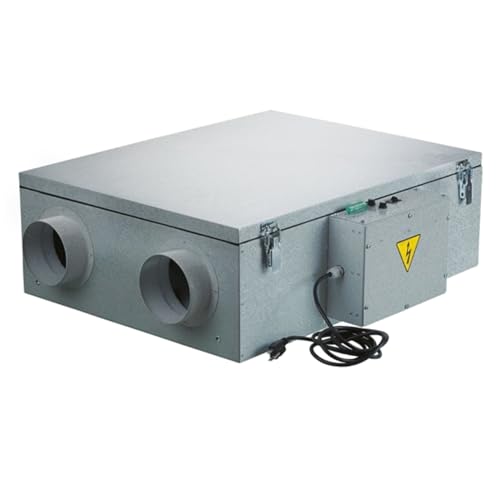
VENTS-US Frigate ERV 150 Whole House Ventilation System - 180 CFM | Fresh Air Intake and Humidity Exhaust for Balanced Indoor Comfort, Includes Washable Filters and Anti-Freeze Protection
Check price on Amazon
Amico 12" Shutter Exhaust Fan, Thermostat,1400 Sq.Ft,25W DC Motor, 1282 CFM | Energy-Efficient 8-Speed Ventilation Fan, Garage, Attic, Greenhouse, Wall Mount, Plug&Play, 3-Year Protection
Check price on Amazon
Amico 10" Shutter Exhaust Fan, Remote 9-Speed 13W DC Motor, 1000 CFM | Energy-Efficient Wall Mount Ventilation Fan, Garage, Greenhouse, Attic, Chicken Coop, Plug&Play 8-Hr Timer, 3-Year Protection
Check price on Amazon
2pcs Attic Vent Soffit Vent Aluminum Wall Vent Metal Shed Vent Square Vent Louver Vent Grille with Built-in Insect Screen for Exterior Door House Attic Garage Ceiling (White 6" x 6"-2 Pack)
Check price on Amazon
VEVOR 12 in Shutter Exhaust Fan Wall-Mount Automatic Louvers Variable Speed, Sturdy Steel Housing, Low Noise, AC Motor, 1347 CFM Ventilation and Cooling for Attic, Garage, Barn, Greenhouse, Workshop
Check price on Amazon
iLiving 12" Wall Mounted Shutter Exhaust Fan, Automatic Shutter, with Thermostat and Variable Speed controller, 0.6A, 960 CFM, 1400 SQF Coverage Area Silver (ILG8SF12V-ST)
Check price on AmazonReady to Improve Your Home's Airflow?
Start with a room-by-room assessment, then choose the ventilation strategy that fits your climate and construction style. Your lungs—and your home—will thank you.
Explore AC & Airflow Guides