How to Install a Portable Air Conditioner Without a Window
Not every room has a window. Learn practical, tested ways to vent a portable AC through sliding doors, walls, drop ceilings, or temporary seals — and keep your space comfortably cool.
Explore Venting MethodsQuick answer: A portable air conditioner needs a path for hot exhaust air to leave the room. Without a window, you can use a sliding-door seal kit, a wall vent kit, a drop-ceiling vent, or a custom panel through a door or wall. The venting method matters more than the unit itself — a tight seal preserves cooling performance and keeps humidity under control.
Why a Portable AC Needs Venting (Even Without a Window)
A portable air conditioner does not create cold air from nothing. It pulls heat and moisture from the room, condenses the moisture, and then pushes hot air out through an exhaust hose. If that hose has nowhere to go, the hot air comes straight back into the room. The result is a unit that runs constantly but never really cools — and a compressor that works harder than it should.
Understanding how an air conditioner works helps clarify the goal: separate the hot exhaust stream from the cool supply stream. A window is simply the most common exit point. It is not the only one.
There is also a myth worth clearing up: single-hose portable units create negative pressure by pulling room air in and pushing it out. That draws warm outside air back in through gaps. Dual-hose units avoid this by using outdoor air for cooling the condenser. If your room is windowless, a dual-hose model paired with a solid venting seal is often the more comfortable choice.
Venting Methods for a Room Without a Window
Choose the method that matches your space, your lease terms, and how permanent you want the setup to be. Each option below works with standard portable AC exhaust hoses, usually 5 to 6 inches in diameter.
Sliding Door Seal Kit
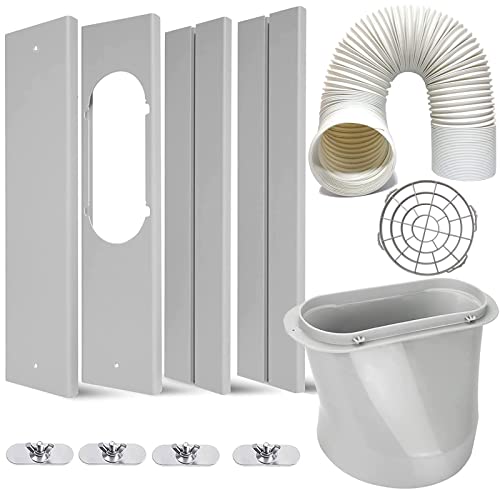
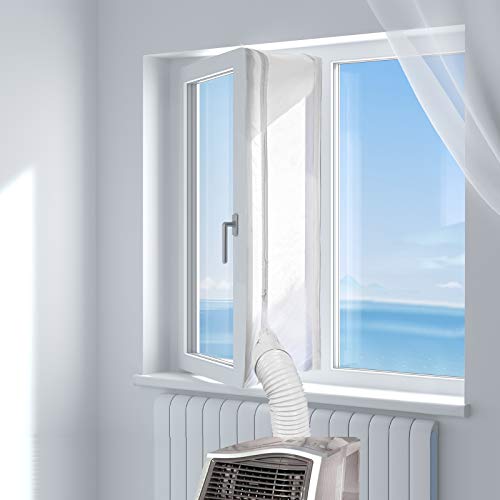
Fabric or foam panel fits into a sliding glass door opening and includes a hose connector. Close the door against the seal for a tight barrier. No drilling, no permanent changes — ideal for apartments and condos.
Wall Vent Kit
A flange and short duct sleeve installed through an exterior wall. Best for long-term or room-specific cooling. Requires cutting a hole and sealing it properly to prevent drafts and moisture intrusion.
Drop Ceiling Vent
Route the exhaust hose into the plenum above a drop ceiling, provided that space vents to the outdoors. Common in basement offices and finished lower levels. Check that the plenum is not sealed.
Door Panel Insert
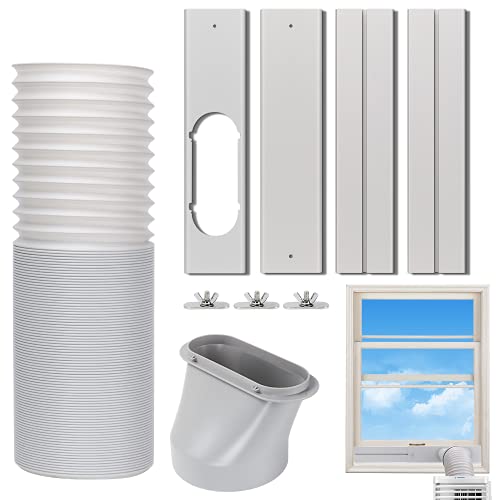
A rigid or fabric panel that fits into a doorway, with a cutout for the hose. Useful for rooms adjacent to a hallway that leads outside. Keep the panel secured and seal the edges with weatherstrip.
Existing Vent or Chimney
Some older homes have unused flues or dryer vents. A proper adapter can route exhaust outdoors. Have the path inspected for blockages and confirm local code allows it before use.
Evaporative (Swamp) Cooler
An evaporative cooler adds moisture instead of removing it and does not need exhaust venting. It works only in dry climates. In humid regions it makes the room feel worse. Not a replacement for a true AC in most US homes.
Which Venting Method Fits Your Situation?
| Method | Best For | Effort Level | Reversible? |
|---|---|---|---|
| Sliding door seal kit | Apartments, condos, renters | Low | Yes |
| Wall vent kit | Permanent room cooling, home offices | High | No |
| Drop ceiling vent | Basements and finished lower levels | Medium | Yes |
| Door panel insert | Temporary setups, adjacent hallway exit | Low to medium | Yes |
| Existing vent / chimney | Older homes with unused flues | Medium to high | Depends on adapter |
Step-by-Step: Installing a Portable AC Without a Window
The exact steps vary by venting method, but the sequence below works for a sliding door seal or door panel — the two most common windowless setups.
- Choose the right unit. Confirm the portable AC includes a hose and connector. For windowless setups, a dual-hose model often performs better because it does not pull conditioned air out of the room. If you are still comparing options, see our guide on using a portable AC without a window for model-specific advice.
- Measure the opening. Measure the height and width of the sliding door or doorway. Match the seal kit or panel to those dimensions. A loose fit leaks hot air and undermines the whole installation.
- Assemble the seal or panel. Most sliding door kits use fabric with a zippered or hook-and-loop hose opening. Door panels are usually rigid plastic or aluminum with a pre-cut hole. Follow the manufacturer's instructions for the hose connector.
- Install the seal. Fit the panel or fabric into the opening. Close the sliding door against the seal so the fabric is compressed. Add weatherstrip or foam tape along any edge that does not sit flush.
- Connect the exhaust hose. Attach one end to the unit's exhaust port and the other to the seal's hose connector. Keep the hose as short and straight as possible — bends reduce airflow and cooling efficiency.
- Seal the gaps. Use foam weatherstrip, removable caulk, or a draft stopper at the bottom of the door. Even small gaps let hot, humid outdoor air back in and reduce comfort.
- Position the unit. Place the AC on a level surface, at least a few inches from walls, and away from direct sunlight. Keep the exhaust hose clear of furniture. Do not cover the unit's air intake.
- Drain condensation. Most portable units collect water. Use the continuous drain option if available, or empty the tank regularly. In humid rooms, a unit that is not drained can shut off automatically or leak.
- Test the airflow. Run the unit on fan-only for a few minutes, then switch to cool mode. Check that the hose is warm and that the room air feels cooler. If not, recheck the seal and hose routing.
- Maintain the setup. Clean the filter every two weeks during heavy use. Inspect the seal and hose for wear. Follow the seasonal checklist in our guide to testing a new AC installation for ongoing checks.
Installation Tips That Protect Cooling Performance
A portable AC in a windowless room is only as good as its exhaust path. These details make the difference between a comfortable room and a unit that runs all day without results.
- Keep the hose short. Every extra foot of hose adds resistance. Route it as directly as possible to the vent point.
- Avoid sharp bends. A kinked hose blocks airflow and can cause the unit to overheat. Support the hose if it sags.
- Insulate the hose if it crosses a hot space. A hose sleeve reduces heat gain and prevents condensation from dripping onto floors.
- Seal the entire opening, not just the hose hole. The fabric or panel is part of the pressure boundary. Gaps around the edges are just as damaging as a loose hose connection.
- Use a dual-hose unit when possible. In a sealed windowless room, a single-hose unit creates negative pressure. A dual-hose model is more balanced and often more comfortable.
- Do not vent into an enclosed attic or crawlspace. That traps heat and moisture indoors. The exhaust path must lead outdoors or to a space that vents outdoors.
- Consider the room's humidity. Portable ACs remove some moisture, but in very humid rooms a dehumidifier may still help. Our guides on lowering humidity in a room and dehumidifying without a dehumidifier cover the details.
Choosing a Portable AC for a Windowless Room
The venting method is only half the decision. The unit itself needs the right capacity and features for the space. As a starting point, match BTU capacity to room size — undersized units run constantly, and oversized units short-cycle and leave the room feeling clammy.
Single-hose portable AC
Simple, widely available, and easy to set up. Works well in small rooms with a strong seal and a short exhaust path. Consider the negative-pressure effect before choosing this type for a tightly sealed space.
Dual-hose portable AC
Uses outdoor air to cool the condenser, so it does not pull conditioned room air outside. A strong choice for windowless rooms and sealed spaces. Usually larger and heavier than single-hose units.
Inverter portable AC
Variable-speed compressor technology that modulates output instead of cycling on and off. Often quieter and more efficient in the long run. Learn more in our guide on how inverter AC works.
Other features worth checking: a self-evaporating system (reduces how often you drain the tank), a washable filter, programmable timer, and a window or door seal kit included in the box. For rooms that also need humidity control, see our overview of humidifier and air conditioner combinations — but note that a portable AC dehumidifies, while a humidifier adds moisture. They serve opposite purposes.
Troubleshooting Common Windowless Setup Problems
If the AC runs but the room stays warm, the issue is usually airflow or sealing, not the unit itself.
- Unit runs but does not cool: Check that the exhaust hose is connected and routed outdoors. Confirm the seal is tight. If the room is still warm, the unit may be undersized for the space.
- Water leaking from the unit: Empty the drain tank or connect a continuous drain hose. High humidity increases condensate. See our guide on why a house is not cooling from the air conditioner for related checks.
- Hose feels cool instead of warm: The compressor may not be running. Confirm cool mode is selected and the unit has had time to start. Persistent issues may need professional diagnosis.
- Room feels damp: The exhaust seal may be leaking humid outdoor air. Re-seal the panel edges. In very humid climates, a dedicated dehumidifier may be a useful companion.
- Unit shuts off unexpectedly: Many portable ACs have a full-tank shutoff or overheat protection. Drain the tank and check that the hose is not kinked. Give the unit clearance on all sides.
Frequently Asked Questions
Can a portable air conditioner work without a window?
Yes. The unit needs a path for hot exhaust air to leave the room, not a window specifically. Sliding door seal kits, wall vent kits, and drop-ceiling vents are common alternatives. What matters is that the exhaust air goes outdoors and the opening around the hose is sealed.
What happens if you do not vent a portable air conditioner?
The unit recirculates hot exhaust air back into the room. Cooling performance drops, humidity rises, and the compressor works harder than it should. Over time, trapped heat can stress the unit and shorten its service life.
How do you seal a sliding door for a portable AC?
Use a sliding door seal kit made for portable ACs. The fabric or foam panel fits into the door opening and includes a connector for the exhaust hose. Close the sliding door against the panel and add weatherstrip to any edges that do not sit flush.
Can you vent a portable air conditioner through a wall?
Yes. A wall vent kit includes a flange and a short duct sleeve that passes through an exterior wall. This is a permanent or semi-permanent option best suited to long-term setups. It requires cutting a hole and sealing it properly to prevent drafts and moisture intrusion.
Do windowless venting methods reduce portable AC efficiency?
Efficiency depends on the seal. A tight connection around the hose and a well-fitted panel preserve most of the unit's cooling capacity. Loose seals let hot outdoor air back in, which makes the unit work harder. Dual-hose units are generally more efficient in sealed rooms because they do not create negative pressure.
Is a portable AC with no venting possible?
No true air conditioner can cool a room without rejecting heat somewhere. Units marketed as "ventless" are usually evaporative coolers, which add moisture and work only in dry climates. In humid regions, they do not provide the same comfort as a vented portable AC.
Ready to Cool Your Windowless Room?
Browse our recommended portable air conditioners below and find a model that matches your space, your venting method, and your climate.
View Recommended Models