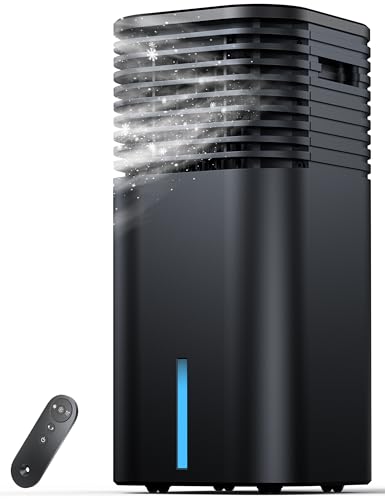
Humidifier Air Conditioner: Balancing Cool and Comfortable Air
Understand how combined humidification and cooling systems work, when they make sense, and how to choose the right setup for your home
Why this guide matters: Most homeowners focus on temperature and overlook humidity. Yet humidity is the hidden variable that decides whether your home feels comfortable or clammy, whether your skin and sinuses stay healthy, and whether your wood floors and furniture hold up over time. A humidifier air conditioner addresses both sides of that equation. This guide explains how the technology works, the different system types available, and the practical factors to weigh before you commit.
What a Humidifier Air Conditioner Actually Is
The term "humidifier air conditioner" describes a system that combines two functions that are often seen as opposites. A conventional air conditioner cools the air and, in doing so, condenses moisture out of it. A humidifier does the reverse: it adds moisture back into the air. When these two capabilities are integrated into one managed system, the result is a home that stays at a comfortable temperature and a balanced humidity level at the same time.
There are two broad ways this integration happens in practice. The first is a whole-house arrangement where a humidifier is installed on the supply ductwork of a central system, so it releases moisture into the same airstream that delivers cooled air. The second is a portable or room-level appliance that combines cooling and humidification in a single chassis, typically aimed at bedrooms, home offices, or small living spaces.
It helps to separate this concept from related terms. A humidifier for an AC unit is a component or accessory that adds moisture to a cooling system's output. By contrast, a dehumidifier removes moisture. Many people conflate the two because both deal with humidity, but they solve opposite problems. Understanding which side of the humidity equation your home needs is the single most important decision before you look at any product.
If you are still exploring the fundamentals of how cooling equipment operates, the guide on how an air conditioner works provides the foundation. For the broader context of moisture management inside a home, the overview of house humidification is a useful companion read.
Why Indoor Humidity Matters More Than You Think
Relative humidity is the percentage of moisture the air is holding compared to the maximum it could hold at that temperature. Most building science and HVAC guidance converges on a comfortable band of roughly 30 to 50 percent relative humidity indoors. Outside that band, both comfort and building health suffer.
When humidity is too low
- Dry skin, chapped lips, and irritated eyes and sinuses become common.
- Static electricity builds up on carpets, fabrics, and door handles.
- Wood floors, furniture, and musical instruments can crack or warp.
- Respiratory discomfort increases, particularly during heating season.
- Air feels colder than the thermostat suggests, prompting people to overheat the home.
When humidity is too high
- The home feels sticky even at a moderate temperature.
- Mold, mildew, and dust mites thrive, which affects allergy sufferers.
- Condensation forms on windows and cold surfaces, risking structural damage.
- Wood swells, paint peels, and metal fixtures corrode faster.
- The air conditioner works harder because latent heat removal becomes the dominant load.
The interaction between cooling and humidity is the reason a humidifier air conditioner concept exists at all. Cooling naturally dries the air, which is welcome in humid climates but problematic in dry ones. If your home struggles with moisture rather than dryness, the practical guides on lowering humidity in a room and checking humidity levels in your house are more relevant starting points.
How the Cooling and Humidification Cycle Works Together
To understand a combined system, it helps to trace the air as it moves through the equipment. In a central setup, return air is drawn from the home into the air handler, passed over the evaporator coil where it is cooled and dehumidified, and then pushed through the supply ducts back into the rooms. A whole-house humidifier taps into this supply side.
The role of each component
- Evaporator coil: Absorbs heat from the indoor air and condenses moisture, which drains away. This is the cooling and drying stage.
- Humidifier unit: Mounted on the supply plenum or duct, it introduces moisture into the warmed airstream through evaporation, steam, or a bypass design.
- Humidistat: A sensor that monitors relative humidity and signals the humidifier to cycle on or off, preventing over-humidification.
- Air handler or blower: Distributes the conditioned, humidity-balanced air throughout the home.
- Drain and water supply: The humidifier needs a water connection, and the cooling coil needs a condensate drain. Both must be routed correctly.
In a portable combined unit, the same physics apply on a smaller scale. A fan draws room air across a cooling element, and a separate wicking or ultrasonic section adds moisture before the air is discharged. Because the cooling and humidifying functions share a single airflow path, the balance is trickier to tune, which is why portable combined units tend to be simpler and less precise than ducted whole-house systems.
For readers comparing compressor technologies, the explanation of how inverter AC works is relevant because variable-speed systems modulate more gently and interact better with humidity control accessories than single-stage equipment.
System Types: Whole-House, Ducted, and Standalone Options
The right configuration depends on your existing HVAC infrastructure, the size of the space, and whether you are building new or retrofitting. The table below compares the main approaches at a high level.
| System Type | Best For | Integration Complexity | Humidity Precision |
|---|---|---|---|
| Whole-house bypass humidifier on central AC | Homes with existing ductwork in dry climates | Moderate; requires duct and water line access | Good when paired with a humidistat |
| Steam humidifier integrated with air handler | Larger homes and cold climates with high demand | Higher; electrical and plumbing work required | Excellent; fast response and tight control |
| Ducted mini-split with inline humidifier | Homes without ducts or with zoned comfort needs | Moderate to high; specialist installation | Good in the zones it serves |
| Portable combined cooling and humidifying unit | Single rooms, renters, temporary setups | Low; plug-and-play | Limited; suitable for general comfort only |
| Standalone humidifier paired with existing AC | Homes that already have cooling but need moisture | Very low; independent appliance | Room-level only unless multiple units are used |
Whole-house systems
These are the most capable and the most invisible. The humidifier lives near the furnace or air handler and works automatically whenever the blower runs and the humidistat calls for moisture. Because the moisture is distributed through the ducts, every room benefits evenly. The trade-off is installation effort: a water line, a drain, and often electrical work are involved.
Ducted mini-split and zoned options
Ducted mini-splits are increasingly common in homes without traditional ductwork. Adding humidification to these systems is possible but requires a compatible inline unit and careful sizing. Homeowners exploring this path should review the guide on house central air conditioning units for context on how central distribution differs from zoned systems.
Standalone and portable options
If you already have cooling and only need to address dryness, a separate humidifier is often the simplest route. Dedicated guides on humidifiers for AC units and humidifiers for an entire house cover sizing and placement in detail. For furnace-based setups, the material on humidifiers for a furnace and humidifier pumps for furnaces explains the plumbing side.
Market Tiers: What Different Quality Levels Deliver
Combined humidification and cooling systems fall into recognizable quality bands. Rather than focusing on figures, it helps to understand what each tier delivers in terms of control precision, durability, and integration depth.
Entry-Level Systems
Portable combined units and basic bypass humidifiers. These deliver general comfort improvement in a single room or a modest home. Expect manual controls, simpler humidity sensing, and periodic refilling or filter changes. A solid choice for renters or for testing whether humidification helps before committing to a larger installation.
Mid-Range Systems
Whole-house bypass or fan-powered humidifiers paired with a humidistat, or ducted mini-split integrations. These offer automated humidity control, better distribution across rooms, and more durable components. The control loop is tighter than entry-level gear, and maintenance intervals are longer. This is the sweet spot for most single-family homes.
High-End Systems
Steam humidifiers integrated with variable-speed air handlers and smart thermostats. These systems respond quickly, hold humidity within a narrow band, and coordinate with the cooling system's modulation. They suit large homes, cold climates with high humidification demand, and owners who want set-and-forget precision.
Across all tiers, the descriptors above describe relative market position rather than absolute performance. A well-installed balanced-tier system frequently outperforms a poorly installed top-tier one, which is why installation quality deserves as much attention as the equipment itself.
Matching the System to Your Climate and Home
Climate is the dominant variable. In arid regions, cooling season is also dry season, and a humidifier air conditioner setup pays off immediately. In humid regions, the priority flips: the cooling system already struggles to remove moisture, and adding more would be counterproductive.
Dry and desert climates
Homes in low-humidity regions often see indoor relative humidity drop below 30 percent during cooling season. Combined humidification and cooling restores comfort, protects wood finishes, and reduces the dry-air discomfort that drives people to raise the thermostat unnecessarily. Related reading on humidity levels for a home helps set realistic targets.
Humid and coastal climates
Here the need is usually dehumidification, not humidification. If your cooling system runs but the home still feels clammy, the issue is latent capacity, not temperature. The guides on reducing humidity in a house in summer and dehumidifying a room without a dehumidifier address practical remedies before considering equipment changes.
Mixed and four-season climates
In regions with distinct heating and cooling seasons, the humidity challenge changes with the calendar. Summer cooling dries the air; winter heating dries it further. A humidifier air conditioner arrangement that operates only in cooling mode may not be enough, which is why many homeowners pair a summer-capable system with a winter humidifier on the furnace. The discussion of humidity in a home during winter is essential reading for this scenario.
Home size and layout
Open floor plans distribute moisture more evenly than compartmentalized layouts. Multi-story homes may need zoned humidification to avoid over-humidifying the lower floor while the upper floor stays dry. The guide on humidifiers for a big house covers sizing considerations for larger footprints.
Advantages and Trade-offs to Consider
No system is universally right. Weighing the benefits against the drawbacks in your specific context is the honest way to decide.
Advantages
- Balanced humidity improves perceived comfort at the same thermostat setting.
- Protects wood floors, furniture, and structural materials from drying out.
- Reduces static electricity and the discomfort of dry skin and sinuses.
- Automated whole-house systems require little day-to-day attention.
- Can reduce the urge to over-cool or over-heat, supporting efficient operation in the long run.
Trade-offs
- Installation complexity is meaningful for ducted and steam systems.
- Requires a water supply and, for some designs, a drain nearby.
- Humidifiers need periodic maintenance, filter changes, and cleaning.
- Over-humidification is a real risk without a properly calibrated humidistat.
- Not appropriate for humid climates where dehumidification is the actual need.
For homeowners still deciding between repairing existing equipment and adding new capability, the comparison of repair versus replacement in the context of how long an AC lasts provides useful context on timing.
Maintenance Habits That Keep the System Healthy
A combined system has two subsystems to maintain, and neglect of either undermines the whole. The cooling side needs airflow and coil cleanliness; the humidification side needs water quality management and component inspection.
Cooling-side maintenance
- Replace or clean air filters on the schedule the manufacturer specifies, more often in dusty conditions.
- Inspect and clean the condensate drain to prevent clogs and water damage.
- Schedule coil cleaning as part of seasonal service; the guide on vacuuming an AC system explains the basics of system evacuation and why it matters during service.
Humidification-side maintenance
- Replace humidifier pads or filters regularly; mineral buildup degrades output.
- Clean the water reservoir or canister to prevent scale and biological growth.
- Verify the humidistat calibration annually so the system neither under- nor over-humidifies.
- Check the water supply line and saddle valve for leaks at the start of each season.
If your system develops cooling problems during the season, the troubleshooting guide on an AC that turns on but produces no cold air and the overview of the house air conditioner condenser can help you distinguish a cooling fault from a humidity control issue.
Practical Buying Checklist
Use the following sequence to move from research to a confident decision. Each step narrows the field and reduces the risk of a mismatch.
- Measure your humidity. Track relative humidity across several days and rooms. Establish whether you need humidification, dehumidification, or neither.
- Confirm your climate pattern. Determine whether dryness is a cooling-season, heating-season, or year-round issue.
- Audit your existing equipment. Identify the type of cooling system, its age, and whether the ductwork can support an add-on humidifier.
- Choose the integration level. Whole-house, ducted, standalone, or portable, based on home size, layout, and ownership status.
- Match the tier to your expectations. Essential tier for testing the concept in a room, balanced tier for most whole-home needs, top-tier for precision and large footprints.
- Verify installation requirements. Water line access, drain routing, electrical capacity, and duct modifications all affect feasibility.
- Select a qualified installer. The guide on getting an installation quote explains what to ask and how to compare proposals fairly.
- Plan the maintenance routine. Confirm filter and pad availability and set a seasonal service reminder before the first season ends.
Homeowners replacing an aging system entirely may want to review the broader context on house air conditioners and HVAC units to understand how humidity control fits into a full system replacement. For commercial or hospitality contexts, the material on hotels air conditioning illustrates how humidity management scales.
Frequently Asked Questions
Can an air conditioner act as a humidifier?
No. A standard air conditioner removes moisture as it cools the air. A humidifier adds moisture. A humidifier air conditioner combines both functions so the system can cool and balance humidity at the same time.
What is the ideal indoor humidity level?
Most experts recommend keeping indoor relative humidity between 30 and 50 percent. This range supports comfort, protects wood and furnishings, and discourages mold growth.
Do I need a humidifier if I already have an air conditioner?
It depends on your climate and the season. Air conditioning dries the air, so in dry climates or during heating season a humidifier helps restore balance. In humid climates, dehumidification is usually the greater need.
Where is the humidifier installed in an AC system?
A whole-house humidifier is typically mounted on the supply duct or the furnace plenum and connected to the water line. It releases moisture into the airstream that the air handler distributes through the home.
Will a humidifier make my air conditioner work harder?
A properly controlled humidifier adds moisture after the cooling coil, so it does not increase the cooling load in the same way as humid outdoor air entering the return. The key is a calibrated humidistat that prevents over-humidification, which would make the space feel clammy and force the AC to remove excess moisture.
Can I add a humidifier to an existing central AC system?
In most cases, yes. Bypass and fan-powered humidifiers are designed as add-on components for existing forced-air systems. The feasibility depends on duct accessibility, water line proximity, and drain routing, all of which an installer can assess during a site visit.
Bottom line: A humidifier air conditioner is not a single product category but a design approach: pair cooling with deliberate humidity control, and verify with measurement before and after. Start with a hygrometer, confirm your climate pattern, choose the integration level that fits your home, and invest in quality installation. When those pieces align, the result is air that feels comfortable at moderate settings, materials that last longer, and a home that supports health rather than fighting it.