Why this page exists: You already know the type of system or service you need. What you need next is confidence that the company you hire will deliver quality work, honor its warranties, and stand behind the installation for years. This guide walks through the traits that separate reliable HVAC companies from the rest, so you can compare candidates on substance instead of sales pitch.
Types of HVAC Companies You Will Encounter
The HVAC market is not a single category. Companies differ by size, specialization, and the services they offer. Knowing which type matches your project helps you shortlist faster and avoid mismatched proposals.
Full-service installation and service contractors
These companies handle design, equipment selection, installation, and ongoing service. They are the best fit for whole-home replacements, new construction, and homeowners who prefer a single point of responsibility across the equipment's life. Most established HVAC contractors in this group maintain in-house technicians and dedicated service departments.
Specialty installation contractors
Some firms focus on a single category, such as ductless mini-split systems, commercial rooftop units, or high-efficiency heat pumps. If your project involves a specialized system, a specialist may bring deeper product knowledge and cleaner installation practices than a generalist. Consider checking HVAC installation contractors with a documented portfolio in your system type.
Maintenance-focused service companies
These companies are built around tune-ups, seasonal servicing, and repair calls. They often offer maintenance plans that bundle inspections, filter changes, and priority scheduling. They are a good supplement to an installer, and some homeowners choose them for long-term upkeep once installation is complete. Explore HVAC maintenance services if you already have a working system and want structured care.
Commercial and industrial contractors
For buildings with packaged units, chillers, or complex zoning, look for a commercial-grade contractor. Their crews are trained on larger tonnage systems and typically carry additional bonding and safety certifications. See HVAC for commercial for the different service expectations in that segment.
The Selection Framework: Ten Criteria That Actually Matter
Sales presentations tend to focus on equipment brands and financing. The criteria below are the ones that determine whether the job is done well and whether you have recourse if something goes wrong.
1. Active license in your state
Every state has a licensing authority for mechanical and HVAC work. A licensed company has met minimum experience and examination requirements. Ask for the license number and verify it independently through your state's licensing board or contractor registry. A company that hesitates to share this is a company you should skip.
2. General liability and workers' compensation insurance
Request a certificate of insurance that names both policies. General liability protects your property if the crew damages it; workers' compensation protects you from liability if a technician is injured on your property. Confirm the policy is current by calling the insurer listed on the certificate, not just by trusting the document.
3. Manufacturer authorization
Authorized dealers can register warranties, access factory parts, and often receive priority support for warranty claims. Ask whether the company is an authorized dealer for the brand it is proposing. If it is not, confirm in writing how the manufacturer warranty will still be registered and honored.
4. Written, itemized proposals
A proper proposal lists the equipment model number, capacity, efficiency rating, and the full scope of labor and materials. It also states permit responsibility, warranty terms, and a payment schedule. A verbal estimate or a single-line quote is not enough to compare offers fairly. See HVAC quote expectations for the structure of a solid proposal.
5. Permit handling
Reputable companies pull the required permits themselves and schedule inspections. Ask who is responsible for permits in the proposal. If the answer is "the homeowner," that is a warning sign. Permitting requirements vary by jurisdiction, and HVAC building codes can affect what installation methods are allowed in your area.
6. Labor warranty and service guarantee
Manufacturer warranties cover parts, not the labor to replace them. Ask specifically about the labor warranty period, what it covers, and whether it transfers if you sell the home. A company that offers a strong labor warranty is signaling confidence in its own installation quality.
7. Verified local references
Ask for references from jobs completed in the last twelve months that are similar to yours. Call at least two. Ask how the crew handled unexpected issues, whether the timeline held, and whether the company responded promptly after the job was complete. Also check public review platforms for patterns rather than single reviews.
8. Load calculation before equipment selection
A company that sizes a system without performing a room-by-room load calculation is guessing. Proper sizing uses the Manual J method or an equivalent calculation that accounts for insulation, window area, orientation, occupancy, and local climate. Ask whether a load calculation will be performed and whether you will receive a copy.
9. Clear communication and a named point of contact
During the sales process, note how quickly the company responds and whether the person answering questions is the same person who will manage the project. A single accountable contact reduces the chance of dropped details between sales and installation.
10. Transparent equipment tiers and options
A good contractor explains the difference between entry-level, mid-range, and premium equipment in plain terms: efficiency ratings, noise levels, warranty length, and expected service life. They should present options rather than pushing one model. If you want to prepare for that conversation, review HVAC buying guide principles before the appointment.
Vetting and Verification: A Practical Checklist
Use this checklist during the first phone call and the in-home visit. It takes about twenty minutes of follow-up and eliminates most of the risk in selecting a contractor.
Before you sign anything
Confirm the license number through the state licensing board's public lookup.
Request the certificate of insurance and verify it with the insurer.
Ask for two recent references on comparable projects and call both.
Confirm the company will pull permits and schedule inspections.
Request the load calculation and review it before accepting a proposal.
Confirm the equipment model number and efficiency rating in writing.
Read the labor warranty terms and ask what voids them.
Check that the payment schedule is tied to milestones, not full payment upfront.
Red flags during the sales visit
Pressure to sign the same day with a limited-time offer.
A proposal that does not list specific equipment model numbers.
Reluctance to share the license number or insurance certificate.
Sizing recommendations made without measuring the home or asking about insulation.
No mention of permits or inspections.
Warranty terms described verbally but not included in the written proposal.
Practical note: If a company cannot or will not provide license and insurance documentation before the visit, end the process there. No amount of equipment brand prestige compensates for an unlicensed or uninsured installation crew.
Estimates are easiest to compare when they are structured the same way. Ask each company to include the same items so that differences in the proposals reflect actual scope, not formatting.
What every estimate should include
Equipment brand, model number, capacity, and efficiency rating.
A line-by-line scope of labor and materials.
Permit responsibility and inspection scheduling.
Disposal of old equipment and site cleanup.
Labor warranty period and what it covers.
Manufacturer warranty registration confirmation.
Project timeline and payment milestones.
Equipment tiers, not prices
Proposals differ in the tier of equipment they include. Rather than comparing headline figures, compare the tier and what it delivers. The table below describes typical differences you will see between tiers.
Tier
Best For
Typical Characteristics
Entry-level
Basic replacements and secondary spaces
Standard single-stage operation, basic warranty, functional controls
Mid-range
Primary home comfort with balanced efficiency
Two-stage or variable-speed options, quieter operation, improved dehumidification, longer warranty
Two proposals that look different in total often differ mainly because one includes premium-tier equipment and the other includes entry-level equipment. Ask each company to quote the same tier so the comparison is meaningful. The HVAC equipment reference explains how to read model numbers and efficiency ratings.
Questions to ask after receiving proposals
Which tier of equipment is included, and what would the next tier up add in practical terms?
What is the labor warranty period, and does it cover diagnostic visits?
Who pulls the permit, and which inspections are scheduled?
What is the expected timeline from acceptance to commissioning?
What happens if the equipment arrives damaged or delayed?
After You Hire: Getting the Most from the Relationship
The contractor relationship does not end at commissioning. The first twelve months are when installation quality is proven, and a structured follow-up routine protects your investment.
At commissioning
Ask the technician to walk through the system operation and thermostat setup.
Confirm that the manufacturer warranty has been registered in your name.
Collect all documentation: permits, inspection sign-offs, equipment manuals, and warranty certificates.
Note the date of installation and the labor warranty expiration.
During the first year
Schedule the first maintenance visit as recommended by the manufacturer.
Replace filters according to the schedule the technician recommends for your home.
Track any unusual noises, cycling patterns, or humidity issues and report them early.
Keep a simple log of service visits and any parts replaced.
Homeowners who stay on a maintenance schedule with their installing contractor typically get faster response on warranty claims because the service history is documented. If you want a structured plan, compare HVAC maintenance plans and confirm what each plan includes before enrolling.
When to consider a new contractor
The company stops responding to service requests within a reasonable window.
Diagnostic explanations are vague or change between visits.
Repeated repairs point to an installation defect the company will not address.
The company cannot produce warranty documentation you were promised.
Switching is not a failure. It is a reasonable response when the original relationship no longer serves you. The HVAC repair and service reference covers how to transition service records cleanly.
Frequently Asked Questions
How do I verify that an HVAC company is licensed and insured?
Ask the company for its license number and verify it through your state or local licensing board. Request a certificate of insurance that shows both general liability and workers' compensation coverage, and confirm the policy is active by calling the insurer directly.
What should be included in a written HVAC estimate?
A solid estimate should list the equipment brand and model, the efficiency rating, all labor and materials, permit handling, warranty terms for both parts and labor, the project timeline, and a clear payment schedule. Ask for the scope in writing so nothing is left ambiguous.
How often should HVAC systems be serviced by a professional?
Most manufacturers recommend professional servicing once per year for cooling and once per year for heating. Regular tune-ups keep efficiency high, catch small problems early, and are often required to keep the warranty valid.
What is the difference between an HVAC contractor and an HVAC technician?
The contractor is the licensed business that holds the contract with you, carries insurance, and is responsible for the work. The technician is the individual professional who performs the installation or repair on site. Always confirm that the technician is employed or subcontracted by a properly licensed contractor.
Should I choose the lowest HVAC estimate I receive?
Not necessarily. Compare the scope of work, equipment tier, warranty coverage, and licensing details behind each estimate. A low bid that omits permits, uses entry-level equipment without disclosing it, or offers weak labor warranties can end up being the more demanding path in the long run.
Next Steps
If you are ready to move from research to hiring, start with a shortlist of three companies that meet the license, insurance, and authorization criteria above. Schedule in-home visits, request structured proposals, and compare them against the selection framework. For related topics, the HVAC contractor and HVAC experts references cover additional considerations for specific project types.
For homeowners evaluating the equipment itself before choosing an installer, the HVAC and air conditioning overview and the HVAC energy efficiency reference provide the system-level context that makes contractor conversations more productive.
Recommended Tools and Equipment for HVAC Projects
⚠️ AFFILIATE DISCLOSURE: This website contains affiliate links. As an Amazon Associate, we earn from qualifying purchases. If you make a purchase through these links, we may receive a small commission at no additional cost to you.
Read our full affiliate policy.
The E-Myth HVAC Contractor: Why Most HVAC Companies Don't Work and What to Do About It (The E-Myth Expert)
⚠️ Note: The purchase links above are affiliate links. As an Amazon Associate, we earn from qualifying purchases at no additional cost to you.
The HVAC Business Manual: How to Stop Working for Someone Else, Master Pricing, Build Service Agreements & Start Running Your Own HVAC Company (HVAC Field Mastery Series)
⚠️ Note: The purchase links above are affiliate links. As an Amazon Associate, we earn from qualifying purchases at no additional cost to you.
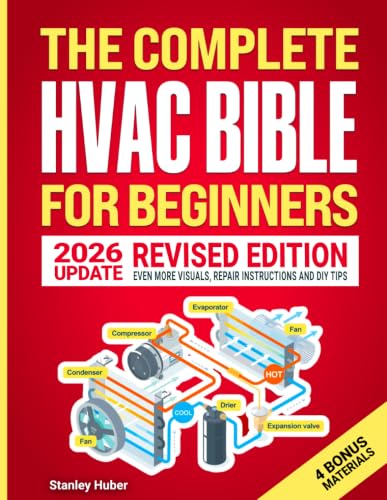
The Complete HVAC BIBLE for Beginners: The Most Practical & Updated Guide to Heating, Ventilation, and Air Conditioning Systems | Installation, Troubleshooting and Repair | Residential & Commercial
⚠️ Note: The purchase links above are affiliate links. As an Amazon Associate, we earn from qualifying purchases at no additional cost to you.
The HVAC Bookkeeper: Stop Being Busy and Broke: Job Costing, Pricing and Cash Flow for Heating and Air Conditioning Contractors (Commercial Small Business Guides)
⚠️ Note: The purchase links above are affiliate links. As an Amazon Associate, we earn from qualifying purchases at no additional cost to you.
Disclaimer
Some of the content on this site uses AI assistance. Information is provided for educational purposes only. We are not responsible for any losses resulting from the use of this information. By using this site, you waive any right to bring legal claims against us arising from your use of the information provided. If you do not agree, please do not use this site.
Read the full disclaimer.
We uses cookies to provide you with a better browsing experience. By continuing to use our site, you consent to our cookie settings.
Learn more