
HVAC Installation Contractors: How to Hire the Right One
A complete, practical guide to finding, vetting, and hiring HVAC installation contractors — from checking licenses and comparing quotes to understanding warranties and spotting red flags before work begins.
Who this guide is for: homeowners and property managers who already know which system type they want — a central unit, a ductless mini-split, or a full heat pump system — and now need a qualified professional to install it correctly. The quality of the installation often matters as much as the equipment itself. A top-tier unit installed poorly will underperform, while a mid-range unit installed correctly by a skilled technician can deliver years of reliable service.
Why the Installation Contractor Matters More Than You Think
HVAC systems are not plug-and-play appliances. Refrigerant charge, airflow balancing, duct sizing, electrical connections, and condensate drainage all depend on the installer's skill and attention to detail. Studies in the building-performance field consistently show that a significant share of system failures and efficiency losses trace back to installation errors rather than manufacturing defects.
That is why choosing the right HVAC contractor is a long-term decision, not a transaction. A skilled installer will:
- Perform a proper load calculation instead of simply matching the old system's size.
- Verify duct capacity and static pressure before commissioning the equipment.
- Follow manufacturer charging charts rather than guessing refrigerant levels.
- Document the installation so warranty claims are honored without friction.
For a deeper look at how load calculations and system design fit together, see the HVAC design guide.
How to Find HVAC Installation Contractors
There is no single best source. The strongest approach combines several channels so you can cross-check reputation and licensing independently.
Manufacturer Dealer Locators
Most equipment brands publish a list of factory-authorized installers. These contractors often have access to extended manufacturer warranties and training programs.
State Licensing Databases
Your state or provincial licensing board maintains a searchable registry. This is the most reliable way to confirm a contractor is legally permitted to perform installation work.
Referrals and Reviews
Neighbors, property managers, and local community groups are strong sources. Pair personal referrals with online review patterns — look for consistency, not isolated complaints.
Trade Associations
Organizations such as ACCA and NATE certify technicians and contractors. Membership is not a guarantee of quality, but it does signal investment in training.
When searching online, phrases like HVAC installers or HVAC companies near you will return a long list. Filter aggressively: verify licensing first, then reputation, then price positioning within its tier. If you prefer a curated starting point, a directory of HVAC installation companies can help narrow the field before you make calls.
Vetting Checklist: What to Confirm Before You Sign
Use this checklist for every contractor you seriously consider. A professional will answer these questions without hesitation and will provide documentation on request.
| Item to Verify | What "Good" Looks Like | Why It Matters |
|---|---|---|
| State license | Active, verifiable license number matching the company name | Unlicensed work can void warranties and create liability for the homeowner |
| Insurance | General liability and workers' compensation certificates provided on request | Protects you if a worker is injured or property is damaged on site |
| NATE or equivalent certification | Technicians hold current certifications for the system type being installed | Signals baseline competence and ongoing training |
| Permits | Contractor pulls the required permit and schedules inspection | Permitted work is inspected and documented — important for resale and insurance |
| Load calculation | Contractor performs a room-by-room Manual J or equivalent calculation | Prevents oversizing and undersizing, both of which hurt efficiency and comfort |
| Written scope | Detailed proposal listing equipment model numbers, labor, and exclusions | Prevents surprise charges and scope disputes mid-project |
| Warranty terms | Manufacturer and labor warranties stated in writing | Clarifies who covers what and for how long |
For a broader review of how licensing and insurance interact with local requirements, see HVAC license and insurance and HVAC building codes. These two references will help you ask more precise questions during the vetting conversation.
Practical tip: Ask each contractor to send their license number and insurance certificate by email before the site visit. Contractors who hesitate or push back on this request are showing you how they will behave if a problem arises later.
Comparing Quotes: What Separates a Good Proposal from a Vague One
Obtain at least three written proposals. The goal is not to pick the lowest number — it is to compare scope, equipment specification, and installation approach on equal footing. A properly structured HVAC quote should include:
- Equipment details: brand, model number, capacity, efficiency rating, and refrigerant type.
- Scope of labor: what is included (line sets, pad, disconnect, thermostat) and what is excluded.
- Ductwork: whether existing ducts will be tested, sealed, or modified, and whether that work is itemized.
- Permits and inspection: who pulls the permit and who is responsible for scheduling inspection.
- Old equipment removal: disposal and recycling of the existing unit.
- Timeline: estimated start date and duration, with weather contingencies noted.
- Payment terms: deposit amount, progress payments, and final payment trigger.
If you want a structured way to gather comparable bids, see HVAC estimates. For a broader view of what installation projects involve, the HVAC installation services overview is a useful cross-reference.
Positioning Contractors Within Their Tier
Rather than ranking contractors by headline figure, classify them by market positioning:
| Tier | Typical Profile | Best For |
|---|---|---|
| Entry-level / starter tier | Small local outfits, owner-operator crews, limited office staff | Straightforward replacements where the existing infrastructure is sound |
| Mid-range / balanced tier | Established local companies with dedicated install crews and service departments | Most residential installations, especially where warranty support matters |
| Premium / top-tier | Factory-authorized dealers with in-house training programs and extended labor warranties | Complex systems, high-efficiency equipment, and homeowners who want a single accountable provider |
| Professional-grade / commercial-grade | Firms with commercial divisions, engineering staff, and project management | Multi-zone systems, light commercial, and larger residential retrofits |
A mid-tier contractor with strong reviews and verifiable licensing is often the balanced choice for residential work. A top-tier dealer makes more sense when the equipment itself is premium and you want the extended warranty chain to remain intact.
What a Professional Installation Process Looks Like
Understanding the sequence helps you evaluate whether a contractor is following best practice or cutting corners. A well-run residential installation generally follows these stages.
1. Pre-installation assessment
The crew confirms equipment match, reviews the load calculation, inspects the electrical panel, and checks the existing duct system and refrigerant line routing. If duct sealing or repair is needed, this is identified before equipment is set. Related reading: HVAC air duct sealing and HVAC ductwork.
2. Equipment set and connections
The outdoor condenser is set on a level pad with proper clearance. The indoor unit is positioned and connected. Line sets are routed, brazed or flared per manufacturer spec, and pressure-tested. Electrical connections are made to code, including disconnect and overcurrent protection.
3. Evacuation and charging
The system is evacuated with a vacuum pump to the manufacturer's specified micron level, then charged by weight or subcooling/superheat method. Skipping or shortening evacuation is one of the most common causes of premature compressor failure. If you want to understand the components involved, see HVAC evacuation pump and HVAC linesets.
4. Commissioning and verification
A proper commissioning includes measuring static pressure, verifying airflow at each register, checking temperature split across the coil, and confirming condensate drainage. The contractor should record these readings and leave them with you. For context on the cooling side, see HVAC cooling cycle.
5. Homeowner walkthrough
The installer explains thermostat operation, filter maintenance schedule, and warranty registration steps. You should receive a packet containing the equipment manual, warranty documents, permit inspection record, and commissioning readings.
Depending on system type, the process varies somewhat. A mini-split installation is usually faster and less invasive than a full ducted system changeout, while a heat pump installation may include additional low-voltage wiring and defrost configuration. For larger projects, an HVAC inspection after commissioning is a worthwhile step.
Red Flags to Watch For
Most installation problems are foreseeable. The following warning signs appear repeatedly in homeowner complaints and should prompt you to slow down or walk away.
Pressure to sign immediately
"Today-only" offers and same-day signing incentives are a sales tactic, not a service. A legitimate contractor will give you time to compare proposals.
No load calculation
If the proposal simply matches the old unit's tonnage without measuring the home, the contractor is guessing. Oversizing causes short cycling and humidity problems.
Verbal-only scope
Anything not written into the proposal is effectively not agreed. Insist on a written scope with model numbers and exclusions listed.
Large upfront deposit
A deposit that covers most of the project before any work begins is a risk. Standard practice is a modest deposit with progress payments tied to milestones.
No permit mentioned
If the contractor suggests skipping the permit to "save time," treat it as a serious integrity issue. Unpermitted work can complicate insurance and resale.
Vague warranty language
"Full warranty" without documentation means nothing. Ask for the manufacturer warranty document and the labor warranty terms in writing.
Unmarked vehicles and no credentials
Legitimate crews arrive in branded vehicles and can produce ID and license information on request. This is a basic professionalism check.
No post-install commissioning
If the crew leaves without measuring airflow, temperature split, or refrigerant charge, the job is not finished. Ask for the commissioning record.
For a broader discussion of how to evaluate companies before hiring, see HVAC companies and HVAC experts. If you are comparing different types of providers, HVAC professionals offers additional context on credentials and roles.
Warranty, Maintenance, and What Comes After Installation
Installation is the beginning of the system's service life, not the end of your involvement. Two things determine how well the system performs over the next decade: whether the warranty is properly registered, and whether routine maintenance is kept up.
Warranty registration
Many manufacturer warranties require online registration within a set window after installation. Ask your contractor whether they handle registration on your behalf and request confirmation. Keep the equipment model and serial numbers in a safe place — they are needed for any future claim.
Labor warranty
Labor warranties vary widely by contractor. Some offer one year; top-tier dealers may offer five years or more on their own workmanship. Confirm what is covered (diagnostics, refrigerant, labor hours) and what is excluded.
Maintenance plans
Many contractors offer annual maintenance plans that include filter changes, coil cleaning, and seasonal checkups. These plans often satisfy the manufacturer's maintenance requirements for keeping the parts warranty valid. If you prefer to handle maintenance yourself, the HVAC maintenance guide covers the essentials, and HVAC maintenance services explains what a professional visit typically includes.
If a problem appears shortly after installation, document it immediately and contact the installer in writing. Most workmanship issues surface within the first cooling or heating season. For a structured approach to post-installation review, see HVAC inspection checklist.
Frequently Asked Questions
How do I verify an HVAC contractor's license?
Check with your state licensing board or local building department. Most states maintain an online database where you can confirm license status, expiration date, and any disciplinary actions. Always verify the license number directly with the issuing authority rather than relying on the contractor's word.
What should a proper HVAC installation quote include?
A thorough quote should list the equipment model numbers and specifications, labor scope, ductwork modifications if any, permit fees, warranty terms, payment schedule, and project timeline. It should also confirm whether old equipment removal and disposal are included.
How long does a typical HVAC installation take?
A straightforward replacement of a similar system often takes one to two days. New installations involving ductwork changes, electrical upgrades, or a switch in system type can take three to five days or more depending on complexity and permitting requirements.
What warranties should I expect from an HVAC installer?
Manufacturer warranties on equipment commonly range from five to ten years for parts, with some extending to compressors. Labor warranties from the installer typically range from one to five years. Ask for both in writing and confirm whether registration steps are required to keep the manufacturer warranty valid.
Should I choose the lowest quote?
Not automatically. Compare proposals on scope, equipment specification, and included services. A lower proposal that omits duct sealing, permit fees, or commissioning is not comparable to one that includes them. Weigh tier positioning and warranty support alongside the proposal itself.
Do I need a permit for HVAC installation?
In most jurisdictions, yes — replacing or installing a central system typically requires a mechanical permit and inspection. Your contractor should handle the permit as part of the scope. Skipping permits can create problems with insurance and future home sales.
HVAC Tools and Equipment for Installation Professionals
⚠️ AFFILIATE DISCLOSURE: This website contains affiliate links. As an Amazon Associate, we earn from qualifying purchases. If you make a purchase through these links, we may receive a small commission at no additional cost to you. Read our full affiliate policy.

HVAC Basics for Contractors 3rd Ed
Check price on Amazon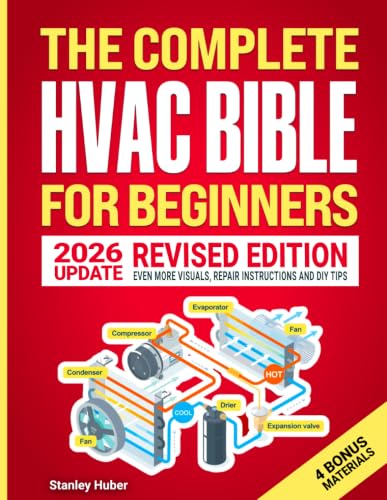
The Complete HVAC BIBLE for Beginners: The Most Practical & Updated Guide to Heating, Ventilation, and Air Conditioning Systems | Installation, Troubleshooting and Repair | Residential & Commercial
Check price on Amazon
General or Residential Florida HVAC Contractor Study Guide 2026–2027: Complete Class A and Class B Exam Prep with 1000 Practice Questions, 500 Flashcards and Trade Knowledge Review
Check price on Amazon
QI HVAC Quality Installation Specification Standard Number ANSI/ACCA 5 QI 2015
Check price on Amazon
California C-20 HVAC Contractor License Study Guide 2026–2027: Real-World Contractor Cases, Installation & Troubleshooting, HVAC Calculations, 1,000+ Questions, 400 Flashcards & Online Exam Simulator
Check price on Amazon
ETERART Aluminum Foil Duct Tape, High-Temp Seal for HVAC,2" x 20Yds | Heavy-Duty, Dryer Vents & Insulation, Stops Air Leaks & Resists Extreme Heat for Home Repair, Silver, easy to apply, durable
Check price on Amazon
Texas HVAC Contractor License Exam Review Questions and Answers: A Self-Practice Exercise Book focusing on HVAC code compliance
Check price on Amazon
HVAC Troubleshooting and Diagnostics: A Practical Field Workbook for Diagnosing Common Residential HVAC Problems
Check price on AmazonDisclaimer
Some of the content on this site uses AI assistance. Information is provided for educational purposes only. We are not responsible for any losses resulting from the use of this information. By using this site, you waive any right to bring legal claims against us arising from your use of the information provided. If you do not agree, please do not use this site. Read the full disclaimer.