
In Winter What Should the Humidity in the House Be?
Find the ideal indoor humidity range, learn how to measure it, and discover practical tips to maintain comfort and protect your home during cold months.
Learn the Ideal RangeWhy winter humidity matters: During cold months, indoor air can become excessively dry, leading to respiratory issues, dry skin, static electricity, and even damage to wood furniture and musical instruments. Conversely, too much humidity can cause condensation, mold growth, and structural damage. Finding the right balance is key.
What Is the Ideal Winter Humidity Level?
According to the Environmental Protection Agency (EPA) and most HVAC experts, the ideal indoor relative humidity (RH) during winter is between 30% and 50%. However, the sweet spot for most homes is around 35% to 45%. This range balances comfort, health, and home preservation.
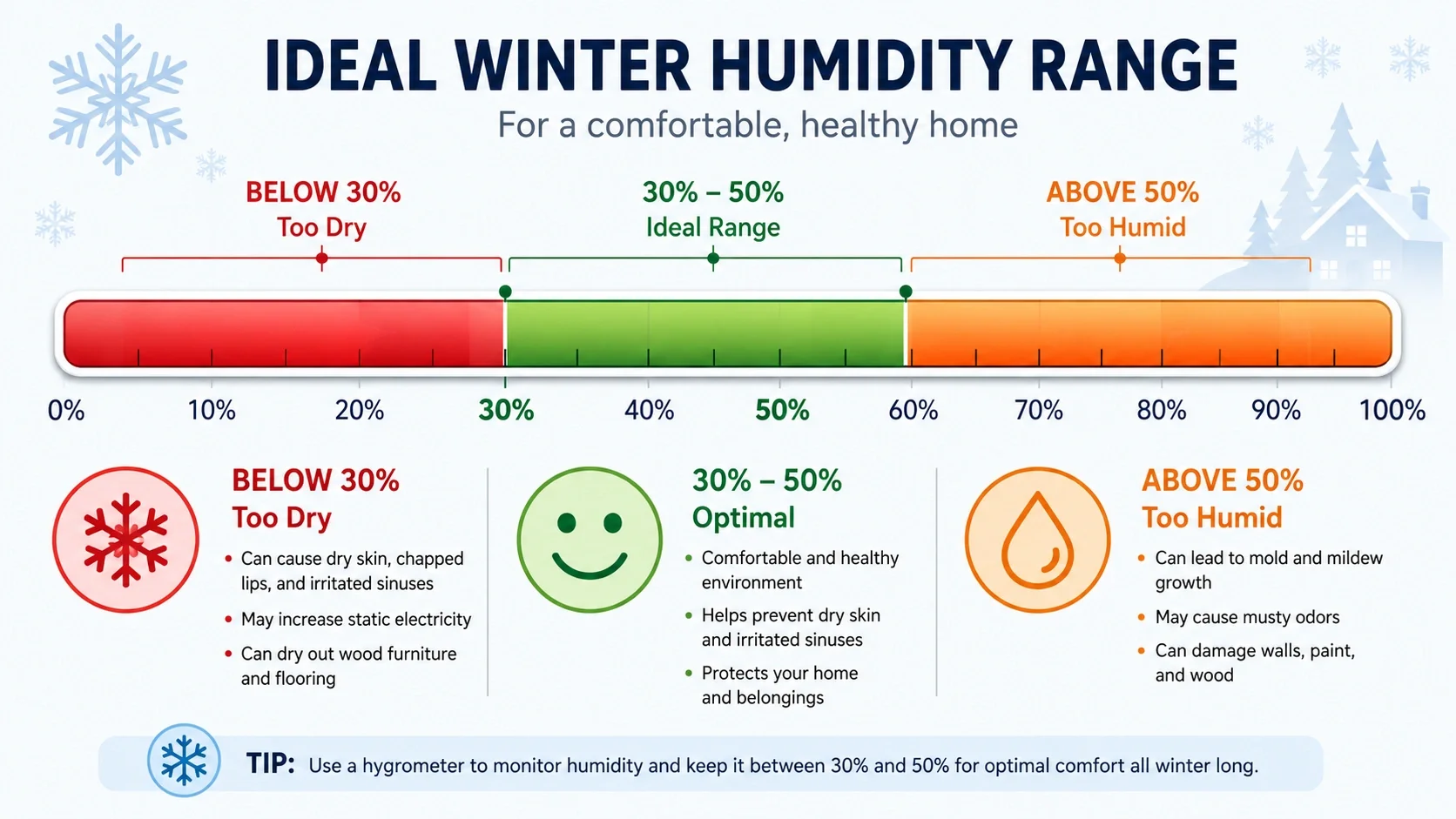
Humidity Level Guide
| Humidity Level | Impact | Recommendation |
|---|---|---|
| Below 30% | Dry skin, respiratory irritation, static electricity, wood cracks | Use a humidifier to increase moisture |
| 30% – 50% | Optimal comfort, healthy breathing, protected home | Maintain this range |
| Above 50% | Condensation, mold growth, dust mites, musty odors | Use a dehumidifier or increase ventilation |
Why 35–45% Is the Sweet Spot
Maintaining humidity around 40% provides the best balance: it prevents the air from feeling too dry while avoiding the risks of excess moisture. At this level, you'll likely feel warmer at lower thermostat settings, potentially saving on heating costs. It also protects your home's structure and your family's health.
How to Measure Indoor Humidity
You can't manage what you don't measure. Here are the most common and accurate ways to check your home's humidity level:
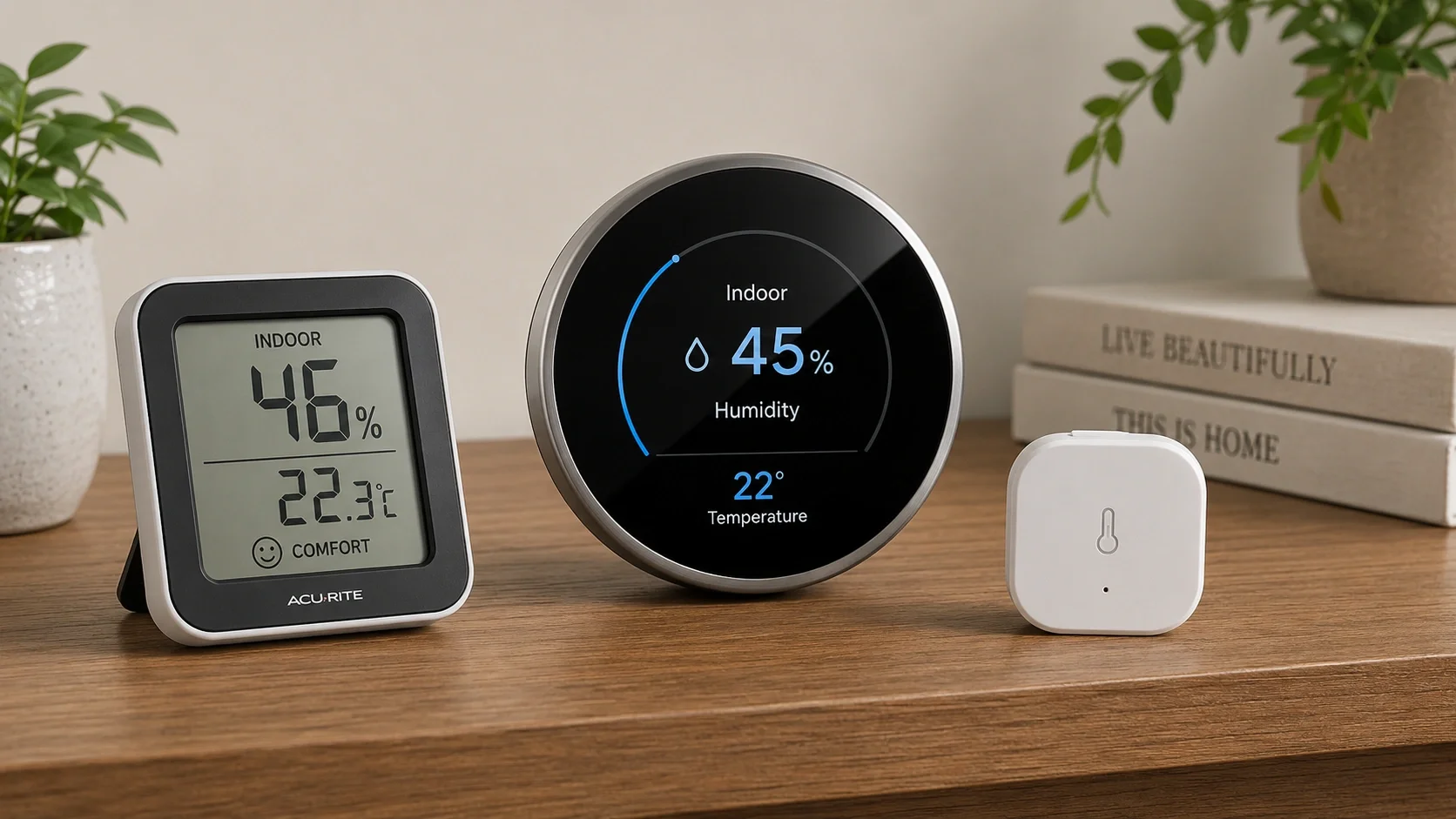
- Hygrometer: A small, affordable device that measures relative humidity. Place one in your main living area and one in the bedroom for accurate readings.
- Smart Thermostat: Many modern thermostats, like the Nest or Ecobee, display indoor humidity levels.
- Smart Home Sensors: Devices like the Aqara or Eve Room sensors provide real-time humidity and temperature data.
- Observation: Signs of low humidity include static shock, dry lips, and cracked skin. Signs of high humidity include foggy windows, musty odors, or condensation.
💡 Pro Tip: Place a hygrometer in different rooms—humidity can vary significantly between rooms, especially bathrooms, kitchens, and basements.
How to Adjust Winter Humidity
Once you know your humidity level, you can take action to bring it into the ideal range. Here are practical methods for increasing or decreasing indoor humidity.
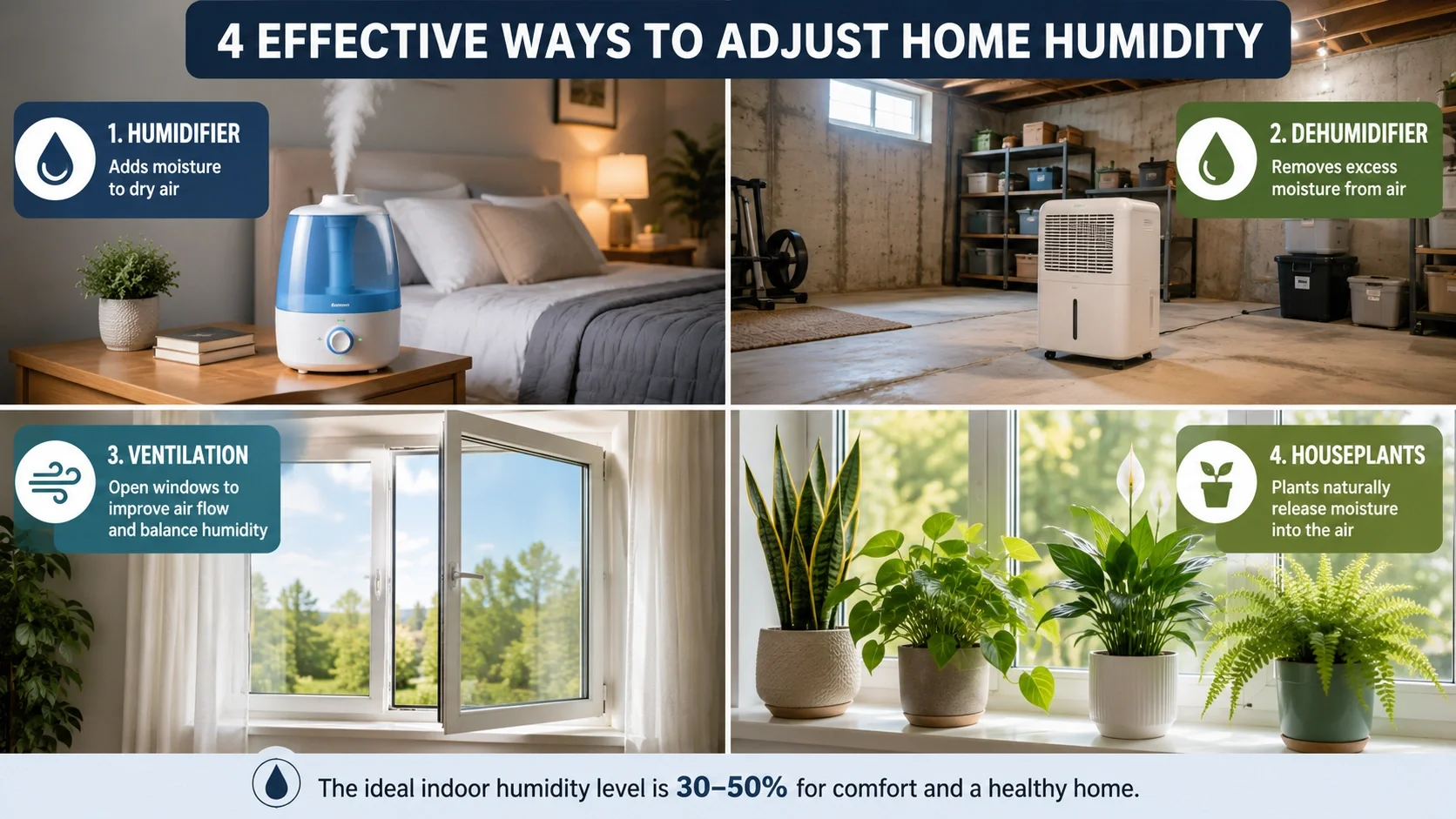
If Humidity Is Too Low (Below 30%)
💧 Use a Humidifier
Portable or whole-house humidifiers add moisture to the air. Choose one that matches your room size.
🌿 Add Houseplants
Plants release moisture through transpiration. Consider peace lilies, ferns, or spider plants.
🛁 Let Bathroom Steam Escape
Leave the bathroom door open after a shower to allow moisture to circulate.
🥣 Place Water Bowls
Set bowls of water near heat sources or on radiators to evaporate and add humidity.
If Humidity Is Too High (Above 50%)
💨 Use Exhaust Fans
Run bathroom and kitchen exhaust fans to remove excess moisture from cooking and bathing.
🌀 Use a Dehumidifier
Portable dehumidifiers can quickly reduce humidity in damp basements or living spaces.
🪟 Increase Ventilation
Open windows briefly on mild days to allow dry air to enter and humid air to escape.
🌡️ Check Your HVAC System
Ensure your central air conditioning or mini-split system is properly sized and maintained.
Health and Comfort Benefits of Proper Humidity
Maintaining the right winter humidity isn't just about comfort—it's about health and protecting your home. Here's why it matters:

- Respiratory Health: Proper humidity soothes nasal passages and reduces the risk of colds and flu.
- Skin Hydration: Prevents dry, itchy, and cracked skin during harsh winter months.
- Better Sleep: Comfortable humidity levels promote deeper, more restful sleep.
- Protects Home: Prevents wood floors, furniture, and musical instruments from drying out and cracking.
- Static Electricity: Reduces static shocks, which can damage electronics.
- Energy Efficiency: Higher humidity makes the air feel warmer, allowing you to lower your thermostat and save energy.
Common Winter Humidity Mistakes
Avoid these pitfalls to ensure your home stays comfortable and healthy throughout the winter.
- Over-humidifying: Setting humidifiers too high can cause condensation, mold, and mildew. Stick to 30–50%.
- Ignoring the thermostat: Humidity levels change with outdoor temperature. Adjust your humidifier accordingly.
- Closing vents: Blocking air vents can create imbalanced humidity and reduce air circulation.
- Forgetting to maintain equipment: Clean humidifiers regularly to prevent bacteria and mineral buildup.
- Not measuring: Guessing humidity levels is unreliable. Always use a hygrometer.
Humidity and Your HVAC System
Your heating and cooling system plays a crucial role in maintaining indoor humidity. If your home is consistently too dry or too humid, your HVAC system may need attention.
If you're using a central air conditioner or a ductless mini-split AC, ensure it has proper humidity control features. Some systems come with built-in dehumidification modes. For homes with forced air heating, consider installing a whole-house humidifier that integrates with your HVAC system.
If you're in the market for a new system, look for units with high SEER ratings and energy-efficient features. A well-maintained HVAC system not only regulates temperature but also helps manage humidity levels effectively.
Also, consider sealing air ducts to prevent moisture loss and improve overall efficiency. Leaky ducts can let dry outdoor air into your home, making it harder to maintain optimal humidity.
Frequently Asked Questions
What humidity level is best for sleeping in winter?
Aim for 40–50% humidity in the bedroom for optimal sleep quality. This range supports respiratory comfort and prevents dry skin.
Can low humidity make you sick?
Yes. Dry air can dry out mucous membranes, making you more susceptible to colds and flu. It can also exacerbate asthma and allergy symptoms.
How do I know if my humidifier is working?
Use a hygrometer to measure humidity levels before and after running the humidifier. You should see a noticeable increase within a few hours.
Is it okay to run a humidifier all night?
Yes, as long as you monitor humidity levels. Many humidifiers have built-in hygrostats that automatically shut off when the desired humidity is reached.
Ready to Optimize Your Winter Humidity?
Explore our recommended humidifiers and dehumidifiers to find the perfect solution for your home.
Shop Recommended ProductsFor more information on managing your home's environment, check out our guides on what is a good humidity level for a home and how to lower humidity in your house.


