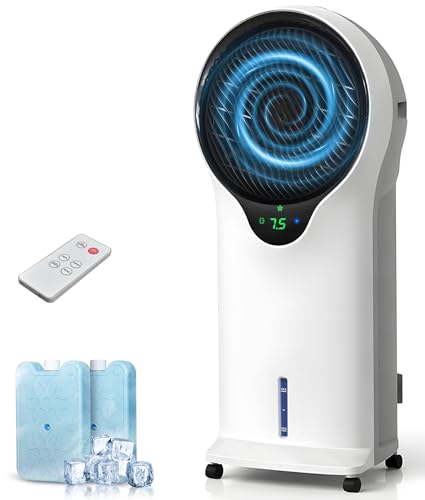
Indirect Direct Evaporative Cooling System
Discover how two-stage evaporative cooling combines indirect and direct stages to deliver cooler, more comfortable air with greater energy efficiency than single-stage systems.
Explore the SystemWhat is an indirect direct evaporative cooling system? It is a two-stage evaporative cooling architecture that first cools air indirectly without adding moisture, then passes it through a direct evaporative stage for further temperature reduction. This hybrid approach delivers cooler supply air than either stage alone while keeping humidity gain under control.
How Indirect Direct Evaporative Cooling Works
Traditional single-stage evaporative coolers rely on one direct stage: warm outside air passes through water-saturated pads, and evaporation lowers the air temperature while raising humidity. An indirect direct evaporative cooling system improves on this by adding a pre-cooling stage before the direct stage.
In the first stage (indirect), a primary air stream is cooled through a heat exchanger by a separate secondary air stream that is itself evaporatively cooled. Because the two air streams never mix, the primary air loses heat without gaining moisture. In the second stage (direct), that pre-cooled air passes through evaporative media, dropping its temperature further. The result is supply air that is noticeably cooler than a direct-only system can produce, with a moderate humidity increase rather than an excessive one.
Stage 1 — Indirect Cooling
A heat exchanger transfers heat from the primary air stream to a secondary evaporatively cooled stream. The primary air drops in temperature without adding moisture.
Stage 2 — Direct Cooling
The pre-cooled primary air passes through wetted evaporative media for a second temperature drop, delivering cool supply air into the space.
Net Result
Lower supply-air temperature than a single-stage cooler, with controlled humidity gain and substantially lower electrical demand than vapor-compression systems.
Key Components of a Two-Stage Evaporative Cooler
Understanding the major parts helps you evaluate specifications and compare models across tiers. A well-built two-stage unit typically includes the following elements:
- Indirect heat exchanger: A plate, tube, or polymer core that separates the primary and secondary air streams and transfers sensible heat without mixing the streams.
- Direct evaporative media: Rigid cellulose, polymer, or fiber pads that maximize water-to-air contact area for the second cooling stage.
- Water distribution system: Pumps, headers, and distribution pads that keep the media uniformly wetted; premium models use corrosion-resistant fittings and even-flow designs.
- Primary and secondary fans: High-end tiers often use electronically commutated (EC) fans for variable-speed control and quieter operation; entry-level units may use fixed-speed motors.
- Water management and bleed system: Controls mineral buildup and maintains water quality; commercial-grade units add automated drain-and-fill cycles.
- Control system: From basic switches on entry-level models to programmable and smart controls on top-tier units, often compatible with modern smart thermostat platforms.
Benefits of Indirect Direct Evaporative Cooling
Two-stage evaporative cooling is particularly attractive in hot, dry climates and in buildings that need large air volumes with moderate humidity control. The main advantages include:
- Cooler supply air: The indirect pre-cooling stage produces supply temperatures lower than direct-only evaporative systems can reach.
- Controlled humidity: Because the first stage adds no moisture, the total humidity gain is more moderate, improving comfort in transitional climates.
- Lower electrical demand: Evaporative systems use fans and pumps rather than a compressor, making them efficient in the long run compared with vapor-compression cooling.
- 100% fresh air: These systems continuously introduce outside air, which improves indoor air quality when combined with proper filtration.
- Simpler maintenance: No refrigerant circuit means fewer regulated service requirements; routine media and water-system care is the main upkeep.
Climate note: Two-stage evaporative cooling performs best in hot, dry regions. In humid climates, the direct stage adds moisture that may reduce comfort, so sizing and humidity control deserve extra attention. For general system sizing principles, see HVAC sizing.
Single-Stage vs Two-Stage Evaporative Cooling
The table below compares the two approaches across the factors that matter most during research. Use it to match the architecture to your climate, building, and comfort expectations.
| Factor | Single-Stage (Direct) | Two-Stage (Indirect + Direct) |
|---|---|---|
| Supply air temperature | Moderate reduction | Greater reduction via pre-cooling |
| Humidity gain | Higher | Moderate and better controlled |
| Best-fit climate | Hot and very dry | Hot and dry to semi-arid |
| System complexity | Essential tier — simple build | Mid-tier to high-end tier — added heat exchanger |
| Maintenance focus | Media and water system | Media, water system, and heat exchanger cleaning |
| Typical use | Residential spot cooling, workshops | Whole-building comfort, commercial spaces |
How to Choose the Right Indirect Direct Evaporative Cooler
Buyers at the research stage usually know they want evaporative cooling but need help narrowing the field. Focus on these decision factors:
- Climate and design conditions: Confirm your local wet-bulb and dry-bulb design temperatures. Two-stage systems shine where summer air is hot and dry but not bone-dry.
- Airflow and capacity: Match cubic feet per minute (CFM) to the space and occupancy. Undersized units run constantly; oversized units cycle and may over-humidify.
- Installation type: Rooftop, side-discharge, and ducted configurations exist. Ducted layouts should follow sound design; see HVAC ventilation system guidance for balancing supply and return paths.
- Control and integration: Top-tier units offer variable-speed EC fans and building-control integration; mid-range units typically offer programmable controllers; starter tier units may be manual.
- Water quality and maintenance access: Hard water increases scaling; choose units with accessible media panels and effective bleed systems.
- Professional installation: Proper commissioning matters. Vetted HVAC specialists can verify airflow, water balance, and duct static pressure.
If your project involves a larger facility, evaluate how the evaporative system integrates with existing equipment. Commercial buildings often pair evaporative pre-cooling with conventional packaged units; see HVAC systems for commercial buildings for integration considerations.
Maintenance Essentials
Evaporative systems reward routine care. Schedule these tasks seasonally:
- Inspect and replace media: Mineral scale and algae degrade pad performance; replace rigid media when airflow drops or scaling is visible.
- Clean the indirect heat exchanger: Dust and scale on the core reduce heat transfer; follow the manufacturer's cleaning method to avoid damaging the plates.
- Check water distribution: Ensure even wetting and clear nozzles; adjust the bleed rate for your water hardness.
- Service fans and belts: Lubricate bearings where applicable and check belt tension on belt-driven models. A seasonal HVAC tune-up service can catch issues early.
- Verify controls: Test thermostat and humidity interlocks before each cooling season. Professional HVAC system inspection is worthwhile for commercial installations.
Frequently Asked Questions
Is an indirect direct evaporative cooling system the same as a two-stage evaporative cooler?
Yes. The terms are used interchangeably. Both describe a system with an indirect first stage followed by a direct second stage.
Can it replace a conventional air conditioner?
In dry climates, a properly sized two-stage evaporative system can provide whole-building comfort for much of the cooling season. In humid climates it is better suited to pre-cooling or hybrid configurations with conventional equipment.
Does the indirect stage really reduce humidity gain?
Yes. The indirect stage cools the primary air without adding moisture. The direct stage then adds a measured amount of humidity, so total moisture gain is lower than direct-only cooling for the same temperature drop.
What maintenance do two-stage units require?
Seasonal media replacement, heat exchanger cleaning, water system checks, and fan service. Commercial-grade units may include automated drain cycles that reduce manual labor.
How do I know what size system I need?
Capacity depends on space volume, occupancy, internal loads, and climate design conditions. Use professional load calculation or manufacturer sizing tools; general sizing principles are covered in HVAC sizing.
Ready to compare models? Browse the recommended options below and evaluate specifications against the factors covered in this guide.