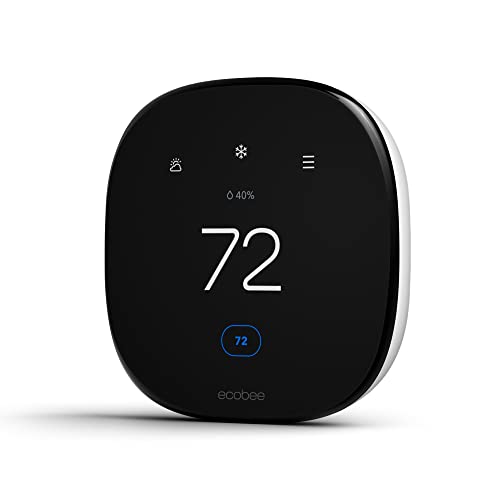
HVAC Smart Thermostat: The Complete Guide to Smarter Home Comfort
Discover how smart thermostats work, their key features, and how to choose the right one to optimize your HVAC system's performance and energy use.
START LEARNINGWhy Upgrade to a Smart Thermostat? A smart thermostat is more than a programmable device—it's the brain of your HVAC system. It learns your schedule, responds to real-time conditions, and gives you precise control from anywhere. The result: consistent comfort, reduced energy waste, and a longer-lasting HVAC system.
What Is an HVAC Smart Thermostat?
An HVAC smart thermostat is a Wi-Fi-enabled device that automatically adjusts heating and cooling settings based on your habits, preferences, and environmental conditions. Unlike traditional programmable thermostats that rely on fixed schedules, smart thermostats use algorithms, sensors, and geofencing to optimize comfort and efficiency in real time.
Modern smart thermostats integrate seamlessly with your HVAC system, allowing you to control temperature, humidity, and airflow from a smartphone app or voice assistant. They also provide detailed energy usage reports, helping you understand how your HVAC behaves throughout the day.
How Smart Thermostats Work with Your HVAC System
A smart thermostat communicates with your HVAC equipment—furnace, air conditioner, heat pump, or zoning system—through low-voltage wiring. It reads temperature and humidity data from onboard sensors and remote sensors placed around your home, then sends precise signals to your equipment to maintain the desired conditions.
Key technologies include:
- Learning algorithms: The thermostat observes your adjustments and builds an automatic schedule.
- Geofencing: Uses your phone's location to switch to eco mode when you're away and resume comfort settings when you return.
- Remote sensors: Monitor temperature in multiple rooms to eliminate hot and cold spots.
- Weather adaptation: Adjusts operation based on local forecasts to prepare your home ahead of temperature swings.
Key Features to Look For in a Smart Thermostat
When evaluating smart thermostats, focus on the features that matter most for your home and lifestyle. The table below summarizes the most important categories.
| Feature Category | What It Does | Best For |
|---|---|---|
| Learning & Scheduling | Automatically creates and adjusts schedules based on usage patterns | Busy households with varying routines |
| Remote Access | Control temperature via smartphone app from anywhere | Frequent travelers and commuters |
| Geofencing | Detects when you leave or arrive to switch modes automatically | Energy-conscious users |
| Multi-Zone Support | Manages multiple HVAC zones with separate schedules | Large homes with zoning systems |
| Voice Assistant Integration | Works with Alexa, Google Assistant, and Apple HomeKit | Smart home enthusiasts |
| Energy Reports | Tracks runtime and usage patterns to highlight savings opportunities | Data-driven homeowners |
Smart Thermostat Tiers: Entry-Level to Premium
Smart thermostats are available across several market tiers. Understanding these tiers helps you match features to your needs without over- or under-specifying.
Entry-Level Tier
These models offer core smart functionality: Wi-Fi connectivity, app control, and basic scheduling. They are a solid choice for first-time smart thermostat users or secondary rooms.
Good value for its tier
Mid-Range Tier
Adds learning algorithms, geofencing, remote sensors, and broader compatibility with residential HVAC systems. A balanced choice for most households.
Competitive within its class
Premium Tier
Features advanced sensors, multi-zone management, detailed energy analytics, and premium build quality. Suited to larger homes and complex HVAC setups.
Feature-rich for its class
Top-Tier / Flagship
Flagship models include all premium features plus the most refined user experience, extensive integrations, and the highest level of automation.
Long-term investment
Compatibility: Will a Smart Thermostat Work with Your HVAC System?
Most smart thermostats support conventional systems—single-stage, multi-stage, and heat pumps. However, compatibility depends on your existing wiring and equipment. Before purchasing, check:
- Wire configuration: Look for labels like R, W, Y, G, C, and O/B. A C-wire (common wire) is often required for continuous power.
- System type: Verify support for your specific equipment—conventional gas/electric, heat pump, or dual-fuel system.
- Voltage: Most smart thermostats operate on 24V low-voltage systems. Line-voltage systems require specialized models.
If you're unsure about compatibility, consult a qualified HVAC technician or HVAC service provider. Professional thermostat installation ensures correct wiring and configuration, especially for complex systems.
Benefits of a Smart Thermostat for Your Home
Upgrading to a smart thermostat delivers benefits across comfort, efficiency, and system longevity:
- Consistent comfort: Remote sensors and precise control eliminate temperature swings and hot spots.
- Energy efficiency: Automated scheduling and geofencing reduce unnecessary heating and cooling.
- System longevity: Fewer short cycles and optimized runtime reduce wear on your HVAC equipment.
- Remote diagnostics: Many smart thermostats alert you to filter changes, maintenance reminders, or equipment faults.
- Integration: Works alongside air purifiers, humidifiers, and ventilation systems for whole-home comfort.
Installation and Maintenance Tips
While many smart thermostats are designed for DIY installation, professional installation is recommended for systems with complex wiring or zoning. A licensed HVAC service technician can verify compatibility, install a C-wire if needed, and configure advanced settings.
After installation, keep your thermostat operating reliably by:
- Updating firmware regularly through the manufacturer's app.
- Cleaning the device and checking sensor placement seasonally.
- Reviewing energy reports to refine schedules and setpoints.
- Scheduling periodic HVAC unit maintenance to keep the entire system performing optimally.
Common Questions About HVAC Smart Thermostats
Do I need a C-wire for a smart thermostat?
Many smart thermostats require a C-wire for continuous power. If your system lacks one, adapters or professional installation can solve the issue.
Can a smart thermostat reduce my energy use?
Yes. Learning schedules, geofencing, and eco modes reduce unnecessary runtime, leading to more efficient operation over time.
Will a smart thermostat work with a heat pump?
Most premium and mid-range models support heat pumps, including multi-stage and dual-fuel configurations. Always verify compatibility before purchasing.
Can I install a smart thermostat myself?
Many models are DIY-friendly, but professional installation is advised for complex systems or when wiring modifications are needed. A local HVAC service can handle it safely.
Explore More HVAC Resources: Learn about HVAC system installation, HVAC servicing, and HVAC system repair to keep your home comfortable year-round.