Outside Air Conditioning Unit
Understand the outdoor half of your cooling system, from how it works and where it should be placed to how to maintain it and what to check when it stops running.
START LEARNINGQuick summary: The outside air conditioning unit, often called the condenser, is responsible for releasing heat removed from your home. Proper placement, clearance, and maintenance are essential for quiet, efficient operation. Many no-cooling problems can be traced to a blocked or dirty outdoor unit.
What Is an Outside Air Conditioning Unit?
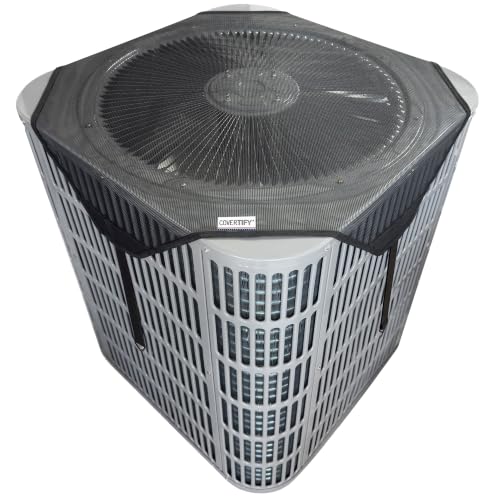
An outside air conditioning unit is the outdoor component of a split or central air conditioning system. It typically contains the compressor, the condenser coil, the condenser fan, and the electrical controls. The indoor air handler moves warm air across the evaporator coil, and the refrigerant carries that heat to the outdoor unit, where it is released into the outside air.
This outdoor unit is sometimes called the condenser unit because its main job is to condense refrigerant back into a liquid after it has absorbed heat indoors. Without a functioning outdoor unit, the indoor portion of the system cannot remove heat from your home, even if the indoor fan continues to run.
For a broader overview of the outdoor components in different system types, see our guide on the outside AC unit not running, which explores common electrical and mechanical failures.
How the Outdoor Unit Works
In cooling mode, the compressor raises the pressure and temperature of the refrigerant gas. That hot gas travels through the condenser coil, where the outdoor fan pulls air across the coil. As the air moves across the coil, it absorbs heat from the refrigerant, which condenses into a liquid. The cooled liquid then travels back indoors to repeat the cycle.
In heating mode on a heat pump system, the process reverses: the outdoor coil absorbs heat from the outside air and moves it indoors. That is why heat pumps can provide heating even in cool weather, and why keeping the outdoor unit clear of snow and ice matters in winter.
Key Components of the Outdoor Unit
- Compressor: Pumps refrigerant and raises its pressure.
- Condenser coil: Releases heat from the refrigerant to the outdoor air.
- Condenser fan: Moves air across the condenser coil.
- Contactor and capacitor: Electrical components that start and run the compressor and fan.
- Service valves: Connection points for refrigerant lines and gauges.
- Base pan and drain: Manages condensation and defrost runoff.
Where Should the Outside Unit Be Placed?
Placement has a significant effect on performance and longevity. The unit needs unobstructed airflow, a stable base, and protection from excessive debris and direct water runoff. Poor placement can cause overheating, higher energy use, and premature failure of the compressor.
Clearance Guidelines
Most manufacturers specify minimum clearances in the installation manual, but common guidelines include:
- Sides and back: At least 12 to 24 inches of open space.
- Top: Several feet of open space above the fan so hot air can discharge freely.
- Above ground: The unit should sit on a level pad at least a few inches above grade.
- From walls and fences: Enough distance to prevent recirculation of hot discharge air.
| Placement Factor | Recommended | Why It Matters |
|---|---|---|
| Side clearance | 12 to 24 inches | Allows air to enter the coil and prevents overheating. |
| Top clearance | Several feet | Lets the fan discharge hot air without recirculation. |
| Shade | Partial shade preferred | Reduces load on the compressor, but airflow must not be blocked. |
| Snow and rain | Elevated above grade | Prevents water pooling and ice buildup at the base. |
| Noise | Away from windows and bedrooms | Keeps operating sound out of living spaces. |
If the unit must sit in a tight spot, a top-discharge model with higher static pressure capability may be a better fit. For narrow side yards, a side-discharge unit can also help. Our article on moving cool air conditioner placement covers how airflow and layout influence comfort in adjacent rooms.
Types of Outdoor Units by System
Split System Condenser
Paired with an indoor air handler or furnace. The most common residential configuration, typically a single outdoor unit with one or two fans.
Multi Zone Condenser
Connects to several indoor heads for room-by-room control. See our guide to multi zone ductless heating and cooling systems for details.
Year-Round Outdoor Unit
Provides both heating and cooling. Cold-climate models include features such as a base pan heater for defrost cycles.
Packaged Rooftop or Ground Unit
Contains both indoor and outdoor components in one cabinet. Often seen on commercial buildings and some modular homes.
Maintaining the Outside Unit
A few simple habits keep the outdoor unit performing reliably:
- Clear debris: Remove leaves, grass clippings, and lint from around and under the unit.
- Rinse the coil: Gently spray the condenser coil with a garden hose, with the power off.
- Straighten fins: Use a fin comb to straighten bent coil fins, which improve airflow.
- Trim vegetation: Keep shrubs and branches several feet away from the unit.
- Check the pad: Confirm the unit sits level and the pad has not settled or cracked.
- Schedule annual service: A technician can measure refrigerant charge and test electrical components.
Safety note: Always switch off power at the breaker and the outdoor disconnect before cleaning the unit. Never open the electrical panel unless you are qualified to do so.
What to Check When the Outside Unit Stops Running
If the indoor fan runs but the outdoor unit is silent, the cause could be electrical, mechanical, or related to the thermostat. Use this checklist as a starting point:
- Check the thermostat: Make sure it is set to cool and the setpoint is below room temperature.
- Check the breaker: Look for a tripped breaker in the main panel and the outdoor disconnect.
- Listen for humming: A hum without the fan spinning often points to a failed capacitor.
- Inspect the coil: A heavily clogged coil can cause the unit to overheat and shut down.
- Look for ice: Frozen lines or coil indicate low refrigerant or restricted airflow.
- Call a technician: If the unit stays silent after these checks, electrical diagnosis is needed.
For a deeper look at the electrical and mechanical failures behind a silent outdoor unit, see our troubleshooting guide on outside AC unit not running. If the outdoor unit runs but the indoor air stays warm, our central AC guide on my central AC isn't blowing cold air walks through refrigerant, airflow, and electrical checks.
Frozen Outdoor Unit
In heating mode, a heat pump periodically enters defrost, and a light frost on the outdoor coil is normal. If the unit remains coated in thick ice, the defrost cycle may be failing, or the outdoor fan may not be running. Turn the system off and call a technician before the compressor is damaged.
Loud or Unusual Noises
Grinding, screeching, or rhythmic banging from the outdoor unit points to a failing fan motor bearing, a loose fan blade, or debris inside the cabinet. Shut the system off and schedule service to prevent further damage.
Protecting the Unit in Winter
If your outdoor unit is part of a heat pump, it must remain clear all winter so it can absorb heat from the outdoor air. Remove snow from around and on top of the unit, and never cover a heat pump during the heating season.
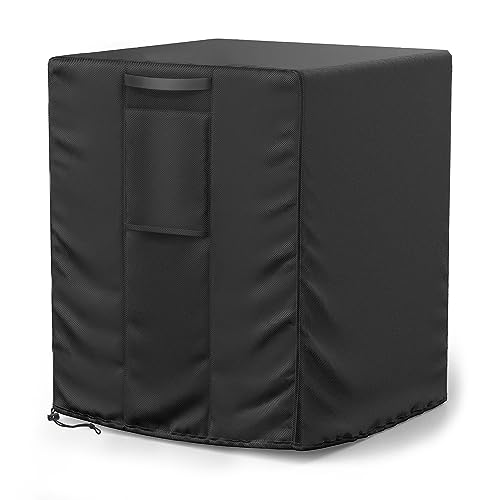
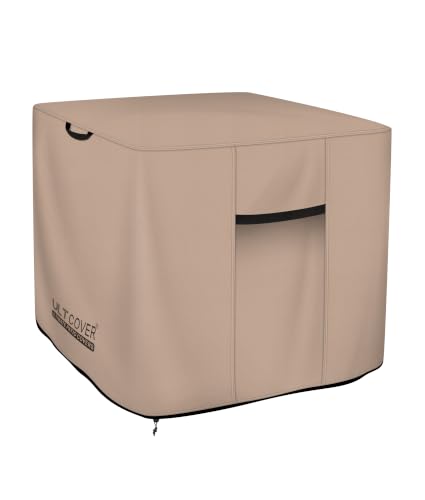
If the unit is a cooling-only condenser and will sit idle for the winter, you can cover the top with a breathable cover to keep debris out. Avoid tightly sealing the unit, since trapped moisture can encourage rust inside the cabinet. If you plan to run the system occasionally during mild winter days, leave it uncovered.
Understanding Outdoor Unit Quality Tiers
Outdoor units vary in build quality, sound levels, and low-temperature performance. The tier framework below helps you compare options without relying on numbers.
Essential Reliability
Good value for its tier. A solid choice for mild climates and homes with straightforward installation paths.
Balanced Performance
Feature-rich for its class, with quieter fans, improved modulation, and better efficiency in variable weather.
High-End Comfort
Well-specified for the category, often with enhanced cold-climate heating, corrosion-resistant coatings, and advanced diagnostics.
Maximum Efficiency
Efficient in the long run, with premium materials and controls for homeowners planning a long-term investment.
If you are comparing replacement options for an older outdoor unit, our roundup of the most energy efficient central air conditioner highlights how modern condensers deliver better seasonal efficiency and quieter operation than older models.
Frequently Asked Questions
What is an outside air conditioning unit?
An outside air conditioning unit, also called the condenser unit, is the outdoor half of a split or central air conditioning system. It contains the compressor and condenser coil, and it releases heat removed from your home into the outdoor air.
How much clearance does an outside AC unit need?
Most manufacturers recommend at least 12 to 24 inches of clearance around the sides and back of the unit, and several feet of open space above it. The top of the unit must be unobstructed so the fan can discharge hot air freely.
Why is my outside AC unit not running?
Common causes include a tripped breaker, a failed capacitor or contactor, a thermostat issue, a dirty condenser coil causing the unit to overheat, or a failed compressor. Start by checking the breaker and thermostat, then call a technician if the unit remains silent.
Should I cover my outside AC unit in winter?
A breathable cover can keep debris out during the off-season, but a tightly sealed cover can trap moisture and encourage rust. Many technicians recommend leaving the top clear and only covering the unit if it is not used for heating and the climate is wet.
How often should the outside AC unit be cleaned?
Rinse the condenser coil and clear debris at least once per cooling season, and more often if the unit is near trees, dryers, or a dusty area. Schedule professional coil cleaning and a system check annually.
Explore Outdoor Unit Options
Compare outdoor units and complete cooling systems selected for placement flexibility, quiet operation, and reliable performance in a range of climates.
Explore Options