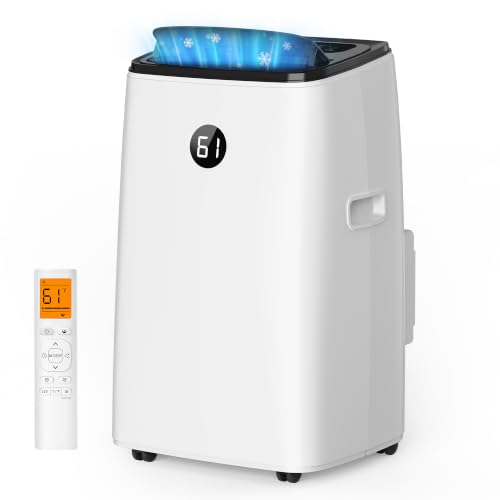
Portable Air Conditioner for 500 Square Feet
Everything you need to know about choosing, sizing, and using a portable AC unit to cool a 500 square foot room effectively and efficiently.
START LEARNINGQuick answer: A portable air conditioner for 500 square feet generally needs a cooling capacity of 12,000 to 14,000 BTU. This guide explains how to size the unit correctly, what features matter most, and how to get the best cooling performance from a portable AC in a room of this size.
Why 500 Square Feet Is a Unique Cooling Challenge
A 500 square foot room is larger than a typical bedroom but smaller than an open-concept living area. It often serves as a combined living and dining space, a spacious studio apartment, a home office suite, or a finished basement. Because the space is substantial, a small portable AC unit will struggle to maintain a comfortable temperature. At the same time, oversizing the unit can lead to short cycling, poor humidity removal, and uneven cooling.
The key is matching the unit's cooling output to the actual heat load of the room. Heat load is influenced by ceiling height, window area, sun exposure, insulation quality, the number of occupants, and the presence of heat-generating appliances. A portable air conditioner for 500 square feet must be sized with these factors in mind, not just the square footage alone.
If you are still exploring how portable units compare with other cooling options for larger spaces, our guide on portable AC units for rooms provides a broader overview that can help you decide whether a portable unit is the right category for your situation.
BTU Requirements for a 500 Square Foot Room
Cooling capacity is measured in British Thermal Units (BTU). The widely used rule of thumb is 20 BTU per square foot of living space. For 500 square feet, that gives a baseline of 10,000 BTU. However, portable air conditioners are less efficient than window or split systems because part of their cooling output is lost through the exhaust hose and because they draw in warm room air to cool the compressor.
In practice, a portable air conditioner for 500 square feet should be rated at 12,000 to 14,000 BTU to deliver comfortable cooling. The table below shows how different room conditions shift the requirement within that range.
| Room Condition | Recommended BTU Range | Tier Guidance |
|---|---|---|
| Standard room, average insulation, moderate sun | 12,000 BTU | Essential tier |
| Large windows, afternoon sun, 2–3 occupants | 13,000 BTU | Balanced tier |
| Top floor, poor insulation, kitchen nearby | 14,000 BTU | High-end tier |
| Open plan with high ceilings and skylights | 14,000 BTU or dual-unit setup | Top-tier configuration |
If your room has unusual features such as a vaulted ceiling or a wall of west-facing glass, lean toward the upper end of the range. If you are cooling a basement or a room with limited sun exposure, the lower end may be sufficient. For a deeper explanation of how BTU ratings translate into real-world performance, see our guide on portable air conditioners for 400 square feet, which covers the sizing logic one step below this room category.
Key Features to Look For in a 500 Sq Ft Portable AC
Beyond BTU rating, several features determine whether a portable air conditioner will perform well in a 500 square foot space. These features affect cooling speed, energy use, noise, and long-term convenience.
Single-Hose vs Dual-Hose Design
Single-hose portable AC units pull cooled air from the room and exhaust hot air through one hose. This creates negative pressure, which draws warm outside air back into the room through gaps and cracks. Dual-hose units use one hose to draw in outside air for the condenser and a second hose to exhaust hot air, maintaining better pressure balance and cooling efficiency. For a 500 square foot room, a dual-hose model is generally the stronger choice because it avoids the efficiency loss that becomes more noticeable in larger spaces.
Inverter Compressor Technology
Inverter-driven compressors adjust their speed continuously rather than cycling on and off. This provides more stable temperatures, lower energy consumption, and quieter operation. A portable air conditioner for 500 square feet with an inverter compressor is a long-term investment that tends to perform better in rooms where the unit runs for extended periods. You can learn more about this technology in our guide on inverter AC systems.
Dehumidification Capacity
Portable AC units remove moisture from the air as they cool. In a 500 square foot room, humidity control matters because larger spaces hold more moisture and because portable units can struggle with high humidity. Look for a unit with a dehumidification rate that suits your climate. If humidity is a major concern in your area, our article on air conditioning for humid climates offers additional context on managing moisture alongside temperature.
Noise Level
Portable air conditioners are generally louder than window or split systems because the compressor and fan are inside the room. For a 500 square foot living space, noise becomes more noticeable during conversations, TV viewing, or sleep. Look for units with a low decibel rating and variable fan speeds. If quiet operation is a priority, consider models positioned near the edge of the room or explore our guide on portable air conditioners for bedrooms for noise-focused recommendations.
Drainage Options
Portable AC units collect condensate water that must be removed. Manual drain tanks require frequent emptying, especially in humid conditions. Self-evaporating systems use the condensate to cool the condenser coil and exhaust the rest as vapor, reducing the need to drain the tank. For a 500 square foot room where the unit may run for many hours, a self-evaporating or continuous-drain design is a significant convenience. Our guide on portable AC units that do not need draining explains how these systems work.
Window Kit Compatibility
Every portable air conditioner needs to exhaust hot air outside. The included window kit must fit your window type. Standard double-hung windows are usually well supported, but casement and crank-out windows may require a specialized kit. If your room has a casement window, review our guide on portable air conditioners for casement windows before choosing a model.
How to Choose the Best Portable AC for 500 Square Feet
Choosing the right unit comes down to matching the product tier to your room conditions and usage patterns. The following guidance uses universal tier descriptors rather than specific figures, so the advice stays relevant regardless of market changes.
| Tier | Best For | Typical Characteristics |
|---|---|---|
| Essential tier | Standard rooms with average heat load | Single-hose design, manual drain, basic fan speeds, 12,000 BTU class |
| Balanced tier | Rooms with moderate sun and daily use | Dual-hose or improved airflow design, self-evaporating, remote control, 13,000 BTU class |
| High-end tier | Challenging rooms and extended runtime | Inverter compressor, quiet operation, smart controls, 14,000 BTU class |
| Top-tier configuration | Open plan or high-ceiling spaces | Dual high-capacity units or a premium inverter model with zone-focused placement |
Use the tier table as a starting point, then refine your choice based on the specific features described above. A balanced-tier unit is usually the sweet spot for a 500 square foot room because it combines adequate cooling capacity with better humidity control and convenience than an essential-tier model.
Placement and Installation Tips for Maximum Efficiency
Correct placement has a major impact on how well a portable air conditioner performs in a 500 square foot room. Follow these practical guidelines:
- Position the unit near the window: Shorter exhaust hose runs reduce heat gain and improve efficiency. Avoid long, winding hose routes.
- Keep the exhaust hose straight and insulated: A straight, insulated hose loses less cooling than a coiled or bare hose. Consider an exhaust hose insulation sleeve if your hose runs through a warm area.
- Direct airflow toward the center of the room: Use the louvers or oscillation feature to distribute cool air evenly rather than blasting one spot.
- Seal the window opening: Gaps around the window kit let hot air back in. Use weather stripping or foam to close any remaining openings.
- Keep the unit away from heat sources: Do not place the portable AC next to ovens, electronics, or direct sunlight if avoidable.
- Allow clearance around the unit: Portable AC units need space for air intake and exhaust. Follow the manufacturer's clearance recommendations.
For rooms where a window is not available or practical, our guide on portable AC units for rooms without windows explains alternative venting approaches, including through-wall venting and door kits.
Maintenance Checklist for Long-Term Performance
A portable air conditioner for 500 square feet runs longer and harder than a unit in a smaller room, so maintenance becomes more important. Keep the unit performing well with this checklist:
- Clean or replace the air filter every two to four weeks during heavy use. A clogged filter reduces airflow and cooling capacity.
- Empty the drain tank regularly unless the unit is self-evaporating. Check for standing water and clean the tank to prevent mold.
- Inspect the exhaust hose for cracks, kinks, or loose connections. Replace damaged hoses promptly.
- Clean the condenser coils at the start of each cooling season. Dust buildup reduces efficiency.
- Store the unit properly during the off-season. Drain all water, clean the filters, and cover the unit to prevent dust accumulation.
If your unit stops cooling effectively despite regular maintenance, review our troubleshooting guide on air conditioners not blowing cold air for diagnostic steps.
Common Mistakes to Avoid
Many buyers choose a portable air conditioner for 500 square feet based on square footage alone, then discover the unit underperforms. Avoid these common mistakes:
- Choosing a unit that is too small. A 10,000 BTU portable AC will struggle in a 500 square foot room with average heat gain. Stick to the 12,000–14,000 BTU range.
- Ignoring hose type. Single-hose units lose efficiency in larger rooms due to negative pressure. Dual-hose models are better suited to 500 square feet.
- Skipping the window seal. An unsealed window kit lets hot air back in and undermines the unit's cooling effort.
- Expecting whole-room cooling from a single poorly placed unit. Placement matters. Direct airflow and seal the space properly.
- Overlooking drainage. In humid climates, a manual-drain unit may require emptying multiple times per day. Choose self-evaporating or continuous-drain models for convenience.
Pro tip: If your 500 square foot room is part of an open floor plan or has a high ceiling, consider whether a single portable AC can realistically cool the entire volume. In some cases, a dual-unit setup or a different cooling category, such as a ductless mini-split, may be more effective. Portable units work best when the space can be closed off and cooled as a single zone.
Frequently Asked Questions
What size portable air conditioner do I need for 500 square feet?
For a 500 square foot room, choose a portable air conditioner rated between 12,000 and 14,000 BTU. Rooms with large windows, strong sun exposure, or poor insulation should lean toward the higher end of that range.
Can a portable air conditioner cool a 500 square foot room effectively?
Yes. A properly sized portable AC in the 12,000–14,000 BTU range can cool a 500 square foot room effectively when the space is reasonably insulated, the exhaust is vented correctly, and the window kit is sealed against air leaks.
How many BTU do I need for a 500 square foot room?
The baseline calculation is 20 BTU per square foot, which gives 10,000 BTU. For portable units, real-world performance and heat gain factors usually require 12,000 to 14,000 BTU to achieve comfortable cooling.
Is a single-hose or dual-hose portable AC better for 500 square feet?
Dual-hose models are generally better for larger rooms because they maintain pressure balance and avoid drawing warm outside air back into the room. Single-hose units can work but are less efficient in a space of this size.
How often should I drain a portable AC in a 500 square foot room?
Manual-drain units may need emptying once or twice per day in humid conditions. Self-evaporating models reduce or eliminate manual draining, which is a major convenience for rooms where the unit runs for long periods.
Ready to compare models? Explore our recommended portable air conditioners for 500 square feet below.
View Recommendations