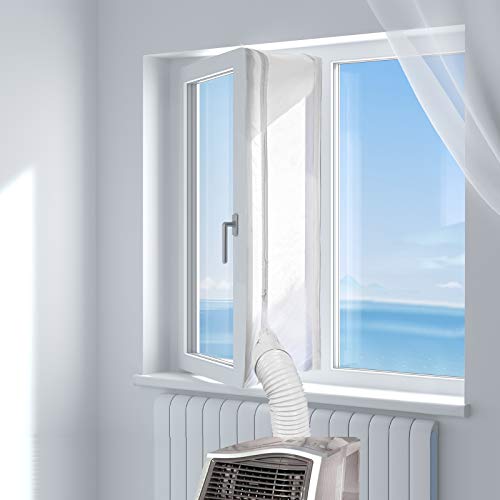
Portable Air Conditioner for a Casement Window
Casement windows open outward with a crank, which makes them awkward for standard window AC units. A portable air conditioner paired with the right casement window vent kit solves the problem. This guide explains how the setup works, how to seal it properly, and what to look for before you buy.
Explore Recommended UnitsQuick answer: Yes, a portable air conditioner can work with a casement window, but only when you use a casement-specific vent kit. Standard sliding-window panels will not fit. The kit creates a sealed vertical opening for the exhaust hose while the crank window stays closed against the panel.
Why Casement Windows Need Special Treatment
Casement windows differ from double-hung and sliding windows in two important ways. First, they open outward on a hinge rather than moving up and down or side to side. Second, the opening is a tall vertical gap on one side rather than a horizontal rectangle. That geometry means a standard portable AC window panel, which is designed to slide into a horizontal track, cannot seal a casement window properly.
Without a proper seal, exhaust air can leak back into the room, outdoor humidity enters freely, and the unit works harder than necessary. A dedicated casement vent kit solves this by using a vertical fabric or rigid panel that wraps around the open section of the window and holds the exhaust hose securely. If you are still comparing window styles, our guide on portable AC units for side-opening windows covers the broader category, while the portable AC window kit for casement windows page focuses on the hardware itself.
How a Casement Window Vent Kit Works
A casement kit typically includes a vertical sealing panel, a hose adapter ring, and weatherproof fasteners. You open the crank window just enough to fit the panel, then close the window against it so the frame presses the panel into place. The exhaust hose snaps into the adapter, and the rest of the panel blocks outside air from entering.
Some kits use a rigid acrylic or polycarbonate panel, while others use heavy-duty fabric with zippered hose ports. Rigid panels tend to seal better and last longer; fabric panels are easier to store and fit irregular openings. Either way, the goal is the same: a tight, insulated barrier between the conditioned room and the outdoors.
Step-by-Step Setup
- Measure the window opening. Record the height and width of the crank opening and the depth of the frame. Casement kits are sized by these dimensions, so an accurate measurement prevents gaps.
- Choose the right kit. Match the kit to your window size and to the diameter of your portable AC exhaust hose. Most portable units use a 5-inch or 6-inch hose.
- Install the sealing panel. Fit the panel into the open section of the window and close the crank so the window presses against it. Most kits include screws or tension rods to hold the panel in place.
- Connect the exhaust hose. Attach the hose to the panel adapter and to the back of the portable AC. Keep the hose as short and straight as possible to reduce back pressure.
- Seal the edges. Apply foam weatherstripping or removable caulk around the panel perimeter. Check for gaps at the top, bottom, and along the hinge side.
- Test the airflow. Run the unit and confirm that hot air exits outdoors and that no exhaust leaks back into the room. A tissue held near the panel edges will flutter if air is escaping.
Sealing and Efficiency Tips
Even a well-fitted casement kit can leak if the surrounding window frame is old or warped. Use closed-cell foam tape along the frame, and consider an insulating sleeve for the exhaust hose to reduce heat gain. If your home has older windows without modern weather seals, our guide on cooling older homes without ducts offers additional strategies that pair well with a portable unit.
Keep the exhaust hose away from sharp window edges and avoid long, looping runs. A short, direct path to the window improves cooling performance and reduces strain on the compressor. If the room feels humid, a unit with a dehumidifier mode or a dedicated portable air conditioner dehumidifier combo can help maintain comfort.
Advantages of This Setup
- Works with outward-cranking windows where window AC units cannot fit
- No permanent modification to the window or wall
- Portable unit can be moved between rooms
- Vent kits are removable and renter-friendly
- Compatible with most standard portable AC hose sizes
Limitations to Consider
- Requires a dedicated casement kit, not a standard panel
- Sealing can be tricky on older or warped frames
- Condensate may need manual draining on some models
- Exhaust hose can be visible and takes up floor space
- Cooling capacity depends on proper sealing and hose routing
What to Look For in a Portable AC for Casement Windows
Not every portable air conditioner is equally suited to a casement setup. Focus on these features when comparing models:
| Feature | Why It Matters for Casement Windows |
|---|---|
| Hose diameter and adapter compatibility | The unit must match your casement kit's adapter ring, usually 5 or 6 inches. |
| Self-evaporation or drain-free operation | Reduces how often you need to empty the condensate tank, which is useful in rooms where the window stays mostly sealed. |
| Adjustable fan speeds and modes | Lets you balance cooling and noise, especially in bedrooms or home offices. |
| Digital thermostat and timer | Improves comfort control without constant manual adjustment. |
| Window kit included or compatible | Some units ship with a basic kit; confirm whether a casement-specific panel is included or sold separately. |
| Weight and caster design | Easier to reposition between rooms and to move closer to the window during setup. |
Product Tiers for Casement Window Cooling
Portable air conditioners for casement windows fall into a few broad market tiers. The table below uses neutral tier descriptors rather than specific figures, so it stays useful over time.
| Tier | Typical Characteristics | Best For |
|---|---|---|
| Entry-level | Basic cooling modes, manual controls, simpler vent kits, and occasional manual draining. | Small rooms, occasional use, and buyers who want a straightforward setup. |
| Mid-range | Digital controls, multiple fan speeds, self-evaporation, and improved kit compatibility. | Bedrooms, home offices, and daily use in medium-sized rooms. |
| Premium | Quieter operation, smart controls, enhanced dehumidification, and durable vent hardware. | Living areas, bedrooms near shared walls, and users who value convenience. |
| Top-tier | High-capacity cooling, advanced sealing accessories, and feature-rich controls for larger spaces. | Open-plan rooms and setups where performance and flexibility matter most. |
For smaller spaces, a compact unit may be sufficient. Our guide on portable AC for a 100 sq ft room explains how room size affects the choice. If the casement window is in a bedroom, the portable air conditioner for bedroom page covers noise and comfort considerations in more detail.
Maintenance and Long-Term Use
Casement window setups collect dust and pollen on the vent panel and hose adapter, so clean these parts regularly. Wipe the panel with a damp cloth, check the hose for cracks, and inspect the window frame seal each season. If the unit runs but does not cool effectively, confirm that the exhaust is actually leaving the room and that the panel has not shifted.
For broader troubleshooting, see our guides on an air conditioner not blowing cold air and portable AC unit repair. If the unit develops persistent issues, professional inspection may be worthwhile, especially for refrigerant-related problems.
Frequently Asked Questions
Can I use a regular window kit on a casement window?
No. Standard horizontal panels are designed for sliding or double-hung windows and will not seal a vertical crank opening. A casement-specific kit is required for a proper fit.
Will a portable AC cool a room effectively with a casement kit?
Yes, provided the panel is sealed tightly and the exhaust hose is routed correctly. Gaps around the panel are the most common cause of reduced cooling performance.
Do I need to remove the kit every time I close the window?
Most casement kits are removable and can be taken out when the unit is not in use. Some rigid panels can stay in place with the window closed against them, but check the kit instructions for your specific model.
Can a portable AC with a casement kit be used in a rental?
Yes. Casement vent kits are generally renter-friendly because they do not require permanent window or wall modifications. Use removable sealing materials to protect the frame.
What if my casement window has an unusual size?
Look for adjustable kits or fabric panels that can be trimmed to fit. If the opening is very large or irregular, a custom rigid panel may provide a better seal.
Ready to Choose a Portable AC for Your Casement Window?
Match the unit to your room size, confirm hose compatibility with your casement kit, and prioritize sealing for the best results. The recommended models below are organized to help you compare features at a glance.
View Recommended Units