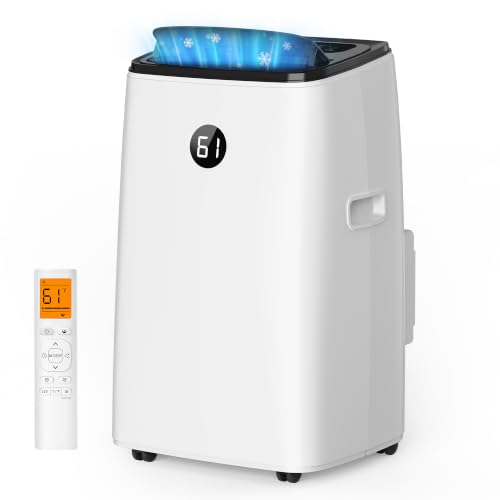
Portable Air Conditioner for Multiple Rooms
Cooling several rooms with one or more portable AC units is possible when you match capacity, hose type, and room layout correctly. This guide explains how to plan a multi-room cooling setup that actually works.
Portable air conditioners are flexible, vent through a window or wall opening, and can be moved between spaces. That flexibility makes them a popular option for renters, older homes without ductwork, and households that need supplemental cooling. However, using a portable AC for multiple rooms requires more planning than cooling a single space. Capacity must cover the combined area, airflow must reach each room, and exhaust management must be handled carefully so the unit does not fight itself.
Below you will find a practical framework: how to size capacity, which hose configuration suits which layout, how to position the unit, and how to compare portable ACs for multi-room use. If you are still deciding whether a portable unit fits your home, our overview of the portable air conditioner category covers the basics before you dive into the multi-room specifics.
How Multi-Room Cooling Works in Practice
There are three realistic approaches to cooling multiple rooms with portable ACs. Each has trade-offs in effectiveness, noise, and effort.
One Large Unit, Connected Rooms
Best for open-plan living areas, connected apartments, or rooms joined by wide doorways. A high-capacity dual-hose unit placed centrally can push cooled air into adjacent spaces. Requires open doors and a layout where air can circulate.
Multiple Smaller Units
Best for separated bedrooms or rooms with doors. Each unit cools its own zone, which is more efficient and quieter per room. Requires multiple windows or vent openings and enough electrical circuits.
One Unit, Moved Between Rooms
Best for households that cool one room at a time, such as a bedroom at night and a living room during the day. The most economical in terms of equipment but requires moving the unit and re-seating the window kit.
Sizing Capacity for Multiple Rooms
Portable AC capacity is rated in BTU. The common sizing shortcut is roughly 20 BTU per square foot of floor area, then adjustments for ceiling height, sun exposure, occupant count, and heat-producing appliances. When cooling multiple rooms, add the square footage of every room you intend to cool and treat the result as one combined zone.
- Combined area under 300 sq ft: a mid-range single-hose or dual-hose unit is usually sufficient.
- 300 to 500 sq ft across connected rooms: look for a dual-hose unit in the 12,000 to 14,000 BTU range.
- 500 to 700 sq ft or heavy sun exposure: prioritize a high-capacity dual-hose unit and expect to close doors to unused rooms.
- Separated rooms: treat each room as its own zone and size a unit per room rather than oversizing one unit.
If your rooms are connected but uneven in heat load, for example a sunny living room and a shaded hallway, place the unit in the hottest room and let cooler air spill into the adjacent space. For a deeper breakdown of sizing math, see our guide on what to look for in a portable air conditioner.
Single-Hose vs Dual-Hose for Multi-Room Use
Hose configuration matters more when cooling multiple rooms than when cooling a single enclosed space. A single-hose unit pulls air from the room and exhausts it outside, which creates negative pressure and draws in warm outside air through gaps. In a multi-room setup with open doors, that effect is magnified because the unit is trying to condition a larger volume while simultaneously pulling in replacement air.
A dual-hose unit draws intake air from outside and exhausts hot air outside, so it does not depressurize the room. This makes dual-hose units the better choice for cooling connected rooms, larger open spaces, and homes where doors are frequently open. If your layout involves open doorways, prioritize dual-hose models. If you are cooling a single room with the door closed, a single-hose unit is often adequate.
Placement and Airflow Strategy
Placement determines whether cooled air reaches the second or third room at all. Portable ACs blow air in one direction, so aim the louvers toward the doorway or the room you want to cool next. A small floor fan placed near the doorway can help push cooled air into adjacent spaces, effectively extending the unit's reach.
- Position the unit near the warmest room and point airflow toward the connecting doorway.
- Keep doors open between rooms you want to cool together.
- Close doors to rooms you are not cooling so the unit is not fighting unused space.
- Keep the exhaust hose as short and straight as possible; long, kinked hoses reduce efficiency.
- Seal the window kit gaps with foam or weatherstripping to limit hot air infiltration.
If your window type is unusual, the vent kit is often the limiting factor. Sliding windows and casement windows each need different kits. Our guides on the portable air conditioner sliding window kit and the window kit for casement windows explain the sealing details.
Electrical and Noise Considerations
Running two portable ACs on the same circuit can trip a breaker. Check the amperage on each unit and confirm your circuits can handle the combined load. Large multi-room units often draw 10 to 12 amps, so two units on one 15-amp circuit is generally not safe.
Noise compounds when multiple units run. If you are cooling bedrooms, choose units with lower decibel ratings or place them in hallways and use fans to distribute air. For bedrooms specifically, our guide to the portable air conditioner for small bedroom covers noise and sizing in more detail.
Draining and Humidity in Multi-Room Setups
Portable ACs remove moisture from the air, and in humid climates the condensate tank can fill quickly. When a unit runs for long periods to cool multiple rooms, a self-evaporating system or a condensate pump becomes valuable. Without one, you will be emptying the tank frequently.
If humidity is a major concern in your area, review the options in our guide to the portable air conditioner with dehumidifier. For high-humidity environments specifically, the portable air conditioner for high humidity guide explains how to balance cooling and moisture removal.
When Multi-Room Portable Cooling Makes Sense
Portable ACs are a good fit for multi-room cooling when you rent, when ductwork is absent, or when you need supplemental cooling in a few specific rooms rather than the entire house. They are less ideal when you need to cool four or more separated rooms, when windows cannot accommodate a vent kit, or when noise is a strict concern.
For small apartments and studios, a single well-placed unit often covers the whole living area. Our guide on the portable air conditioner for small apartment walks through compact layouts. If you are supplementing central air that struggles in certain rooms, the portable air conditioner to supplement central air guide explains how to integrate the two systems without wasting energy.
Quick Comparison: Which Setup Fits Your Home?
| Layout | Recommended Approach | Best For |
|---|---|---|
| Open-plan living and dining | One high-capacity dual-hose unit | Mid-range to premium tier |
| Two adjacent bedrooms | Two mid-range single-hose units | Essential to balanced tier |
| Bedroom plus home office | One unit moved between rooms, or two compact units | Starter to mid-tier |
| Living room plus hallway | One dual-hose unit with a floor fan at the doorway | Mid-range tier |
| Four or more separated rooms | Reconsider; mini-split or central system may be more effective | Professional-grade planning |
Common Mistakes to Avoid
- Oversizing one unit for separated rooms. A large unit in one room cannot push air through closed doors. Size per zone.
- Ignoring negative pressure. Single-hose units in open layouts pull in hot air. Use dual-hose for connected spaces.
- Skipping the window seal. Gaps around the vent kit let hot air back in and undermine the unit's work.
- Running two units on one circuit. Check amperage and use separate circuits.
- Forgetting drainage. Long run times produce more condensate; plan for a pump or self-evaporating model.
Final Checklist Before You Choose
Before selecting a portable AC for multi-room cooling, confirm the combined square footage, whether doors stay open or closed, how many vent openings are available, and whether your electrical circuits can support the load. Prioritize dual-hose units for connected spaces and size each unit to its zone. For a structured buying process, the portable air conditioner buying checklist is a useful next read.