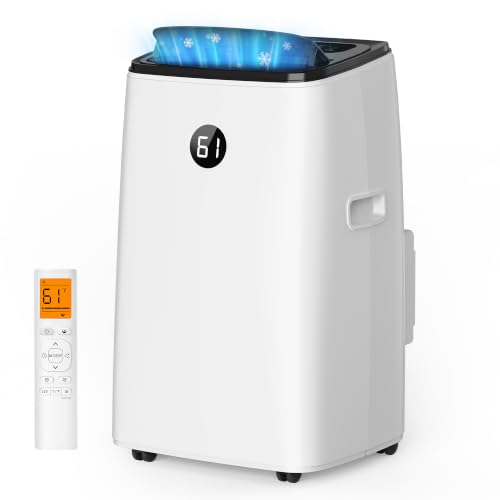
Portable Air Conditioner for High Humidity: Cooling That Actually Dries the Air
In a muggy room, cold air alone is not enough. A portable air conditioner for high humidity must remove moisture as effectively as it lowers temperature. This guide explains how to choose one that keeps your space both cool and dry.
See Humid-Climate OptionsThe core challenge: High humidity makes a room feel warmer than the thermostat says and leaves surfaces clammy. A standard portable AC removes some moisture as a byproduct of cooling, but units designed for humid climates go further with larger tanks, self-evaporating systems, and continuous drain options. Choosing the right one makes the difference between comfort and a constant battle with condensation.
Why Humidity Changes the Buying Decision
Humidity affects comfort in ways temperature alone cannot explain. When the air is saturated with moisture, sweat evaporates more slowly, so your body cannot cool itself efficiently. That is why a 78°F room at 80% relative humidity feels far worse than a 78°F room at 45% humidity. A portable air conditioner that only lowers temperature without managing moisture leaves you cool but clammy, and the room may still feel oppressive.
Compressor-based portable air conditioners remove moisture as part of the cooling cycle. Moisture in the air condenses on the cold evaporator coil and drips into a drain pan. The amount of moisture removed depends on the unit's design, the ambient humidity, and how long the compressor runs. In a high-humidity climate, the condensate volume can be substantial, which is why drain management becomes a central feature rather than an afterthought.
Some buyers assume any portable AC will dry the air. That is only partly true. A unit with a small tank or no continuous drain will shut off when the tank fills, leaving you with a room that is cooler but still humid. A unit designed for humid climates keeps running because it has a way to dispose of water continuously. That is the key distinction to look for. The guide to portable air conditioner for humid climates covers the broader category, while this page focuses on the humidity-specific selection criteria.
Key Features for Humid Climates
Self-Evaporating System
Recycles condensate to cool the condenser coil, reducing how often you empty the tank. In moderate humidity, some units can run without manual draining at all.
Continuous Drain Hose
Routes water to a floor drain, sump pump, or outside. Essential in very humid climates where the tank would fill several times a day.
High Dehumidification Rating
Measured in pints per day. A higher rating means more moisture removal. Compare this number across models, not just cooling BTU.
Larger Water Tank
A bigger tank means fewer interruptions. If you cannot use a continuous drain, a large tank is the next best option for humid rooms.
Dual-Hose Design
Draws in outdoor air for the condenser and exhausts hot air separately. Often more efficient and better at handling humidity than single-hose designs.
Dehumidify-Only Mode
Removes moisture without pushing cold air into the room. Useful in damp shoulder seasons when cooling is not needed but humidity is high.
How a Portable AC Handles Humidity
Inside a portable air conditioner, the evaporator coil is colder than the surrounding air. As warm, humid room air passes over the coil, moisture condenses on the cold surface and drips into a drain pan. The dried, cooled air then blows back into the room. Meanwhile, the condenser coil releases heat outdoors through the exhaust hose. This dual process of cooling and dehumidifying is what makes a compressor-based portable AC more than just a fan.
The challenge in high humidity is the volume of condensate. A single-hose unit in a very humid room can produce several gallons of water per day. If the unit has a small tank and no continuous drain, you will be emptying it constantly, and the unit may shut off before the room reaches your target temperature. That is why humid-climate models emphasize drain management. Self-evaporating systems spray condensate onto the condenser coil to help reject heat, which reduces the amount of water that reaches the tank. Continuous drain hoses send the water away entirely.
It is also worth understanding the difference between a portable AC and a dedicated dehumidifier. A dehumidifier removes moisture without deliberately cooling the room; it is designed for damp, cool spaces. A portable AC is designed for hot, humid spaces where both temperature and moisture need attention. If your room is hot and muggy, the AC is the right tool. If the room is cool but damp, a dehumidifier is more appropriate. Many households in humid climates own both and use them seasonally. The guide to portable air conditioner with self-evaporating system explains how that feature reduces manual draining.
Portable AC vs Dehumidifier in High Humidity
| Feature | Portable AC | Dedicated Dehumidifier |
|---|---|---|
| Cooling | Yes | No, adds slight warmth |
| Moisture removal | Yes, as part of cooling | Yes, primary function |
| Best for | Hot and humid rooms | Cool and damp rooms |
| Water output | Moderate to high | High |
| Venting required | Yes, in cooling mode | No |
| Typical tier | Entry-level to premium | Mid-range to high-end tier |
Sizing and Selection Tips
Sizing a portable AC for a humid room is similar to sizing for a dry room, but there is an important twist: humidity makes the room feel warmer, so buyers often oversize. That can be a mistake. An oversized unit cools the room quickly and shuts off before it has time to remove much moisture. The result is a cool but clammy room. A better approach is to size the unit for the room's square footage and let it run longer cycles, which removes more moisture.
As a starting point, match the BTU rating to the room size using standard guidelines. A 150-square-foot room typically needs around 5,000 to 6,000 BTU. A 300-square-foot room needs around 8,000 to 10,000 BTU. In very humid climates, consider going slightly larger only if the room has significant heat gain from windows or appliances. Otherwise, prioritize dehumidification capacity and drain management over raw BTU.
- Entry-level tier: Basic cooling with a small tank. Suitable for mildly humid rooms if you are willing to empty the tank often.
- Mid-range tier: Better dehumidification, larger tank, often a self-evaporating system. A solid choice for most humid-climate households.
- High-end tier: Dual-hose design, continuous drain, strong moisture removal, quieter operation. Best for very humid rooms and larger spaces.
For small rooms, the guide to portable air conditioner for a very small room explains how to balance capacity and moisture removal in tight spaces. For larger spaces, the article on portable air conditioner for 500 sq ft room covers sizing considerations.
Drain Management: The Make-or-Break Feature
In high humidity, drain management is not a minor convenience; it determines whether the unit is usable. A portable AC that fills its tank in a few hours and shuts off is not solving the problem. There are three common approaches, and each has trade-offs.
- Manual tank: The simplest design. Water collects in an internal tank, and the unit stops when the tank is full. Fine for mild humidity, frustrating in very humid climates.
- Self-evaporating system: Condensate is recycled onto the condenser coil to improve heat rejection. In moderate humidity, this can eliminate manual draining. In high humidity, it reduces but does not always eliminate the need to drain.
- Continuous drain hose: Water flows continuously to a floor drain, sump pump, or outside. This is the most reliable option in very humid climates, but it requires a drain location and gravity feed or a condensate pump.
If you cannot use a continuous drain, choose a model with a large tank and a self-evaporating system. The guide to portable air conditioner no drain required covers models that minimize water handling, and the article on portable air conditioner that doesn't need draining explains the limits of that claim in humid conditions.
Practical Considerations for Humid Rooms
Beyond the unit itself, the room setup affects how well a portable AC handles humidity. Sealing the room helps: close windows and doors, and use weatherstripping around the exhaust hose connection. A poorly sealed window kit lets humid outdoor air back in, forcing the unit to work harder. The guide to portable air conditioner exhaust hose insulation sleeve explains how insulating the hose reduces heat gain and condensation.
Airflow matters too. Keep the unit away from walls and furniture so it can draw in room air freely. Clean the filter regularly; a clogged filter reduces airflow across the evaporator coil and can cause the coil to freeze, which stops moisture removal. If the unit develops ice on the coils, turn it off and let it thaw before restarting.
Window compatibility is another practical factor. Sliding windows, casement windows, and crank-out windows may need special kits. The article on portable air conditioner for casement windows covers those cases. If the room has no window at all, the guide to portable AC unit for a room without windows explains the alternatives.
Finally, consider noise. Portable ACs are louder than split systems because the compressor is in the room. In a bedroom, a quieter model with a sleep mode is worth prioritizing. The article on portable air conditioner not cooling enough covers troubleshooting if performance drops after installation.
Ready to Compare Humid-Climate Portable ACs?
Explore our curated selection of portable air conditioners built for high humidity. Each option is chosen for moisture removal, drain management, and reliable cooling.
View Recommended UnitsFrequently Asked Questions
What is the best portable air conditioner for high humidity?
The best portable air conditioner for high humidity combines strong cooling capacity with effective moisture removal, ideally through a self-evaporating system or continuous drain option. Look for models with a high dehumidification rating, a reliable condensate management system, and a dual-hose or single-hose design that suits your window setup. In very muggy climates, a dedicated dehumidifier may be needed alongside the AC.
Do portable air conditioners remove humidity?
Yes, all compressor-based portable air conditioners remove some humidity as part of the cooling process. Moisture condenses on the evaporator coil and drains away. However, the amount of moisture removed varies by model. Units designed for humid climates typically include larger tanks, continuous drain options, or self-evaporating systems to handle the extra condensate.
Should I use a portable AC or a dehumidifier in high humidity?
It depends on your goal. If the room is hot and humid, a portable AC is the better single choice because it cools and dehumidifies at the same time. If the room is cool but damp, a dedicated dehumidifier is more effective because it removes moisture without adding cold air. Some households use both: a portable AC for hot days and a dehumidifier for damp shoulder seasons.
Why does my portable AC fill its water tank so quickly in humid weather?
High humidity means more moisture in the air, so the evaporator coil condenses more water. That water collects faster in the tank. To avoid frequent emptying, choose a model with a self-evaporating system, a larger tank, or a continuous drain hose that routes water to a floor drain or outside.
Can a portable air conditioner handle very high humidity?
A portable AC can reduce humidity in a room, but it is not a dedicated dehumidifier. In extremely humid climates, a portable AC may struggle to keep up with moisture loads, especially if the room has poor ventilation or frequent door openings. In those cases, pairing a portable AC with a dedicated dehumidifier or choosing a model with strong dehumidification capacity is the practical approach.
Related Reading
If you are still weighing your options, these guides can help you go deeper:
- Portable air conditioner for humid climates — the broader category guide with more model context.
- Portable air conditioner dehumidifier heater — three-in-one units for year-round moisture and temperature control.
- Portable air conditioner with self-evaporating system — how self-evaporation reduces manual draining.
- Portable air conditioner no drain required — models that minimize water handling.
- Portable air conditioner that doesn't need draining — what that claim really means in humid rooms.
- Portable air conditioner without dehumidifier — when moisture removal is not a priority.
- Portable air conditioner insulated exhaust hose — reducing condensation and heat gain.
- Portable air conditioner not cooling enough — troubleshooting performance in humid conditions.