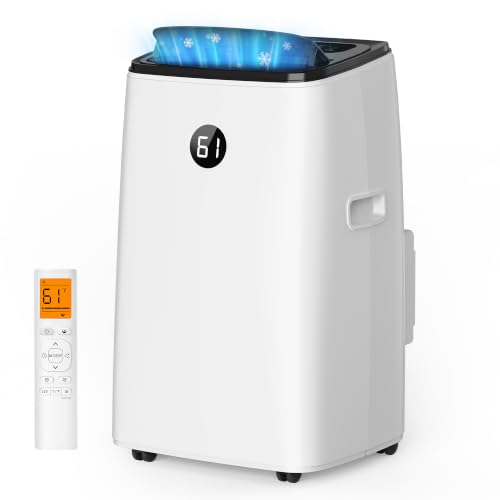
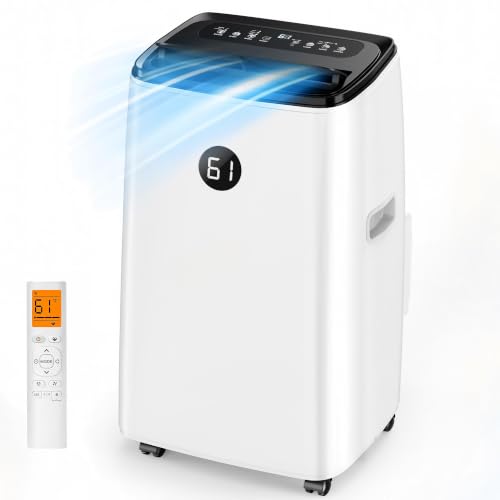
Portable Commercial Air Conditioner for Sale: The Complete Buyer's Guide
Everything business owners need to know before choosing a portable commercial air conditioner — BTU sizing, commercial-grade features, venting requirements, and how to match a unit to retail, office, workshop, and event spaces.
Explore Commercial Portable AC OptionsWho this guide is for: facility managers, shop owners, workshop supervisors, and event organizers who need dependable spot cooling without permanent ductwork or structural modification.
If you have already decided that a portable commercial air conditioner is the right category and are comparing models, this guide gives you the technical framework to choose confidently. If you are still exploring broader options, our portable air conditioning unit for office overview is a useful starting point.
Why Commercial Spaces Need a Different Class of Portable AC
Residential portable air conditioners are engineered for a bedroom or living room running a few hours a day during the warm season. Commercial environments impose a very different duty cycle. A portable commercial air conditioner for sale in the business channel is typically rated for continuous operation, built around heavier compressors, and designed to move far more air through a reinforced cabinet.
The practical differences show up in several places:
- Duty cycle: Commercial-grade units are built for extended daily run times rather than intermittent seasonal use.
- Heat load: Offices, kitchens, workshops, and retail floors carry people, lighting, computers, and machinery that generate heat a residential sizing chart ignores.
- Air changes: Customer entrances, loading doors, and open production areas constantly exchange conditioned air with unconditioned air.
- Condensate volume: High-capacity cooling produces substantially more water, so continuous drainage or large internal tanks become essential.
- Mobility and durability: Units get repositioned between zones, so casters, handles, and cabinet reinforcement matter as much as cooling output.
That is why a unit marketed for home use often underperforms in a commercial setting even when the nominal BTU figure looks adequate on paper.
How to Size a Portable Commercial Air Conditioner
Sizing is the single most consequential decision. An undersized unit runs continuously without reaching the target temperature, while an oversized unit short-cycles, struggles to remove humidity, and stresses the compressor. Commercial spaces generally need a higher BTU-per-square-foot figure than homes because of occupancy density and internal heat gain.
A practical starting framework for commercial spot cooling:
| Space Type | Approx. Area | Suggested Cooling Capacity | Typical Use Case |
|---|---|---|---|
| Small office, server closet, kiosk | Up to 250 sq ft | 8,000 – 10,000 BTU | Supplemental cooling for equipment rooms |
| Private office, small retail bay | 250 – 450 sq ft | 12,000 – 14,000 BTU | Single-zone spot cooling |
| Open office zone, workshop bay | 450 – 700 sq ft | 14,000 – 18,000 BTU | Mid-size commercial cooling |
| Retail floor, studio, event tent | 700 – 1,000 sq ft | 18,000 – 24,000 BTU | High-occupancy or high-heat-load areas |
| Warehouse zone, large open bay | 1,000+ sq ft | 24,000 BTU+ or multiple units | Industrial spot cooling, often multiple units |
Treat the table as a starting point, then adjust upward for south-facing glazing, high ceilings, kitchen equipment, server racks, or frequent door openings. If you want a more formal method, our guide on sealing air ducts and general building-envelope advice complements load-reduction steps that improve any portable unit's effectiveness.
Rule of thumb: Commercial spaces typically need 20–30 BTU per square foot versus roughly 20 BTU per square foot for a well-insulated residential room. When in doubt, choose the next capacity tier up rather than down — but avoid jumping two tiers, which causes short cycling and poor dehumidification.
Key Features That Define a Commercial-Grade Portable AC
Not every unit sold as “commercial” is genuinely built for business duty. These are the specifications that separate professional-grade equipment from residential models dressed up for the business channel.
Dual-Hose Venting
Dual-hose designs draw intake air from outside and exhaust hot air outside, preserving room pressure and improving real-world cooling efficiency compared with single-hose models.
Continuous Condensate Drain
A drain port or condensate pump lets the unit run indefinitely without manual tank emptying — essential for unattended commercial operation.
Heavy-Duty Casters
Reinforced locking casters and integrated handles allow safe repositioning between zones on hard floors and low-pile carpet.
Programmable Thermostat & Timer
Setback scheduling and 24-hour timers align cooling with business hours and reduce unnecessary compressor runtime.
Self-Evaporative Technology
Partial self-evaporation reduces condensate volume, though commercial units still benefit from a continuous drain in humid conditions.
Washable Filtration
Reusable, easily accessible filters lower upkeep in dusty workshops, print rooms, and light-industrial environments.
Extended Duty Rating
Commercial-grade compressors and fan motors are rated for longer continuous operation than residential equivalents.
Remote & Building-Control Compatibility
Remote control, Wi-Fi, or dry-contact interfaces support integration with scheduling and facility management workflows.
Single-Hose vs Dual-Hose: What Commercial Buyers Should Know
Single-hose portable units pull air from the room to cool the condenser and exhaust it outside, which creates negative pressure and draws warm outside air back in through gaps. In a busy commercial space with frequent door traffic, this effect is pronounced. Dual-hose units separate intake and exhaust, maintaining neutral pressure and delivering noticeably more consistent cooling in the conditioned zone.
For most business applications, dual-hose is the better choice. Single-hose models remain workable for short-term event cooling or spaces where a second window opening is impractical. If ventless operation is a hard constraint, review the limits of portable AC units that do not need venting — and note that true refrigerated cooling always requires exhaust somewhere.
Venting and Installation Considerations
Portable commercial air conditioners require a path for hot exhaust air. Common solutions include window vent kits, sliding-door adapters, and wall thimbles in spaces without operable windows. The exhaust hose should be as short and straight as possible, and the vent opening should be sealed around the hose to prevent hot air recirculation.
Before placing an order, confirm the following:
- The nearest window or wall opening can accommodate the supplied vent kit or a compatible adapter.
- Floor space allows at least 12–18 inches of clearance around the unit for intake airflow.
- A grounded outlet with adequate amperage is available near the placement zone; larger units may require a dedicated circuit.
- If the unit will run unattended, a continuous drain line can be routed to a floor drain or condensate pump.
- Local permits or building rules are reviewed for wall-thimble installations; our guide on how to get an AC permit covers the general process.
Energy Use, Efficiency, and Long-Term Operation
Commercial portable units vary in efficiency, and because they may run all day, the difference compounds over a season. Look for a reasonably high EER or CEER rating within the capacity class you need, and prioritize models with programmable scheduling and an auto-restart function after power interruptions.
Operational habits matter as much as the specification sheet. Pairing portable cooling with thermostat scheduling and ceiling fans reduces compressor load, and keeping filters clean maintains airflow and efficiency. Our article on using a programmable thermostat explains scheduling principles that apply equally to portable units with built-in timers. For facilities planning broader efficiency upgrades, a maintenance plan structure is worth reviewing alongside equipment selection.
Common Commercial Use Cases and Matching Recommendations
Different business environments place different demands on portable cooling. The table below maps common scenarios to the tier of equipment typically appropriate for each.
| Environment | Recommended Tier | Priority Features |
|---|---|---|
| Small office or home-based business | Entry-level commercial | Reliable thermostat, washable filter, compact footprint |
| Retail bay or salon | Mid-range commercial | Dual-hose venting, quiet operation, programmable timer |
| Workshop or light-industrial bay | Mid-to-high commercial | Heavy-duty casters, reinforced cabinet, high airflow |
| Server closet or equipment room | High-end commercial | Continuous drain, low-temperature operation, remote monitoring |
| Event tent, exhibition, temporary structure | Professional-grade | High capacity, rugged portability, quick venting setup |
For small rooms without a window, the practical alternatives are covered in small room air conditioner no window. Businesses evaluating a more permanent ductless solution may find portable air conditioning unit for office and split ductless air conditioning systems useful comparison material.
Maintenance Checklist for Commercial Portable AC Units
Commercial duty cycles accelerate wear, so a simple routine keeps capacity stable and extends compressor life:
- Every two to four weeks: Remove and clean or replace filters. In dusty environments, inspect weekly. Our guide on how to clean AC filter covers the process.
- Monthly: Inspect the exhaust hose for kinks or leaks, check the vent seal, and clean the exterior intake grille.
- Every cooling season: Clean evaporator and condenser coils; refer to clean AC condenser coils for general coil-care principles.
- Annually: Schedule a professional inspection if the unit runs continuous duty. A HVAC tune-up framework is a useful reference for scope and timing.
- Ongoing: Empty or route condensate daily, verify the drain is unobstructed, and log any unusual noise or reduced cooling output.
If a unit develops a refrigerant leak or loses cooling performance despite clean coils, professional diagnosis is appropriate. Background on refrigerant repair scope is available in AC refrigerant leak repair.
When a Portable Commercial AC Is the Right Choice — and When It Is Not
A portable commercial air conditioner is the right investment when you need cooling in a space that cannot be structurally modified, when permanent equipment installation is impractical or delayed, or when cooling demand is seasonal or temporary. It is also a strong supplement when an existing central system struggles in a specific zone.
It is usually not the right choice when a space requires year-round, whole-floor conditioning. In those cases, permanent ducted or ductless systems are more efficient and less disruptive to floor space. If you are weighing permanent installation pathways, our materials on installing an air conditioning unit and installation guide provide the structural and permitting context to compare approaches.
Frequently Asked Questions
What size portable commercial air conditioner do I need for my business space?
Commercial spaces generally require 20 to 30 BTU per square foot, higher than residential estimates because of occupancy density, equipment heat, and door traffic. A 400 square foot retail area may need 12,000 to 14,000 BTU, while a 900 square foot open office may require 24,000 BTU or more. Always add capacity for heat-producing equipment and frequent door openings.
Do portable commercial air conditioners need venting?
Yes. Almost all portable commercial units are single-hose or dual-hose models that exhaust hot air through a window or wall opening. Dual-hose designs are strongly preferred in commercial settings because they draw intake air from outside rather than from the conditioned room, maintaining better pressure balance and cooling efficiency.
Can a portable commercial air conditioner cool an entire office floor?
Portable units are spot-cooling devices, not whole-floor solutions. A single high-capacity commercial unit can effectively condition an open area of roughly 500 to 1,000 square feet depending on insulation, ceiling height, and heat load. For larger floors, multiple units or a permanent ducted or ductless system is more effective.
What is the difference between commercial-grade and residential portable AC units?
Commercial-grade portable air conditioners typically feature heavier-duty compressors, reinforced cabinets, higher-duty casters, longer continuous-duty ratings, larger condensate management systems, and more robust warranty coverage. They are built for extended daily run times, whereas residential units are designed for intermittent seasonal use.
How much maintenance does a portable commercial AC require?
Expect to clean or replace filters every two to four weeks in dusty commercial environments, drain condensate daily or configure continuous drainage, and schedule coil cleaning and refrigerant checks annually. Units running continuous duty benefit from a professional tune-up twice per year.