R22 Replacement: Options for Older AC Systems
Understand the R22 phase-out, refrigerant alternatives, retrofit considerations, and how to decide between repair and replacement for an older air conditioner.
Why R22 replacement matters: R22, also known as Freon, has been phased out due to its ozone-depleting potential. Homes with older air conditioners still using R22 face shrinking refrigerant supplies and rising service complexity. This guide explains the options so you can plan ahead with confidence.
What Is R22 and Why Is It Being Phased Out?
R22 is a hydrochlorofluorocarbon (HCFC) refrigerant that was widely used in residential and commercial air conditioning systems for decades. It is effective at cooling, but it contains chlorine, which damages the ozone layer when released into the atmosphere. International agreements and national regulations have progressively restricted its production and use.
In the United States, R22 production and import for new equipment ended under EPA rules. The refrigerant is no longer manufactured for new systems, and remaining supplies come from recovered, recycled, or reclaimed refrigerant. As supplies tighten, service options for R22 systems become more limited over time.
Homeowners with R22 systems should not panic — many systems continue to operate reliably for years. But planning for eventual replacement is prudent. If your system develops a refrigerant leak or needs major repairs, replacement is often the better long-term path. Our article on common AC problems can help you recognize when a system issue may be refrigerant-related.
R22 Replacement Refrigerant Options
When an R22 system needs refrigerant, the options fall into three broad categories: reclaimed R22, retrofit refrigerants, and complete system replacement with a modern refrigerant.
Reclaimed R22
Reclaimed R22 is recovered from decommissioned systems and processed to meet purity standards. It is the most direct replacement because it matches the original refrigerant, meaning no system modifications are required. However, availability is declining and service professionals must handle it under strict EPA rules.
Retrofit refrigerants
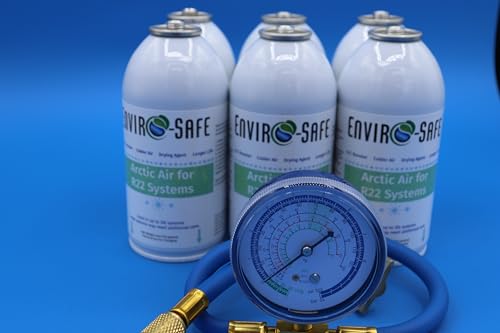
Several refrigerant blends have been marketed as R22 replacements for existing systems. These include variants that operate at similar pressures and can sometimes be used after adjusting the system charge and, in some cases, changing components such as filter-driers or seals. Retrofit is not a universal drop-in solution: compatibility depends on compressor oil type, system materials, and manufacturer guidance.
Many HVAC professionals advise against retrofitting older R22 systems when the equipment is nearing the end of its service life. The combined effort may not deliver reliable long-term performance, and the system will still lack the efficiency of modern equipment.
Replacement with a modern refrigerant system
Replacing the entire outdoor and indoor unit with a system using a current refrigerant is the most reliable long-term solution. Modern systems primarily use R410A, with newer equipment transitioning to lower-global-warming-potential refrigerants such as R32 and R454B. These systems are designed for the refrigerant they use, offer higher efficiency, and come with modern controls and warranties.
| Option | Description | Best For |
|---|---|---|
| Reclaimed R22 | Recycled refrigerant matching the original specification | Systems in good condition needing a small top-up |
| Retrofit refrigerant | Alternative blend requiring charge adjustment or component changes | Systems in fair condition where replacement is not yet planned |
| R410A system | Modern refrigerant widely used in current equipment | Homeowners replacing an aging system with a current model |
| R32 / R454B system | Lower-global-warming-potential refrigerants in newer equipment | Buyers seeking the latest efficiency and environmental standards |
Can You Retrofit an R22 System?
Retrofitting an R22 system with a different refrigerant is technically possible in some cases, but it is rarely the best long-term choice. The process typically involves:
- Recovering the existing R22 charge according to EPA rules.
- Replacing the filter-drier and possibly other components.
- Adjusting the refrigerant charge to match the new refrigerant's properties.
- Updating labels to reflect the new refrigerant.
Even when the retrofit is done correctly, performance and efficiency may not match a system designed for the new refrigerant. Compressor oil compatibility, pressure limits, and component materials all factor into the outcome. Many contractors advise that the effort is only worthwhile when the system is otherwise in good condition and replacement is not feasible in the near term.
For homes that also have a furnace, replacing the entire system — including the indoor coil — is often simpler than retrofitting. Our article on central air with furnace explains how the two systems share components and why matching equipment matters.
EPA Rules and Safe Handling
R22 is a regulated refrigerant. Under EPA rules, only certified technicians may purchase, handle, and recover R22 and other ozone-depleting refrigerants. Homeowners should never attempt to add or remove refrigerant themselves. Improper handling can cause injury and violates environmental regulations.
When a system is decommissioned, the refrigerant must be recovered and either recycled, reclaimed, or destroyed according to regulations. Reputable HVAC contractors follow these procedures as part of standard service. Our guide to working with an HVAC contractor explains what to look for when hiring.
Repair vs. Replace: Making the Decision
The decision to repair or replace an R22 system depends on the system's age, condition, and the nature of the problem. The table below outlines common scenarios.
| Situation | Typical Recommendation | Reasoning |
|---|---|---|
| Minor repair on a functioning system | Repair | If the system is otherwise reliable and refrigerant is available |
| Refrigerant leak requiring significant top-up | Evaluate replacement | Ongoing leak repairs plus refrigerant uncertainty add up over time |
| Compressor failure | Replace system | Compressor replacement on an R22 system is rarely worthwhile |
| Coil failure | Replace system | New coil must be matched to a modern refrigerant system |
| System over 15 years old | Plan replacement | Efficiency gains and refrigerant certainty favor new equipment |
If you are comparing repair and replacement, our article on central air conditioner stopped cooling explains how to diagnose the issue before deciding. For systems that still run but fail to cool properly, see my AC is running but not cooling for a structured troubleshooting approach.
What to Expect from a Modern Replacement System
Replacing an R22 system with a modern unit offers several benefits beyond refrigerant availability. New systems are significantly more efficient, quieter, and often include features such as variable-speed compressors and smart thermostat compatibility.
Sizing and installation quality matter as much as the equipment. A proper load calculation ensures the new system matches your home's needs. Our article on central air unit for 1400 square foot house provides context for typical home sizes, and our guide to central air set up covers installation fundamentals.
If you are considering a replacement, our overview of HVAC replacement cost explains what factors influence project scope, and our HVAC buying guide walks through system selection.
Market Tiers for Replacement Systems
Replacement systems are available across several market tiers. The table below summarizes typical characteristics without referencing monetary figures.
| Tier | Typical Features | Best For |
|---|---|---|
| Entry-level | Single-stage compressor, standard efficiency, basic thermostat | Homeowners prioritizing straightforward replacement |
| Mid-range | Two-stage compressor, higher efficiency, improved humidity control | Households wanting balanced comfort and efficiency |
| Premium | Variable-speed compressor, smart thermostat compatibility, quieter operation | Homeowners seeking maximum comfort and long-term efficiency |
| High-end tier | Top efficiency ratings, zoning integration, advanced controls |
Mid-range systems typically offer a strong balance for homeowners replacing an older R22 unit. Premium and high-end tier systems make more sense when the home has significant zoning needs or the owner plans to stay long-term and wants to minimize operating energy use.
Maintenance for Remaining R22 Systems
If you plan to keep an R22 system running for the near term, maintenance becomes especially important. A well-maintained system is less likely to develop leaks and more likely to operate efficiently until replacement is scheduled.
- Change filters every one to three months.
- Schedule annual professional service to check refrigerant levels and clean coils.
- Address small issues promptly before they escalate.
- Monitor for signs of refrigerant loss, such as reduced cooling or ice on the indoor coil.
Our HVAC maintenance guide covers seasonal routines in detail, and our article on cleaning filter of air conditioner explains filter care.
Ready to Explore Replacement Systems?
Compare modern air conditioners in our recommended section below, then confirm sizing and refrigerant details with a licensed contractor.
View Recommended SystemsFrequently Asked Questions
Is R22 still available for purchase?
R22 production and import for new equipment ended in the United States, and supplies now come from recovered and recycled refrigerant. Availability continues to tighten, and service options vary by region. Homeowners with R22 systems should plan for eventual replacement rather than relying on long-term refrigerant supply.
Can I retrofit my R22 system with a different refrigerant?
Retrofit refrigerants exist, but they are not a universal drop-in solution. Compatibility depends on the compressor oil, system components, and manufacturer guidance. Many HVAC professionals advise that retrofitting older R22 systems is not worthwhile compared with replacing the equipment with a modern refrigerant system.
What refrigerants are used in new AC systems today?
Modern systems primarily use R410A, with newer equipment moving toward lower-global-warming-potential refrigerants such as R32 and R454B. These refrigerants operate at different pressures and require different handling procedures than R22.
Should I replace my R22 air conditioner or keep repairing it?
If your R22 system needs a significant repair, such as a compressor or coil replacement, replacement is usually the better long-term decision. New systems use current refrigerants, offer higher efficiency, and avoid the uncertainty of R22 availability. A qualified technician can help you compare repair versus replacement based on the system's age and condition.
Who can legally handle R22 refrigerant?
Under EPA regulations, only certified technicians may purchase, handle, and recover R22 and other regulated refrigerants. Homeowners should not attempt to add or remove refrigerant themselves. Proper recovery and disposal are required by law.