R404A Freon: Complete Guide to Properties, Uses, and Replacement
Everything you need to know about R404A refrigerant — its characteristics, commercial applications, regulatory status, and the best replacement options for your refrigeration system.
Quick Summary: R404A is a high-GWP hydrofluorocarbon (HFC) refrigerant blend designed primarily for commercial refrigeration. Due to its significant environmental impact, it is being phased out globally in favor of lower-GWP alternatives such as R448A, R449A, and R454A. If your system runs on R404A, understanding your replacement options is essential for long-term compliance and efficiency.
What Is R404A Freon?
R404A is a zeotropic refrigerant blend composed of three HFC components: R125 (44%), R143a (52%), and R134a (4%). It was developed as a replacement for R502 and R22 in commercial refrigeration applications, particularly in low and medium-temperature systems. Unlike single-component refrigerants, R404A's blend composition means it must be charged in liquid state to maintain correct proportions.
R404A is not a drop-in replacement for R22 in residential air conditioning. It is specifically formulated for refrigeration equipment operating at lower evaporating temperatures. Its boiling point at atmospheric pressure is approximately -46.5°C (-51.7°F), making it suitable for frozen food storage and display cases.
Key Properties of R404A
| Property | Value |
|---|---|
| Chemical Name | R125 / R143a / R134a blend (44/52/4) |
| ASHRAE Safety Classification | A1 (non-toxic, non-flammable) |
| Global Warming Potential (GWP) | 3,922 (AR4) / 4,728 (AR5) |
| Ozone Depletion Potential (ODP) | 0 |
| Boiling Point at 1 atm | -46.5°C (-51.7°F) |
| Critical Temperature | 72.1°C (161.8°F) |
| Critical Pressure | 3,729 kPa (540.9 psia) |
| Liquid Density at 25°C | 1,046 kg/m³ |
| Vapor Pressure at 25°C | 1,258 kPa (182.5 psia) |
| Temperature Glide | Approx. 0.8 K |
⚠️ Safety Note: R404A is a high-pressure refrigerant. Always wear appropriate personal protective equipment (PPE), including safety glasses and insulated gloves, when handling refrigerant lines. Never charge R404A in vapor state — it must be charged as a liquid to maintain the correct blend ratio. In enclosed spaces, ensure proper ventilation to prevent oxygen displacement.
Common Applications of R404A
R404A is predominantly found in commercial refrigeration rather than residential cooling. Its properties make it well-suited for systems requiring low evaporating temperatures and reliable performance under heavy-duty cycles.
Supermarket Display Cases
Open and closed refrigerated display cases for dairy, meat, and frozen foods commonly use R404A due to its reliable low-temperature performance.
Walk-In Coolers & Freezers
Commercial walk-in refrigeration units for restaurants, grocery stores, and food service operations frequently rely on R404A.
Transport Refrigeration
Refrigerated trucks and shipping containers use R404A for maintaining temperature during transport of perishable goods.
Industrial Process Cooling
Some industrial processes requiring low-temperature cooling, such as food processing and cold storage warehouses, use R404A systems.
Ice Machines
Commercial ice production equipment often operates on R404A for reliable freezing performance.
Cold Storage Rooms
Dedicated cold rooms for pharmaceuticals, flowers, and perishable inventory use R404A-based refrigeration systems.
R404A Phase-Out and Regulatory Status
R404A has been subject to increasing regulatory restrictions due to its exceptionally high global warming potential (GWP). Under the EU F-Gas Regulation (517/2014), the use of R404A in new equipment was banned starting January 2020 for certain applications, with further restrictions phasing in through 2022 and beyond. The Kigali Amendment to the Montreal Protocol also targets HFC phasedowns, which affects R404A availability globally.
In the United States, the EPA's Significant New Alternatives Policy (SNAP) program has delisted R404A for certain new applications, and the AIM Act (2020) provides a framework for HFC phasedown. As a result, R404A is increasingly being replaced in new installations, and technicians are advised to plan for retrofitting existing systems with lower-GWP alternatives.
What this means for you: If you operate commercial refrigeration equipment using R404A, you should begin evaluating replacement refrigerants and retrofit options. Regulatory timelines vary by region, but the trend is clear — R404A is being phased down. Planning ahead helps avoid supply disruptions and ensures compliance. For related refrigerant context, see our guides on R410A phase out and R22 freon.
R404A vs Other Common Refrigerants
| Refrigerant | Type | GWP | ODP | Typical Use | Phase-Out Status |
|---|---|---|---|---|---|
| R404A | HFC blend | 3,922 | 0 | Commercial refrigeration | Under phasedown |
| R410A | HFC blend | 2,088 | 0 | Residential AC, heat pumps | Phasedown underway |
| R22 | HCFC | 1,810 | 0.055 | Legacy AC and refrigeration | Banned in new equipment |
| R448A | HFO/HFC blend | 1,387 | 0 | Commercial refrigeration | Active replacement |
| R449A | HFO/HFC blend | 1,397 | 0 | Commercial refrigeration | Active replacement |
| R454A | HFO/HFC blend | 238 | 0 | Low-temp refrigeration | Low-GWP alternative |
| R744 (CO2) | Natural | 1 | 0 | Commercial refrigeration | Long-term solution |
R404A Replacement Options
Several lower-GWP refrigerants are available as replacements for R404A in existing and new systems. The choice depends on system design, operating temperatures, and regional regulations. Most replacements require minimal system modifications, but always consult a qualified technician before retrofitting.
R448A (Opteon XP40)
A near-azeotropic blend with GWP of 1,387 — approximately 65% lower than R404A. Suitable for retrofit in many existing systems with minor adjustments. One of the most widely adopted replacements in commercial refrigeration.
R449A (Forane 449A)
Similar performance to R448A with GWP of 1,397. Designed as a drop-in replacement for R404A in medium and low-temperature systems. Requires synthetic lubricants and may need expansion valve adjustment.
R452A (Opteon XP44)
GWP of 2,141 — lower than R404A but higher than R448A/R449A. Often used in transport refrigeration where higher capacity is needed. Compatible with POE lubricants.
R454A / R454C
Lower-GWP HFO blends (GWP 238 and 148 respectively) for new equipment designs. Not typically drop-in replacements but offer excellent long-term environmental performance for new installations.
CO2 (R744)
A natural refrigerant with GWP of 1. Increasingly used in new commercial refrigeration systems, especially in cascade configurations. Requires high-pressure system design but offers the lowest environmental impact.
R407A / R407F
HFC blends with GWP around 2,107 and 1,825 respectively. Sometimes considered for retrofits, though their GWP is still relatively high compared to HFO blends.
Safety and Handling Guidelines
R404A must be handled with care by trained professionals. Key safety considerations include:
- Charge as liquid: R404A is a zeotropic blend. Always charge in liquid state to prevent fractionation and maintain correct composition.
- Personal protective equipment: Use insulated gloves, safety goggles, and protective clothing when working with refrigerant lines. Liquid refrigerant can cause frostbite on contact.
- Ventilation: Work in well-ventilated areas. In enclosed spaces, use refrigerant monitors and ensure adequate airflow to prevent oxygen displacement.
- Recovery: Never vent R404A to the atmosphere. Use EPA-approved recovery equipment and follow local regulations for refrigerant recovery and disposal.
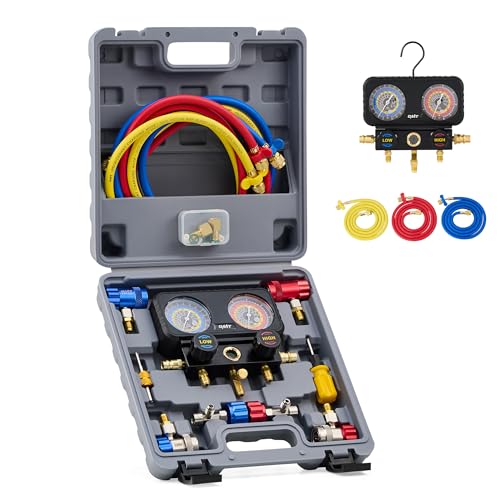
- Pressure awareness: R404A operates at higher pressures than R22 and many other refrigerants. Ensure all system components are rated for the pressure and use appropriate gauges and hoses.
- Leak detection: Use electronic leak detectors calibrated for HFC refrigerants. Regular leak checks are required under many regulatory frameworks.
Frequently Asked Questions About R404A
Need Help Choosing the Right Refrigerant Solution?
Whether you are maintaining an existing R404A system or planning a retrofit to a lower-GWP alternative, understanding your options is the first step. Explore our related guides on refrigerant management, AC selection, and system maintenance to make informed decisions.
Explore RecommendationsRelated Guides on Refrigerants and AC Systems
Expand your knowledge with these related resources:
- R22 Freon Guide — Understanding the legacy refrigerant and its phase-out.
- R134A Freon Guide — Properties and uses of this common refrigerant.
- R12 Freon Guide — The history and status of R12 refrigerant.
- R410A Air Conditioner Guide — What homeowners should know about R410A systems.
- R410A Phase-Out Explained — Regulatory timeline and replacement options.
- Recharging Your Air Conditioner — When and why refrigerant recharge is needed.
- Refilling Your AC System — Step-by-step overview of the refill process.
- Process Cooling Systems — Industrial cooling applications and refrigerant considerations.