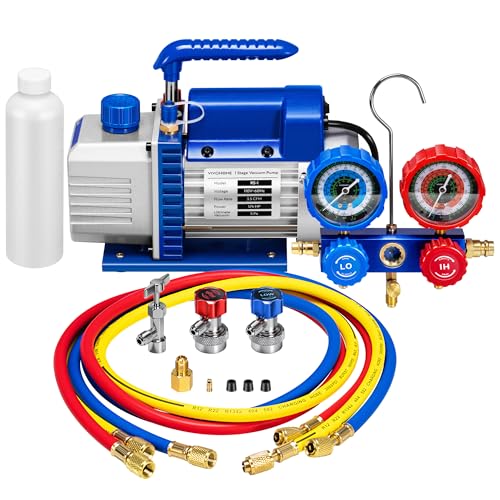
Recharging Freon in Air Conditioner
A complete guide to understanding refrigerant, spotting low-freon symptoms, and knowing when recharging is the right fix versus a warning sign of a bigger problem.
START LEARNINGWhat Recharging Freon Really Means
"Freon" is a brand name that many homeowners use as a catch-all word for refrigerant. When people talk about recharging freon in an air conditioner, they mean adding refrigerant to a system that has lost some of its charge. The goal is to restore the correct pressure and volume so the cooling cycle can work as designed.
Here is the key point that surprises many homeowners: refrigerant is not a fuel that gets used up. In a sealed system, the charge stays constant for the life of the equipment. If the level is low, refrigerant has escaped through a leak. Adding more without fixing the leak is a temporary patch, not a repair.
The cooling cycle depends on a precise amount of refrigerant moving between the indoor evaporator and the outdoor condenser. If you want the full picture of how that loop works, the AC refrigerant cycle explained article walks through each stage. When the charge is correct, the system transfers heat efficiently. When it is low, the compressor works harder, the coil can freeze, and the home never reaches the set temperature.
Signs Your AC Needs Refrigerant
Low refrigerant produces a recognizable set of symptoms. If you notice more than one of these, it is worth having the system inspected.
| Symptom | What It Suggests | What to Check First |
|---|---|---|
| Weak cooling or warm air from vents | Low charge cannot absorb enough heat | Air filter, thermostat setting, then refrigerant pressure |
| Ice on the indoor coil or refrigerant lines | Low pressure drops coil temperature below freezing | Turn the unit off, let ice melt, check airflow before adding refrigerant |
| Hissing or bubbling near the lines | Refrigerant escaping through a leak | Visual inspection of line sets and joints by a technician |
| Compressor runs constantly | System cannot reach setpoint and never cycles off | Refrigerant pressure and compressor amp draw |
| Higher than usual energy use | Longer run times to compensate for low cooling | Compare recent bills, then schedule a system check |
Some of these symptoms overlap with other problems. A dirty filter, a failing blower, or a bad capacitor can all cause weak cooling. Before assuming the refrigerant is low, run through the things to check when AC is not cooling checklist. If the filter is clean and the outdoor unit is running but the air is not cold, refrigerant pressure is the next thing to test.
Why Refrigerant Level Drops
Refrigerant does not evaporate from a healthy system. If the level is low, there is a physical path for it to escape. Common leak points include:
- Flare fittings and brazed joints on the line set between the indoor and outdoor units.
- Schrader valves at the service ports, which can wear out and slowly seep.
- Coil pinholes caused by corrosion, especially in coastal or humid climates.
- Vibration cracks in the copper lines where they pass through the wall or cabinet.
- Poor installation workmanship that left a joint under-tightened or under-brazed.
A technician locates leaks with electronic leak detectors, UV dye, or nitrogen pressure testing. Once the leak is found and repaired, the system is evacuated with a vacuum pump and then charged to the manufacturer's specified weight or superheat/subcooling target. Skipping the leak repair means the new refrigerant will escape the same way the old charge did.
Older systems with R-22 refrigerant are a special case. Because R-22 production has been phased out, the refrigerant is harder to source and the repair math often favors replacement. If you are weighing that decision, the HVAC replacement guide covers the trade-offs.
Types of Refrigerant in Modern AC
The refrigerant in your system depends on when the equipment was built. You cannot mix types, and you cannot swap one for another without a system designed for it.
| Refrigerant | Common In | Notes |
|---|---|---|
| R-22 | Older systems installed before 2010 | Production phased out; only reclaimed supply remains; service requires certified handling |
| R-410A | Systems installed roughly 2010–2023 | Higher pressure than R-22; uses POE oil; common in most current residential splits |
| R-32 and R-454B | Newer systems entering the market | Lower global warming potential; designed for next-generation equipment |
If you are unsure which refrigerant your unit uses, check the data plate on the outdoor condenser. It lists the refrigerant type and the factory charge. This label is also what a technician uses to confirm the system is charged to the correct specification after a repair.
For a deeper look at the gas side of the system, the air conditioning gas article and the freon for HVAC guide explain the difference between refrigerant types and how they are handled.
How a Professional Recharge Works
A proper recharge is a multi-step procedure, not a single "add gas" action. Here is what a qualified technician does, in order.
Diagnose the system
Measure suction and liquid line pressures, superheat, and subcooling to confirm the charge is actually low.
Find the leak
Use an electronic detector, UV dye, or nitrogen pressure test to locate the leak point.
Repair and verify
Fix the leak, then pressure test again to confirm the repair holds.
Evacuate the system
Pull a deep vacuum with a pump to remove air and moisture from the lines.
Charge to spec
Add refrigerant by weight or by superheat/subcooling target, following the manufacturer's label.
Confirm performance
Check temperature split across the coil and verify the system cycles correctly.
The vacuum step is where many shortcuts happen. If the system is not evacuated properly, moisture and non-condensable gases stay in the lines and reduce efficiency or damage the compressor over time. A technician who skips evacuation is not doing the job correctly.
If you are hiring help, the heating and air conditioning service companies guide explains what to ask before booking, and the air conditioning companies near my location article covers how to vet local providers.
Why DIY Recharge Is Risky
Store shelves and online marketplaces sell "AC recharge" kits with a hose and a gauge. They look simple, but refrigerant handling is not a beginner task.
- Legal requirements. In the United States, handling refrigerant requires EPA Section 608 certification. Releasing refrigerant into the atmosphere is illegal.
- Overcharge risk. Adding too much refrigerant raises head pressure, stresses the compressor, and can cause the system to shut down on a safety limit.
- Undercharge risk. Guessing at the correct amount leaves the system inefficient and can freeze the coil.
- No leak repair. A recharge kit does not fix the leak. The new refrigerant escapes the same way the old charge did.
- Mixed refrigerants. Some kits contain blends or sealants that can contaminate the system and void the warranty.
If the goal is to avoid a service call, the better move is prevention. Regular filter changes and annual tune-ups catch small issues before they become refrigerant problems. The AC maintenance guide and the air conditioning unit tune-up article cover the routine checks that keep a system sealed and efficient.
What to Do After a Recharge
A correct recharge should restore normal cooling within a short time. Here is how to confirm the job was done right and protect the repair.
- Check the temperature split. Measure the air temperature at the return and at a supply vent. A healthy split is typically in the high teens to low twenties in Fahrenheit.
- Watch for ice. If the indoor coil starts to frost within a day or two, call the technician back. It usually means an airflow problem or an incorrect charge.
- Ask for the leak report. A professional recharge should come with documentation of where the leak was found and how it was repaired.
- Keep the filter clean. Restricted airflow is one of the most common causes of coil freeze and compressor strain.
- Schedule a follow-up check. A short visit a few weeks later confirms the repair is holding and the charge is stable.
If the unit still struggles after a recharge, the problem may not be refrigerant at all. The AC not blowing cold air in house guide and the air is blowing but not cold in house article cover the other common causes, from thermostat issues to compressor problems.
Water around the indoor unit after a service visit is a separate issue. If you notice it, the AC leaking water solutions guide explains the likely causes and fixes.
Choosing Service by Provider Tier
HVAC providers vary widely in how they handle refrigerant work. The tiers below describe service depth, not any specific figure. Use them to compare quotes on an apples-to-apples basis.
| Tier | Best For | What to Expect |
|---|---|---|
| Entry-level | Quick diagnostic visits and simple top-offs on newer systems | Basic pressure check, refrigerant add, minimal leak documentation; suitable for straightforward cases |
| Mid-range | Most residential leak repairs and recharges | Leak detection, repair, evacuation, charge to spec, performance verification, written report |
| High-end tier | Older systems, R-22 equipment, complex leaks | Nitrogen pressure testing, UV dye tracing, deep vacuum, superheat/subcooling tuning, follow-up visit |
| Top-tier | Whole-home systems and commercial-grade equipment | Full system audit, documented leak history, refrigerant management plan, preventive maintenance schedule |
For a typical single-family home, a mid-range provider covers the full leak-repair-and-recharge workflow. Entry-level service can work for a newer system with a minor issue, but it should still include a leak check. If a provider offers to add refrigerant without checking for leaks, move on to the next quote.
If the system is old enough that repeated repairs are adding up, replacement may be the better long-term investment. The HVAC replacement guide and the AC maintenance plan article can help you compare ongoing service against a new installation.
Frequently Asked Questions
Final Thoughts
Recharging freon in an air conditioner is a repair procedure, not routine maintenance. If your system is low on refrigerant, the real question is where the refrigerant went. A qualified technician will find the leak, fix it, evacuate the lines, and charge the system to spec. That sequence is what makes a recharge last.
If you are comparing service options, start with a clear diagnostic and ask for a written leak report. If the system is older and repairs are piling up, the HVAC replacement guide can help you decide whether a new unit is the better long-term investment. And if you want to catch problems early, the AC maintenance guide and the tune-up guide lay out the checks that keep a system sealed, efficient, and out of the repair shop.