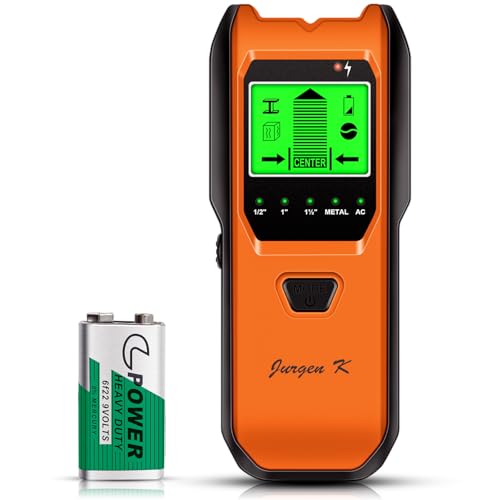
Stud Finder Guide: Choose the Right Stud Finder for Your Home
Master stud detection for safer, smarter home projects. Understand how stud finders work, compare types, learn accuracy tips, and pick the right tool for your walls.
START LEARNINGWhy a Stud Finder Matters: Whether you are mounting a TV, hanging heavy shelving, or installing cabinetry, knowing exactly where the structural framing sits prevents wasted holes, damaged drywall, and dangerous contact with wiring or plumbing. A reliable stud finder is one of the most valuable tools in any homeowner's kit.
What Is a Stud Finder and Why Do You Need One?
A stud finder is a handheld tool that locates the wooden or metal studs behind drywall, plaster, or other wall surfaces. Studs are the vertical framing members that support wall panels and carry the load of mounted objects. Without a stud finder, you risk drilling into empty wall cavities, hitting a live electrical cable, or puncturing a water pipe.
Modern stud finders range from simple magnetic models that detect the nails or screws holding drywall to advanced electronic wall scanners that map density changes and identify stud edges, centers, and depth. For any project that involves anchoring into a wall, a stud finder transforms guesswork into precision.
Types of Stud Finders: Which One Fits Your Needs?
Magnetic Stud Finders
These entry-level tools use strong magnets to detect the fasteners that secure drywall to studs. They are simple, require no batteries, and work well for basic projects. They are the most straightforward option for occasional DIY use and are especially handy for locating screws in standard drywall installations.
Electronic Edge-Finding Stud Finders
Mid-range electronic models use capacitive sensors to detect density changes in the wall. They alert you when approaching a stud edge, and you mark both sides to estimate the center. These are a solid choice for homeowners who want reliable results without advanced features.
Electronic Center-Finding Stud Finders
These mid-tier to high-end tier devices indicate the center of the stud directly, saving time and reducing marking errors. Center-finding models are ideal for mounting heavy items where precise anchor placement matters most.
Deep-Scan Wall Scanners
Premium and professional-grade scanners detect studs through thicker walls, tile, and multiple layers. They often include metal, live wire, and pipe detection modes. These top-tier tools are favored by contractors and serious DIYers working on complex installations.
How Stud Finders Work: Magnetic vs Electronic Detection
Magnetic stud finders rely on neodymium magnets that latch onto the steel screws or nails used to attach drywall. When the magnet jumps or slides toward a fastener, you have found a stud location. This method is simple and dependable for standard wood-frame construction with drywall.
Electronic stud finders use capacitive sensing technology. The tool measures the dielectric constant of the wall material. Drywall has a different density than the wood or metal stud behind it, so the sensor registers a change when it passes over framing. Center-finding models process these signals to pinpoint the middle of the stud, while edge-finding models alert you near the boundaries.
Advanced wall scanners add radar or electromagnetic sensing to detect metal, live AC wiring, and sometimes plastic pipes. These features are especially useful before drilling near electrical outlets or plumbing runs. For related home safety topics, see our guide on troubleshooting air conditioning to understand how professional tools support household maintenance.
Key Features to Consider Before Buying a Stud Finder
- Detection Depth: Standard models detect studs up to a typical drywall thickness, while deep-scan models reach through thicker surfaces. Match the depth rating to your wall construction.
- Center-Finding vs Edge-Finding: Center-finding saves time and improves anchor accuracy. Edge-finding is adequate for light-duty hanging but requires more marking.
- Live Wire and Metal Detection: Essential for safety when drilling near outlets, switches, or plumbing. Mid-range and high-end tier models commonly include these modes.
- Display and Feedback: Audible beeps, LED indicators, and LCD screens improve usability. Premium models offer clearer visual guidance and multiple detection modes.
- Ergonomics and Build Quality: A comfortable grip, durable housing, and a clear marking channel make repeated use easier. Professional-grade models often feature reinforced construction.
- Calibration and Accuracy: Auto-calibration and continuous scanning improve reliability. Always test on a known stud location before critical projects.
How to Use a Stud Finder: Step-by-Step Accuracy Tips
- Prepare the Wall: Remove paintings, mirrors, and obstructions. Clean the surface so the stud finder glides smoothly.
- Calibrate the Tool: Most electronic models require calibration by holding the button and placing the unit against the wall in a stud-free area. Follow the manufacturer's instructions.
- Scan Horizontally: Move the stud finder slowly across the wall. Mark the first signal, then approach from the opposite direction to confirm the stud location.
- Mark Stud Edges or Center: For edge-finding models, mark both edges and calculate the center. For center-finding models, mark the indicated center directly.
- Verify with a Secondary Method: Use a thin nail, a magnet, or a second scan to confirm before drilling. This step is critical near electrical or plumbing runs.
- Avoid Common Mistakes: Do not scan over textured surfaces without adjusting for thickness, and avoid moving too quickly. Consistent, slow movement yields the best results.
Stud Finder Accuracy and Limitations You Should Know
No stud finder is perfectly accurate on every wall. Thick plaster, tile backer board, and foil-backed insulation can interfere with electronic sensors. Magnetic models only detect metal fasteners, so they may miss studs secured with adhesives or non-standard fasteners. Deep-scan premium models mitigate many of these issues but still benefit from verification.
Environmental factors such as humidity, wall temperature, and nearby electrical devices can affect readings. Always perform a calibration check and scan from multiple directions. For projects involving HVAC or electrical systems, cross-reference with other maintenance guides, such as our air conditioning system overview, to ensure you understand the broader home infrastructure before making modifications.
Stud Finder Buying Guide: Match the Tier to Your Project
Choose a stud finder based on how often you will use it and the complexity of your projects. The table below uses universal quality tiers instead of numeric values, so the guidance stays relevant over time.
| Tier | Best For | Typical Strengths |
|---|---|---|
| Entry-Level | Occasional picture hanging and light DIY | Simple operation, no batteries for magnetic models, easy to store |
| Mid-Range | Homeowners mounting TVs, shelves, and cabinets | Center-finding or edge-finding, live wire alerts, reliable accuracy |
| Premium | Frequent DIY and renovation projects | Deep scanning, multiple detection modes, clear displays |
| Professional-Grade | Contractors and complex installations | High precision, reinforced build, advanced wall scanning |
A mid-range center-finding model is a solid choice for most homeowners. If you regularly work on thicker walls or need to detect pipes and wiring, step up to a premium or professional-grade scanner. Entry-level magnetic models remain useful as a backup and for quick checks.
Stud Finder Maintenance and Storage Tips
Keep your stud finder accurate by storing it in a dry place away from strong magnetic fields. Replace batteries regularly on electronic models, and clean the sensor surface with a soft, dry cloth. Avoid dropping the tool, as internal sensors can lose calibration. Periodically test the device on a known stud to confirm it is working correctly.
Frequently Asked Questions About Stud Finders
How accurate is a stud finder?
Accuracy depends on the type and quality tier. Entry-level magnetic models are simple but only detect metal fasteners. Mid-range electronic models typically locate stud edges within a small margin, while premium and professional-grade deep-scan models offer the highest precision and can identify stud centers, edges, and even live wires.
Can a stud finder detect pipes and electrical wires?
Many mid-range and high-end tier stud finders include live wire detection and metal scanning. Premium wall scanners can also detect plastic pipes and rebar. Always verify with a secondary method before drilling near plumbing or electrical runs.
What is the difference between edge-finding and center-finding stud finders?
Edge-finding models signal when they approach the edge of a stud, requiring you to mark both sides. Center-finding models indicate the middle of the stud directly, which is faster and more convenient for most DIY projects.
Do stud finders work on all wall types?
Most work well on standard drywall over wood or metal framing. Thick plaster, tile, brick, and concrete may require specialized scanners or different detection modes. Deep-scan models perform better on thicker wall surfaces.
Final Thoughts: Choose the Right Stud Finder for Safe, Confident Projects
A stud finder is a small investment that pays off in safety and precision. Start with a mid-range center-finding model for general home use, or choose a premium deep-scan scanner for complex walls and frequent projects. Always verify readings and combine stud detection with awareness of electrical and plumbing layouts. For more home infrastructure insights, explore our summer heating and cooling guide and HVAC thermostat guide.