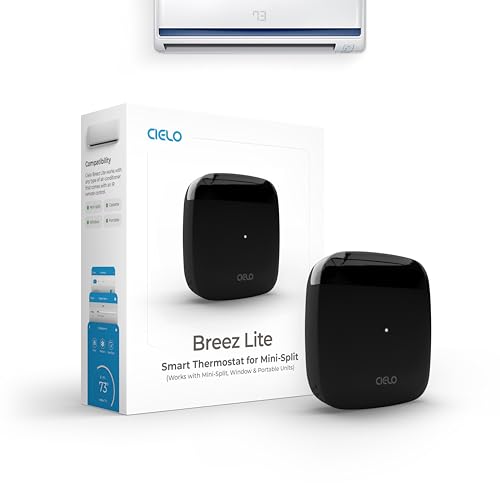
Thermostat Controlled Air Conditioner: Smart Cooling Explained
Learn how thermostat-controlled AC units maintain consistent room temperature, cut energy waste, and integrate with smart home systems — before you decide which model fits your space.
Explore the GuideReader's note: This page is written for buyers in the research stage. You already know you want cooling with precise temperature control. What follows is a complete, practical breakdown of how thermostat-controlled ACs work, what to compare between models, and how to match one to your room and usage pattern.
What Is a Thermostat Controlled Air Conditioner?
A thermostat controlled air conditioner is a cooling unit that relies on a thermostat — either built into the unit, mounted on the wall, or connected wirelessly — to read the ambient room temperature and cycle the compressor on and off to hold a chosen setpoint. Rather than running continuously at full output, the unit continuously compares actual temperature against your target and adjusts runtime accordingly.
This feedback loop is what separates a thermostat-controlled unit from a basic manual-control AC. On window and portable units, the thermostat is usually an internal sensor paired with a digital control panel. On mini-split and central systems, the thermostat is typically a dedicated wall-mounted controller, often programmable or Wi-Fi enabled. The principle is identical in every case: sense, compare, correct.
Automatic Temperature Cycling
The thermostat signals the compressor to engage when the room drifts above your setpoint and disengage once the target is reached, keeping comfort stable without manual intervention.
Built-In vs. Wall-Mounted
Window and portable ACs house the thermostat internally. Mini-splits and central systems use dedicated wall thermostats that can be programmable or smart-connected.
Programmable & Smart Scheduling
Many thermostats support day/time schedules, sleep profiles, and remote app access, so cooling matches your routine instead of running on a fixed setting all day.
Reduced Overcooling
Precise cycling avoids the common manual-control problem of overcooling a room and then switching the unit off entirely, which wastes energy and creates temperature swings.
How the Thermostat Control Loop Works
Understanding the sequence helps you evaluate spec sheets and marketing claims. A thermostat-controlled AC follows four repeating stages:
- 1. Sensing: A thermistor (temperature sensor) inside the unit or on the wall thermostat measures the current room temperature several times per minute.
- 2. Comparison: The control board compares the reading against your setpoint, factoring in the thermostat's deadband — a small tolerance range that prevents rapid on/off cycling.
- 3. Actuation: If the room is warmer than the setpoint plus deadband, the compressor and fan engage. If it is cooler than the setpoint minus deadband, they disengage.
- 4. Modulation (inverter models): Inverter-driven units do not simply switch on and off — they scale compressor speed up or down to hold the setpoint with smaller temperature fluctuations.
The quality of this loop — sensor accuracy, deadband tuning, and whether the compressor is single-stage or inverter — directly determines how comfortable the room feels and how efficiently the unit operates. For a deeper look at the compressor side, see our guide to inverter vs non-inverter AC.
Thermostat Control by AC Type
Not every AC category implements thermostat control the same way. The table below maps common unit types to their typical control setup and the tier where smart features usually appear.
| AC Type | Thermostat Location | Typical Control Level | Best For |
|---|---|---|---|
| Window AC | Built-in digital panel | Essential tier to mid-range | Single rooms, renters |
| Portable AC | Built-in panel, some with remote | Mid-range | Flexible room-to-room cooling |
| Ductless Mini-Split | Wall-mounted programmable thermostat | Mid-range to premium | Whole-home zones, no ductwork |
| Central AC | Dedicated wall thermostat | Premium to top-tier | Multi-room homes with ductwork |
| Smart Window AC | Built-in + Wi-Fi app | High-end tier | Tech-forward single rooms |
If your home lacks ductwork and you want zoned thermostat control, a ductless configuration is usually the practical route. Our ductless mini-split AC guide covers sizing and installation considerations in detail. For homes that already have ducts, a central system paired with a programmable thermostat delivers the most consistent whole-home control.
Key Features to Compare Before Buying
Once you have narrowed the category, the thermostat and control features become the deciding factor. These are the specifications that matter most:
Programmable Schedules
Seven-day programmable thermostats let you set different targets for wake, away, home, and sleep periods. This is the single most effective control feature for reducing unnecessary runtime.
Wi-Fi & App Control
Smart thermostats allow remote adjustment, geofencing, and usage reports. Look for stable app support and compatibility with common smart home platforms.
Remote Control Included
Many window and portable units ship with an infrared remote. If the unit is mounted high or in a hard-to-reach spot, a remote or app is essential for daily use.
Inverter Compressor
Inverter models modulate output instead of cycling fully on and off, producing smaller temperature swings and smoother thermostat behavior.
Sensor Accuracy & Deadband
Better thermostats hold tighter tolerances. A narrow deadband means steadier comfort; a wide one means fewer compressor starts but larger temperature drift.
Sleep & Eco Modes
These modes gradually shift the setpoint overnight or during low-occupancy periods, reducing runtime without sacrificing comfort when it matters.
Want to compare thermostat-controlled units side by side?
View Recommended ModelsThermostat Control vs. Manual Control: What Actually Changes
Manual-control ACs run at a fixed setting until you switch them off or adjust the dial. Thermostat-controlled units close the loop automatically. In daily use, the differences show up in three areas:
- Temperature stability: Thermostat cycling keeps the room within a narrow band. Manual units tend to overshoot, leaving the room too cold before you notice and switch them off.
- Energy behavior: Automatic cycling avoids the "blast cold, then off" pattern that wastes energy on overcooling. Programmable schedules compound the benefit by aligning runtime with occupancy.
- Convenience: You set a target once and the unit manages itself. With smart thermostats, you can adjust from your phone before you arrive home.
For a practical walkthrough of scheduling strategies, see our guide on how to use a programmable thermostat. If you are pairing a new thermostat with an existing system, confirm compatibility with your compressor type and control voltage before purchasing.
Matching Thermostat Control to Your Space
Thermostat features only pay off when the unit is correctly sized for the room. An oversized AC will short-cycle — reaching the setpoint quickly and shutting off before it has dehumidified the air — which undermines the thermostat's benefit. An undersized unit will run continuously and never reach the target on hot days.
Start with a room-size estimate, then refine using ceiling height, window area, insulation, and occupancy. Our AC sizing guide and BTU calculator by room size walk through the calculation step by step. For small rooms and studio spaces, a thermostat-controlled window unit in the 5,000–6,000 BTU range is typically the right starting point. Larger living areas generally need the 12,000–14,000 BTU class.
Smart Thermostat Integration
Modern thermostat-controlled ACs increasingly overlap with smart home ecosystems. Integration brings several practical capabilities:
- Geofencing: The thermostat detects when you leave and raises the setpoint, then restores it as you return.
- Voice control: Compatibility with major voice assistants for hands-free adjustment.
- Usage reporting: Runtime and cycle data help you identify inefficient schedules and adjust them.
- Remote diagnostics: Some systems flag filter issues or abnormal cycling patterns before they become failures.
If you are building toward a connected home, look at models that combine thermostat control with Wi-Fi and smart control features. For central systems, the thermostat itself is often the upgrade path — a Wi-Fi central thermostat can modernize an existing system without replacing the AC.
Maintenance for Thermostat-Controlled Units
Thermostat accuracy degrades if the unit is neglected. A clogged filter restricts airflow, causing the evaporator to run colder and the thermostat to misread room conditions. Dust on the return-air sensor can also bias readings. A simple maintenance routine keeps the control loop reliable:
- Clean or replace the filter every four to eight weeks during peak season — see how to clean an AC filter.
- Clean condenser coils annually to maintain heat rejection efficiency — see clean condenser coils.
- Check thermostat batteries and recalibrate if readings drift from a separate thermometer.
- Schedule a professional tune-up before each cooling season to verify refrigerant charge and electrical connections.
For a structured seasonal routine, our seasonal AC checklist covers the tasks in order of priority.
Common Questions About Thermostat-Controlled ACs
What is a thermostat controlled air conditioner?
It is an AC unit that uses a built-in or connected thermostat to monitor room temperature and automatically cycle cooling on and off to maintain a set target temperature.
Are thermostat controlled air conditioners worth it?
Yes. They improve comfort consistency, reduce energy waste, and enable smart scheduling. Mid-tier and premium models with smart thermostats offer the best long-term efficiency.
Can I control a thermostat AC from my phone?
Many modern thermostat controlled AC units support Wi-Fi and mobile app control, allowing you to adjust temperature, schedules, and modes remotely.
Do thermostat controlled ACs save energy?
They can. Precise thermostat cycling prevents overcooling and unnecessary runtime, especially when paired with programmable schedules and inverter compressors.
What is the difference between a programmable and a smart thermostat?
A programmable thermostat follows fixed schedules you set in advance. A smart thermostat adds connectivity, learning behavior, geofencing, and app control, adapting schedules based on usage patterns.
Final Buying Checklist
Before committing to a thermostat-controlled model, confirm each of the following:
- The unit's BTU rating matches your room size after accounting for sun exposure and occupancy.
- The thermostat offers at least seven-day programmable scheduling, or smart app control if you want remote management.
- An inverter compressor is preferred if you want tighter temperature stability and smoother cycling.
- The control interface — panel, remote, or app — is accessible for where the unit will be installed.
- Filter access is straightforward, since regular cleaning directly affects thermostat accuracy.
- Warranty coverage includes the control board and thermostat components, not only the compressor.
With these checks complete, you are ready to compare specific models in the section below.