
Thermostat in AC: How It Works and How to Use It Well
The thermostat is the control center of every air conditioning system. This guide explains what a thermostat in AC does, the main types available, wiring essentials, placement rules, and practical settings that keep your home comfortable and your equipment running efficiently.
START LEARNINGWhy this matters: A well-matched thermostat turns a basic AC unit into a responsive, efficient comfort system. A poorly placed or wrongly configured thermostat can make a perfectly healthy air conditioner look broken, cycle too often, or leave rooms unevenly cooled. Understanding the thermostat first is the fastest way to get more from the equipment you already own.
What Is a Thermostat in an Air Conditioner?
A thermostat in an AC system is the device that measures the temperature of the conditioned space and compares it with the temperature you selected. Based on that comparison, it opens or closes the control circuit that tells the cooling equipment to run, stop, or modulate its output. In simple window and portable units, the thermostat is built into the unit itself and often includes a remote sensor. In central and ductless systems, a wall-mounted or smart thermostat acts as the interface between you and the HVAC equipment.
The thermostat does not generate cooling. It is a switch and a sensor combined. Its accuracy, location, and configuration determine how closely the actual room temperature follows your setpoint, and how often the compressor starts and stops. That is why the device is often described as the brain of the system while the compressor and coils are the muscles.
Core functions at a glance
- Sensing: Measures ambient air temperature (and sometimes humidity) around the device.
- Comparing: Checks the reading against your setpoint using a small internal logic circuit.
- Switching: Sends a low-voltage signal to the contactor, blower, and reversing valve as needed.
- Scheduling: In programmable and smart models, changes setpoints by time of day or occupancy.
- Reporting: Displays current conditions, filter reminders, and diagnostic codes.
How a Thermostat in AC Works Step by Step
Understanding the operating sequence helps you interpret odd behavior. Most residential cooling systems follow the same basic loop:
- You set a target temperature on the thermostat or through a mobile app.
- The sensor reads the room and the thermostat compares that reading to the setpoint.
- If cooling is needed, the thermostat closes the circuit that energizes the air handler and the outdoor condenser contactor.
- The system runs, moving refrigerant and air until the room reaches the setpoint or a safety limit.
- The thermostat opens the circuit, and the compressor and blower stop or ramp down, depending on the equipment type.
- The cycle repeats as the room temperature drifts back above the setpoint.
In inverter-driven systems, the thermostat does not simply switch on and off. It communicates a demand level, and the outdoor unit modulates compressor speed to hold the room temperature closer to the setpoint. That is why the choice of thermostat matters more than ever in modern high-efficiency installations.
Main Types of Thermostats Used With AC Systems
Thermostats fall into a few broad categories. The right choice depends on the equipment you have, how you use the space, and whether you want remote access.
| Type | Best For | Key Traits |
|---|---|---|
| Non-programmable (manual) | Entry-level setups and simple single-zone rooms | Basic dial or button control, no scheduling, very reliable |
| Programmable | Mid-range homes with predictable daily routines | Time-based setpoint changes, 5-2 or 7-day schedules |
| Smart thermostat | High-end tier installations and connected homes | Wi-Fi control, geofencing, learning algorithms, energy reports |
| Heat pump thermostat | Systems that both heat and cool with a reversing valve | Dedicated O/B terminal and auxiliary heat staging |
| Line-voltage thermostat | Window ACs, portable units, and some baseboard heat | Switches mains voltage directly, often built into the appliance |
| Low-voltage thermostat | Central AC, mini-splits, and forced-air furnaces | Operates on 24V control circuits, standard for wall-mounted units |
Many window air conditioners and portable units ship with an onboard thermostat plus a remote control that contains a temperature sensor. The remote sensor is useful because the unit itself sits near a window where readings can be skewed. For central systems, the thermostat is a separate wall device, and the quality of that device has a direct effect on comfort and runtime.
Where to Place an AC Thermostat
Placement is one of the most overlooked factors in thermostat performance. A device that reads the wrong air will command the system to do the wrong thing, no matter how capable the equipment is.
- Interior wall, 4 to 5 feet above the floor: This height samples air in the occupied zone where comfort actually matters.
- Away from direct sunlight: Sun on the device creates a false warm reading and causes short cycling.
- Not above supply registers or near return grilles: Discharge air can make the thermostat think the room is already cool.
- Away from kitchens, lamps, TVs, and exterior doors: Local heat sources and drafts distort readings.
- Good natural airflow: A thermostat in a dead corner or behind a door will not sample the room accurately.
In multi-story homes, a single thermostat on the main floor often leaves upper rooms warmer. Zoning or a thermostat with remote sensors can help balance the system without replacing the equipment. For homes where the thermostat is stuck in a poor location, a remote sensor is often a simpler fix than relocating the wiring.
Thermostat Wiring Basics for AC Systems
Most low-voltage thermostats use a standard terminal layout. Knowing the letters helps you interpret installation instructions and troubleshoot simple issues.
| Terminal | Function | Notes |
|---|---|---|
| R / Rc / Rh | 24V power | Rc powers cooling, Rh powers heating; often jumpered in single-transformer systems |
| C | Common wire | Provides continuous power; required by most smart thermostats |
| Y | Cooling call | Energizes the compressor contactor |
| G | Fan | Runs the indoor blower independently of heating or cooling |
| W | Heating call | Used for furnaces and auxiliary heat stages |
| O / B | Reversing valve | O is typical for cooling-mode valves, B for heating-mode valves |
If you are replacing a thermostat, photograph the existing wiring before disconnecting anything. Label each conductor. A single misplaced wire can prevent the system from starting or, worse, damage the control board. If the existing cable has no C-wire and you want a smart thermostat, an add-a-wire adapter or a dedicated power supply is usually the cleanest solution. Detailed guidance on the common wire is available in the thermostat C-wire guide.
How to Set a Thermostat in AC for Comfort and Efficiency
The setpoint is a preference, but the way you use it affects runtime, humidity control, and equipment life. A few principles apply to almost every system.
- Choose a realistic setpoint. A moderate setting that the system can actually hold is more comfortable and more efficient than an aggressive setting that never quite gets reached.
- Avoid large setbacks. Turning the thermostat far up during the day and far down at night forces long recovery runs and can leave the house humid.
- Use the fan setting deliberately. "Auto" saves energy; "On" improves air mixing but runs the blower continuously.
- Let the system finish a cycle. Repeated manual adjustments can cause short cycling and unnecessary wear.
- Check the mode. Confirm the thermostat is set to Cool rather than Heat, Auto, or Fan Only before diagnosing a cooling complaint.
If the thermostat is set to cool but the room never reaches the target, work through the basics before calling for service. A clogged filter, a closed supply register, or a thermostat reading skewed by sunlight can all mimic a mechanical failure. Our guide on thermostat set to cool but not cooling walks through the diagnostic order.
Common Thermostat Problems and What They Mean
Most thermostat complaints fall into a small number of categories. Identifying the category early saves time and prevents unnecessary parts replacement.
Blank or unresponsive display
Usually a power problem: tripped breaker, blown low-voltage fuse, disconnected C-wire, or a float switch that has shut the system down because the drain pan is full. Check power at the air handler first.
Thermostat on but not cooling
The thermostat may be calling correctly while the outdoor unit is not responding. Listen for the condenser fan and compressor. If nothing runs outdoors, suspect the contactor, capacitor, or a low-pressure lockout. If the indoor blower runs but the air is warm, the issue is likely in the refrigerant circuit or the compressor.
Short cycling
Frequent starts and stops can come from an oversized system, a thermostat placed near a heat source, a setpoint too close to room temperature, or a failing pressure switch. A thermostat with an adjustable differential or cycle rate can reduce nuisance cycling in some cases.
Temperature reading drifts
Thermostats are not laboratory instruments. A small offset is normal. A large persistent offset often indicates a sensor problem or a location problem. Recalibration is possible on some models, but relocation or a remote sensor is usually more reliable.
When the thermostat itself is suspect, a process of elimination works best: confirm power, confirm the mode and setpoint, confirm the wiring, then test the equipment at the service disconnect. If you are uncomfortable working inside the air handler, stop and call a licensed technician.
Matching the Thermostat to Your AC System
Thermostats are not universal. A model built for a conventional furnace and central AC may not support a heat pump's reversing valve, and a thermostat designed for line-voltage window units cannot control a 24V central system. Before choosing a replacement, confirm the following:
- System type: Conventional cooling, heat pump, dual-fuel, or mini-split with proprietary communication.
- Number of stages: Single-stage, two-stage, or variable-speed equipment needs a thermostat that supports the same staging.
- Voltage: Low-voltage 24V control versus line-voltage switching.
- Wiring available: Count the conductors in the wall, and note whether a C-wire is present.
- Communication protocol: Some ductless systems require the manufacturer's own controller, and third-party smart thermostats may not be compatible.
For split systems specifically, the thermostat must match the indoor and outdoor equipment's staging and defrost logic. Our overview of a thermostat for split system setups covers the compatibility details in more depth.
Are Smart Thermostats Worth Adding to an AC System?
Smart thermostats sit at the high-end tier of the category. They add remote control, scheduling, usage reporting, and often occupancy detection. For households with irregular schedules, the scheduling and geofencing features can meaningfully reduce runtime. For households with a predictable routine, a mid-range programmable thermostat already captures most of the benefit.
The practical prerequisites matter more than the feature list. A compatible system, a reliable C-wire, and a good location determine whether a smart thermostat performs well. Without those, the extra features cannot compensate. If you are unsure whether your wiring supports a smart model, resolve that question first.
Ready to Choose the Right Thermostat?
Review the recommended thermostats and AC controls below. Compare features, compatibility, and tier positioning before you decide.
VIEW RECOMMENDATIONSFrequently Asked Questions About Thermostats in AC Systems
What does a thermostat do in an air conditioner?
A thermostat measures room temperature and compares it to your setpoint. When the room is warmer than the setpoint, it signals the cooling equipment to run; when the setpoint is reached, it signals the system to stop or modulate. It is the control interface between you and the AC equipment.
Where should an AC thermostat be placed?
On an interior wall about 4 to 5 feet above the floor, away from direct sunlight, supply vents, doors, windows, kitchens, and lamps. Good airflow around the device is essential for accurate readings.
What is the C-wire on an AC thermostat?
The C-wire, or common wire, provides continuous low-voltage power to a thermostat. Smart thermostats usually require it. If your existing cable has no spare conductor, an add-a-wire kit or a dedicated power adapter may be needed.
Why is my thermostat set to cool but the AC is not cooling?
Common causes include a tripped breaker, a clogged air filter, a frozen evaporator coil, low refrigerant charge, a faulty capacitor, or a thermostat configuration problem such as an incorrect system type or fan setting. Start with power and airflow before assuming a refrigerant issue.
Can I replace a thermostat myself?
Replacing a low-voltage thermostat is a common DIY task if you photograph the wiring first, switch off the breakers, and follow the manufacturer's terminal mapping. Systems with proprietary communication, heat pumps with auxiliary heat, and line-voltage controls are better handled by a technician.
Does a thermostat control humidity?
Most standard thermostats only control temperature. Some advanced models support humidity sensing and can slow the blower to improve dehumidification, but true humidity control usually requires a dedicated dehumidify mode or a separate dehumidistat.
Recommended Thermostats for AC Systems
⚠️ AFFILIATE DISCLOSURE: This website contains affiliate links. As an Amazon Associate, we earn from qualifying purchases. If you make a purchase through these links, we may receive a small commission at no additional cost to you. Read our full affiliate policy.

ACiQ 3.5 Ton 13.4 SEER2 Packaged Heat Pump System with Thermostat | R32 Horizontal All-in-One Central AC Heat Pump System Unit, 42000 BTU, 230V Residential or Commercial
Check price on Amazon
ACiQ 2 Ton 13.4 SEER2 Packaged Heat Pump System with Thermostat | R32 Horizontal All-in-One Central AC Heat Pump System Unit, 24000 BTU, 230V Residential or Commercial
Check price on Amazon
GM Genuine Parts 131-151 (12632948) Engine Coolant Thermostat with Seal
Check price on Amazon
Thermostat for Home,NonProgrammable ac thermostats House,smart and Simple Thermostat,1 Heat Or 1 Cool,Easy DIY,White Backlight
Check price on Amazon
Wireless Thermostat for House, SENSTREE Remote Temperature Controller, Temperature Control Plug, Support Heating/Cooling Mode, for Window A/C, Fan, Space Heater,in Home,Baby Room, Attic, Garage
Check price on Amazon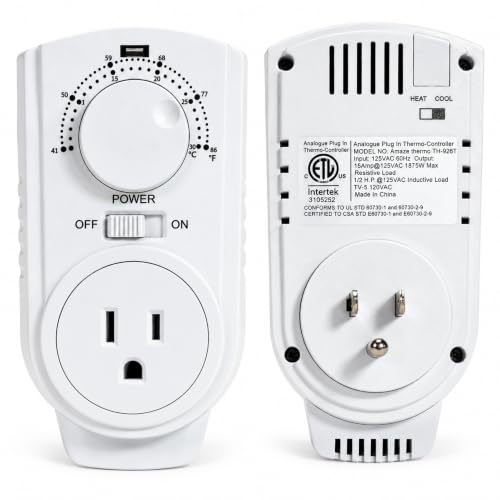
Amaze-Heater Plug in Thermostat for Heater or AC – Universal Temperature Controlled Outlet with Heat & Cool Modes – Thermostats for Home, Energy Saving with Analog Dial
Check price on Amazon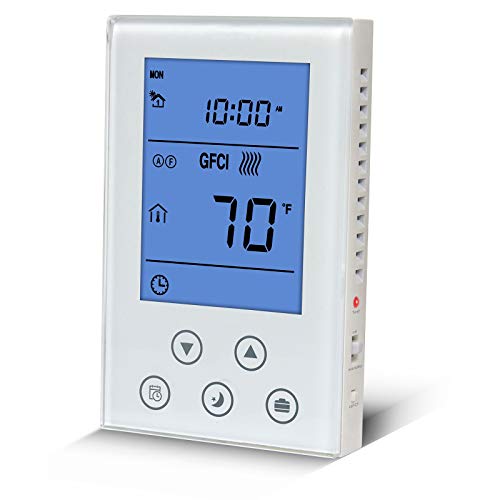
Programmable Thermostat for House Radiant Underfloor Heating, Home Heat Floor Mat Controller self-Adaption AC(120/240V) Voltage, Dual Sensing(Air&Floor Sensor) Built-in Class A GFCI, Power 3600W
Check price on Amazon