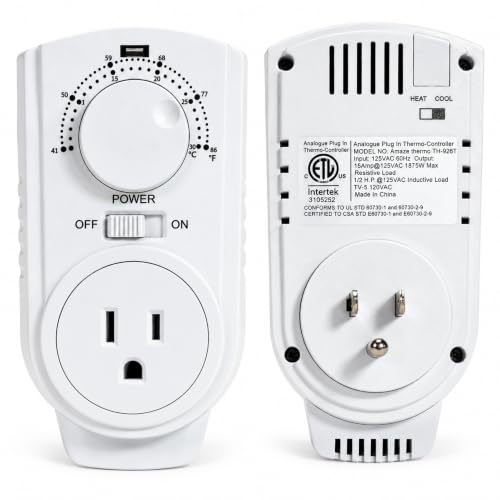
What Is a Heating and Cooling Thermostat?
A thermostat that controls heat and cool is a single device that directs both your heating system and your air conditioner. Instead of separate controllers for a furnace and an AC, one thermostat handles mode selection, temperature setpoints, fan control, and scheduling. This unified control is the standard for most modern residential HVAC systems.
The thermostat's job is straightforward but important. It measures the ambient temperature with a sensor, compares that reading to the setpoint you have chosen, and sends a signal through low-voltage wiring to the appropriate equipment. When heating is needed, it activates the furnace or heat pump. When cooling is needed, it activates the compressor and air handler. When the temperature reaches the setpoint, it signals the equipment to stop.
For homes with a heat pump, the thermostat must be designed for that equipment type because it also controls the reversing valve and the auxiliary heat stages. For homes with a standard furnace and AC, a conventional heating and cooling thermostat is sufficient.
Core Components
-
Temperature Sensor
Reads the ambient room temperature. Advanced models use multiple sensors or remote sensors for better accuracy.
-
Microcontroller
Compares the reading to the setpoint and decides which equipment to activate, and for how long.
-
Relay Terminals
Connect to the HVAC wiring — typically R, W, Y, G, and O/B for heat pumps — to switch equipment on and off.
-
User Interface
Buttons, touchscreen, or app-based control for setting temperature, mode, schedule, and fan operation.
-
Display
Shows current temperature, setpoint, mode, and status indicators such as filter reminders or system alerts.
-
Power Source
Typically powered by the HVAC system's 24V transformer, with battery backup on many models.
How the Thermostat Decides Between Heat and Cool
The logic depends on the mode the thermostat is in. In heating-only mode, it activates heat when the room temperature falls below the setpoint. In cooling-only mode, it activates cooling when the room temperature rises above the setpoint. In auto mode, it switches between heating and cooling based on both setpoints, with a deadband to prevent short cycling.
Most thermostats use a swing or differential setting — a small buffer around the setpoint that prevents constant on-off cycling. A well-tuned swing keeps the space comfortable without wasting energy. For heat pump systems, the thermostat also handles defrost cycles, auxiliary heat staging, and emergency heat operation.
Automatic changeover is especially useful in shoulder seasons, when daytime temperatures call for cooling and evening temperatures call for heating. A thermostat that switches from heat to cool automatically is described in more detail in our dedicated guide on thermostat that switches from heat to cool automatically.
Types of Heating and Cooling Thermostats
Thermostats vary widely in capability and control style. The main categories are summarized below.
| Type | Best For | Key Characteristics |
|---|---|---|
| Non-programmable | Simple setups or short-term needs | Manual temperature adjustment; no scheduling |
| Programmable | Households with predictable routines | Time-based schedules for daily comfort |
| Smart thermostat | Modern homes and remote control | Wi-Fi, app control, learning, geofencing |
| Heat pump thermostat | Homes with a heat pump system | Reversing valve and aux/emergency heat control |
| Multi-stage thermostat | Two-stage or variable-speed equipment | Controls multiple heating and cooling stages |
| Line-voltage thermostat | Electric baseboard heaters | Directly switches high-voltage heating circuits |
Tier descriptors are useful for comparing models. An entry-level thermostat offers basic temperature control and mode selection. A mid-range model adds scheduling and better displays. A premium or top-tier model includes Wi-Fi, learning features, and multiple sensor support. A luxury or flagship-tier model pairs the most advanced control features with the most complete integration into smart-home ecosystems.
Features That Matter Most
Two thermostats with similar specs can differ significantly in day-to-day usefulness. These are the features worth prioritizing.
- Auto changeover: Switches between heating and cooling automatically based on the setpoint. Essential in climates with large day-night temperature swings.
- Programmable scheduling: Sets different temperatures for home, away, sleep, and wake periods. Reduces unnecessary runtime.
- Smart recovery: Learns how long your system takes to reach a target temperature and starts early, so the home is comfortable at the scheduled time.
- Geofencing: Detects when you leave or arrive and adjusts the setpoint accordingly.
- Remote sensors: Monitors temperature in multiple rooms and averages or prioritizes readings.
- Humidity control: Some models manage humidity alongside temperature, particularly useful in humid climates.
- Filter reminders: Alerts you when it is time to clean or replace the filter.
- System alerts: Notifies you of faults, filter issues, or maintenance needs.
- Wi-Fi and app control: Allows adjustments from anywhere and integration with voice assistants.
For homes with a heat pump, the thermostat must also support auxiliary heat staging and emergency heat. If your system uses a reversing valve, the thermostat must have an O/B terminal to control it. A thermostat for AC and heat designed for conventional systems will not control a heat pump correctly.
Compatibility: Matching the Thermostat to Your System
Compatibility is the most common source of installation problems. Before choosing a thermostat, identify your equipment type and wiring.
Conventional Systems
A furnace and AC setup typically uses five wires: R (power), W (heat), Y (cool), G (fan), and C (common). Most standard heating and cooling thermostats support this configuration.
Heat Pump Systems
Heat pump systems use the same wires plus an O/B terminal for the reversing valve and often additional wires for auxiliary or emergency heat. If your system is a split system air conditioner and heat pump, you need a thermostat explicitly designed for heat pump control.
Multi-Stage and Variable-Speed Systems
Two-stage or variable-speed equipment requires a thermostat that supports additional terminals (W2, Y2) and can manage stage transitions. For a review of how staging works, see two stage AC guidance.
Installation Basics
Many smart and programmable thermostats are designed for straightforward DIY installation. The general steps are:
- Turn off power to the HVAC system at the breaker.
- Remove the old thermostat and label each wire according to its terminal.
- Mount the new base plate and connect the wires to the matching terminals.
- Attach the thermostat body and restore power.
- Complete setup: date/time, schedule, mode, and any Wi-Fi pairing.
If your system is a heat pump, or if you have multiple stages, a C-wire is missing, or wiring is unclear, professional installation is the safer choice. For split system controls specifically, the overview of a split unit thermostat explains additional considerations for ductless equipment.
Thermostat Placement and Setup Tips
- Mount height: Approximately five feet above the floor, where the thermostat can sense average room temperature.
- Avoid direct sunlight: Sunlight skews the temperature reading and causes the system to run longer than necessary.
- Avoid heat sources: Do not place the thermostat near lamps, TVs, appliances, or supply registers.
- Avoid drafts: Doors, windows, and exterior walls can distort readings.
- Use the right swing setting: A slightly wider swing reduces cycling and saves energy without noticeable comfort loss.
- Set schedules thoughtfully: Base schedules on your actual routine, not idealized habits.
Thermostats for Split System Air Conditioners
Split systems vary in how they are controlled. Wall-mounted ductless units often include a dedicated remote with thermostat functions built in. Multi-zone systems may use a central controller or individual thermostats for each indoor head. For homes with ducted split systems, a standard wall thermostat is the norm.
If your system is a split ductless configuration, the split ductless systems overview explains how controls integrate with the equipment. For heating and cooling combined, the guide to split system heating and cooling units covers control options across common equipment types.
Maintenance and Troubleshooting
A thermostat is a low-maintenance device, but it benefits from periodic checks:
- Replace batteries annually on models that use them.
- Clean the cover with a dry cloth; avoid liquid cleaners that can enter the vents.
- Verify that the displayed temperature is accurate by comparing it to a separate thermometer.
- Check for loose wiring if the thermostat becomes unresponsive or displays error codes.
- Update firmware on smart models when prompted.
If the system is not responding to the thermostat, check the breaker, the air filter, and the outdoor unit before assuming the thermostat is at fault. Many apparent thermostat problems are actually airflow issues. For a structured diagnostic path, see the troubleshooting air conditioning guide.
If the system runs but does not cool or heat, the issue may be elsewhere in the system. The split system air conditioning repairs article explains what typical service visits cover.
When to Replace an Old Thermostat
Consider an upgrade when any of the following apply:
- The display is dim, flickering, or unreadable.
- The thermostat responds slowly or not at all to adjustments.
- Temperature readings are inconsistent with a separate thermometer.
- The system cycles frequently despite a clean filter and clear outdoor unit.
- You want remote access, scheduling, or integration with a smart-home system.
- You are installing a heat pump and need a compatible controller.
Many older thermostats still function but lack the features that make modern systems comfortable and efficient. A mid-range smart thermostat often delivers a meaningful improvement in control and convenience for homes with predictable routines.
Frequently Asked Questions
What is a thermostat that controls heat and cool?
A thermostat that controls heat and cool is a single controller that manages both heating and cooling equipment. It reads room temperature, compares it to the setpoint, and switches the HVAC system between heating and cooling modes as needed.
What is auto changeover on a thermostat?
Auto changeover allows the thermostat to switch automatically between heating and cooling based on the setpoint and room temperature. This is especially useful in shoulder seasons when temperatures swing between warm days and cool nights.
Does a heat pump need a special thermostat?
Yes. Heat pumps require a thermostat designed for heat pump operation, with support for the reversing valve and auxiliary or emergency heat. Using a standard thermostat can cause the system to run inefficiently or fail to heat properly.
Can I install a smart thermostat myself?
Many smart thermostats are designed for DIY installation with clear wiring instructions. However, systems with heat pumps, multi-stage equipment, or unusual wiring may require a professional. Always verify compatibility before purchasing.
How often should a thermostat be replaced?
A well-functioning thermostat can last well over a decade. Replace it when it becomes inaccurate, unresponsive, or when upgrading to a smart model. Persistent temperature swings or frequent cycling despite a clean filter often indicate a thermostat issue.
Explore Heating and Cooling Thermostats
Compare features, compatibility, and control options for your HVAC system.
VIEW RECOMMENDED THERMOSTATSThis guide is for educational purposes. Thermostat compatibility depends on your specific HVAC equipment. Consult a qualified technician before installation if you are unsure about wiring or system configuration.