
Thermostat That Switches From Heat to Cool Automatically
An auto changeover thermostat keeps your home comfortable through shifting seasons without manual mode switching. This guide explains how automatic heat-to-cool switching works, the features that matter, compatibility requirements, and how to choose the right thermostat for your system.
Explore the GuideWhy auto changeover matters: In spring and fall, temperatures swing between cool mornings and warm afternoons. A thermostat that switches from heat to cool automatically handles those transitions for you, maintaining comfort without you touching a dial. This page is written for buyers who have decided they want automatic mode switching and need clear, structured information to compare models before purchase.
What Is a Thermostat That Switches From Heat to Cool Automatically?
A thermostat that switches from heat to cool automatically includes an auto changeover mode. Instead of requiring you to select heating or cooling manually, the thermostat monitors indoor temperature and selects the appropriate mode on its own. When the room rises above the cooling setpoint, it activates the air conditioner. When the room drops below the heating setpoint, it activates the heater. Between the two setpoints, the system stays idle.
This behavior is different from a basic mode switch. On a conventional thermostat, you choose Heat, Cool, or Off, and the thermostat only responds to the setpoint for the mode you selected. Auto mode removes that decision from your daily routine and lets the thermostat manage both directions of comfort.
The feature is especially useful in climates with large day-to-night temperature swings, and in homes with heat pump systems where the same equipment handles both seasons. If you are planning around a split system, our guide to a thermostat that controls heat and cool explains how these controls pair with ducted and ductless equipment.
How Auto Changeover Works
Auto changeover relies on a deadband, sometimes called a differential, between the heating and cooling setpoints. If the heating setpoint is 68°F and the cooling setpoint is 74°F, the deadband is the 6-degree gap between them. As long as indoor temperature stays inside that band, the system remains idle. When temperature rises above 74°F, cooling engages. When it drops below 68°F, heating engages.
The deadband prevents short cycling. Without it, a thermostat could flip between heating and cooling within minutes, which stresses the compressor and wastes energy. Mid-range and premium thermostats typically offer configurable deadbands or built-in compressor short-cycle protection. Our explanation of two-stage AC operation is useful background if your equipment supports staged heating or cooling and you want the thermostat to manage it smoothly.
Some thermostats also include adaptive recovery, which learns how long your system takes to reach a setpoint and starts conditioning before a scheduled event. Combined with auto changeover, this creates a hands-off comfort experience across seasons.
Features That Matter in an Auto Changeover Thermostat
Compatibility With Your Equipment
Confirm the thermostat supports your system type: conventional single-stage, multi-stage, heat pump with aux heat, or dual-fuel. Our guide to a thermostat for AC and heat covers the compatibility checks most buyers should perform before purchase.
Deadband and Short-Cycle Protection
Look for a configurable minimum differential and compressor delay features. These protect the equipment from rapid mode switching and are especially important in homes with wide seasonal swings.
Scheduling and Adaptive Recovery
Scheduling helps align comfort with daily routines. Adaptive recovery learns system response time and begins pre-conditioning before events, so your home is comfortable when you arrive.
Smart and Remote Control
Wi-Fi connectivity allows remote monitoring and adjustment. Many smart thermostats also provide usage reports and diagnostic alerts. Our overview of a thermostat that automatically switches from AC to heat covers how smart models handle seasonal transitions.
Thermostat Tiers: What Separates Them
Auto changeover thermostats are commonly grouped into three broad market tiers. The descriptors below are relative, not absolute, and describe feature positioning rather than any numeric figure. Use them to align your expectations with what each tier typically delivers.
| Tier | Typical Characteristics | Best For |
|---|---|---|
| Entry-level | Basic auto changeover, simple scheduling, fixed deadband, standard display, wired installation. | Buyers who want automatic heat-to-cool switching without extra connectivity. |
| Mid-range | Configurable deadband, multi-stage compatibility, adaptive recovery, Wi-Fi or app control, usage reports. | Households that want comfort automation and remote control. |
| Premium | Advanced zoning support, learning algorithms, detailed diagnostics, integration with smart home platforms, high-grade display and build. |
The jump from entry-level to mid-range usually delivers the most noticeable improvement, because configurable deadband and adaptive recovery make auto changeover feel smoother in daily use. Moving from mid-range to premium adds zoning support, advanced diagnostics, and deeper smart-home integration. A mid-range model is a solid choice for the tier in most households, while premium models are a long-term investment for buyers who want the most capable control available.
Compatibility: Heat Pump vs Conventional Systems
Auto changeover thermostats are compatible with a wide range of HVAC equipment, but the wiring requirements differ. Conventional gas furnace and air conditioner systems use separate heating and cooling wires. Heat pump systems use a reversing valve wire, often labeled O or B, and may have auxiliary or emergency heat stages. A thermostat that supports conventional systems does not automatically support heat pumps unless it is explicitly listed as compatible.
Before buying, check the manufacturer's compatibility list. Confirm the number of stages your system uses, the presence of auxiliary heat, and whether your system is single-fuel or dual-fuel. If you are pairing the thermostat with a split heat pump, our guide to a split system air conditioner and heat pump describes how the equipment behaves in each mode. The thermostat must match that behavior.
Power is another consideration. Most smart and programmable auto changeover thermostats require a C-wire for continuous power. Some models include power adapters or can run without a C-wire, but compatibility should be confirmed before installation to avoid surprises. Wiring questions are best handled by a qualified HVAC technician; our guidance on how to choose an HVAC contractor lists the credentials to look for.
Installation and Setup Considerations
Thermostat installation is a moderate DIY task for a confident homeowner, but incorrect wiring can damage equipment or cause safety issues. If you are not comfortable working with low-voltage wiring, professional installation is the safer route. The key steps are identifying your system type, labeling wires before removal, and confirming the C-wire is present and functional.
Once installed, configure the deadband and temperature setpoints to match your comfort preferences. A wider deadband saves energy but allows slightly larger temperature swings; a narrower deadband increases comfort but can raise energy use. If your thermostat supports adaptive recovery, enable it and give the system a week to learn your household routine.
For split-system equipment, consider how the thermostat interacts with zone controls. A split unit thermostat may support specific zone addressing or configuration. Multi-zone homes benefit from thermostats that can coordinate with zone controllers; our guide to a thermostat that controls heat and cool covers zoning basics.
Buying Checklist for Auto Changeover Thermostats
Before you commit to a specific model, work through this checklist. Each item addresses a decision that is difficult to reverse after purchase.
- Confirm auto changeover is explicitly supported. Not every programmable thermostat includes an auto mode, and some label it differently.
- Verify system compatibility. Match the thermostat to your equipment type: conventional single-stage, multi-stage, heat pump, or dual-fuel.
- Check C-wire requirements. Confirm your thermostat has continuous power, or confirm the model includes a power adapter that works in your setup.
- Review deadband configuration. Confirm the thermostat offers a configurable differential or short-cycle protection to prevent rapid mode switching.
- Consider connectivity needs. Decide whether Wi-Fi, app control, and smart home integration are worth the additional setup complexity.
- Plan installation approach. If you are not comfortable with low-voltage wiring, budget for professional installation.
- Check warranty and support. Warranty length and manufacturer support quality vary meaningfully across models.
If you are still deciding which configuration you need, our overview of a thermostat that switches from heat to cool automatically is the page you are on. Related guides on a thermostat that automatically switches from AC to heat and a thermostat for AC and heat help clarify the overlapping product categories so you can compare models fairly.
Ready to Compare Auto Changeover Thermostats?
Review our curated selection of thermostats with automatic heat-to-cool switching and filter by compatibility, tier, and connectivity.
View Recommended ThermostatsFrequently Asked Questions
What is a thermostat that switches from heat to cool automatically?
It is a thermostat with an auto changeover mode that monitors indoor temperature and chooses heating or cooling automatically. When the room gets too warm it activates cooling, and when it drops below the heating setpoint it activates heating, without you manually switching modes.
Is auto changeover the same as a heat pump thermostat?
They overlap but are not identical. Many heat pump thermostats include auto changeover, and many auto changeover thermostats are designed for heat pumps. Before buying, confirm the thermostat explicitly supports your equipment type, including heat pump reversing valve configurations.
Will auto changeover work with a conventional furnace and AC?
Yes, if the thermostat supports conventional multi-stage systems and has a dedicated auto mode. Check the compatibility list from the manufacturer, since wiring requirements differ between conventional systems and heat pumps.
How do I avoid short cycling when using auto changeover?
Use a thermostat with a built-in deadband or minimum differential between heating and cooling setpoints, and enable compressor short-cycle protection if available. These features prevent the system from rapidly switching back and forth between modes.
Do I need a C-wire for an auto changeover thermostat?
Most smart and programmable auto changeover thermostats require a C-wire for continuous power. Some models include a power adapter or can run without a C-wire, but compatibility should be confirmed before purchase to avoid installation problems.
Final Thoughts
A thermostat that switches from heat to cool automatically is a small upgrade with a large effect on daily comfort. It removes the seasonal mode decision from your routine, protects your equipment with deadband and short-cycle logic, and works smoothly with both conventional systems and heat pumps when the correct model is chosen. The key decisions are compatibility, deadband configuration, connectivity needs, and installation approach.
Take the time to confirm compatibility before purchase. Wiring mismatches are the most common source of frustration with auto changeover thermostats. Once you have a shortlist, our recommended thermostats below are organized to make comparison straightforward. You can also explore related guides on a thermostat that controls heat and cool and a thermostat for AC and heat if you are still clarifying which product category fits your system.
Recommended Thermostats That Switch From Heat to Cool Automatically
⚠️ AFFILIATE DISCLOSURE: This website contains affiliate links. As an Amazon Associate, we earn from qualifying purchases. If you make a purchase through these links, we may receive a small commission at no additional cost to you. Read our full affiliate policy.
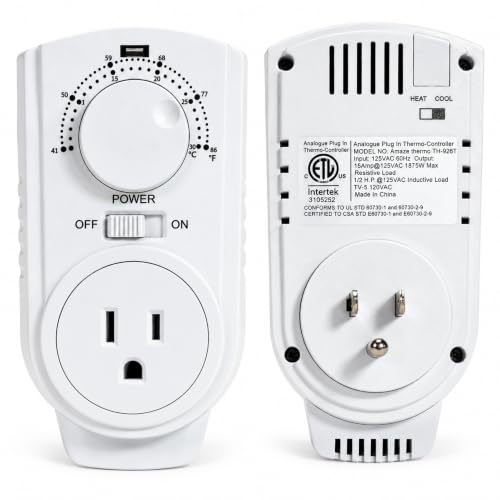
Plug in Thermostat for Heater or AC – Universal Temperature Controlled Outlet with Heat & Cool Modes – Thermostats for Home, Energy Saving with Analog Dial - Amaze Heaters
Check price on Amazon
NonProgrammable Thermostat for Home,Single-Stage Systems,Digital Energy-Saving Thermostat,1 Heat/1 Cool, Easy DIY Install, White Backlight
Check price on Amazon
Pymeter Digital Temperature Controller Dual Probe Reptile Thermostat Controlled Outlet for Terrarium Heat Mat Heating Pad, Switch Cooling Fan Freezer Fridge ON & Off at Setpoints 10A 1200W
Check price on Amazon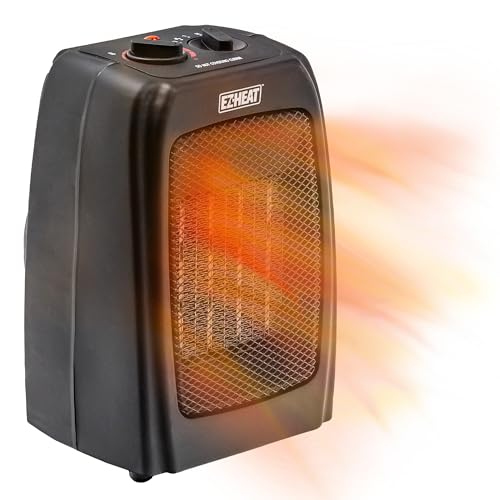
EZ-HEAT 1500W Portable Ceramic Space Heater with Thermostat and Fan Mode | Heats up to 150 sq ft with 750W/1500W settings, adjustable thermostat, fan-only mode, overheat protection & tip-over shutoff.
Check price on Amazon
ELECTECK Non-Programmable Digital Thermostat, 1 Heat/1 Cool, Big LCD, White | Compatible with Single Stage Electrical and Gas/Oil System for Home, with 4.5 sq. inch Large LCD Display
Check price on Amazon
Temperature Controlled Outlet, Thermostat Plug for Heater (2 Pcs, Orange) | Thermo Cube, Automatically Turn on Below 32℉, Turn Off Above 47℉ Unnecessary to Control Power Manually in Cold Winter
Check price on Amazon