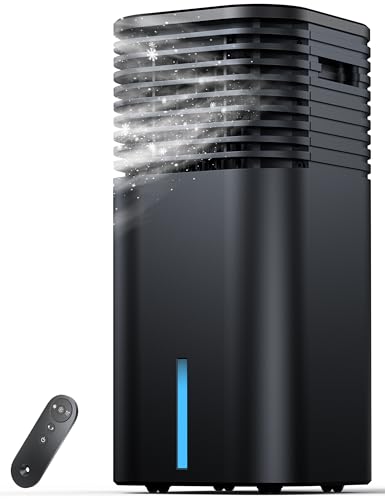
Tower Air Conditioners: The Complete Guide
Discover how tower air conditioners work, what separates a good tower AC from an average one, and how to match a unit to your room before you buy.
START READINGWhat Is a Tower Air Conditioner?
A tower air conditioner is a floor-standing cooling unit built in a tall, narrow vertical chassis. Instead of blowing air from a wide window-mounted box, a tower AC draws room air through its base or rear, conditions it internally, and releases cooled air through a tall front grille. The vertical form factor is the defining trait: it lets the unit occupy a small footprint in a corner while directing airflow across a larger portion of the room.
Tower air conditioners belong to the broader family of freestanding cooling appliances. They sit on the floor, usually roll on casters, and are a practical option when a window unit or a wall-mounted system is not feasible. If you are comparing form factors, the overview of stand-up air conditioners explains where tower models fit relative to other freestanding designs.
Key point: A tower air conditioner is not the same as a mini-split. It is a self-contained portable-style unit that needs an exhaust path to the outdoors, typically through a window using a hose and window kit.
How Tower Air Conditioners Work
Inside the tower chassis, the cooling process follows the standard vapor-compression cycle. A compressor circulates refrigerant between an evaporator coil and a condenser coil. Room air passes over the cold evaporator coil, gives up heat and moisture, and is pushed back into the room by a blower fan. The absorbed heat is rejected at the condenser coil, and a second fan exhausts that hot air through the hose to the outdoors.
Because the condenser exhaust must leave the room, venting is essential. Units are supplied with a flexible hose and a window adapter kit. If you want to understand how these units differ from models that avoid window venting altogether, the guide to a stand-alone air conditioner without window vent covers the alternatives and their trade-offs.
Key Features to Look For
Cooling Capacity (BTU)
The most important specification. Undersized units run continuously and never reach the set temperature; oversized units cycle too quickly and leave the room humid. Match capacity to room area, ceiling height, sun exposure, and occupant load.
Inverter vs. Fixed-Speed Compressor
Inverter compressors modulate speed to hold a steady temperature and typically run more efficiently in the long term. Fixed-speed compressors are simpler and switch fully on and off. The trade-off is explained in the comparison of inverter AC technology.
Airflow and Oscillation
Tall front grilles distribute air over a wider vertical span. Oscillating louvers sweep the airflow side to side. Together they reduce hot spots and make the cooling feel more even than a single fixed vent.
Noise Level
Compressor and fan noise are the main complaint points for floor-standing units. Decibel ratings vary widely across tiers, and quieter models usually sit at the premium end of the range. See the notes on a quiet air conditioner for what to expect.
Dehumidification Mode
Many tower units include a dedicated dry mode that removes moisture without heavy cooling. This is useful in humid climates and shoulder seasons when full cooling is unnecessary.
Smart Controls
Wi-Fi connectivity, app scheduling, and voice assistant support are increasingly common. These features matter most if the unit will run on a programmed schedule rather than manually. Related options appear in the guide to an AC with Wi-Fi and smart control.
Filtration
Washable mesh filters are standard. Some models add HEPA or activated carbon stages. Filter quality affects indoor air and maintenance frequency, so check how accessible the filter is for cleaning.
Mobility and Build
Castors, a recessed handle, and a compact footprint make a tower AC easier to reposition. Heavier units with reinforced housings tend to be more durable but harder to move between floors.
Sizing a Tower AC for Your Room
Sizing follows the same principles as any portable or room air conditioner. The table below is a starting reference for average rooms with standard 8-foot ceilings and moderate sun exposure.
| Room Area | Suggested Capacity | Typical Use |
|---|---|---|
| Up to 150 sq ft | 5,000 – 6,000 BTU | Small bedroom, study, nursery |
| 150 – 250 sq ft | 8,000 – 10,000 BTU | Medium bedroom, home office |
| 250 – 400 sq ft | 12,000 – 14,000 BTU | Large bedroom, living room |
| 400 – 550 sq ft | 14,000 – 18,000 BTU | Open-plan living area, studio |
Adjust upward for south- or west-facing windows, vaulted ceilings, kitchens, or rooms with several occupants. Adjust downward for shaded, well-insulated rooms. For a deeper walkthrough of the calculation, see the guide on how to size an air conditioner and the BTU calculator by room size.
Tower AC vs. Other Cooling Options
| Option | Best For | Considerations |
|---|---|---|
| Tower AC | Rooms with floor space but no window mounting; modern interiors | Requires exhaust venting; taller footprint; airflow spreads vertically |
| Window AC | Bedrooms with a suitable double-hung window | Permanent installation; blocks part of the window; lower entry cost tier |
| Portable AC (box style) | Renters and rooms that need flexible placement | Same venting requirement; shorter airflow column |
| Mini-split | Whole-room comfort with minimal noise | Professional installation; higher upfront investment tier |
The choice often comes down to installation constraints. If you have a usable window but want a freestanding unit, a tower model is a reasonable compromise. If you want to compare portable formats directly, the overview of stand-alone portable air conditioning units is a useful companion read.
Efficiency and Running Behavior
Efficiency for portable and tower units is expressed differently from central systems. Look for the unit's energy efficiency ratio and any ENERGY STAR designation. A higher ratio means more cooling per unit of electricity. Inverter-equipped tower ACs generally hold temperature more steadily than fixed-speed models, which reduces compressor cycling and improves comfort in the long run.
Real-world efficiency also depends on installation quality. A short, straight exhaust hose performs better than a long, kinked one. Sealing the window kit reduces hot air leaking back in. Keeping the filter clean maintains airflow. For broader context on ratings, read about the SEER rating and ENERGY STAR certified AC standards.
Placement and Installation Tips
- Place the unit near the window you will use for exhaust to keep the hose short and straight.
- Leave clearance around the intake and exhaust grilles; do not push the tower flush against furniture.
- Avoid routing the hose through a doorway that is used frequently, and never run it into an enclosed interior space.
- Check that the window kit seals fully; gaps let hot outdoor air back in and reduce cooling.
- Use a dedicated outlet where possible and confirm the circuit can handle the unit's rated draw. The guide on 110V vs 240V AC units explains voltage requirements.
- Level the floor surface so the unit sits stable and does not vibrate.
Maintenance That Keeps a Tower AC Running Well
Tower air conditioners have fewer serviceable parts than central systems, but routine care matters. Clean or rinse the washable filter every two to four weeks during heavy use. Empty the condensate tank or confirm the drain configuration if the unit uses a tank rather than evaporation. Wipe the intake and outlet grilles to prevent dust buildup. At the start of each cooling season, inspect the hose for cracks and check the window kit seal.
For a full seasonal routine, see the seasonal AC checklist and the guide on how to clean an AC filter. If the unit stops cooling, loses airflow, or develops unusual noise, the troubleshooting overview for air conditioning troubleshooting is a good first stop before calling a technician.
Who Should Choose a Tower Air Conditioner?
A tower AC is a strong fit for renters who cannot modify walls, for rooms where a window unit would block the view or is prohibited by building rules, and for interiors where a freestanding appliance is acceptable. It is a weaker fit for very large open spaces, for rooms with no viable exhaust path, and for households that want the quietest possible operation, where a mini-split usually wins.
If you are furnishing a studio or apartment, the recommendations for an AC for a small apartment put tower and portable options in context. If noise is the priority, review the quietest portable air conditioners before deciding on a form factor.
Frequently Asked Questions
What is a tower air conditioner?
A tower air conditioner is a floor-standing, vertical AC unit that delivers cooled air through a tall front panel. It is designed for rooms without window or wall installation options and blends into modern interior layouts.
Are tower air conditioners portable?
Most tower air conditioners are portable in the sense that they can be moved between rooms on built-in casters. However, they still require an exhaust hose routed to a window or vent, so relocation is limited to spaces where venting is possible.
How many BTUs does a tower AC need?
As a general guide, a small tower AC of 8,000 to 10,000 BTU suits rooms up to roughly 250 square feet, while 12,000 to 14,000 BTU models handle rooms up to about 400 square feet. High ceilings, sun exposure, and occupancy may require a larger unit.
Do tower air conditioners need to be vented?
Yes. Tower air conditioners are a form of portable AC and need an exhaust hose connected to a window or wall vent to remove hot air. Without proper venting, cooling performance drops and the unit cannot operate efficiently.
How do tower air conditioners compare to window units?
Window units are permanently installed in a window opening and cool efficiently because the condenser sits outdoors. Tower units are freestanding and easier to relocate, but they must exhaust hot air through a hose, which adds a small efficiency penalty. The right choice depends on installation constraints and how often you plan to move the unit.
Ready to Compare Tower Air Conditioners?
Review the recommended models below to see which tower AC fits your room size, feature needs, and efficiency goals.
VIEW RECOMMENDED MODELS