Types of Heating and Air Conditioning Systems
Understand how each HVAC system heats, cools, and distributes air so you can choose the right setup for your home, climate, and duct situation.
START LEARNINGWhy this guide matters: Heating and air conditioning systems are not interchangeable. The right choice depends on whether your home already has ductwork, how cold winters get in your region, and how much zoned control you want. This guide breaks down each system type in plain language so you can shortlist the right options before speaking with a contractor.
Quick Overview of HVAC System Types
Heating and air conditioning systems fall into a few broad families. The biggest dividing line is whether a system uses ductwork to distribute conditioned air or delivers it directly into each room. The second dividing line is how the system produces heat: by generating it, as a furnace or boiler does, or by moving it, as a heat pump does.
Most residential systems you will encounter belong to one of these categories:
- Split central systems — an outdoor condenser paired with an indoor air handler or furnace, connected by ducts.
- Packaged systems — all components housed in a single outdoor cabinet, connected to ducts.
- Heat pumps — reversible systems that provide both heating and cooling.
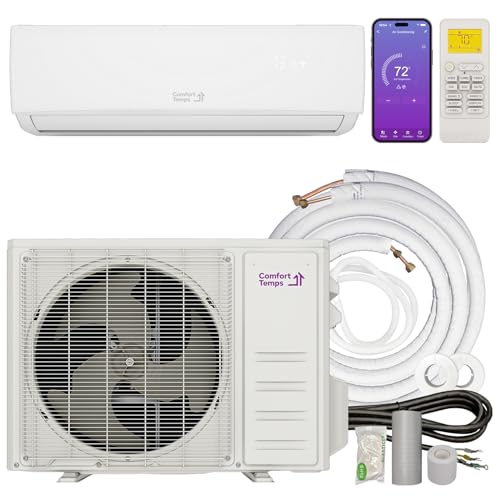
- Ductless mini-splits — wall-mounted indoor heads connected to an outdoor unit, no ducts required.
- Furnace plus air conditioner — a dedicated heating furnace combined with a separate cooling coil.
- Boiler plus separate cooling — hydronic heating with a standalone cooling solution.
- Hybrid systems — a heat pump paired with a fossil-fuel furnace for cold-climate backup.
If you want a broader reference that also covers cooling-only equipment, the related guide on types of HVAC systems expands on how these categories intersect with ventilation and air quality equipment.
Split Central Systems
A split system separates the noisy components from the living space. The outdoor unit houses the compressor and condenser coil, while the indoor unit contains the evaporator coil and the blower that pushes air through the duct network. In cooling mode, refrigerant absorbs heat indoors and releases it outside. In heating mode, the same indoor unit works with a furnace or electric heat strip.
How it works
Warm air from your rooms returns through return ducts, passes over the evaporator coil, and is cooled before being pushed back through supply ducts. A thermostat cycles the compressor on and off to hold the set temperature. Because the system is centrally located, one thermostat typically controls the whole home unless zoning dampers are added.
Where it fits best
- Homes that already have a full duct network in place.
- Households that want a single thermostat to manage the whole living area.
- Regions where both heating and cooling demand are significant.
- Homeowners planning a full system replacement rather than a room-by-room solution.
Strengths and limitations
Split systems are well understood by contractors, parts are widely available, and efficiency ratings have improved substantially over the past decade. The main limitation is duct loss: in older homes, leaky or poorly insulated ducts can waste a meaningful share of the conditioned air before it reaches the rooms. Sealing and insulating ducts is often the highest-return improvement before upgrading the equipment itself.
For a deeper look at how central systems are configured for houses, see the guide on types of central air conditioners for homes.
Packaged Heating and Cooling Units
A packaged unit puts the compressor, condenser, evaporator, and often the heating components into one weather-tight cabinet, usually installed on the roof or on a concrete pad beside the house. Instead of a separate indoor air handler, the packaged unit connects directly to the duct system through a short supply and return connection.
How it works
Because everything sits in one enclosure, the refrigerant circuit is fully contained at the factory. The unit draws return air from the house, conditions it, and delivers it back through the ductwork. Packaged systems are available as cooling-only, gas-electric, or all-electric heat pump configurations.
Where it fits best
- Homes with limited indoor mechanical space, such as smaller footprints or slab foundations.
- Properties where a rooftop or side-yard installation is practical.
- Manufactured homes and light commercial buildings.
- Replacements where the existing duct connections already suit a single-cabinet design.
Strengths and limitations
The single-cabinet design simplifies installation and frees up interior space. The trade-off is that a service visit may require access to the roof or an outdoor enclosure, and a major component failure can affect both heating and cooling at once because they share one chassis. Roof-mounted units also need a sturdy curb and clear drainage.
Heat Pump Systems
A heat pump is the clearest example of a system that both heats and cools. Rather than burning fuel to create heat, it uses a reversing valve to change the direction of refrigerant flow. In summer, it moves heat from indoors to outdoors. In winter, it extracts heat from the outdoor air, ground, or water and moves it inside.
Air-source heat pumps
The most common residential type. Modern cold-climate models maintain useful capacity well below freezing, though efficiency and output decline as outdoor temperatures drop. They pair naturally with ducted systems or with ductless heads.
Ground-source and water-source heat pumps
These exchange heat with the stable temperature of the ground or a water body. Installation requires excavation or a loop field, which raises the upfront scope of work, but the system operates efficiently across a wide temperature range and is well suited to larger properties. The reference on types of heating and cooling systems for homes covers how these compare in residential settings.
Where it fits best
- Homeowners who want one system to handle both seasons.
- Regions with moderate to cold winters where a cold-climate model is specified.
- Households aiming to reduce dependence on combustion-based heating.
- New construction where the system can be designed in from the start.
Strengths and limitations
A single installed system replaces two separate appliances, which simplifies maintenance scheduling. In very cold snaps, a heat pump may rely on supplemental electric resistance heat, which is less efficient. A common configuration pairs the heat pump with a gas furnace as backup — that is the hybrid approach described further below.
Ductless Mini-Split Systems
A ductless mini-split connects one outdoor compressor unit to one or more indoor air-handling heads mounted on walls, ceilings, or floors. Each head has its own blower and evaporator coil, and refrigerant lines run through a small bundled line set rather than through large ducts. This makes the format especially relevant for homes where duct installation would be disruptive or impossible.
Single-zone and multi-zone configurations
A single-zone system serves one room. A multi-zone system connects several indoor heads to one outdoor unit, each with independent temperature control. The article on two-head mini-split configurations explains how two indoor heads share one outdoor unit and when that layout is the better fit than two separate single-zone systems.
Where it fits best
- Older homes built before central ductwork became standard.
- Room additions, converted attics, and garages that were never ducted.
- Households that want room-by-room temperature control.
- Properties where running ducts would require major structural work.
Strengths and limitations
Because conditioned air is delivered directly into the room, there is no duct loss, and zoning is inherent rather than added on. Indoor heads are visible on the wall, which some homeowners consider a design consideration. Each head also needs a condensate drain path, and line sets require a clean route from the indoor head to the outdoor unit. A related resource on wall-mounted mini-split systems covers indoor head placement in more detail.
If your situation is a whole-home replacement rather than a targeted solution, compare this format against ducted options in the guide on type of air conditioning systems.
Furnace with Air Conditioner
This is the classic North American setup: a gas or electric furnace handles heating, and a separate air conditioner — typically a split-system condenser and evaporator coil — handles cooling. The two share the same blower and duct network. The furnace is the primary appliance, and the cooling coil sits in the supply plenum above or below it.
How it works
During winter, the furnace burns gas or energizes electric elements and the blower pushes warm air through the ducts. During summer, the furnace's heating section stays off and the same blower moves air across the cooling coil. A single thermostat switches between modes.
Where it fits best
- Homes in cold climates where a dedicated heating appliance is preferred.
- Existing installations where the furnace is in good condition and the cooling side is being added or replaced.
- Households that want gas heating efficiency alongside electric cooling.
Strengths and limitations
This arrangement is straightforward to service because heating and cooling components are distinct. If one side fails, the other can often continue operating. The downside is that you maintain two appliances, and in cooling season the furnace is effectively dead weight in the airflow path. When the furnace reaches end of life, the natural upgrade path is often a heat pump or a hybrid setup rather than another furnace-plus-coil pairing.
Boiler with Separate Cooling
A boiler heats water and circulates it through radiators, baseboards, or radiant floor tubing. It provides exceptionally comfortable, even heat and does not move air, which is a benefit for occupants sensitive to dust. A boiler, however, does not cool. Homes with hydronic heating need a separate cooling solution, which is usually a ductless mini-split, a high-velocity small-duct system, or a standalone split system.
Where it fits best
- Older homes already fitted with radiators or radiant floors.
- Homeowners who value silent, draft-free heating.
- Properties where adding full ductwork is impractical but targeted cooling is needed.
Strengths and limitations
The separation of heating and cooling means each system can be sized and selected on its own merits, and a boiler failure does not disable cooling. The trade-off is two separate systems to maintain, and in homes with no ducts, the cooling side usually requires a ductless approach. This is one of the scenarios where the decision often comes down to pairing hydronic heating with ductless cooling rather than rebuilding the whole distribution system.
Hybrid and Dual-Fuel Systems
A hybrid system pairs an electric heat pump with a fossil-fuel furnace. The heat pump carries the load through mild and moderate weather, and the furnace takes over when outdoor temperatures fall below the heat pump's efficient operating range. A control board or smart thermostat decides which source to use based on outdoor temperature and demand.
How it works
The thermostat monitors outdoor conditions and switches the active heat source at a configured balance point. Above that point, the heat pump runs; below it, the furnace runs. In cooling season, the heat pump operates as a standard air conditioner. The result is a system that uses the most efficient source for each condition rather than committing to one fuel type year-round.
Where it fits best
- Regions with cold winters and moderate summers.
- Homeowners who want heat pump efficiency without giving up cold-weather capacity.
- Existing gas-furnace homes where the furnace is retained and a heat pump is added.
Strengths and limitations
Hybrid systems are flexible and can be tuned to local energy conditions. The added complexity means commissioning matters: the balance point should be set deliberately rather than left at a default. Controls also need to be compatible with both appliances. When configured well, this is one of the most adaptable approaches for mixed climates.
Commercial and Specialty Systems
Buildings beyond single-family scale use systems that prioritize zoning, part-load efficiency, and ventilation control. These are worth understanding even for residential readers because the same technologies increasingly appear in larger homes.
VRF and VAV systems
Variable refrigerant flow systems modulate refrigerant delivery to many indoor units from a shared outdoor bank, allowing fine-grained zoning across a building. Variable air volume systems vary the quantity of conditioned air delivered to different zones through dampers while the central plant runs at a steadier rate. Both are common in offices and multi-tenant buildings. The guide on VRF systems explains the refrigerant-side approach in more depth, and the reference on types of HVAC systems for commercial buildings covers how these are selected in practice.
Specialty applications
Some spaces need systems outside the residential mainstream. Server rooms, laboratories, and industrial spaces may use precision cooling with tight humidity control. Warehouses often use large packaged or evaporative equipment sized for volume rather than comfort. The article on warehouse air conditioner selection outlines how those spaces differ from occupied offices.
Side-by-Side Comparison
The table below summarizes how the main system families compare on the factors that most often drive the decision. Use the "Best For" column to narrow your shortlist before reviewing installation requirements with a contractor.
| System Type | Heating Source | Cooling Source | Ductwork | Zoning Potential | Best For |
|---|---|---|---|---|---|
| Split central system | Furnace or heat pump | Split condenser + coil | Required | Limited without dampers | Ducted homes with year-round demand |
| Packaged unit | Gas or electric in one cabinet | Integrated in same cabinet | Required | Limited without dampers | Limited indoor space, slab homes |
| Heat pump | Reversible refrigerant cycle | Reversible refrigerant cycle | Optional (ducted or ductless) | Good with multi-zone design | One system for both seasons |
| Ductless mini-split | Reversible cycle per zone | Reversible cycle per zone | None | Excellent, per head | Homes without ducts, room additions |
| Furnace + AC | Gas or electric furnace | Split condenser + coil | Required | Limited without dampers | Cold climates with existing ducts |
| Boiler + separate cooling | Hydronic boiler | Ductless or separate split | Not for heating | Room-level via radiators | Homes with radiators or radiant floors |
| Hybrid / dual-fuel | Heat pump + furnace backup | Heat pump | Required | Good with zoning | Cold climates seeking efficiency |
| VRF / VAV | Central plant or heat recovery | Refrigerant or air-side modulation | Required for VAV | Excellent, multi-zone | Commercial and large multi-zone buildings |
How to Choose the Right System
Rather than starting with a brand or a specific model, start with the constraints of your home. The decision usually follows this order:
1. Check whether ductwork exists
If the home already has a full duct system in usable condition, ducted options remain the most straightforward path. If there are no ducts and installing them would require major structural work, ductless options are the practical starting point. A related overview on types of residential heating and cooling systems frames this trade-off in more detail.
2. Match the system to the climate
In mild climates, a heat pump alone often covers both seasons. In colder climates, either a cold-climate heat pump or a hybrid configuration is appropriate. In hot climates with minimal heating demand, a cooling-first system with a modest heating element may be enough.
3. Decide how much zoning you need
If some rooms are consistently too warm or too cool, multi-zone ductless or a zoned ducted system solves the problem more directly than a single-thermostat setup. The guide on types of air conditioning units includes additional detail on how zoning changes unit selection.
4. Size the system properly
Oversizing is a common mistake. A system that is too large cools quickly but removes less humidity, cycles on and off frequently, and wears components faster. A room-by-room load calculation is the correct basis for sizing, not a rule of thumb based on square footage alone.
5. Plan for maintenance and service access
Ask where the air handler, filter, and condensate drain will be located. Filter changes should be easy for the homeowner. Service access to the outdoor unit and indoor coil should be unobstructed. In multi-zone systems, each indoor head needs a serviceable drain path.
Practical note: If you are comparing this guide against a specific equipment shortlist, review the distinction between types of residential air conditioning systems for the cooling side, and consider whether a two-stage AC or variable-speed model improves part-load comfort for your climate.
Frequently Asked Questions
What are the main types of heating and air conditioning systems?
The main types are split central systems, packaged systems, ductless mini-splits, heat pumps, furnaces paired with air conditioners, boilers with separate cooling, and hybrid systems. They differ in how heated or cooled air is distributed and which climates and duct situations they suit.
Is a heat pump both a heating and air conditioning system?
Yes. An air-source heat pump moves heat rather than generating it, so it cools in summer and warms in winter. That makes it one of the few true combination heating and air conditioning systems.
Which HVAC system is best for a home without ductwork?
Ductless mini-split systems are usually the best fit for homes without ducts. They use small wall-mounted indoor heads connected to an outdoor unit, so no major duct construction is required, and each head provides independent temperature control.
What is the difference between a furnace and a heat pump?
A furnace generates heat by burning fuel or using electric elements and only provides heating. A heat pump moves heat between indoors and outdoors, so it provides both heating and cooling in one system.
Can I add air conditioning to a home with a boiler?
Yes. A boiler handles heating, so cooling is added separately, usually with a ductless mini-split, a high-velocity small-duct system, or a standalone split system. The best option depends on whether any ductwork exists and how many rooms need cooling.
What is a hybrid HVAC system?
A hybrid system pairs a heat pump with a fossil-fuel furnace. The heat pump handles mild and moderate weather, and the furnace takes over below a set outdoor temperature. This gives the efficiency of a heat pump with the cold-weather capacity of a furnace.
Ready to Narrow Your Options?
Once you know which system family fits your home, the next step is comparing specific units within that category. Browse our equipment recommendations to see models grouped by type and capacity.
Explore Recommended Systems