
Ventilation System: The Complete Guide to Healthy Indoor Air
Understand how ventilation systems work, which type fits your home, how to size them correctly, and how to keep indoor air fresh, dry, and healthy year-round.
START LEARNINGWhy ventilation matters: Modern homes are built tighter than ever, which improves energy performance but traps moisture, volatile organic compounds (VOCs), cooking odors, and allergens. A well-designed ventilation system is the most reliable way to refresh indoor air without sacrificing comfort or efficiency. This guide walks you through every decision you need to make before purchasing.
What Is a Ventilation System?
A ventilation system is the combination of equipment, ducts, and controls that deliberately moves air into, out of, or through a building. Its core purpose is to dilute and remove indoor pollutants while bringing in filtered outdoor air. In residential settings, ventilation systems range from a single exhaust fan in a bathroom to a whole-home balanced system with heat recovery.
Ventilation is often confused with air conditioning. An air conditioner cools and dehumidifies air but recirculates it; it does not necessarily introduce fresh outdoor air. Ventilation, by contrast, is about air exchange and indoor air quality. The two systems work best when designed together — a topic covered in our guide on types of HVAC systems.
Why Every Home Needs Proper Ventilation
Without adequate ventilation, indoor pollutants can accumulate to levels several times higher than outdoors. The consequences include:
- Moisture buildup that leads to mold, mildew, and structural damage.
- Poor indoor air quality from VOCs, cooking fumes, and cleaning chemicals.
- Elevated CO₂ levels that cause drowsiness and reduced concentration.
- Allergen accumulation such as dust mites and pet dander.
- Condensation on windows and persistent musty odors.
Proper ventilation addresses all of these by continuously or intermittently replacing stale air with fresh, filtered air. It also protects the building envelope by controlling humidity, which is especially important in bathrooms, kitchens, and attics.
Types of Ventilation Systems Explained
There are four main approaches to residential ventilation. Each has distinct advantages and is suited to different climates and building types. Understanding these categories is the first step toward choosing the right system.
1. Exhaust-Only Ventilation
Exhaust-only systems use fans to push stale indoor air outside, creating negative pressure that draws fresh air in through gaps and vents. They are simple, low-maintenance, and common in bathrooms and kitchens. However, they can pull in unfiltered air and, in tight homes, may cause backdrafting of combustion appliances. Local exhaust fans are the most familiar example.
2. Supply-Only Ventilation
Supply-only systems push filtered outdoor air into the home, creating positive pressure that forces stale air out through leaks. They are good at filtering incoming air but can push moist indoor air into wall cavities in cold climates. They are less common than exhaust-only systems in residential applications.
3. Balanced Ventilation (HRV and ERV)
Balanced systems use two fans — one to exhaust stale air and one to supply fresh air — in equal amounts. This avoids pressure imbalances and allows for heat recovery. The two key technologies are:
- Heat Recovery Ventilator (HRV): Transfers sensible heat from outgoing air to incoming air, ideal for cold climates where heating energy matters.
- Energy Recovery Ventilator (ERV): Transfers both heat and moisture, making it better for hot, humid climates where you want to keep humidity out.
Balanced systems are the gold standard for whole-home ventilation because they provide consistent air exchange with minimal energy penalty. They pair naturally with ducted HVAC systems and are often integrated into new construction.
4. Natural Ventilation
Natural ventilation relies on wind and the stack effect (warm air rising) to move air through open windows and vents. It requires no electricity but is unpredictable and unsuitable as a sole strategy in most climates. It can complement mechanical systems in mild weather.
How to Choose the Right Ventilation System for Your Home
Selecting a ventilation system depends on climate, home tightness, existing HVAC infrastructure, and budget tier. The following framework helps narrow down the options:
| Home Situation | Recommended Approach | Best For |
|---|---|---|
| Older, leaky home in a mild climate | Exhaust-only with local fans | Entry-level, simple retrofits |
| Tight new construction in a cold climate | Balanced HRV system | Mid-range to premium efficiency |
| Tight home in a hot, humid climate | Balanced ERV system | High-end tier humidity control |
| Single-room problem (bath, kitchen) | Local exhaust fan | Essential tier spot ventilation |
| Attic moisture and heat | Attic ventilation (ridge, soffit, or powered) | Dedicated roof ventilation |
For homes that also need cooling and heating, ventilation should be designed alongside the HVAC system. Our guide to types of residential air conditioning systems explains how ventilation integrates with cooling equipment. If you are considering a ducted system, see vents for house for details on vent placement.
Ventilation System Sizing Basics
Undersized ventilation leaves pollutants behind; oversized systems waste energy and can over-dry or over-humidify indoor air. Two common sizing approaches are used:
- Air changes per hour (ACH): A common target for whole-home ventilation is around 0.35 ACH, meaning the full volume of indoor air is exchanged roughly every three hours.
- ASHRAE 62.2: This standard calculates required continuous ventilation based on floor area and number of bedrooms, providing a more precise target.
Local exhaust fans are sized by room: bathroom fans typically need 1 CFM per square foot of floor area (minimum 50 CFM for intermittent use), while kitchen range hoods should match the cooktop width and cooking intensity. A qualified HVAC professional can perform a room-by-room calculation.
Installation Considerations
Proper installation determines whether a ventilation system performs as designed. Key considerations include:
- Duct routing: Keep duct runs short, straight, and insulated to minimize pressure loss and condensation.
- Termination points: Intake and exhaust should be separated to prevent cross-contamination — typically at least 6 to 10 feet apart.
- Condensation management: HRV and ERV units require drain connections to handle condensate.
- Electrical and controls: Ensure dedicated circuits and compatible control interfaces, including smart thermostats if desired.
- Permits and code: Many jurisdictions require permits for new ventilation ductwork. Check local codes before starting.
If your project involves ductwork changes, review our guide to wall ventilation for guidance on wall-mounted venting solutions. For commercial buildings, the requirements differ significantly — see types of HVAC systems for commercial buildings.
Maintenance Tips to Keep Ventilation Efficient
Regular maintenance preserves airflow, protects indoor air quality, and extends equipment life. Follow this schedule:
| Component | Maintenance Task | Frequency |
|---|---|---|
| Filters | Clean or replace | Every 1–3 months |
| HRV/ERV core | Rinse and inspect | Every 6–12 months |
| Ducts and vents | Inspect for dust and blockages | Annually |
| Exhaust fans | Clean grilles and blades | Every 6 months |
| Professional service | Full system inspection | Every 1–2 years |
Dirty filters and blocked vents are the most common causes of reduced ventilation performance. If you notice persistent stuffiness, condensation, or odors, schedule professional ventilation cleaning to restore airflow. For localized services, you can also search for vent cleaning in my area to find qualified technicians.
Common Ventilation Problems and Solutions
- Condensation on windows: Often a sign of insufficient ventilation or excess humidity. Increase continuous ventilation and check the ERV/HRV setting.
- Persistent odors: May indicate blocked exhaust ducts or an undersized local fan. Inspect and clean ductwork.
- Backdrafting combustion appliances: Exhaust-only systems in tight homes can cause this. A balanced system or make-up air supply solves it.
- Noisy operation: Usually caused by undersized ducts, loose dampers, or worn fan bearings. Have the system inspected.
- Ice buildup on HRV exhaust: In very cold climates, this can indicate a need for preheating or a defrost cycle adjustment.
Addressing problems early prevents mold growth and structural damage. If issues persist after basic checks, a professional assessment is recommended.
Integrating Ventilation With Your HVAC System
In many homes, ventilation is integrated into the central HVAC system rather than installed as a standalone unit. This approach uses existing ductwork to distribute fresh air, reducing installation complexity. However, it requires careful design to avoid interfering with heating and cooling performance.
Common integration strategies include:
- Inline duct fans: Draw fresh air into the return duct, where it mixes with recirculated air.
- Dedicated ERV/HRV with separate ducting: Provides balanced ventilation independent of the HVAC blower.
- Zoned ventilation: Delivers fresh air to specific rooms based on occupancy and need.
For an overview of how these systems fit together, see our guide on types of heating and cooling systems for homes. If you are also upgrading cooling equipment, our article on type of air conditioning systems explains the options.
Buying Checklist: What to Look For
Before purchasing a ventilation system, confirm the following:
- Sizing calculation: Match the system to your home's volume and occupancy using ASHRAE 62.2 or ACH targets.
- Climate suitability: Choose HRV for cold climates and ERV for hot, humid climates.
- Efficiency rating: Look for high sensible and latent recovery efficiency in balanced systems.
- Filtration: MERV 8 to MERV 13 filters balance filtration performance and airflow.
- Controls: Consider programmable or smart controls for scheduling and humidity sensing.
- Noise level: Check sone ratings, especially for systems near living spaces.
- Durability: Look for corrosion-resistant housings and solid construction for long-term reliability.
- Warranty and support: A robust warranty signals manufacturer confidence.
Quality tiers matter too: entry-level systems typically offer basic exhaust or supply functions, mid-range systems add heat recovery, and premium systems include advanced controls and higher recovery efficiency. Choose the tier that matches your climate and air quality goals.
Recommended Ventilation Systems
⚠️ AFFILIATE DISCLOSURE: This website contains affiliate links. As an Amazon Associate, we earn from qualifying purchases. If you make a purchase through these links, we may receive a small commission at no additional cost to you. Read our full affiliate policy.

VEVOR Air Mover Blower Fan 12 Inch | Heavy Duty Cylinder Fan with 33ft Flexible Duct, Industrial Exhaust Utility Blower, for Sucking Dust, Smoke, Home/Workplace
Check price on Amazon
VEVOR Air Mover Blower Fan 12 in, 3198CFM 585W, Portable Ventilator, Orange | Heavy Duty Cylinder Fan with 16.4ft Flexible Duct, Industrial Exhaust Utility Blower, for Sucking Dust, Smoke, Home/Workplace
Check price on Amazon
12 in Utility Blower Exhaust Fan with 32.8 ft Duct, 3500 r/min & 3500 CFM Heavy Duty Blower Fan, High Velocity Low Noise Extraction and Ventilation Fan for Ventilating Workshops, Confined Space
Check price on Amazon
Panasonic FV-06VE1 WhisperComfort 60 ERV, 60 CFM | Balanced Fresh Air Exchange, MERV 13 Filtration, Boost Mode, Ceiling or Wall Installation
Check price on Amazon
VIVOSUN T4 Air Filtration Kit, Inline Fan, Controller, Carbon Filter, Duct | AeroZesh Inline Fan, Speed Controller, Carbon Filter & 8' Ducting, Cooling Ventilation, Grow Tent, Indoor Grow, Hydroponic
Check price on Amazon
VIVOSUN P4 4" Inline Fan &Speed Control 130 CFM Exhaust Fan for Home | Low Noise Duct Fan, HVAC Ventilation, Vent Booster Fan in Workshop, Grow Room, Basement, Bathroom, Kitchen, Attic, 3D Printer
Check price on Amazon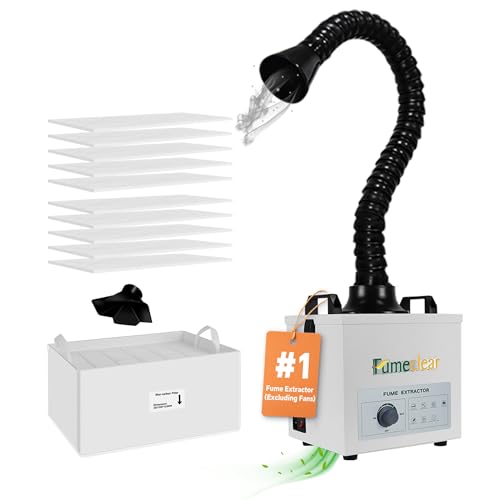
FumeClear FC-100A Fume Extractor Low-Noise & High Iodine 3-Stage Filtration | 118-152CFM Suction For Garages, Workshops, Soldering & Laser & welding & Nail Odor Smoke Removal, 100W with 12pcs H13 Filters
Check price on Amazon
TOPCUBE Adjustable Ventilation Kit with Powerful Exhaust Fan and Filter | Magnetic-Mount Exhaust Pipe Kit for 3D Printer Enclosure, Efficient Ventilation, Exhaust Odors Smoke and Dust
Check price on AmazonFrequently Asked Questions
What is a ventilation system and why is it important?
A ventilation system is a mechanical or natural setup that exchanges indoor air with outdoor air to remove pollutants, moisture, and odors while supplying fresh air. It is important because modern homes are tightly sealed, which can trap contaminants and cause poor indoor air quality, mold growth, and health issues.
What is the difference between HRV and ERV ventilation systems?
A Heat Recovery Ventilator (HRV) transfers sensible heat between outgoing and incoming air streams, which is ideal for cold climates. An Energy Recovery Ventilator (ERV) transfers both sensible heat and moisture, making it better for hot, humid climates where humidity control is important.
How do I know what size ventilation system I need?
Sizing depends on home volume and occupancy. A common rule is to achieve around 0.35 air changes per hour (ACH) for whole-home ventilation, or follow ASHRAE 62.2 guidelines based on floor area and number of bedrooms. A qualified HVAC professional can perform a proper calculation.
How often should ventilation systems be maintained?
Filters should be cleaned or replaced every 1 to 3 months. Ducts and vents should be inspected annually, and the core of an HRV or ERV should be cleaned once or twice a year. Professional servicing is recommended every 1 to 2 years depending on usage.
Can I install a ventilation system myself?
Local exhaust fans are often within reach of experienced DIYers, but whole-home balanced systems require duct design, electrical work, and commissioning. Professional installation is recommended for HRV, ERV, and ducted systems to ensure performance and code compliance.