
What Does a Dehumidifier Do for Your House?
A dehumidifier does more than dry the air. It protects your home from mold, wood damage, and musty odors while improving comfort and indoor air quality. Here is how it works and why it matters.
Start LearningWhy this matters: Excess indoor humidity is one of the most overlooked causes of home damage. It feeds mold, warps wood, and makes rooms feel warmer and stickier than they are. Understanding what a dehumidifier does helps you decide whether your home needs one and how to use it correctly.
What a Dehumidifier Actually Does
A dehumidifier removes water vapor from the air. It draws in room air, cools it below its dew point so moisture condenses, collects that water in a tank or drains it away, and returns drier air to the room. The result is lower relative humidity.
Lower humidity has effects that go beyond comfort. It slows mold and mildew growth, protects wood flooring and furniture from warping, reduces musty odors, and makes the air feel cooler at the same thermostat setting. A dehumidifier is not a cooling appliance, but it can make a room feel less oppressive.
How a Dehumidifier Works
Most home dehumidifiers use a refrigerant cycle similar to an air conditioner, but the goal is moisture removal rather than cooling the room.
- Air intake: A fan pulls humid room air into the unit.
- Cooling coil: The air passes over a cold evaporator coil, causing moisture to condense into water droplets.
- Water collection: The water drips into a tank or flows to a drain line.
- Reheating: The dried air passes over a warm condenser coil and returns to the room slightly warmer than when it entered.
- Humidistat control: A sensor monitors humidity and cycles the unit on and off to maintain the target level.
Desiccant dehumidifiers use a moisture-absorbing wheel instead of a cold coil. They work better in cooler temperatures, such as basements and crawlspaces, where refrigerant models may frost up.
Key Benefits for Your House
Mold and Mildew Prevention
Mold spores need moisture to grow. Keeping indoor humidity below 60 percent removes the conditions mold needs.
Protection for Wood and Structure
High humidity warps hardwood floors, swells doors, and damages framing over time. Controlled humidity protects these materials.
Better Comfort
Dry air feels cooler and less sticky. Many people can raise the thermostat slightly when humidity is under control.
Reduced Musty Odors
Musty smells come from mold and mildew. Removing excess moisture removes the source of the odor.
Allergy Relief
Dust mites thrive in humid air. Lowering humidity reduces their population and can ease allergy symptoms.
Faster Drying
After a leak, flood, or humid season, a dehumidifier speeds drying and reduces the chance of secondary damage.
Protection for Belongings
Books, photos, electronics, and clothing all suffer in humid environments. Controlled humidity protects stored items.
Energy Efficiency Support
An air conditioner works less when it does not have to remove as much moisture, which can help efficiency in the long run.
Healthy Indoor Humidity Levels
Most experts recommend keeping indoor relative humidity between 30 and 50 percent. The table below explains what each range means for your home.
| Humidity Range | What It Means | Action |
|---|---|---|
| Below 30% | Air feels dry; skin and airways may be irritated | Consider a humidifier or ventilation adjustment |
| 30% to 50% | Comfortable and healthy range for most homes | Maintain with a dehumidifier or ventilation as needed |
| 50% to 60% | Mold and dust mites begin to thrive | Use a dehumidifier and improve ventilation |
| Above 60% | High risk of mold, musty odors, and material damage | Run a dehumidifier consistently and address moisture sources |
If your home feels damp but you are unsure about humidity, a hygrometer is an inexpensive tool that shows the current level. The guide on what can I use for dry air in house covers the opposite problem, and the article on what can I put under my house to absorb moisture covers moisture management in crawlspaces.
Types of Dehumidifiers
Dehumidifiers differ in how they remove moisture and where they are designed to be used. The table below compares the main types.
| Type | How It Works | Best For | Tier |
|---|---|---|---|
| Refrigerant (compressor) portable | Cools air to condense moisture, then reheats it | Basements, living areas, and rooms above 65°F | Entry-level to mid-range |
| Desiccant portable | Absorbs moisture with a rotating desiccant wheel | Cool basements, garages, and spaces below 65°F | Mid-range to premium |
| Whole-house ducted | Integrated with HVAC ductwork to treat the entire home | Homes with chronic humidity problems across multiple rooms | Premium to high-end tier |
| Crawlspace dehumidifier | Heavy-duty unit designed for low-clearance spaces | Crawlspaces and encapsulated foundations | Professional-grade |
| Mini or closet dehumidifier | Small unit for confined spaces | Closets, safes, RVs, and small rooms | Starter tier |
For rooms that also need cooling, the guide on types of air conditioning units explains how air conditioners and dehumidifiers differ in purpose. If you are dealing with moisture around an air handler, the article on water leaking out of furnace when air conditioning is on covers condensate issues that a dehumidifier will not fix.
Where to Place a Dehumidifier
Placement affects how well the unit works and how often you need to empty the tank.
- Dampest area first: Basements, crawlspaces, and bathrooms usually benefit most.
- Air circulation: Keep the unit at least 6 to 12 inches from walls and furniture so air can flow freely.
- Closed space: Close windows and doors so the unit treats the room air rather than pulling in humid outdoor air.
- Drain access: If the unit has a drain hose option, place it near a floor drain or sump pump to avoid emptying the tank often.
- Away from heat sources: Avoid placing the unit next to dryers, furnaces, or direct sunlight, which can reduce efficiency.
Dehumidifier vs Air Conditioner
People often ask whether an air conditioner does the same job as a dehumidifier. The two appliances overlap but are not interchangeable.
| Feature | Dehumidifier | Air Conditioner |
|---|---|---|
| Primary purpose | Remove moisture from the air | Cool the air |
| Effect on temperature | Slightly warms the room | Lowers room temperature |
| Effect on humidity | Substantially lowers humidity | Lowers humidity as a byproduct of cooling |
| Best season | Humid months, damp basements, rainy seasons | Hot weather |
| Works in cool spaces | Desiccant models work well in cool spaces | Not designed for cool spaces |
An air conditioner removes moisture while it cools, but it only runs when cooling is needed. In mild but humid weather, a dehumidifier is often the more appropriate tool. The guide on what does a dehumidifier do for your house and the overview on types of air conditioning units help clarify the overlap.
Maintenance Checklist
Regular maintenance keeps the unit efficient and prevents mold growth inside the appliance itself.
- Empty the tank: Empty it before it overflows, or connect a drain hose for continuous operation.
- Clean the filter: Rinse or replace the air filter every few weeks during heavy use.
- Wipe the tank and reservoir: Clean the tank regularly to prevent biofilm and odors.
- Check the coils: Dust the coils gently when they become visibly dirty.
- Inspect the drain hose: Confirm the hose is not kinked or clogged.
- Store properly: Before long storage, empty and dry the unit thoroughly.
If you are also managing an air conditioning system, the guide on split system air conditioning maintenance covers coil and filter care for cooling equipment. For water issues around an AC system, the article on water coming out of air conditioner vents explains a different but related moisture problem.
How to Choose the Right Model
Use the following framework to narrow your options before comparing specific products.
Step 1: Identify the Space
Basements and crawlspaces need different models than bedrooms or closets. Measure the space and note the typical temperature.
Step 2: Match Capacity to the Area
Capacity is measured in pints per day. A larger, wetter space needs a higher-capacity unit. Oversizing wastes energy, and undersizing leaves the space damp.
Step 3: Choose the Right Technology
Refrigerant models work well in warm spaces. Desiccant models are better in cool basements and garages.
Step 4: Consider Drainage
If you do not want to empty a tank daily, choose a model with a continuous drain hose option.
Step 5: Evaluate Features and Tier
Entry-level models cover basic moisture removal. Mid-range models add humidistats, auto-restart, and better drainage options. Premium and high-end tier models add quieter operation, smart controls, and higher efficiency. The right tier depends on how much you value convenience and quiet operation.
For broader context on indoor air and moisture, the guides on what can I use for dry air in house and what can I put under my house to absorb moisture cover related solutions.
Recommended Dehumidifiers for Your House
⚠️ AFFILIATE DISCLOSURE: This website contains affiliate links. As an Amazon Associate, we earn from qualifying purchases. If you make a purchase through these links, we may receive a small commission at no additional cost to you. Read our full affiliate policy.

5500 Sq. Ft Dehumidifier,Max 150 Pint/Day Whole House Dehumidifier | Dehumidifier for Basement with Drain Hose,Smart Humidity Control,Quiet Operation Dehumidifiers for home
Check price on Amazon
160 Pints Whole House Dehumidifier, Energy Efficient DOE 65PPD Commercial Dehumidifier with Fresh Air Function Cycle Timer Whole-Home Dehumidifiers with Remote Controller for Crawlspace|Marshal WD160
Check price on Amazon
Waykar 125 Pints Crawl Space Dehumidifier with Remote Control and Pump, Dual Duct HVAC Commercial Whole-House Dehumidifier for Basement, Industrial Water Damage Unit - 5-Year Quality Coverage
Check price on Amazon
AprilAire E070 Pro Dehumidifier Bundle - 70 Pint Whole House Dehumidifier - Full Complete Kit - Crawl Spaces, Basements, Whole Homes, Commercial up to 2,800 sq. ft - 5 Year Warranty Included
Check price on Amazon
DuraComfort 38 Pints Max Dehumidifier for Basement, Up to 2500 Sq.Ft, 25 Pint DOE Dehumidifier for Home with Continuous Drainage, Adjustable Humidity, Auto Defrost & 24H Timer
Check price on Amazon
AprilAire E100 Pro Dehumidifier Bundle - 100 Pint Whole House Dehumidifier - Full Complete Kit - Crawl Spaces, Basements, Whole Homes, Commercial up to 5,500 sq. ft - 5 Year Warranty Included
Check price on Amazon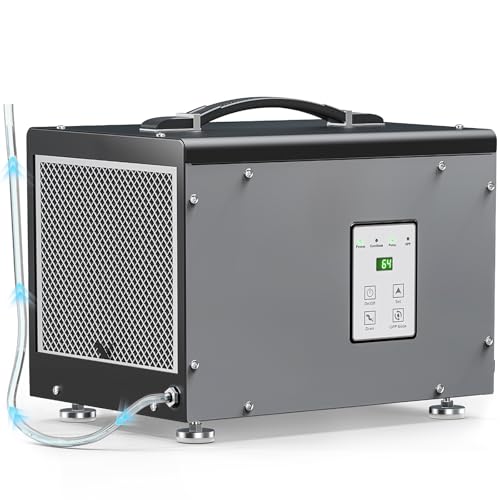
BaseAire Crawlspace 70 PPD Dehumidifier with Pump for 1000 Sq Ft | Dehumidifier with Pump, Dehumidifiers with Drain Hose, Auto Defrost, for Commercial, Basements. Compact Size Easy to Move
Check price on Amazon
Uthfy 5500 Sq.Ft Dehumidifiers for Home and Basement, Max 100 Pint/Day Dehumidifier with Drain Hose, 24 H Timer & Child Lock, LED Panel, Ultra Quiet, whole house dehumidifiers for home, Bedroom
Check price on AmazonFrequently Asked Questions
What does a dehumidifier do for your house?
A dehumidifier removes excess moisture from the air, lowering indoor relative humidity. This improves comfort, reduces mold and mildew growth, protects wood and structural materials, and can ease allergy and asthma symptoms.
What is a healthy indoor humidity level?
Most experts recommend keeping indoor relative humidity between 30 and 50 percent. Above 60 percent, mold growth and dust mites thrive. Below 30 percent, air feels dry and can irritate skin and airways.
Does a dehumidifier cool the air?
A refrigerant dehumidifier produces a slight cooling effect as it removes moisture, but it is not a substitute for an air conditioner. It also adds a small amount of heat to the room, so it is not a cooling appliance.
Where should I place a dehumidifier in my house?
Place it in the dampest area such as a basement, crawlspace, or bathroom. Keep it away from walls and furniture so air can circulate. Close windows and doors in the space so it treats the room air rather than pulling in outside humidity.
Can a dehumidifier help with allergies?
Yes. Dust mites and mold both thrive in high humidity. Lowering humidity to the 30 to 50 percent range reduces their growth and can ease allergy and asthma symptoms for many people.
Ready to Compare Dehumidifiers?
Review the recommended models above, confirm the capacity for your space, and choose the tier that matches your humidity needs and drainage preferences.
View Recommended Units