
Window Air Conditioner for Casement Window Installation
Everything you need to know about cooling a room with a casement window — from choosing the right casement AC unit to a safe, secure, and weather-tight installation.
START THE GUIDEWhy this guide matters: Casement windows open outward like a door, which makes them beautiful for ventilation but problematic for standard window air conditioners. A regular double-hung window AC cannot be supported or sealed in a casement opening. This guide explains the units and methods that genuinely work, so you can cool your room without damaging the window frame or compromising security.
Why Casement Windows Need Special AC Solutions
A standard window air conditioner is engineered around a double-hung window: the lower sash lifts, the unit sits on the sill, and the upper sash closes down onto the unit's top seal. The weight of the unit rests on the sill and is stabilized by the window frame and a support bracket.
Casement windows work differently. They are hinged on one side and swing outward, leaving a tall, narrow opening with no horizontal sill surface to carry the unit's weight. There is also no sash to clamp the AC in place, and the crank mechanism occupies part of the frame. Attempting to force a standard window unit into a casement opening is unsafe and usually voids the manufacturer's installation requirements.
That said, casement windows are not a dead end. Several purpose-built and alternative solutions exist, and the right choice depends on your room size, window dimensions, whether you rent or own, and how permanent you want the installation to be.
The Main Options for Cooling a Room with a Casement Window
There are four practical approaches. Each has a distinct position in the market, from entry-level to premium, and each suits a different type of household.
Casement Window Air Conditioner
A vertical-format AC designed specifically for narrow, tall casement openings. It usually comes with a filler panel or frame kit that seals the gap above and below the unit. This is the most direct replacement for a traditional window AC and is available from entry-level to mid-range tiers.
Portable AC with Casement Sealing Kit
A portable unit rolls on casters and exhausts hot air through a hose connected to an adjustable sealing plate fitted into the casement opening. No heavy unit sits in the window, which suits renters and rooms where the window cannot bear load. See our guide to portable air conditioners for crank windows for related setups.
Ductless Mini-Split System
A wall-mounted indoor head connected to an outdoor compressor by a small refrigerant line. It does not use the window at all, delivers the quietest and most efficient cooling, and sits in the mid-range to premium tiers. Installation requires a professional and, in most jurisdictions, a permit.
Through-the-Wall AC Unit
If you own the home and are willing to cut a dedicated wall sleeve, a through-the-wall unit offers a clean, permanent result and frees the casement window completely. This is a construction project rather than a seasonal install, so plan it with a contractor.
Side-by-Side Comparison of Casement Cooling Options
The table below compares the four approaches using neutral tier descriptors rather than any figure-based ranking. Use it to shortlist the approach that fits your situation before comparing individual models.
| Approach | Market Tier | Best For | Installation Effort | Window Security |
|---|---|---|---|---|
| Casement window AC | Entry-level to mid-range | Bedrooms and small living rooms where the window opening matches the unit frame | Moderate — DIY-friendly with the supplied kit | Good when the filler panel and lock kit are installed correctly |
| Portable AC + sealing kit | Entry-level to mid-tier | Renters, rooms with weak sills, and spaces needing a movable unit | Low — no lifting of heavy equipment into the window | Moderate — the sealing plate must be locked or braced |
| Ductless mini-split | Mid-range to premium | Whole-room comfort, quiet operation, and long-term efficiency | High — professional installation required | Excellent — the window stays closed and locked |
| Through-the-wall AC | Mid-tier to high-end tier | Homeowners wanting a permanent, clean installation | Very high — wall cutting and sleeving | Excellent — the window is untouched |
How a Casement Window Air Conditioner Works
A casement AC is essentially a conventional window unit rotated 90 degrees. The chassis is tall and narrow so it can pass through the vertical opening between the window frame and the hinge side. Instead of resting on a sill, the unit is supported by a mounting frame or bracket that transfers the load to the window frame and, in many kits, to the interior wall below the window.
Key components of a casement AC installation kit
- Mounting frame or bracket — a rigid frame that holds the unit and anchors to the window frame and interior wall.
- Filler panels — usually acrylic or insulated panels that close the gap above and below the unit so outside air and insects stay out.
- Weather seal — foam or rubber gaskets that close the remaining gaps between the frame and the window opening.
- Security bracket or lock — prevents the unit from being pushed inward or removed from outside.
- Support legs or braces — carry the unit's weight and keep it level.
Sizing a casement AC correctly
Undersizing leaves the room warm on peak days; oversizing causes short cycling, poor humidity removal, and uneven temperatures. The standard starting point is roughly 20 BTU per square foot of floor area, then adjusted for the following factors:
- Sun exposure: a south- or west-facing room with large glass needs more capacity.
- Ceiling height: rooms above eight feet need a proportional increase.
- Occupancy: add capacity for each regular occupant beyond two.
- Heat-producing appliances: kitchens and home offices with multiple devices run warmer.
- Insulation and window quality: older, leaky rooms need headroom in capacity.
Casement units are commonly offered from around 5,000 BTU up to about 12,000 BTU. If your calculated requirement lands near the top of a range, choose the higher capacity only after confirming the electrical circuit can support it. For a broader sizing walkthrough, read how to size an air conditioner.
Efficiency ratings to look for
Casement AC units are evaluated on the same efficiency scales as other room air conditioners. A higher CEER or EER value means more cooling per unit of electricity. ENERGY STAR certified models sit above the federal minimum and are the sensible default for a unit that will run daily through summer. Inverter-driven casement models are increasingly common and modulate compressor speed to hold a steady temperature, which is more comfortable and typically more efficient across a full season than a single-speed compressor cycling on and off.
Step-by-Step Casement Window AC Installation
The exact procedure depends on the kit supplied with your unit, but the sequence below reflects how most casement AC installations are carried out. Always follow the manufacturer's instructions, which take precedence over any general guide.
-
Measure the window opening precisely
Record the width and height of the clear opening with the window fully cranked open, plus the depth from the exterior face to the interior wall. Compare these figures against the unit's minimum and maximum window dimensions before purchase. A mismatch here is the single most common reason a casement AC has to be returned.
-
Check the electrical circuit
Confirm the outlet is on a dedicated or adequately rated circuit and that the plug type matches. Larger casement units often require a 115V circuit with a specific amperage; some require 230V. If you are unsure, have a licensed electrician verify the circuit before installation. See 220V air conditioners for how higher-voltage units differ.
-
Assemble the mounting frame
Build the frame on the floor according to the kit instructions. Most kits use interlocking rails that are cut or adjusted to the window height. Tighten all fasteners firmly — the frame carries the entire weight of the unit.
-
Seat the frame in the window opening
With the window cranked fully open, position the frame in the opening and check that it is plumb and level. Attach the frame to the interior wall and window frame using the supplied brackets and appropriate fasteners for your wall material.
-
Install the support bracket
Attach the exterior support bracket or legs so they rest firmly against the outside wall. This bracket carries the cantilevered weight of the unit and prevents the frame from sagging over time. Never skip this step — a casement opening has no sill to share the load.
-
Lift the AC unit into the frame
This is a two-person job for anything above a small unit. Slide the chassis into the frame until it seats fully, then secure it with the retaining screws specified in the manual. Confirm the unit is level; a tilted casement unit can leak condensate into the room.
-
Fit the filler panels and weather seals
Install the top and bottom filler panels and press foam weather stripping into every remaining gap between the frame and the window opening. A thorough seal is what prevents cool air loss, insect entry, and rainwater intrusion. Pay particular attention to the hinge side, where the gap is often widest.
-
Install the security lock or bracket
Fit the anti-theft bracket that prevents the unit from being pushed into the room or pulled out from outside. If the kit includes a window lock for the crank mechanism, install it so the window cannot be opened further while the unit is in place.
-
Test and check for leaks
Run the unit on fan only first, then on cooling. Check for rattles, confirm the thermostat responds, and inspect the interior and exterior seals for gaps. On the first rainy day, verify that no water enters around the frame.
Important: Many apartment leases and homeowners association rules restrict window-mounted air conditioners. Check your lease or HOA guidelines before installing. For installations that require a permit or inspection, review how to get an AC permit in your area.
The Portable AC Alternative for Casement Windows
If a window-mounted unit is not allowed, or if lifting a heavy chassis into a casement opening is impractical, a portable air conditioner with a casement sealing kit is the most flexible solution. The unit stays on the floor, and only a lightweight hose and an adjustable sealing plate sit in the window opening.
The sealing plate is typically a fabric or rigid panel that closes the casement opening around the exhaust hose. Choose a kit sized for the height of your window, and make sure the plate can be locked or braced so the window cannot be pushed open from outside. Portable units are generally less efficient than window units of the same capacity because the compressor and fan sit inside the conditioned room and reject some heat back into it, so size slightly above your calculated requirement.
For rooms where no window can be used at all, a small room air conditioner with no window may be the better fit. If you only need to cool a desk or bed area, a personal space air conditioner uses far less power.
Pros and Cons of Casement Window Air Conditioners
Advantages
- Purpose-built fit for narrow, vertical casement openings
- No permanent wall modification required
- Lower entry point into cooling than a mini-split
- Simple to remove and store in the off-season
- Many models now offer inverter compressors and smart controls
Limitations
- Fewer models available than standard window units
- Capacity range tops out lower than central or mini-split systems
- Requires careful sealing to prevent drafts and water entry
- Adds some noise inside the room compared with a mini-split
- The window cannot be used normally while the unit is installed
Maintenance That Keeps a Casement AC Running Well
Casement units sit in a vertical opening and collect dust and pollen on the same schedule as any window AC. A simple routine protects cooling performance and extends service life:
- Clean or replace the filter every two to four weeks during heavy use. A clogged filter is the most common cause of weak airflow. Follow our guide on how to clean an AC filter.
- Inspect the exterior seals each season. Foam weather stripping compresses and cracks over time; replace it before summer so the unit stays weather-tight.
- Clean the condenser coils annually. Dust and cottonwood on the outdoor-facing coil reduce efficiency noticeably. See how to clean condenser coils.
- Check the support bracket for looseness. A sagging bracket tilts the unit and can cause condensate to drip indoors.
- Remove and store the unit in winter if the window is needed for ventilation, and cover the opening properly so cold air does not enter.
If the unit stops cooling, the cause is often a dirty filter, a tripped breaker, or a blocked exterior coil rather than a mechanical failure. Our troubleshooting article on an air conditioner not blowing cold air walks through the checks in order.
What to Check Before You Buy a Casement AC
Buying a casement unit is a measurement exercise first and a features exercise second. Work through this checklist:
- Window opening dimensions — width, height, and depth must fall inside the unit's supported range.
- Room heat load — match BTU to your calculated requirement, not to the room's floor area alone.
- Electrical requirements — confirm plug type, voltage, and circuit capacity.
- Efficiency rating — prefer a higher CEER or EER value and ENERGY STAR certification where offered.
- Noise level — decibel ratings matter in bedrooms; inverter models usually run quieter at low demand.
- Controls and connectivity — a remote or app control is useful if the unit sits high in the frame.
- Kit completeness — confirm the mounting frame, filler panels, seals, and security bracket are included.
For rooms where the casement unit alone cannot handle the load, or where you want cooling in several rooms from one outdoor unit, compare the options in our guide to split ductless air conditioning systems. If you are also dealing with an older window that leaks air, the sealing advice in how to seal air ducts covers the same principles of closing gaps before adding capacity.
Recommended Window Air Conditioners for Casement Windows
⚠️ AFFILIATE DISCLOSURE: This website contains affiliate links. As an Amazon Associate, we earn from qualifying purchases. If you make a purchase through these links, we may receive a small commission at no additional cost to you. Read our full affiliate policy.

IKSTAR Portable AC Window Seal Kit 400CM/157 for Casement, Crank-Out & Skylight Windows, No-Drill Window Vent Kit with Adjustable Zipper, Fits Single & Dual Hose Portable Air Conditioners
Check price on Amazon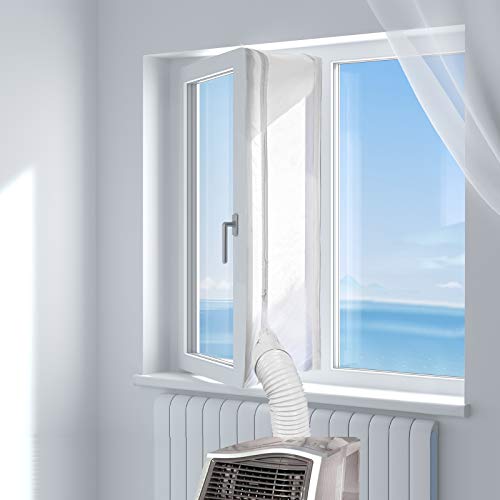
HOOMEE 157”(400CM) Universal Window Seal for Mobile Air Conditioner and Tumble Dryer – Window Kit Works with Portable AC, Easy to Install - Air Exchange Guards with Zip and Adhesive Fastener
Check price on Amazon
SPONDWILD 197"/500CM Portable AC Window Seal Kit for Casement Windows | No-Drill Window Vent Kit, Fit 5" and 6" Single Hose Portable Air Conditioners, Waterproof Window Seal Kit, Easy Install
Check price on Amazon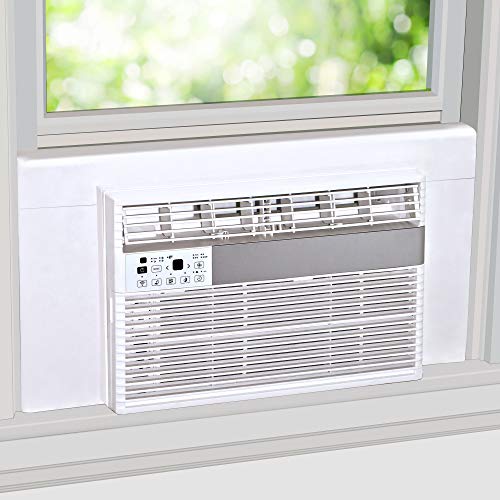
Breeze Stop Surround Insulation Side Panels White for Window AC Unit Indoor Air Conditioner Cover for Winter and Summer
Check price on Amazon
Portable AC Window Seal, 118"/300CM Window Vent Kit for Casement Window | with 26 ft Shrink Rope&Adhesive Fastener, Universal Air Conditioner Vent Kit, Waterproof, Energy Saving, Innovative Design
Check price on Amazon
Portable AC Window Seal, 157"/400CM Window Vent Kit for Casement Window | with 32 ft Shrink Rope&Adhesive Fastener, Universal Air Conditioner Vent Kit, Waterproof, Energy Saving, Innovative Design
Check price on Amazon
Gruntbear Portable Air Conditioner Window Seal Kit for Casement 300CM/118” | Casement Window Ac Vent Kit for Mobile Air Conditioner and Tumble Dryer,Ac Window Seal Kit with Zip and Adhesive Fastener
Check price on AmazonFrequently Asked Questions
Can I use a regular window air conditioner in a casement window?
What is the best type of air conditioner for a casement window?
How do I know what size casement AC I need?
Are casement window AC units energy efficient?
Can I install a casement AC myself?
Will a casement AC unit block the window completely?
The Bottom Line
Casement windows rule out the standard window AC, but they do not rule out effective cooling. The right path is to measure the opening first, calculate the room's heat load second, and then choose between a purpose-built casement unit, a portable AC with a sealing kit, a ductless mini-split, or a through-the-wall installation based on ownership, budget tier, and how permanent you want the result to be.
Whichever route you take, the quality of the installation — a level frame, a solid exterior support bracket, and fully sealed gaps — determines how well the unit performs and how long it lasts. Get those details right and a casement window becomes an asset for cooling rather than an obstacle.