
Window Unit Air Conditioner Leaking Water: Causes, Fixes & Prevention
Water pooling on your floor or dripping down the wall is one of the most common — and most preventable — window AC problems. This guide walks you through the real causes, safe step-by-step fixes, and the telltale signs that it's time to call a professional.
Quick summary: Most window AC water leaks trace back to a missing tilt, a clogged drain, a dirty filter, or a frozen evaporator coil. Nine out of ten cases can be diagnosed and corrected in under an hour with basic tools and no special training. Read on to match your symptom to the right fix.
How a Window AC Handles Water (in 60 Seconds)
A window air conditioner does two water-related jobs at once. Inside the unit, the evaporator coil pulls heat and humidity out of your room. That moisture condenses on the cold coil and drips into a shallow drain pan under the coil. Meanwhile, at the back of the unit, the condenser coil gets hot as it releases that heat outside. Most modern window units are designed so that the condensate from the pan is flung onto the hot condenser coil by a slinger ring on the outdoor fan blade — this helps cool the coil and evaporates most of the water.
Whatever doesn't evaporate drains out the back through small holes in the unit's base pan. For that drainage to work, the unit must be installed with a slight downward tilt toward the outside — typically about 1/4 to 1/2 inch per foot of depth. Break any one link in that chain (tilt, drain holes, slinger ring, drain pan) and water ends up where it shouldn't: inside your room.
8 Causes of a Leaking Window Air Conditioner
Below are the causes we see most often, ordered roughly from most common to least. Match the symptom you're observing — water inside the room, dripping down the wall, ice on the unit, or water running continuously — to the section that fits.
1 Wrong or missing tilt
The #1 cause. If the unit is level or tilted slightly into the room, condensate can't drain out the back and instead runs down the inside wall or onto the floor. A small bubble level is the fastest way to confirm.
2 Clogged drain holes
Dirt, pollen, and insect nests block the small weep holes in the base pan. Water backs up until it overflows into the room. Common in units that sit outside all summer without a cover.
3 Dirty air filter
A clogged filter restricts airflow over the evaporator coil, causing it to run too cold and form ice. When that ice melts, the pan overflows faster than it can drain. This is one of the easiest fixes.
4 Frozen evaporator coil
Beyond a dirty filter, low refrigerant, a failing blower, or running the unit in cool mode when outdoor temps are very low can freeze the coil. The meltwater usually pours out in one big rush after the unit is shut off.
5 Cracked or rusted drain pan
Older units and coastal installs are prone to rust-through. A pinhole or hairline crack in the pan drips water directly into the room with no other symptoms. Shine a light inside the pan to inspect.
6 Improper installation
Missing window bracket, insufficient support, gaps around the window frame, or a unit too small for the opening all allow water to bypass the outdoor drainage path and flow indoors. Related guidance: window AC bracket support.
7 Damaged slinger ring
The plastic ring on the outdoor fan blade that flings water onto the condenser can crack or fall off. Result: water accumulates in the pan instead of being evaporated, and eventually overflows.
8 High indoor humidity or oversized unit
An oversized window unit cools the room too fast, short-cycles, and never runs long enough to remove humidity. The extra moisture can overwhelm the drain system. Related symptom: water leaking inside the house.
Diagnose Your Leak in 5 Steps
Before you reach for tools, spend five minutes narrowing down the cause. In nearly every case, one of these five checks will identify the problem outright.
- Turn the unit off and unplug it. Never diagnose a water leak with power connected. Wait 10–15 minutes for any ice to melt, then dry the area so you can see fresh water.
- Check the tilt. Place a small bubble level on the top of the unit front-to-back. The bubble should sit slightly toward the outside. If it's centered or toward the room, that's your cause.
- Inspect the filter. Slide it out. If you can't see light through it when held up to a bulb, it's overdue for cleaning — and likely the reason for a frozen coil.
- Look for ice on the coil. Shine a flashlight into the front grille. Visible frost or ice on the evaporator coil confirms a freeze event. Let it melt fully before restarting.
- Check the drain holes and pan. With power off, look at the base pan from outside. Any standing water, debris, or visible cracks point directly at a drainage or pan failure.
Window AC units run on 110V or 220V circuits. Always unplug before tilting, cleaning, or opening the cabinet. Never tilt a unit more than about 45 degrees while it's still mounted — and never tip a running unit. If the unit uses a dedicated circuit or has a hardwired connection, switch off the breaker.
Fixes You Can Do Yourself
Once you've identified the cause, the fix is usually straightforward. Each fix below maps to one of the causes above. If a fix requires removing the unit from the window, ask a second person to help — window ACs are heavier than they look and dropping one is a real injury risk.
| Symptom | Likely cause | Fix | Difficulty |
|---|---|---|---|
| Water runs down the inside wall continuously while running | Wrong tilt | Re-seat the unit with 1/4–1/2 inch per foot slope toward the outside | Moderate |
| Water pools in the room only on humid days | Clogged drain holes | Clear the base pan weep holes with a stiff wire or pipe cleaner | Easy |
| Unit runs but barely cools; ice forms on the front | Dirty filter / frozen coil | Clean or replace the filter; let the coil thaw fully before restart | Easy |
| Sudden large volume of water after running for hours | Frozen coil melting | Thaw, clean filter, check for low refrigerant or blower issues | Easy–Moderate |
| Steady drip from inside cabinet, no other symptoms | Cracked drain pan | Patch small cracks with epoxy; replace pan or unit if severe | Moderate |
| Water comes in around the window frame, not the unit | Improper installation / gaps | Add weather seal, bracket support, and proper flashing | Moderate |
| Water accumulates in pan but never drains | Broken slinger ring | Replace slinger ring (part number varies by brand) | Moderate–Advanced |
| Room feels clammy; unit short-cycles | Oversized unit | Use a dehumidifier alongside, or switch to a correctly sized inverter unit | Advanced |
Step-by-step: fix the wrong tilt (most common case)
- Unplug the unit and, if possible, have a helper support it from outside.
- Loosen the window bracket or support screws just enough to shift the unit.
- Slide a small shim (a piece of wood or plastic) under the front edge of the unit, inside the room. Aim for roughly 1/4 to 1/2 inch of slope toward the outside.
- Re-level the unit front-to-back with a bubble level, then re-tighten the bracket.
- Run the unit for 30 minutes on a humid day and confirm water exits through the back, not into the room.
Step-by-step: unclog the drain holes
- Unplug the unit and remove it from the window if you can safely do so — this is the most thorough approach.
- Locate the small weep holes in the base pan, usually a row of them along the bottom edge at the back.
- Pass a stiff wire, pipe cleaner, or thin screwdriver through each hole to clear debris.
- Flush with a cup of water and confirm it drains freely.
- Reinstall the unit with correct tilt and test.
For persistent cooling problems that accompany a water leak, the issue may be more than drainage. If your unit is running but not cooling, see our guide on window AC not cooling but fan is running. If water is leaking inside but the unit otherwise seems fine, our deeper dive on window air conditioner leaking water inside covers additional diagnostics.
Prevention Checklist
Window AC water leaks are almost entirely preventable with a small amount of seasonal maintenance. Run through this checklist at the start of every cooling season and again halfway through summer.
- Verify the tilt at the start of the season with a bubble level.
- Clean the filter every 2–4 weeks during heavy use, or monthly otherwise.
- Clear the drain holes every spring before the first hot week.
- Inspect the drain pan for rust or cracks at the same time.
- Check the window seal and bracket for gaps or looseness.
- Consider a cover during the off-season if the unit stays installed.
- Use a dehumidifier in very humid climates to reduce condensate load.
- Replace aging units — a 10+ year old unit with repeated leaks is often past its reliable service life.
If you're still shopping for the right unit or preparing to install one, our broader guide on window air conditioner selection and sizing is a useful next step. If you're dealing with a unit that's already installed but has lost efficiency, window unit repair walks through the most common fixes.
When to Call a Professional
Most water leaks are DIY-friendly, but a few situations call for a licensed HVAC technician — both for safety and to avoid making the problem worse.
- Suspected refrigerant leak. Low refrigerant causes the coil to freeze repeatedly. Recharging requires EPA-certified handling. See our note below on refrigerant safety.
- Electrical smell, sparking, or breaker trips alongside the leak. Stop using the unit immediately.
- Cracked compressor or sealed-system damage. Usually not worth repairing on a window unit — replacement is typically the better path.
- Persistent leaks after all DIY fixes. If you've corrected tilt, cleared drains, cleaned filters, and thawed the coil and water still enters the room, a technician should inspect the pan and slinger ring.
- Unit is 220V hardwired. Tilt adjustments and internal repairs should be handled by a pro for safety.
If you suspect the unit is low on refrigerant, do not attempt to add it yourself. Refrigerant handling in the U.S. requires EPA Section 608 certification. For background reading before you call a technician, see where to buy Freon for an air conditioner — this explains why DIY recharges are restricted and what certified technicians use.
Frequently Asked Questions
Is it normal for a window AC to drip water outside?
Yes — that's exactly what should happen. Condensate draining from the back of the unit is normal and healthy. What is not normal is water appearing inside the room, running down the interior wall, or pooling on the floor. If water is escaping the outdoor path and ending up indoors, that's a leak that needs fixing.
Why is my window AC leaking water only at night?
Nighttime leaks usually point to one of two things. First, outdoor temperatures drop, the unit short-cycles, and any ice that formed on the coil during the day melts in a rush after the compressor shuts off. Second, if the unit is tilted only marginally, cooler night air can change the drainage behavior just enough that water backs up indoors. Check the tilt first — it's the most common culprit for intermittent leaks.
Can I use a window AC without tilting it?
You can install it level, but you shouldn't. A level unit will not drain condensate properly, and water will find its way into the room within hours on a humid day. The manufacturer's specified tilt — usually 1/4 to 1/2 inch per foot of depth toward the outside — exists specifically to route water away from the interior.
How do I stop water from dripping down my wall from the AC?
Water running down the inside wall almost always means the unit is tilted the wrong way or the drain holes are clogged. Start by checking the tilt with a bubble level, then clear the weep holes in the base pan. If both are fine, inspect the drain pan for cracks and confirm the window seal is intact. Persistent wall drips after these checks warrant a professional inspection.
Why is my AC leaking water and not cooling?
This combination strongly suggests a frozen evaporator coil — usually caused by a dirty filter, restricted airflow, or low refrigerant. When the coil ices over, cooling stops and meltwater overflows the pan. Shut the unit off, let it thaw completely, clean the filter, and restart. If the ice returns within a day, the unit likely needs refrigerant service from a certified technician.
How much water should a window AC produce?
On a humid day, a typical window unit can produce several pints to a couple of gallons of condensate per day. Most of it is evaporated onto the condenser coil by the slinger ring; the remainder drains out the back. You should see a slow, steady drip outside — not a stream, and definitely not anything indoors. Very dry climates produce far less.
Can I fix a cracked drain pan?
Small hairline cracks can sometimes be sealed with a waterproof epoxy or silicone rated for HVAC use, but this is a temporary fix. A rusted or badly cracked pan should be replaced, or the unit replaced if the pan is integrated into the base. If you see rust flakes or a soft spot near the drain, replacement is the more reliable long-term option.
Should I cover my window AC when it's not in use?
Yes, if the unit stays installed year-round. A breathable cover keeps rain, leaves, and insect nests out of the base pan and drain holes — the exact places that cause clogs and leaks. Use a cover designed for window ACs, and make sure it allows some airflow to prevent trapped moisture and mold.
Window AC Units with Reliable Condensate Management
These window air conditioners are selected for their drainage design, build quality, and user feedback on leak-free operation. Each model sits in a different market tier — from entry-level essentials to premium inverter units — so you can match the unit to your room and climate without overspending for features you don't need.
⚠️ AFFILIATE DISCLOSURE: This website contains affiliate links. As an Amazon Associate, we earn from qualifying purchases. If you make a purchase through these links, we may receive a small commission at no additional cost to you. Read our full affiliate policy.

Midea 6,000 BTU Window Air Conditioner, Electronic Control, 250 Sq Ft, New | 3-In-1 Cool/Fan/Dehumidifier Modes, Easy-To-Use Controls, Remote Control, And Cooling For Bedrooms, Studies and Home Offices
Check price on Amazon
Frigidaire 5,000 BTU Window-Mounted Air Conditioner, Cools Up to 150 Sq. Ft., Quiet Operation, Effortless Temperature Control, 2 Fan Speeds, Auto Restart, White
Check price on Amazon
GE Window Air Conditioner 5,000 BTU AC Unit for Small Spaces up to 150 sq ft with Manual Controls & 2 Cooling Modes, Easy Install Kit, White
Check price on Amazon
Midea 8,000 BTU Smart Inverter Air Conditioner Window Unit with Heat and Dehumidifier – Cools up to 350 Sq. Ft., Energy Star Rated, Quiet Operation, Electronic Controls, Remote Control, White
Check price on Amazon
BOJACK 10ft Air Conditioner Drain Hose Kit, 3/5 inch Connector, Universal Mini-Split & Window AC Unit, 10ft Hose, 1 Pack
Check price on Amazon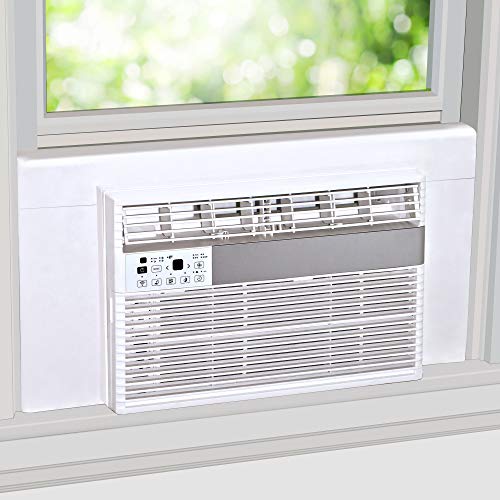
Breeze Stop Surround Insulation Side Panels White for Window AC Unit Indoor Air Conditioner Cover for Winter and Summer
Check price on Amazon
Midea 10,000 BTU U Shaped Window Air Conditioner, Cools up to 450 Sq Ft | Ultra Quiet U-Shaped Design, Inverter Control, Open Window Flexibility, Alexa/Google Assistant, 37% Energy Savings, 2026 New
Check price on Amazon
Midea 6,000 BTU U Shaped Window Air Conditioner, Cools up to 250 Sq Ft | Ultra Quiet U-Shaped Design, Inverter Control, Open Window Flexibility, Alexa/Google Assistant, 37% Energy Savings, 2026 New
Check price on AmazonStill Deciding on a Replacement?
If your current unit is leaking repeatedly after all fixes, a modern unit with a sealed base pan and slinger-ring drainage can eliminate the problem entirely. Explore our full window AC guide to compare types, sizes, and efficiency tiers.
Explore Window AC Options