
10,000 BTU Portable Air Conditioner Room Size: The Complete Sizing Guide
Wondering exactly how much space a 10,000 BTU portable air conditioner can cool? This guide breaks down the realistic room size range, the factors that shift that number, and how to choose a portable unit that actually keeps your room comfortable instead of running constantly.
Jump to Sizing ChartQuick Answer: What Room Size Does 10,000 BTU Cool?
A 10,000 BTU portable air conditioner is typically rated for rooms between roughly 250 and 450 square feet. In a standard room with an 8-foot ceiling, average insulation, and no extreme sun exposure, that works out to a comfortable cooling zone of about 300 to 400 square feet. The upper end of that range assumes favorable conditions; the lower end is more realistic for rooms that absorb heat quickly.
Portable units are a practical solution when you need cooling in a room without ductwork or when a permanent installation is not an option. If you are still comparing form factors, our guide on mini air conditioners for rooms covers how portable units stack up against window and mini-split alternatives. The key point is that portable capacity ratings are measured under standardized test conditions, so real-world performance depends heavily on the room itself.
Sizing Chart: Matching 10,000 BTU to Your Room
The table below translates the square footage range into practical scenarios. Treat it as a starting point, then adjust using the factors in the next section.
| Room Size | Typical Room Type | 10,000 BTU Fit |
|---|---|---|
| Up to 250 sq ft | Small bedroom, home office, dorm room | Oversized — cools quickly, short run cycles |
| 250 – 350 sq ft | Standard bedroom, studio apartment | Ideal match |
| 350 – 450 sq ft | Large bedroom, small living room | Workable with average conditions |
| 450 – 550 sq ft | Open living area, loft | Marginal — expect longer run times |
| Above 550 sq ft | Great room, open floor plan | Insufficient — move up in capacity |
If your room is significantly larger, a 12,000 BTU unit may be a better fit; our breakdown of 12,000 BTU portable air conditioner room size explains where that extra capacity starts to matter. For very large spaces, whole-home solutions such as a whole house AC system deliver far more consistent results than any single portable unit.
Factors That Change the Effective Room Size
The square footage rating is not a hard ceiling. Several conditions can make a 10,000 BTU portable feel underpowered or surprisingly capable. Before you commit, weigh each of the following:
Ceiling Height
Standard sizing assumes an 8-foot ceiling. If your room has 10-foot ceilings, the cubic volume increases by roughly 25 percent, and a 10,000 BTU unit that works well in a 350 sq ft room with standard ceilings may only keep a 280 sq ft room comfortable. High-ceiling lofts and vaulted rooms almost always need extra capacity.
Sun Exposure and Window Area
South- and west-facing rooms with large, unshaded windows gain substantial heat through solar radiation. A room that measures 350 sq ft but has a wall of glass may behave like a 450 sq ft room at peak afternoon hours. Cellular shades, exterior awnings, or reflective window film can recover much of that lost capacity.
Insulation Quality
Older homes with minimal wall insulation, single-pane windows, and unsealed gaps allow hot outdoor air to infiltrate continuously. In a poorly insulated room, a 10,000 BTU portable may run at full output for hours without reaching the set temperature. Sealing gaps around windows and doors is one of the highest-impact improvements you can make.
Occupancy and Heat Sources
Each person contributes roughly 400 to 600 BTU of heat. A bedroom with two occupants is fine; a home office that hosts video calls with three monitors and a gaming PC adds meaningful load. Kitchens with ovens and ranges, laundry rooms with dryers, and rooms with servers or home theater equipment all need extra headroom.
Climate and Outdoor Temperature
Portable air conditioners are rated at a specific outdoor test temperature. In regions where summer afternoons regularly exceed 95°F, a 10,000 BTU unit will deliver less usable cooling than the rating suggests. In mild coastal climates, the same unit can comfortably handle the upper end of its square footage range.
Single-Hose vs Dual-Hose: Why It Matters at This Capacity
Most portable air conditioners draw in room air to cool the condenser, then exhaust hot air through a single hose. That process creates negative pressure in the room, pulling warm outside air in through gaps and reducing efficiency. A dual-hose design separates intake and exhaust, so the unit pulls outdoor air for condenser cooling instead of dumping already-cooled room air outside.
At 10,000 BTU, the difference is measurable. Dual-hose models typically sustain closer to their rated capacity in real rooms, while single-hose models may lose 10 to 25 percent of effective cooling depending on how airtight the room is. If you are choosing between two units with the same rating, a 10,000 BTU dual hose portable air conditioner is generally the stronger choice for larger rooms or hot climates.
Placement and Setup Tips for Best Performance
Even a correctly sized unit underperforms if it is placed poorly. These practical steps help a 10,000 BTU portable reach its rated capacity:
- Keep the exhaust hose short and straight. The longer and more curved the hose, the more heat radiates back into the room. Aim for the shortest run your window setup allows.
- Seal the window kit. Foam or weatherstripping around the vent panel prevents hot outdoor air from leaking back in around the kit.
- Position the unit centrally. A portable unit cools the air around it first. Placing it in the middle of the room or near the area you occupy delivers faster comfort than tucking it into a corner.
- Maintain clearance. Keep at least 12 to 18 inches of space around the intake and exhaust grilles so airflow is not restricted.
- Drain condensate properly. In humid conditions, the internal tank fills quickly. Use continuous drain mode with a hose if the unit supports it, or empty the tank before it auto-shuts off.
- Avoid direct sun on the unit. Positioning a portable unit in direct sunlight warms its casing and reduces cooling efficiency.
For rooms without a suitable window, some homeowners pair a portable unit with a PTAC installation instead; our overview of PTAC units explains when that route makes more sense.
Features Worth Prioritizing in a 10,000 BTU Portable
Not every feature matters equally. These are the ones that directly affect comfort and long-term satisfaction at this capacity tier:
Dehumidification Mode
Portable units naturally remove moisture while cooling, but a dedicated dehumidify mode lets you run the unit on humid days when cooling demand is low. For humid climates, a 10,000 BTU portable air conditioner with dehumidifier function is a meaningful upgrade.
Remote Control and Programmability
A remote or app-based control lets you schedule cooling for the hours you are actually in the room. Many mid-range and premium models include a programmable timer and sleep mode, which reduces energy use overnight.
Noise Level
Portable units are generally louder than window or mini-split systems because the compressor sits inside the room. Look for a sound rating in the low 50s dB(A) or better for bedroom use. If noise is a top concern, compare with a quiet air conditioner option before deciding.
Filtration
Washable pre-filters are standard. Some models add activated carbon or HEPA-style filtration, which helps with dust and odors. Keep in mind that filters need regular cleaning to maintain airflow; a clogged filter can cut cooling capacity noticeably.
Inverter Compressor (Where Available)
Inverter-driven portable units are less common but increasingly available at the premium tier. They modulate compressor speed instead of cycling on and off, which improves temperature stability and reduces energy consumption. Our comparison of inverter AC vs non-inverter explains the tradeoffs.
Common Sizing Mistakes to Avoid
- Buying for the ideal case, not the real room. Sizing based on square footage alone ignores sun, insulation, and occupancy. When in doubt, size up one step rather than down.
- Oversizing dramatically. A much larger unit cools quickly but short-cycles, leaving the room clammy and uneven. A 10,000 BTU unit in a 200 sq ft room is already generous; a 14,000 BTU unit in the same room is wasteful.
- Ignoring the exhaust setup. A portable unit cannot cool a room it cannot vent. Confirm your window type accepts the included kit before purchase.
- Expecting whole-home coverage. Portable units cool the space they are in. Using one to cool multiple connected rooms through open doorways rarely works well.
- Skipping maintenance. Filter cleaning and hose inspection take minutes but preserve most of the unit's rated capacity over its service life.
If your existing unit is running but the airflow has dropped, our troubleshooting guide on an air conditioner running but not blowing air walks through the likely causes.
Top 10,000 BTU Portable Air Conditioners for Medium Rooms
⚠️ AFFILIATE DISCLOSURE: This website contains affiliate links. As an Amazon Associate, we earn from qualifying purchases. If you make a purchase through these links, we may receive a small commission at no additional cost to you. Read our full affiliate policy.

Keystone 12,000 BTU ASHRAE/10,000 BTU DOE Portable Inverter Air Conditioner with Quiet, High Efficiency Operation and Remote, AC Unit for Apartment, Living Room, Medium Rooms up to 450-Sq. Ft.
Check price on Amazon
BLACK+DECKER Portable Air Conditioner, 10,000 BTU, BPACT10WT, White | 5,500 BTU SACC for Rooms up to 450 Sq. Ft., 3-in-1 Portable AC, Fan and Dehum with Follow Me Remote Control
Check price on Amazon
WMC-2500, 10,000 BTU/Hr Portable Industrial Spot Cooler Air Conditioner, 115V Commercial AC Unit for Indoor, Server rooms & Data centers Use, 15A 1P
Check price on Amazon
GE Window Air Conditioner 10000 BTU, Wi-Fi Enabled, Energy-Efficient Cooling for Medium Rooms, 10K BTU Window AC Unit with Easy Install Kit, Control Using Remote or Smartphone App
Check price on Amazon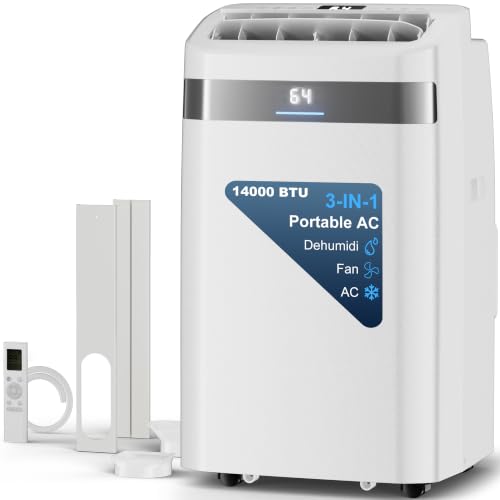
AKIRES Portable Air Conditioners,14,000 BTU Air Conditioner for Bedroom with Remote Control,Portable AC Unit With Fan & Dehumidifier,Cools Up To 700 Sq.Ft For Large Room With 24H Timer And Sleep Mode
Check price on Amazon
GarveeLife Portable Air Conditioner,8,000 BTU for Rooms up to 350 Sq.Ft., Smart Compact AC Unit with Cooling, Dehumidifier, Fan, Remote Control and Window Kit, White
Check price on Amazon
GarveeLife Portable Air Conditioner,8,000 BTU for Rooms up to 350 Sq.Ft., Smart Compact AC Unit with Cooling, Dehumidifier, Fan, Remote Control and Window Kit, White
Check price on Amazon
Midea Duo 14,000 BTU Portable Air Conditioner with Heat, Inverter Quiet | 12,000 BTU SACC High Efficiency Inverter Portable AC, with Heat up to 550 Sq.Ft. Smart/Remote Control, Alexa/Google Assistant
Check price on AmazonFrequently Asked Questions
What room size does a 10,000 BTU portable air conditioner cool?
A 10,000 BTU portable air conditioner is generally suited to rooms between roughly 250 and 450 square feet. The realistic sweet spot is about 300 to 400 square feet under average conditions. Rooms with high ceilings, heavy sun exposure, poor insulation, or multiple occupants should be sized toward the lower end of that range.
Is 10,000 BTU enough for a living room?
For a small living room under about 400 square feet, yes. For larger or open-plan living areas, a 10,000 BTU unit will run continuously without fully cooling the space. Consider a 12,000 BTU portable or a ductless mini-split for better coverage.
Does a 10,000 BTU portable AC need a special window?
Most units include a window kit designed for standard double-hung and sliding windows. Casement windows and unusual window shapes may need a specialized vent panel. Confirm compatibility before purchase, since a poor window seal undermines cooling performance.
Can a 10,000 BTU portable cool two rooms?
Only marginally. Portable units cool the air in their immediate vicinity and rely on air circulation. Leaving doors open between rooms dilutes the cooled air and lets warm air migrate in. For multi-room cooling, separate units or a mini-split system are more effective.
How many amps does a 10,000 BTU portable draw?
Most 10,000 BTU portable units operate on a standard 115V household circuit and draw roughly 8 to 10 amps during normal operation. Check the unit's nameplate rating and confirm the circuit can handle the load, especially if other appliances share the outlet.
Quick Recap
- Target room size: 250 to 450 sq ft, with 300 to 400 sq ft being the realistic sweet spot.
- Adjust upward for high ceilings, heavy sun, poor insulation, or multiple heat sources.
- Prefer dual-hose designs for larger rooms and hotter climates.
- Seal and shorten the exhaust path to recover lost cooling capacity.
- Clean the filter regularly to keep airflow and efficiency near the rated level.