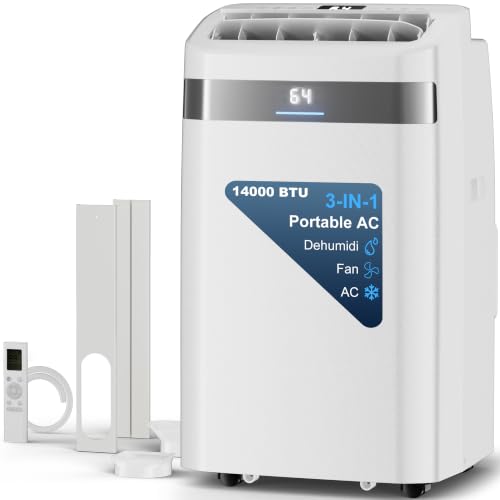
10,000 BTU Portable Air Conditioner with Dehumidifier
Everything you need to know about cooling and dehumidifying medium-sized rooms with a single portable unit — before you decide which model fits your space.
EXPLORE RECOMMENDED MODELSQuick Summary: A 10,000 BTU portable air conditioner with a built-in dehumidifier is one of the most versatile self-contained cooling solutions for rooms that lack ductwork or window space for a traditional unit. It cools while removing excess moisture from the air, making it a strong fit for bedrooms, home offices, apartments, and small living areas. This guide explains how it works, who it suits, and which features matter most before you choose.
What Is a 10,000 BTU Portable AC with Dehumidifier?
A 10,000 BTU portable air conditioner is a freestanding cooling unit that conditions a single room without permanent installation. Unlike a window unit, it sits on the floor and uses an exhaust hose to vent hot air through a window or wall opening. The "with dehumidifier" designation means the unit also removes moisture from the air as part of its normal cooling cycle — and many models include a dedicated dehumidify mode that runs the compressor without aggressive cooling.
The 10,000 BTU figure refers to the cooling capacity of the unit. In practical terms, that capacity is generally suited to a room of roughly 250 to 400 square feet, depending on ceiling height, insulation, sun exposure, and how many people or heat-generating appliances occupy the space. For a detailed breakdown of sizing, see our guide to 10,000 BTU portable air conditioner room size.
How the Cooling and Dehumidifying Process Works
Portable air conditioners operate on the same refrigeration cycle as other AC types. The unit draws warm, humid room air across an evaporator coil, where heat and moisture are absorbed. Cooled air is then blown back into the room. The absorbed heat is transferred to the condenser coil and expelled outdoors through the exhaust hose. Moisture collected on the evaporator coil drips into a condensate tank or drains continuously through a hose.
This dual action — cooling plus moisture removal — is why portable ACs with dehumidifiers are especially useful in humid climates. Excess indoor humidity makes a room feel warmer than the thermostat suggests and can encourage mold and mildew. By reducing humidity alongside temperature, the unit improves comfort more effectively than cooling alone.
Good to know: Dehumidification is a natural byproduct of cooling. A dedicated dehumidify mode typically runs the fan and compressor at reduced cooling output to pull more moisture from the air without overcooling the room.
Who Should Choose a 10,000 BTU Portable Unit?
A 10,000 BTU portable air conditioner with dehumidifier is a strong match for several common situations:
- Renters and temporary occupants who cannot install a permanent system or modify window openings.
- Rooms without ductwork — such as converted attics, basements, sunrooms, or additions.
- Apartments and condos where central air is unavailable or building rules restrict window units.
- Home offices and bedrooms in the 250–400 square foot range that need targeted cooling.
- Humid environments where moisture control matters as much as temperature control.
If you are unsure whether a portable unit or a window unit is the better fit, our comparison of 10,000 BTU portable air conditioners and window alternatives can help clarify the trade-offs. For a space-saving approach, see our guide to space-saving air conditioners.
Key Features to Compare Before You Buy
Cooling Capacity and Room Fit
Confirm the 10,000 BTU rating matches your room size, ceiling height, and heat load. Rooms with large windows or direct sun may need a higher-capacity unit.
Dehumidification Rate
Look for the moisture removal rate, typically expressed in pints per day. Higher rates suit damp basements and humid climates; moderate rates are fine for standard bedrooms.
Single vs. Dual Hose Design
Dual-hose models draw in outdoor air for the condenser and exhaust it separately, which generally improves cooling efficiency. Single-hose units are simpler but can create negative pressure. Our guide to 10,000 BTU dual hose portable air conditioners explains the difference.
Drainage Options
Most units include a condensate tank that must be emptied manually. Continuous drain mode via a hose is convenient for long unattended runs.
Noise Level
Portable ACs are generally louder than mini-splits. Check decibel ratings if the unit will run in a bedroom or during calls in a home office.
Smart Controls and Remote
Wi-Fi control, programmable timers, and remote operation add convenience. See our guide to 10,000 BTU portable air conditioners with remote for feature comparisons.
Portable AC with Dehumidifier vs. Other Cooling Options
| Option | Best For | Notes |
|---|---|---|
| 10,000 BTU Portable AC with Dehumidifier | Medium rooms, renters, spaces without ducts | Self-contained, movable, handles humidity; requires exhaust venting |
| Window AC (10,000 BTU) | Rooms with suitable windows | Generally more efficient but permanently occupies window space |
| Mini-Split System | Permanent installations, multiple rooms | Quieter and more efficient; requires professional installation |
| Central Air | Whole-home cooling | Highest upfront investment; requires ductwork and installation |
If humidity control is your primary concern and the room already has adequate cooling, a standalone dehumidifier may be a better fit. For combined cooling and moisture removal in a single movable unit, a portable AC with dehumidifier is the most practical choice.
Tier Guide: Matching Features to Your Needs
Portable air conditioners in the 10,000 BTU class are available across several market tiers. The right choice depends on how often the unit will run, how quiet it needs to be, and which features you value.
| Tier | Typical Characteristics | Best For |
|---|---|---|
| Entry-level | Basic mechanical or digital controls, single-hose design, manual tank drainage | Occasional use, guest rooms, short cooling seasons |
| Mid-range | Digital thermostat, remote control, sleep mode, improved drainage options, dual-hose availability | Daily use in bedrooms and home offices |
| Premium | Wi-Fi/app control, quieter operation, higher dehumidification rates, self-evaporation systems | Long daily runtimes, smart home integration, light sleepers |
As a general rule, mid-range and premium models offer smoother operation and better moisture control than entry-level units, which matters if the AC will run for many hours each day.
Setup and Placement Tips for Better Performance
- Vent the exhaust properly. The hose must lead outdoors through a window or wall opening. Seal gaps around the window kit to prevent hot air from re-entering.
- Keep airflow unobstructed. Leave clearance around the intake and outlet grilles — typically 12 to 20 inches.
- Position near the heat source. Place the unit near sun-exposed windows or the warmest part of the room for more even cooling.
- Use continuous drain when possible. For long unattended operation, connect a drain hose to avoid the tank filling and shutting the unit off.
- Shade the exhaust hose. A hot exhaust hose can reduce efficiency; some users insulate it or keep it as short and straight as possible.
If your unit runs but does not seem to cool effectively, our troubleshooting guide on an air conditioner running but not blowing air walks through common causes. For general upkeep, see our HVAC cleaning and service guide.
Maintenance Basics for Portable AC Units
- Clean or replace the air filter every two to four weeks during heavy use.
- Empty the condensate tank regularly, or set up continuous drainage.
- Inspect and clean the exhaust hose and window kit for dust and blockages.
- Store the unit upright during off-season and cover it to prevent dust buildup.
- Schedule professional servicing if cooling performance drops noticeably despite routine maintenance.
Professional installation is not usually required for portable units, but if you are comparing broader installation considerations, our HVAC installation guide covers what to expect with larger systems.
Frequently Asked Questions
What size room does a 10,000 BTU portable AC cool?
As a general guideline, a 10,000 BTU portable AC suits rooms of roughly 250 to 400 square feet. Actual coverage depends on ceiling height, insulation, window area, sun exposure, and occupancy. For a closer estimate, use our 10,000 BTU room size guide.
Can a portable AC with dehumidifier replace a standalone dehumidifier?
For moderate humidity, yes. A 10,000 BTU portable AC with a dehumidify mode removes meaningful moisture while cooling. In very damp spaces such as basements with chronic moisture problems, a dedicated dehumidifier may still be more effective.
Do I need to empty the water tank often?
It depends on humidity levels and runtime. In humid conditions, the tank may fill within a few hours. Many units support continuous drainage via a hose, which avoids manual emptying during long runs.
Is a dual-hose portable AC better than a single-hose model?
Dual-hose models generally cool more efficiently because they separate intake and exhaust air, reducing negative pressure in the room. Single-hose units are typically simpler and lighter. Our dual-hose guide covers the trade-offs in detail.
How loud is a 10,000 BTU portable air conditioner?
Noise levels vary by model and fan speed, typically ranging from about 50 to 56 decibels at low speed and higher at maximum output. Premium models often include quieter compressors and sleep modes for bedrooms.
Can I use a portable AC in a room without windows?
The unit needs a path to exhaust hot air outdoors, usually through a window or a wall opening. Rooms without any exterior venting path are not suitable unless a vent can be installed.
Comparing Related Options
Before finalizing your choice, it helps to compare the portable option against related categories. If you want heat as well as cooling, see our guide to 10,000 BTU portable air conditioner and heater units. For a stationary alternative, our overview of 10,000 BTU window air conditioners with dehumidifier covers the window-mounted approach. And if whole-home comfort is the goal, our whole house AC system guide explains the larger-scale path.
Ready to Compare Recommended Models?
Review the curated selection of 10,000 BTU portable air conditioners with dehumidifiers below to match features, tiers, and room fit to your needs.
VIEW RECOMMENDED MODELS