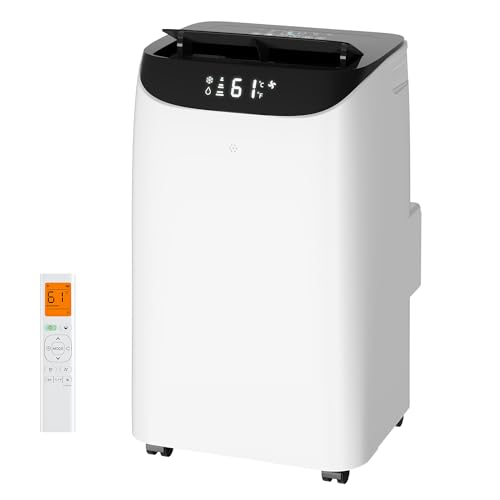
12,000 BTU Portable Air Conditioner Room Size: How Much Space Can It Cool?
A 12,000 BTU portable air conditioner sits in the upper mid-range of portable cooling capacity. This guide explains exactly how many square feet it can cool, when it is the right fit, and how to adjust coverage for real-world room conditions.
How BTU and Room Size Are Connected
BTU (British Thermal Unit) measures how much heat an air conditioner can remove from a room in one hour. The higher the BTU rating, the more space the unit can cool. For portable air conditioners, the widely used residential guideline is about 20 BTU per square foot of floor area. Based on that rule, a 12,000 BTU portable AC is designed for rooms roughly between 400 and 550 square feet, depending on ceiling height, sunlight, insulation, and the number of heat sources inside the room.
This does not mean every 500 square foot room will feel equally cool. A shaded, well-insulated bedroom with an 8-foot ceiling behaves very differently from a sun-drenched loft with 12-foot ceilings and large west-facing windows. The BTU rating is a starting point, not a guarantee. Understanding the variables below helps you decide whether 12,000 BTU is the correct capacity or whether you should step up or down.
Key idea: A 12,000 BTU portable air conditioner is a solid match for a large bedroom, a studio apartment, a medium living room, or a home office. It is usually too strong for a small bedroom and often too weak for an open-plan space above 600 square feet with heavy sun exposure.
12,000 BTU Portable AC Coverage at a Glance
The table below shows how a 12,000 BTU portable unit performs across different room sizes. Use the "Best fit" column as a practical recommendation, not a hard rule.
| Room Size | Typical Use Case | Fit for 12,000 BTU | Notes |
|---|---|---|---|
| Up to 250 sq ft | Small bedroom, nursery, small office | Oversized | Expect short cycling; a 8,000–10,000 BTU unit is usually better matched. |
| 250–400 sq ft | Standard bedroom, medium home office | Slightly oversized | Works well in hot climates or rooms with sun exposure; may cycle quickly in mild conditions. |
| 400–550 sq ft | Large bedroom, studio apartment, medium living room | Ideal fit | This is the sweet spot for a 12,000 BTU portable AC under standard conditions. |
| 550–700 sq ft | Large living room, open studio | Marginal | Acceptable only with good insulation, shaded windows, and moderate outdoor temperatures. |
| 700+ sq ft | Open-plan living area, large loft | Undersized | Consider 14,000 BTU or higher, or a multi-zone cooling approach. |
If you are comparing capacities across categories, the same sizing logic applies to related guides such as 12,000 BTU air conditioner room size and 10,000 BTU portable air conditioner room size. Seeing how coverage scales between BTU classes makes it easier to judge whether 12,000 BTU is the right step up for your space.
Factors That Change Real-World Coverage
The 20 BTU per square foot rule assumes a standard room with an 8-foot ceiling, average insulation, and moderate sun exposure. Real rooms rarely match that baseline perfectly. Adjust your expectation using the factors below.
Ceiling Height
Higher ceilings mean more air volume to cool. For ceilings above 8 feet, add roughly 10% capacity for every additional 2 feet. A room with 12-foot ceilings may need 20–30% more BTU than the same floor area with standard ceilings.
Sunlight and Window Exposure
A room with large south- or west-facing windows collects significant solar heat. In that case, a 12,000 BTU unit may only effectively cool 350–450 square feet rather than 500+. Heavy curtains and exterior shading help recover some of that lost coverage.
Insulation and Air Leaks
Poor insulation, single-pane windows, and gaps around doors let hot air infiltrate continuously. A well-sealed room with quality insulation allows a 12,000 BTU portable AC to reach the upper end of its coverage range.
Occupants and Heat-Generating Appliances
Each person adds body heat, and electronics such as computers, TVs, and kitchen appliances add more. A home office with multiple monitors or a living room with a large TV and gaming console may need a capacity bump compared with an empty bedroom of the same size.
Climate and Outdoor Temperature
Portable air conditioners work harder in hot, humid climates. In a mild coastal climate, a 12,000 BTU unit can comfortably handle the upper end of its range. In a hot inland climate with prolonged heat waves, expect it to perform closer to the lower end.
Practical shortcut: Start with the room's square footage, then add capacity for high ceilings, heavy sun, poor insulation, and extra occupants. If the adjusted number lands between 10,000 and 13,000 BTU, a 12,000 BTU portable AC is usually the right pick.
When a 12,000 BTU Portable AC Is the Right Choice
A 12,000 BTU portable air conditioner fits best when the space is large enough to benefit from the extra capacity but not so large that the unit runs constantly without reaching the set temperature. The following scenarios are strong matches.
- Large master bedrooms between 400 and 550 square feet, especially those with vaulted ceilings or afternoon sun.
- Studio apartments where a single open living-and-sleeping area needs consistent cooling.
- Medium living rooms in homes without central air, provided the room is not open to a large kitchen or hallway.
- Home offices with multiple computers, monitors, and occupants that generate extra heat.
- Rental units where installing a window unit or mini-split is not permitted, and a portable unit is the practical option.
Portable units are also a common choice for rooms that lack the mounting space or landlord approval required for permanent installations. If you are weighing portable cooling against other no-duct options, the mini air conditioner for room guide and the space-saving air conditioner overview can help you compare formats before committing to a portable unit.
Signs 12,000 BTU Is Too Much or Too Little
Signs the unit is oversized
- The compressor cycles on and off every few minutes instead of running steadily.
- The room reaches the set temperature quickly but feels clammy because moisture is not removed consistently.
- You notice frequent temperature swings rather than a stable, comfortable level.
- The unit is installed in a room well under 300 square feet with standard ceilings and no unusual heat load.
Signs the unit is undersized
- The unit runs continuously without reaching the set temperature.
- The room stays warm even after several hours of operation.
- The air coming out feels cool but never cold enough to change the room's overall comfort.
- The space is open to other rooms, has very high ceilings, or receives intense direct sun all afternoon.
If you suspect the unit is struggling, check basic maintenance first. A clogged filter, blocked exhaust hose, or poor window sealing can make a correctly sized unit behave like an undersized one. The HVAC cleaning and service guide covers routine steps that restore airflow and cooling performance.
Placement Tips for Maximum Cooling Efficiency
A portable air conditioner's real-world performance depends heavily on placement. Even a correctly sized 12,000 BTU unit will underperform if the exhaust hose is kinked, the window seal leaks, or the unit sits in a hot corner.
- Center the unit in the room where possible, so cooled air can circulate in multiple directions.
- Keep the exhaust hose as short and straight as possible. Long, looping hoses trap heat and reduce efficiency.
- Seal the window kit thoroughly. Gaps around the window insert let hot outdoor air back in and undermine the unit's capacity.
- Avoid direct sunlight on the unit. A shaded spot helps the internal components run more efficiently.
- Clear obstructions around the intake and exhaust. Furniture, curtains, and boxes can block airflow.
- Use a dedicated outlet. High-capacity portable units draw significant current, and a dedicated circuit avoids tripping breakers.
For rooms that also need seasonal heating, portable heat-pump models exist but behave differently from cooling-only units. If you are comparing formats, the 10,000 BTU portable air conditioner and heater guide explains how dual-function units balance cooling and heating capacity.
How 12,000 BTU Portable Units Compare by Tier
Portable air conditioners in the 12,000 BTU class are available across several market tiers. The differences usually appear in build quality, noise levels, smart features, and how well the unit handles humidity.
Essential tier
Basic mechanical controls, single-speed compressor, and straightforward exhaust kit. Solid choice for a room that only needs occasional cooling during the hottest weeks.
Balanced tier
Digital controls, programmable timers, and improved window sealing. A good fit for daily use in a bedroom or home office where predictable comfort matters.
Top-tier
Quieter operation, better dehumidification, smart controls, and more durable cabinet construction. Well-suited to a primary living space where the unit runs for long hours.
Premium tier
Dual-hose or inverter-driven designs, refined airflow, and app-based scheduling. Typically chosen when noise, efficiency, and long-term reliability are top priorities.
If you want to understand how inverter-driven compressors change performance, the inverter vs non-inverter comparison explains the trade-offs in comfort stability and energy use. For broader context on how portable units fit into a larger cooling plan, the whole house AC system guide shows where spot cooling ends and central cooling begins.
Maintenance Habits That Protect Cooling Capacity
A 12,000 BTU portable air conditioner is a long-term investment, and routine maintenance keeps it performing close to its rated capacity. Neglected filters and dirty coils reduce airflow, which makes the unit behave as if it were undersized.
- Clean or replace the filter every two to four weeks during heavy use.
- Drain the condensate tank regularly. Most portable units shut off automatically when the tank fills, but some models include continuous drain options.
- Inspect the exhaust hose and window seal for cracks, kinks, or gaps at the start of each cooling season.
- Clean the exterior vents and grille to prevent dust buildup that restricts airflow.
- Store the unit upright during the off-season and cover it to keep dust out of the internals.
For a full seasonal routine, the HVAC installation and service resources on this site provide step-by-step guidance that applies to portable units as well as larger systems.
Frequently Asked Questions
What room size does a 12,000 BTU portable air conditioner cool?
A 12,000 BTU portable air conditioner typically cools a room between 400 and 550 square feet under standard conditions. Rooms with high ceilings, direct sunlight, or poor insulation may need a larger capacity or may only be effectively cooled at the lower end of that range.
Is 12,000 BTU too much for a bedroom?
For a standard bedroom under 300 square feet, a 12,000 BTU portable unit may be oversized and cycle on and off frequently. However, for a large master bedroom with high ceilings or significant sun exposure, it can be an appropriate match.
How many square feet will a 12,000 BTU portable AC cool?
Using the standard 20 BTU per square foot guideline, 12,000 BTU covers roughly 500 to 600 square feet. Adjustments for climate, ceiling height, sun exposure, and heat sources should always be applied before making a final decision.
Can a 12,000 BTU portable AC cool two rooms?
A single 12,000 BTU portable air conditioner is designed for one open space. Cooling two separate rooms with one portable unit is generally ineffective because cooled air cannot circulate freely between rooms, and each room has its own heat load.
Does a dual-hose portable AC cool better than a single-hose model?
Dual-hose portable air conditioners generally maintain cooling capacity more consistently because they draw in outdoor air for the condenser instead of pulling conditioned indoor air out of the room. In a 12,000 BTU class, dual-hose models tend to perform closer to their rated capacity in hot conditions.
Should I choose 12,000 BTU or 14,000 BTU for a 500 square foot room?
If the room has standard ceilings, moderate sun, and good insulation, 12,000 BTU is usually sufficient. Step up to 14,000 BTU if the room has high ceilings, large west-facing windows, or a hot climate that pushes the unit to run continuously.
Choosing the Right 12,000 BTU Portable AC for Your Room
Once you have confirmed that 12,000 BTU matches your room size, the remaining decision comes down to features that affect daily comfort. Noise level matters in a bedroom, dehumidification matters in humid climates, and smart controls matter if you want scheduling and remote operation. Window kit quality and exhaust hose design are easy to overlook but have a direct impact on real-world cooling.
The recommendations below are organized to help you compare models within the 12,000 BTU portable category. Use the product cards to check availability and explore specifications before making a final choice.