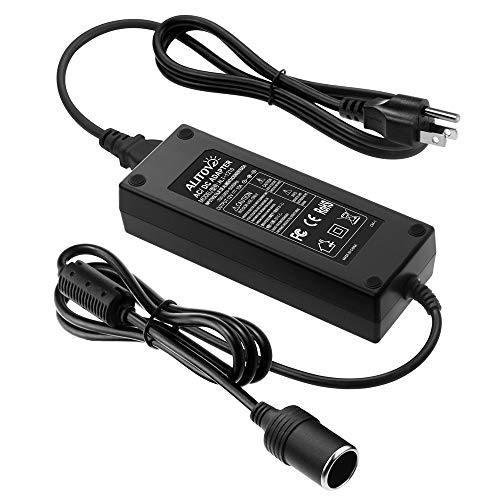
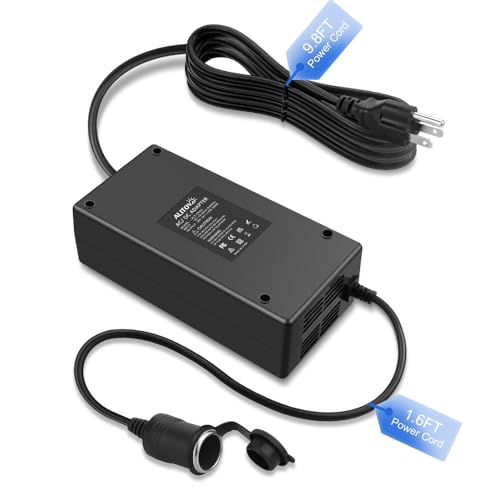
110 to 12 Volt Converter: The Complete Guide
Everything you need to know about stepping down household AC power to a stable 12V DC supply for RV accessories, LED lighting, pumps, fans, and electronics — explained clearly before you buy.
Start LearningWhy this guide matters: A converter that is undersized, poorly ventilated, or mismatched to your outlet can cause voltage drop, overheating, or premature failure of your 12V equipment. This guide walks you through types, sizing, safety, and selection so you can buy with confidence.
What Is a 110 to 12 Volt Converter?
A 110 to 12 volt converter is a power supply that takes standard household alternating current (AC) — typically 110V or 115V in North America — and steps it down to a regulated 12V direct current (DC) output. In practice, the device performs two jobs: it reduces the voltage and it converts AC to DC, which is why it is also called an AC-to-DC converter or a 12V power supply.
These converters are the bridge between wall power and the large ecosystem of 12V equipment. RV owners use them to run interior lighting, water pumps, and ventilation fans from shore power. Homeowners use them for LED strip lighting, security cameras, and small pumps. Hobbyists and technicians use them on workbenches for testing and powering 12V devices.
It is worth distinguishing a converter from related devices. An inverter does the opposite: it takes 12V DC from a battery and produces 110V AC. A transformer changes AC voltage but does not rectify it to DC. A battery charger is designed to charge batteries and may not deliver a clean, stable 12V rail under continuous load. If your goal is to run 12V devices from a wall outlet, a converter is the correct tool.
Most quality converters include voltage regulation, overload protection, short-circuit protection, and thermal shutdown. These features matter because 12V electronics are sensitive to voltage swings, and a well-regulated output protects both the converter and the devices connected to it.
How a 110 to 12 Volt Converter Works
Inside the unit, the process follows a predictable sequence. Understanding it helps you evaluate specifications and avoid misapplying a converter.
- AC input and filtering: The 110V AC line enters through a fuse and an EMI filter that suppresses electrical noise.
- Rectification: A bridge rectifier converts the incoming AC waveform into pulsating DC.
- Switching or linear regulation: Switching converters use a high-frequency oscillator and transformer to step the voltage down efficiently; linear converters use a simpler regulator with lower efficiency but very clean output.
- Output filtering: Capacitors and inductors smooth the output into a stable DC rail.
- Protection and feedback: A control circuit monitors output voltage and current, triggering protection if conditions exceed safe limits.
Switching designs dominate the market because they are lighter, more efficient, and able to handle wide input ranges. Linear designs remain relevant for sensitive audio and measurement equipment where electrical noise must be minimal.
Types of 110 to 12 Volt Converters
Converters are not one-size-fits-all. The right type depends on the load, the environment, and how long the unit will run.
Switching Power Supplies
These are the most common 110 to 12 volt converters. They are efficient, compact, and available in a wide range of output ratings. Look for units with active cooling or generous ventilation if you plan to run loads continuously.
Linear Power Supplies
Heavier and less efficient, but they produce very clean output with minimal high-frequency noise. They suit audio gear, lab equipment, and applications where electrical noise is a concern.
Waterproof and Enclosed Converters
Sealed units with IP-rated housings are built for outdoor lighting, marine use, and damp environments. Confirm the ingress protection rating matches the installation location.
DIN-Rail and Industrial Converters
Designed for control panels and commercial installations, these units mount on standard DIN rails and often include wide input ranges and robust protection circuits.
RV and Automotive Converters
These units often combine power supply functions with battery charging. If you need both, look for a converter-charger with multi-stage charging and proper ventilation for enclosed compartments.
How to Size a 110 to 12 Volt Converter
Sizing is the single most important decision. An undersized converter will overheat, drop voltage, or shut down under load; an oversized converter wastes space and may run inefficiently at very light loads.
Step 1: Total Your Load
List every 12V device you plan to run and note its wattage. If only amperage is listed, multiply amps by 12 to estimate watts. For example, a 5A device draws roughly 60W.
Step 2: Add a Safety Margin
Add 20 to 30 percent headroom. This covers startup surges, simultaneous device use, and long-term aging of components.
Step 3: Check the Output Voltage and Amperage
Confirm the converter delivers a regulated 12V DC output and that its continuous amperage rating exceeds your calculated total. Pay attention to whether the rating is for continuous or peak use.
Step 4: Match the Input
Verify the input voltage range covers your outlet (typically 100–120V for North American households) and that the plug type and cord length suit your installation.
Sizing tip: For a load totaling 150W, choose a converter rated for at least 180W to 200W continuous output. For loads above 300W, prefer units with active cooling and a metal housing rather than a sealed plastic case.
Converter Tiers Compared
The table below groups converters by market tier so you can match expectations to use case. No numeric figures are used; tiers are relative descriptors.
| Tier | Typical Construction | Cooling | Best For |
|---|---|---|---|
| Entry-level | Compact plastic housing | Passive | Intermittent loads, LED strips, small accessories |
| Mid-range | Metal enclosure, reinforced input protection | Passive or low-noise fan | Continuous moderate loads, RV lighting and pumps |
| Premium | Heavy-duty metal chassis, wide input range | Thermostatic fan | Higher continuous loads, workshop and hobby use |
| Professional-grade | DIN-rail or industrial enclosure | Active, serviceable | Control panels, commercial installations, 24/7 duty |
As a general rule, mid-range units offer noticeably better thermal behavior than entry-level models, while premium and professional-grade units add wider input tolerance, better protection circuits, and longer service life under continuous operation.
Buying Guide: What to Check Before You Buy
- Continuous vs. peak rating: Confirm the continuous rating, not just the peak figure. Continuous rating is what matters for long-running loads.
- Regulated output: A regulated 12V rail protects sensitive electronics from voltage swings.
- Protection circuits: Look for overload, short-circuit, over-temperature, and reverse-polarity protection.
- Cooling design: Passive cooling suits light loads; fans suit higher continuous loads but add noise.
- Input range: A wider AC input range tolerates voltage sags and is useful in older wiring or RV parks.
- Connections: Screw terminals, ring terminals, and cigarette-lighter sockets each suit different installations.
- Efficiency: Higher efficiency means less waste heat and more stable output under load.
- Certification: Choose units with recognized safety certifications appropriate to your region.
- Mounting and enclosure: Metal housings and DIN-rail options suit permanent installations; sealed IP-rated units suit outdoor or damp locations.
If your project also involves cooling equipment, the same research-first approach applies. Our guide to what air conditioning is covers the fundamentals, and our overview of energy efficiency ratings helps you compare equipment by efficiency rather than headline specifications. For installations that combine 12V accessories with air conditioning, our pages on through-the-wall AC and quiet air conditioners are useful references.
Common Applications
RV and Camper Power
RVs rely on 12V systems for lighting, water pumps, ventilation fans, and control boards. A converter lets you run these systems from shore power without draining the house battery. For campers that also need cooling, our dual-hose portable air conditioner guide and our 5,000 BTU portable air conditioner overview are practical companions.
LED Lighting
12V LED strips and puck lights are common in kitchens, cabinets, and RVs. Choose a converter with a clean output and enough headroom for the total strip length.
Pumps, Fans, and Motors
Motors draw higher startup current than their running rating suggests. Size for the startup surge, not just the steady-state load.
Security and Networking Equipment
Cameras, routers, and access points often run on 12V. A regulated converter with low ripple protects sensitive electronics.
Workshop and Hobby Use
Bench testing, 12V tools, and DIY electronics projects all benefit from a stable, protected 12V supply.
Safety and Installation Essentials
- Install in a well-ventilated area; never enclose a fan-cooled converter in a sealed box.
- Use fuses or breakers on both the AC input and DC output sides.
- Match wire gauge to the current draw; undersized wiring causes voltage drop and heat.
- Keep AC and DC wiring separated and labeled.
- Ground the enclosure according to local electrical codes.
- Do not exceed the continuous rating, even briefly, unless the manufacturer explicitly permits it.
- If you are not experienced with mains wiring, have a qualified electrician perform the installation.
Safety is not only about the converter itself. The devices connected to it, the wiring, and the environment all contribute to a reliable installation. Treat the converter as one component in a system, not a standalone accessory.
Troubleshooting Common Issues
The converter shuts down under load
Most often this is an undersized unit or inadequate ventilation. Check the continuous rating against your total load and confirm airflow around the housing.
Output voltage drops when devices are connected
Voltage drop usually points to undersized wiring or a converter running near its limit. Shorten the DC run, increase wire gauge, or choose a higher-rated unit.
The unit runs hot but does not shut down
Some warmth is normal, but excessive heat shortens component life. Improve ventilation and verify the load is within the continuous rating.
Devices hum or behave erratically
This can indicate high ripple or noise on the output. A linear supply or a converter with better filtering may resolve it.
Frequently Asked Questions
What is a 110 to 12 volt converter used for?
It steps down household AC power to a regulated 12V DC output for RV accessories, LED lighting, pumps, fans, and electronics.
How do I size a 110 to 12 volt converter?
Add up the total wattage of all 12V devices, then add 20 to 30 percent headroom. Choose a converter with a continuous output rating above that total.
Can a 110 to 12 volt converter run continuously?
Yes, if it is rated for continuous duty and installed with adequate ventilation. Industrial and professional-grade units are designed for continuous operation.
What is the difference between a converter and an inverter?
A converter changes 110V AC to 12V DC. An inverter changes 12V DC to 110V AC.
Do I need a regulated output?
Yes, for most electronics. A regulated 12V rail protects devices from voltage swings that occur as loads change.
Final Thoughts
A 110 to 12 volt converter is a small component with an outsized role in any 12V system. The right unit — correctly sized, properly ventilated, and matched to your load — will run quietly for years. The wrong unit will cause frustration, downtime, and potentially damage the devices it powers.
Use this guide as a checklist: total your load, add headroom, confirm the continuous rating, verify protection circuits, and plan for ventilation. If your project also involves cooling, our 5,000–6,000 BTU AC overview and our small room window air conditioner reviews can help you compare options by capacity and features rather than by headline figures.