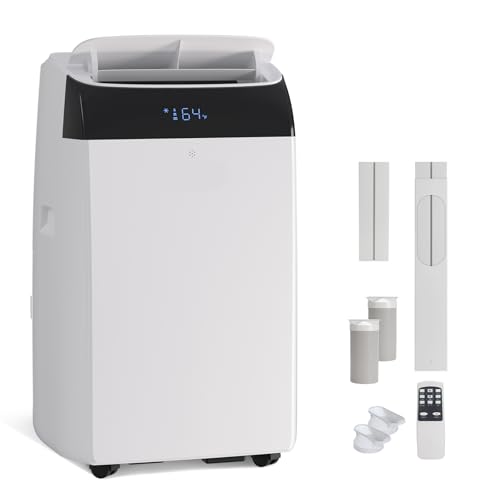
14000 BTU Dual Hose Portable Air Conditioner: The Complete Buyer's Guide
Everything you need to know about 14,000 BTU dual hose portable air conditioners — cooling capacity, room coverage, dual hose advantages, efficiency, installation, and how to choose the right unit for large rooms and open living spaces.
Explore Recommended UnitsWhy this guide matters: A 14,000 BTU dual hose portable air conditioner sits in the sweet spot for cooling large bedrooms, open-plan living areas, and small apartments. If you are researching this category, you already know you need serious cooling power. This guide fills in the technical details, explains the dual hose advantage, and helps you decide whether this class of portable AC fits your space before you commit.
What Is a 14000 BTU Dual Hose Portable Air Conditioner?
A 14000 BTU dual hose portable air conditioner is a floor-standing cooling unit rated at 14,000 British Thermal Units of cooling output. Unlike single hose portable units that draw indoor air through the condenser and exhaust it outside, a dual hose design uses two separate air paths: one hose pulls outside air in to cool the condenser, and the second hose exhausts hot air back outside. This separation prevents the unit from creating negative pressure in the room, which is the main reason single hose models often feel less effective than their BTU rating suggests.
The 14,000 BTU rating places these units in the mid-range to upper-mid-tier of the portable AC market. They are designed for rooms roughly between 400 and 700 square feet, depending on ceiling height, insulation, sun exposure, and how open the floor plan is. If you want a broader overview of how portable units compare to other cooling options, the main air conditioner guide is a useful starting point.
Why Choose a Dual Hose Design?
The dual hose configuration is the single most important feature to understand in this product category. Here is how it changes real-world performance:
No Negative Pressure
Single hose units push indoor air outside, which pulls hot outdoor air in through gaps and cracks. Dual hose units use outside air for condenser cooling, so the room stays balanced.
More Consistent Cooling
Because the unit is not constantly fighting incoming hot air, a 14,000 BTU dual hose model delivers cooling that more closely matches its rated capacity.
Better for Open Layouts
Open-plan living rooms, lofts, and connected kitchen-dining spaces benefit most from the pressure-neutral design of dual hose systems.
Improved Humidity Control
With less outdoor air infiltration, the unit removes moisture from the room more effectively instead of pulling in humid outside air.
That said, dual hose units require a window kit that accommodates two hoses, and they tend to be slightly bulkier than single hose models. If you are comparing configurations in detail, the portable air conditioner guide covers the trade-offs across single hose, dual hose, and window units.
How Much Room Can a 14000 BTU Portable AC Cool?
The commonly cited rule of thumb is that 14,000 BTU cools approximately 500 to 700 square feet. However, that estimate assumes an average ceiling height of about 8 feet, standard insulation, and a room that is not heavily sun-exposed. Real-world coverage shifts significantly based on these factors:
| Room Condition | Practical Coverage | What It Means for You |
|---|---|---|
| Standard bedroom or living room, good insulation, moderate sun | 500 – 650 sq ft | Comfortable for most large bedrooms and mid-size living rooms |
| Open-plan space, high ceilings, or large windows | 400 – 500 sq ft | Consider a second unit or higher-BTU model for full coverage |
| West-facing room with afternoon sun | 350 – 450 sq ft | Sun load reduces effective capacity; shade windows where possible |
| Well-shaded, energy-efficient room | 650 – 700 sq ft | Can comfortably cool a large master suite or studio |
If you are unsure whether your room is closer to 400 or 700 square feet, it is usually better to size up rather than down. A unit that is slightly oversized for the space will cycle less aggressively and cool more evenly. For a deeper sizing walkthrough, see the 14000 BTU air conditioning overview.
Pro tip: Measure the actual floor area, not the room label. A "large bedroom" in a modern home can be 300 square feet, while an older home's living room can exceed 600 square feet. The number on the listing is a starting point, not a guarantee.
Key Features to Look For
Within the 14,000 BTU dual hose category, units differ meaningfully in feature set. These are the specifications that matter most:
1. Energy Efficiency Ratio (EER) and CEER
Portable AC efficiency is measured by CEER (Combined Energy Efficiency Ratio). Higher CEER means more cooling per unit of electricity. Entry-level 14,000 BTU units often sit in the lower efficiency band, while mid-range and premium models push higher. If you plan to run the unit daily through summer, prioritising efficiency is a worthwhile long-term investment. The EER rating guide explains how to interpret these figures.
2. Dehumidification Capacity
Most 14,000 BTU dual hose units remove between 70 and 100 pints of moisture per day. In humid climates, this is almost as important as cooling output. A unit with a higher dehumidification rate keeps the room feeling drier and more comfortable at the same thermostat setting.
3. Fan Speeds and Operating Modes
Look for at least three fan speeds and dedicated modes: cool, fan-only, dehumidify, and ideally a sleep mode. A 24-hour programmable timer is useful if you want the unit to run during off-peak hours or shut off automatically overnight.
4. Noise Level
Portable AC units are generally louder than window or mini-split units. In this category, expect noise levels in the 50–56 dB range on high fan speed. Premium-tier models often run closer to 50 dB, while entry-level units can be noticeably louder. If the unit will sit in a bedroom or home office, check the decibel rating carefully. The quiet air conditioner guide covers noise considerations in more depth.
5. Window Kit and Installation Requirements
Dual hose units require a window kit that fits both hoses. Most kits accommodate standard vertical or horizontal sliding windows. Verify the maximum window opening width before purchasing. If your window setup is unusual, the small vertical window AC guide may help you identify compatible solutions.
6. Drainage Method
Most 14,000 BTU dual hose units offer continuous drainage via a hose connection, plus a built-in tank with auto-shutoff. Continuous drainage is strongly preferred for long cooling sessions, as it eliminates the need to empty the tank manually.
7. Smart Controls and Remote Access
Mid-range and premium models increasingly include Wi-Fi control, app scheduling, and voice assistant compatibility. If remote control matters to you, the AC with Wi-Fi and smart control guide explains what to expect from these features. A wireless thermostat can also improve scheduling flexibility.
Dual Hose vs Single Hose: A Direct Comparison
This is the most common question in the category, so it deserves a clear side-by-side breakdown:
| Factor | Dual Hose (14,000 BTU) | Single Hose (14,000 BTU) |
|---|---|---|
| Cooling effectiveness | High — close to rated capacity | Moderate — negative pressure reduces real output |
| Room pressure | Balanced | Creates negative pressure |
| Humidity control | Better | Less effective |
| Installation complexity | Slightly higher (two hoses) | Lower (one hose) |
| Unit footprint | Generally larger | More compact |
| Best for | Large rooms, open layouts, humid climates | Smaller rooms, occasional use |
The practical takeaway: if you are buying a 14,000 BTU unit, you are already investing in serious cooling power. Pairing that capacity with a dual hose design is the logical choice for most buyers, because the whole point of a higher-BTU unit is to cool a large space effectively.
Installation and Placement Best Practices
Proper placement makes a measurable difference in performance. Follow these guidelines:
- Position near the window: Keep hose runs as short and straight as possible. Long, looping hoses reduce airflow and cooling efficiency.
- Avoid direct sunlight: Place the unit away from windows that receive strong afternoon sun. The unit itself generates heat, and direct sun exposure worsens it.
- Maintain clearance: Leave at least 12–18 inches of space around the air intake and exhaust for unrestricted airflow.
- Seal the window kit: Use the foam or fabric seals included with the kit to minimise gaps. Even small gaps undermine the dual hose advantage.
- Level the floor: Most units require a level surface for the condensate system to work correctly.
- Set up continuous drainage: If you plan to run the unit for extended periods, connect a drain hose to avoid mid-session shutdowns.
If you are installing in a room without standard windows, the windowless air conditioner guide covers alternative ventilation approaches. For rooms with unusual window configurations, the portable AC without window vent guide may be relevant.
Maintenance Checklist for Long-Term Performance
A 14,000 BTU dual hose portable AC is a long-term investment, and basic maintenance keeps it running efficiently for years:
- Clean or replace the air filter every two weeks during peak cooling season. A clogged filter reduces airflow and forces the compressor to work harder. The AC unit filter guide explains filter types and cleaning methods.
- Empty or drain the condensate tank regularly. If using continuous drainage, check the hose for kinks.
- Inspect the hoses for cracks or disconnections. Even small leaks reduce cooling performance.
- Clean the exterior vents with a vacuum brush attachment every month.
- Store the unit upright during off-season and cover it to prevent dust buildup.
- Schedule a professional check every two to three years if the unit runs heavily.
For a broader seasonal routine, the seasonal AC checklist is a practical reference.
Common Problems and Troubleshooting
Even well-maintained units can develop issues. These are the most common problems reported with 14,000 BTU dual hose portable ACs:
- Unit runs but does not cool: Usually a clogged filter, blocked hose, or low refrigerant. Start with filter cleaning and hose inspection. The AC not cooling guide walks through the diagnostic steps.
- Water leaking from the unit: Often caused by a full tank, a blocked drain hose, or a unit that is not level. See the AC leaking water guide.
- Unit shuts off unexpectedly: Check the auto-shutoff sensor on the condensate tank and verify the exhaust hoses are properly connected.
- Excessive noise: Loose hoses, debris in the fan, or an unbalanced unit on an uneven floor are common causes. The AC making noise guide covers fixes.
- Musty smell: Usually mold or mildew in the filter or evaporator coil. Clean and dry the filter thoroughly. See the AC smells bad guide.
If a problem persists after basic troubleshooting, it is usually a refrigerant or compressor issue that requires a qualified technician. The when to call an HVAC technician guide explains the warning signs.
Who Should Buy a 14000 BTU Dual Hose Portable AC?
This category is a strong fit for specific situations and a less ideal fit for others. Here is a straightforward breakdown:
Good Fit
Renters who cannot install window or central units; large bedrooms and open-plan living rooms; homes without ductwork; rooms with sliding windows; humid climates where dehumidification matters.
Less Ideal Fit
Very small rooms (a smaller BTU unit is more efficient); homes where a mini-split or window unit is feasible; spaces where noise is critical; rooms with no suitable window for hose venting.
If you are comparing portable units against other formats, the AC for apartments with no windows guide and the small vertical window AC guide offer useful context. For homes where ductless installation is possible, a ductless mini-split AC is generally more efficient and quieter, though it requires professional installation.
Frequently Asked Questions
Is 14,000 BTU enough for a large living room?
For a standard living room of 400–600 square feet with average insulation, yes. For open-plan spaces above 650 square feet or rooms with heavy sun exposure, consider a higher-BTU unit or a second cooling source. Measure the actual square footage and factor in ceiling height before deciding.
Do dual hose portable ACs really cool better than single hose units?
Yes, in most real-world rooms. Single hose units create negative pressure that pulls hot outdoor air in through gaps and cracks. Dual hose units use outside air to cool the condenser, so the room stays pressure-neutral and the rated BTU output is more representative of actual cooling performance.
How many amps does a 14,000 BTU dual hose portable AC draw?
Most 14,000 BTU portable units draw between 10 and 12 amps on a standard 115V circuit. Check the unit's rated amperage and ensure it is plugged into a dedicated outlet. The amps and breaker size guide explains circuit requirements in detail.
Can I use a 14,000 BTU portable AC in a bedroom?
Yes, but noise is the main consideration. Look for models rated at or below 52 dB, and use sleep mode if available. Place the unit as far from the bed as the hose length allows, and keep the hoses straight for quieter airflow.
How often should I drain the water tank?
In humid conditions, the tank can fill within 4–8 hours of continuous operation. For extended use, connect a continuous drain hose. Otherwise, check and empty the tank every few hours during peak humidity.
Is a dual hose portable AC worth it compared to a window unit?
It depends on your situation. Window units are generally more efficient and less intrusive on floor space. Portable dual hose units are better for renters, rooms without compatible windows, and situations where installation flexibility matters. If a window unit is feasible, the window air conditioner guide is worth reviewing before deciding.
What SEER or CEER rating should I look for?
Portable ACs use CEER rather than SEER. Higher is better. In this category, look for CEER values at the upper end of what the market offers. The SEER rating guide explains the broader efficiency landscape, though note that SEER applies primarily to central and mini-split systems.
Final Buying Checklist
Before you choose a 14,000 BTU dual hose portable air conditioner, confirm the following:
- Measured room area is within the unit's practical coverage range.
- Window type is compatible with the dual hose window kit.
- Noise rating is acceptable for the intended room.
- Dehumidification capacity meets your climate needs.
- Continuous drainage option is available.
- Unit includes a programmable timer and sleep mode.
- Warranty covers compressor and parts for a reasonable period. The AC warranty guide explains what to check.
- Electrical circuit can handle the amperage draw.
- Filter is accessible and easy to clean.
- Hose length and window kit fit your specific layout.
Bottom Line
A 14000 BTU dual hose portable air conditioner is the right choice when you need serious cooling power in a large room, open living area, or apartment where permanent installation is not an option. The dual hose design is the key differentiator: it delivers cooling that more closely matches the rated capacity, maintains better humidity control, and avoids the negative pressure problem that limits single hose units. Focus your comparison on efficiency, noise level, dehumidification capacity, and window kit compatibility, and you will end up with a unit that performs well for years.
Use the recommended products below to compare current options in this category, and revisit the guides linked throughout this page as you narrow down your shortlist.