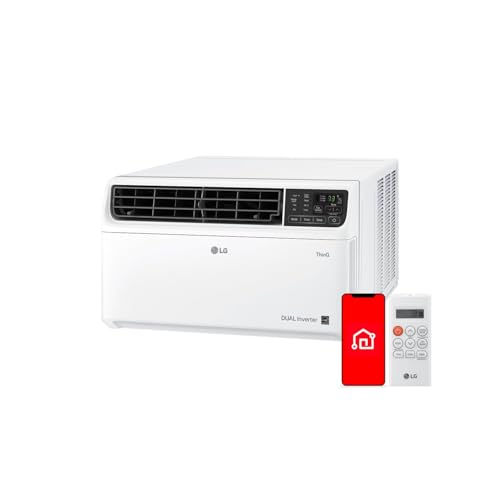
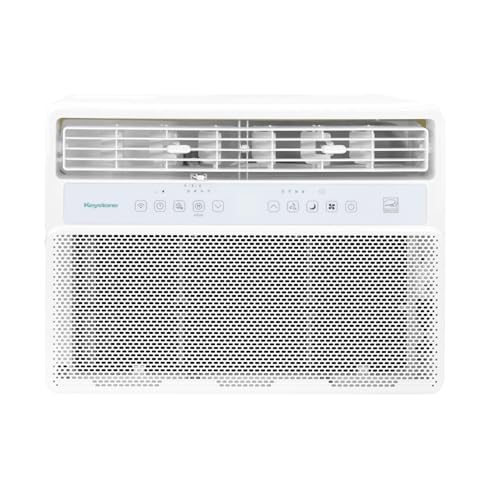
14000 BTU Inverter Window Air Conditioner: The Complete Guide
Everything you need to know about cooling large rooms efficiently with a high-capacity inverter window unit — capacity, efficiency, installation, and top-tier features explained.
START LEARNINGWhy 14000 BTU Inverter Window AC? A 14000 BTU inverter window air conditioner sits in a sweet spot: enough cooling power for large rooms and open living areas, combined with inverter technology that adjusts compressor speed for steady temperatures and lower energy use. This guide helps you decide if it is the right fit for your home before you buy.
What Is a 14000 BTU Inverter Window Air Conditioner?
A 14000 BTU inverter window air conditioner is a window-mounted cooling unit that delivers roughly 14,000 British Thermal Units of cooling capacity while using an inverter-driven compressor. Unlike traditional single-stage compressors that cycle fully on and off, an inverter compressor varies its speed to match the cooling demand. This results in more stable room temperatures, quieter operation during partial load, and typically better energy performance over long cooling seasons.
Units in this capacity class are designed for rooms roughly 550 to 700 square feet, depending on ceiling height, insulation, sun exposure, and occupancy. If your space is larger or your room is particularly heat-heavy, you may want to review higher-capacity AC options. For smaller spaces, a 12000–14000 BTU AC comparison can help you gauge whether 14000 BTU is overkill.
Cooling Capacity and Room Sizing
Getting the capacity right is the single most important decision. A unit that is too small runs constantly and struggles on hot days; a unit that is too large cools too quickly without removing enough humidity, leaving the room feeling clammy. Use the table below as a starting point, then adjust for your specific conditions.
| Room Size (sq ft) | Recommended Capacity | Best For |
|---|---|---|
| 150 – 250 | 8,000 – 10,000 BTU | Bedrooms, small offices |
| 250 – 400 | 12,000 – 14,000 BTU | Large bedrooms, living rooms |
| 550 – 700 | 14,000 BTU | Open living areas, master suites, combined rooms |
| 700 – 1,000 | 18,000 – 24,000 BTU | Large open-plan spaces |
Adjust upward if the room has high ceilings, large unshaded windows, poor insulation, or a kitchen nearby. Adjust downward if the room is heavily shaded, well-insulated, or located on a lower floor. For a detailed walkthrough, see our guide on how to size an air conditioner.
Why Inverter Technology Matters
Inverter technology is the defining feature of this product class. Here is what it changes in practice:
- Stable temperature: The compressor modulates speed instead of cycling on and off, so the room stays within a narrow temperature band.
- Quieter partial-load operation: At moderate demand, the compressor runs slowly and quietly rather than at full blast.
- Better moisture control: Longer, gentler run cycles remove more humidity than short bursts of full-power cooling.
- Energy performance: Inverter units often achieve higher efficiency ratings than comparable fixed-speed models. Learn more about air conditioner efficiency and SEER, EER, and HSPF ratings.
- Soft start: Inverter compressors ramp up gradually, which is gentler on home wiring and can reduce light flicker on startup.
If you are comparing technologies, our inverter AC guide and the inverter vs non-inverter comparison cover the trade-offs in detail.
Pros and Cons of a 14000 BTU Inverter Window Unit
Advantages
- Strong cooling for large rooms without ductwork
- Inverter compressor for steadier temperatures
- Usually quieter at partial load than fixed-speed units
- No professional installation required in most cases
- Good fit for renters and older homes without ducts
- Typically competitive efficiency within its class
Considerations
- Heavier and bulkier than smaller window units
- Requires a sturdy window and possibly extra bracing
- May need a dedicated circuit depending on the model
- Blocks part of the window view
- Not suitable for casement or sliding windows without an adapter
Installation Requirements and Tips
A 14000 BTU window unit is significantly heavier than a 5,000–8,000 BTU model, so installation deserves careful planning. Key points:
- Window type: Double-hung windows are the standard fit. Casement and sliding windows need special brackets or a different product category.
- Support: Use the manufacturer's mounting bracket and, for larger units, add external support brackets rated for the unit's weight.
- Electrical: Many 14000 BTU units run on 115V, but some require 230V. Check the nameplate and confirm your circuit can handle the load. See our guides on 110V vs 240V AC units and amps and breaker size.
- Sealing: Insulate the gap around the unit with foam or weatherstripping to prevent cool air loss and pest entry.
- Drainage: Ensure the unit tilts slightly outward so condensate drains properly.
If you prefer professional help, our guide on companies that install window air conditioners explains what to look for.
Energy Efficiency: What to Look For
When comparing 14000 BTU inverter window units, focus on these efficiency indicators:
| Feature | What It Means | Why It Matters |
|---|---|---|
| CEER / EER Rating | Ratio of cooling output to energy input | Higher ratings indicate more efficient cooling |
| ENERGY STAR Certification | Meets EPA efficiency criteria | Signals verified efficiency performance |
| Inverter Compressor | Variable-speed operation | Better part-load efficiency and comfort |
| Eco / Energy Saver Mode | Cycles fan or adjusts setpoint | Reduces unnecessary runtime |
| Programmable Timer | Scheduled operation | Avoids cooling empty rooms |
For a deeper dive, read window air conditioner energy efficiency ratings and our overview of ENERGY STAR window units.
Features Worth Prioritizing
Beyond capacity and efficiency, these features separate an entry-level unit from a premium one:
- Smart controls: Wi-Fi and app control let you adjust settings remotely. See AC with Wi-Fi and smart control.
- Air purification: Washable filters and ionizers improve indoor air quality. Explore AC with air purifier.
- Quiet operation: Sound ratings below 60 dB are considered quiet for this capacity class. See quiet air conditioner options.
- Remote control and thermostat: Convenient adjustment without getting up.
- Auto-restart: Resumes settings after a power outage.
- Sleep mode: Gradually adjusts temperature for overnight comfort.
Market Positioning: Which Tier Fits You?
14000 BTU inverter window units span several market tiers. Use this framework to match features to your priorities:
| Tier | Typical Characteristics | Best For |
|---|---|---|
| Entry-Level | Basic inverter compressor, manual controls, simple filter | Budget-conscious buyers focused on core cooling |
| Mid-Range | Remote control, timer, eco mode, washable filter, quieter operation | Most households wanting a balance of features and comfort |
| Premium | Wi-Fi control, advanced filtration, low-noise design, auto-restart | Tech-savvy users and those prioritizing air quality |
| Top-Tier | Highest efficiency ratings, premium materials, full smart-home integration | Long-term investment and maximum comfort |
Alternatives to Consider
A 14000 BTU inverter window unit is not the only path to cooling a large room. Depending on your constraints, these alternatives may fit better:
- 14000 BTU standard window unit — simpler and often lighter, but less efficient at part load.
- Casement window 14000 BTU AC — for windows that cannot accept a standard unit.
- 14000 BTU dual-hose portable AC — flexible placement without window mounting.
- 12000–14000 BTU AC comparison — if your room is on the smaller side of the 14000 BTU range.
- Through-the-wall AC — permanent installation with a cleaner window view.
Frequently Asked Questions
What size room is a 14000 BTU window AC suitable for?
Generally 550 to 700 square feet, assuming standard 8-foot ceilings, average insulation, and moderate sun exposure. Adjust upward for high ceilings or heavy sun, and downward for shaded, well-insulated rooms.
Is a 14000 BTU inverter window unit better than a non-inverter model?
In most cases, yes for comfort and part-load efficiency. Inverter models maintain steadier temperatures and are typically quieter at moderate demand. A standard unit may be simpler and lighter, but it cycles fully on and off.
Does a 14000 BTU window AC need a dedicated circuit?
Many 14000 BTU units draw enough current that a dedicated circuit is recommended. Check the unit's amperage rating and compare it to your circuit capacity. Some models run on 115V, others on 230V.
Can I install a 14000 BTU window AC by myself?
Physically capable adults can usually install one with the manufacturer's bracket, but the weight makes a helper strongly recommended. If the window is unusually high or the unit is very heavy, professional installation is the safer choice.
How do I maintain a 14000 BTU inverter window AC?
Clean or replace the filter every two to four weeks during heavy use, inspect the outdoor coil seasonally, and check the drain path for clogs. Our AC filter cleaning guide covers the basics.
Ready to Compare Your Options?
Browse our curated selection of 14000 BTU inverter window air conditioners and find the tier that matches your room and priorities.
VIEW RECOMMENDATIONS